

Crop Diseases in the Philippines
A spot on a leaf can be a fungus, a bacterium, a virus or just the weather. Each page shows the signs of one disease, why it comes and what to do before it spreads.
Diseases by Crop
Start from the crop in front of you. Each shelf holds the diseases that matter most on Philippine farms, from palay to durian, with their local names and what to spray.
Rice14 diseases · Palay
Like Sheath blight, Rice blast and Bacterial leaf blight.
Corn and Sorghum11 diseases · Mais, batad
Like Corn downy mildew, Corn rust and Northern corn leaf blight.
Legumes14 diseases · Monggo, mani, sitaw
Like Southern blight, Stem rot and charcoal rot and Bean rust.
Root Crops23 diseases · Kamote, kamoteng kahoy, gabi
Like Storage rot of root crops, Rhizome and corm rot and Sweet potato scab.
Vegetables32 diseases · Gulay
Like Bacterial wilt, Damping off and Early blight.
Onion and Garlic8 diseases · Sibuyas, bawang
Like Stemphylium leaf blight, Anthracnose twister of onion and Yellow stripe and dwarf viruses of onion and garlic.
Sugarcane and Industrial Crops25 diseases · Tubo, tabako, abaka
Like Pineapple disease and butt rot, Ganoderma basal stem rot and Sugarcane smut.
Fruits and Plantation Crops38 diseases · Niyog, saging, mangga
Like Anthracnose, Fusarium wilt and Banana bunchy top.
Crop Diseases in the Philippines
117 diseases of 83 Philippine crops, from palay, mais and gulay to the root crops, sugarcane and the fruit trees. Search by any name you know, English, scientific or local, like tungro or bugtok.
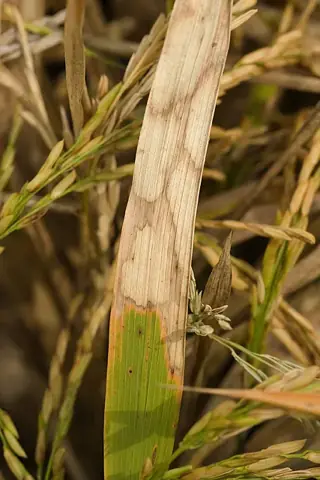 Rice
Fungus
Oval, gray green spots on the sheath near the water that climb the plant.
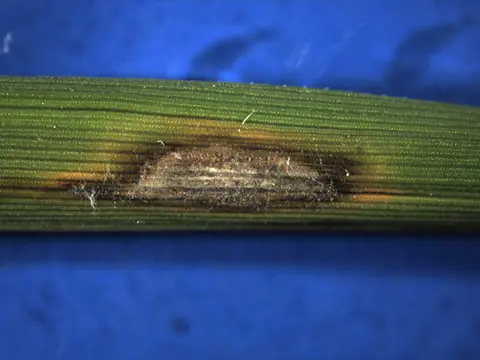 Rice
Fungus
Local names: Mata mata (Tagalog and Bisaya), agupaw (Waray), taya taya (Cebuano in Mindanao)
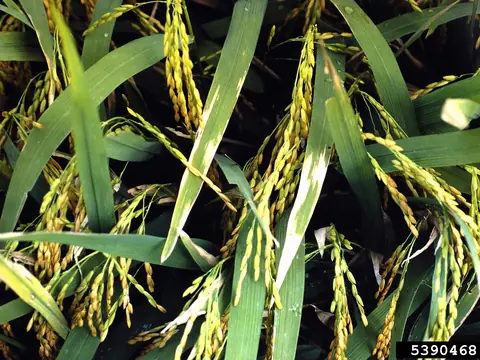 Rice
Bacterium
Local names: Nauga nga dahon and natala nga tanum (Cebuano), nadurot nga tanum (Waray), naggapula (Ilonggo), and kresek for the seedling wilt
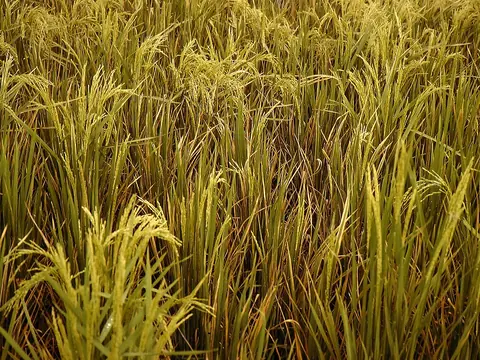 Rice
Virus
Leaves that turn yellow or orange yellow, starting at the tip and spreading down the blade.
 Rice
Fungus
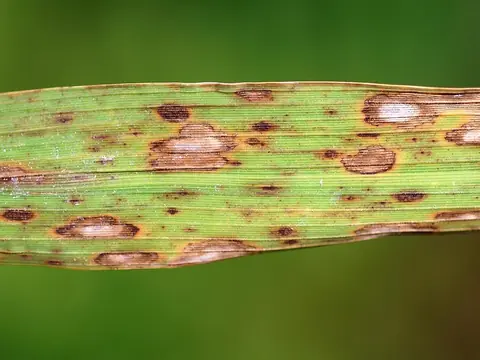
Small, circular, dark brown to purple brown spots on the leaves from tillering on.
 Rice
Fungus
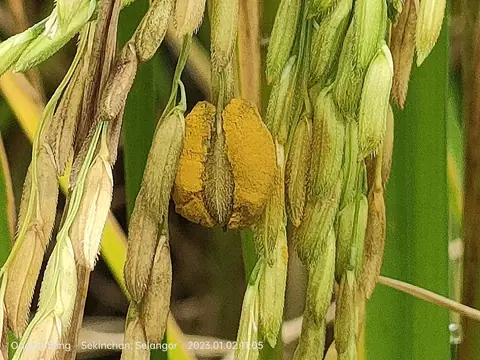
A few grains on a panicle swell into balls that are over twice the size of a normal grain.
 Rice
Bacterium
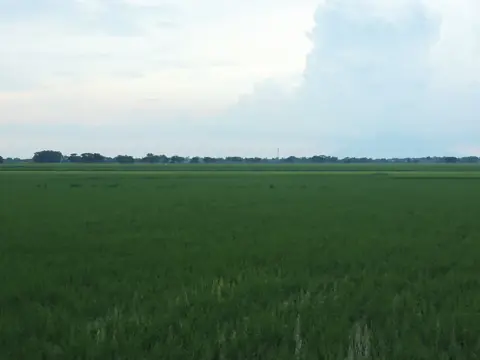
Narrow, water soaked streaks run between the veins of the leaf, with straight sides.
 Rice
Fungus
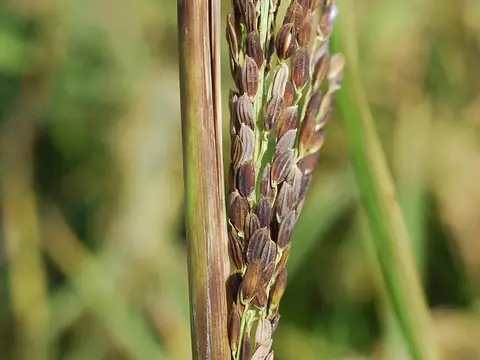
Oblong or irregular spots form on the top leaf sheath, with dark reddish brown edges and gray centers.
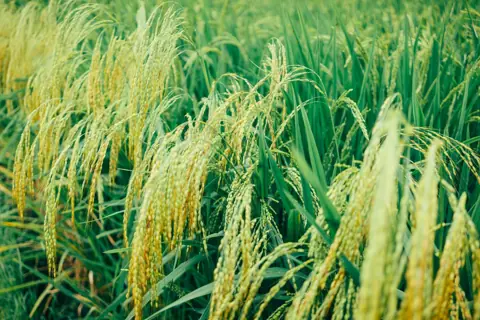 Rice
Fungus
Thin, straight brown lines run parallel to the veins on the leaf and the upper sheath.
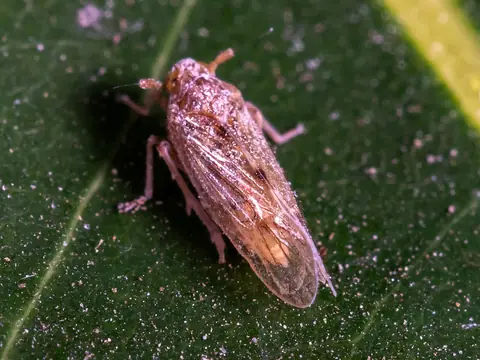 Rice
Virus
Plants are severely stunted, with many thin tillers and a grassy, rosette look.
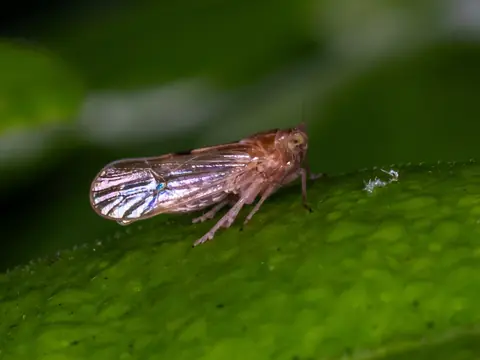 Rice
Virus
Plants are severely stunted in the early growth stages, with short, dark green leaves.
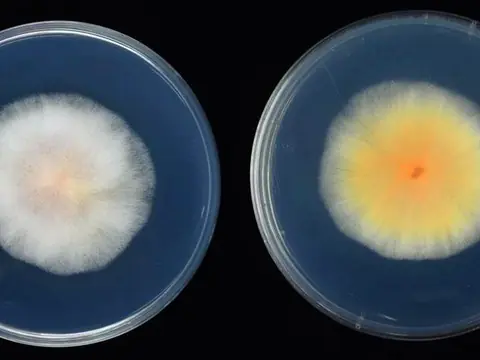 Rice
Fungus
Seedlings several inches taller than their neighbors, thin and arching over the healthy plants.
 Rice
Fungus
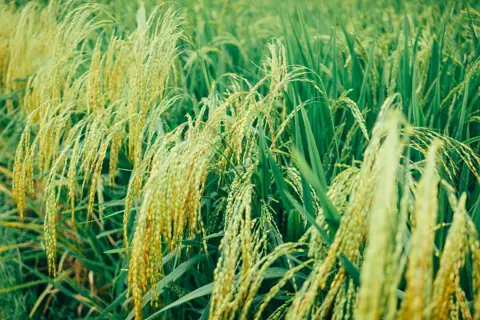
Small, irregular black spots on the outer leaf sheath at the waterline.
 Corn
Water mold
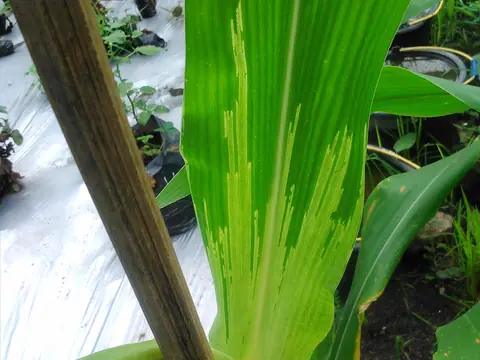
Pale or yellow stripes on the first true leaves of young seedlings.
 Corn
Fungus
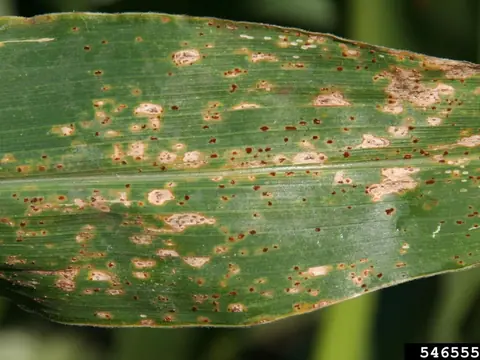
Small, round to oval pustules on the leaves, brown, orange or brick red.
 Corn
Fungus
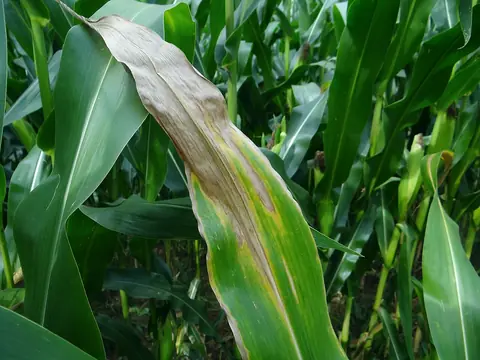
Long, narrow tan lesions along the leaf edge on the lower leaves, the first sign.
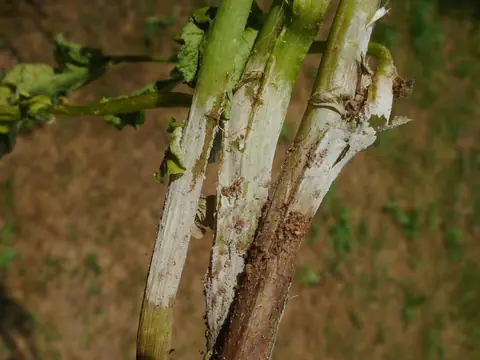 Corn
Fungus
Water soaked, discolored bands and rings on the leaf sheaths, brown, tan or gray.
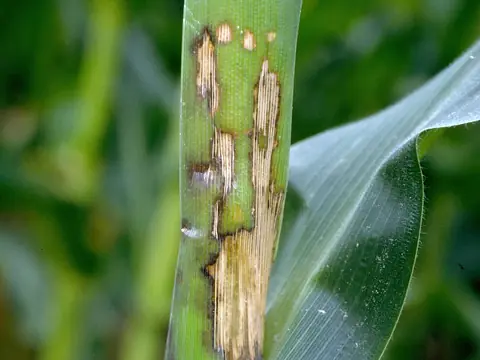 Corn
Fungus
Plants that wilt or turn gray and brown while the grain is filling.
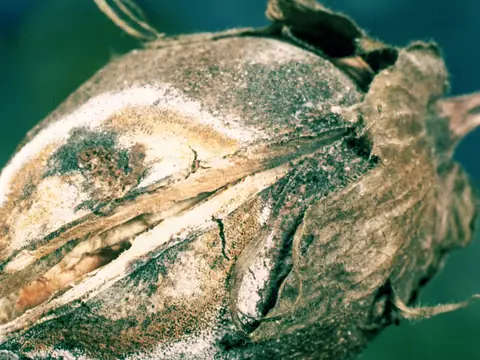 Corn
Fungus
Pinkish white, cottony or powdery growth on the cob and between kernels, the sign of Fusarium.
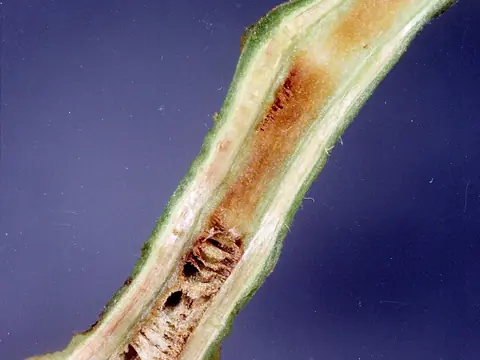 Vegetables
Bacterium
Sudden wilting of the whole plant while the leaves are still green.
 Vegetables
Water mold
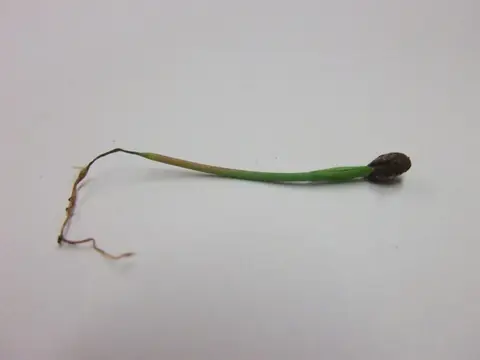
Gaps in the seedbed because seeds rotted before they sprouted.
 Vegetables
Fungus
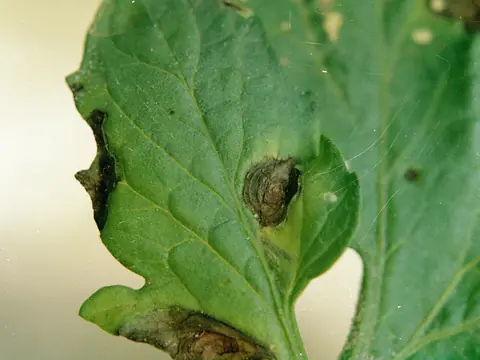
Small brown spots with yellow edges appear first on the oldest, lowest leaves.
 Vegetables
Water mold
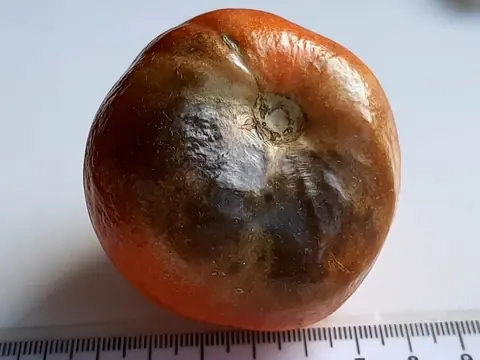
Brown or black patches start at the leaf tips and edges and spread fast across the veins.
 Vegetables
Fungus
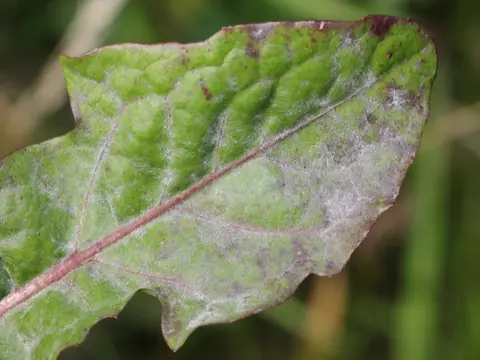
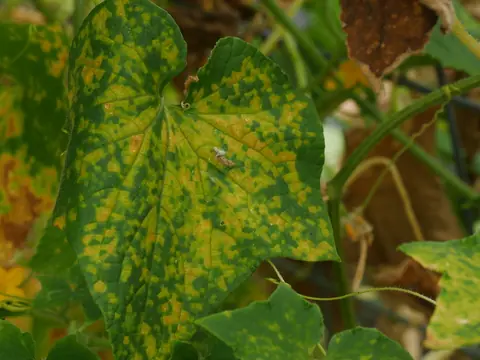
Round white spots, like flour, appear on the leaves, the leaf stalks and the stems.
 Vegetables
Water mold
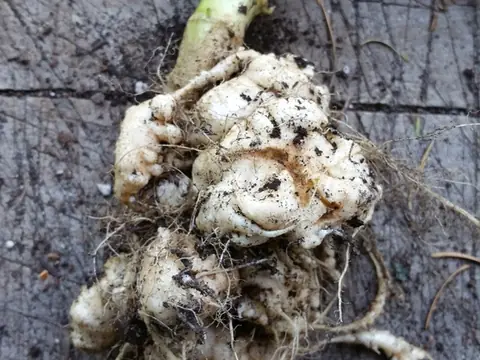
Yellow spots appear on older leaves, round at first, then angular between the veins.
 Vegetables
Water mold
Plants droop even though the soil is still wet.
 Vegetables
Bacterium
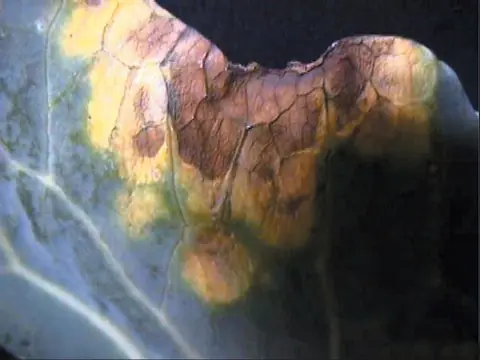
Yellow to brown V shaped patches start at the leaf edge.
 Vegetables
Bacterium
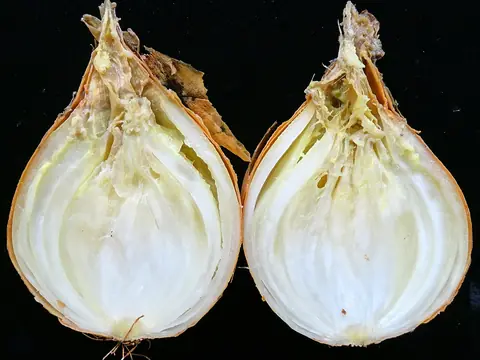
Water soaked spots appear on outer leaves, stems, heads or fruit, then grow and sink.
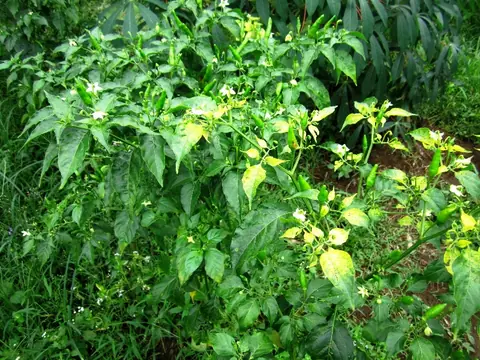 Vegetables
Virus
The leaf edges curl upward and inward, and the leaflets are small and puckered.
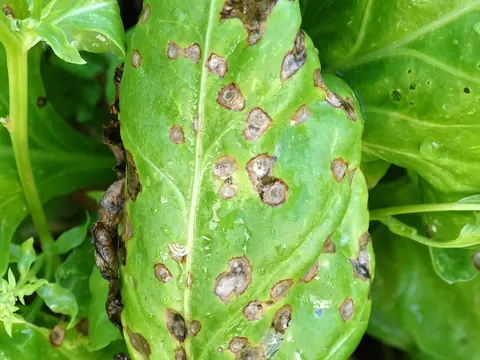 Vegetables
Fungus
Small, round spots appear on the older leaves first.
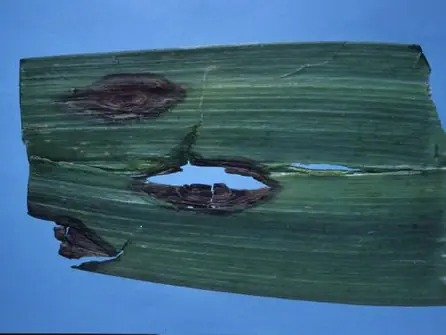 Vegetables
Fungus
Small, sunken spots with a white center appear on the leaves.
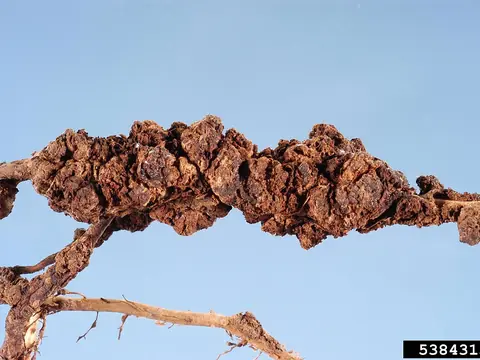 Vegetables
Nematode
Plants stay stunted and uneven across the field, often in patches.
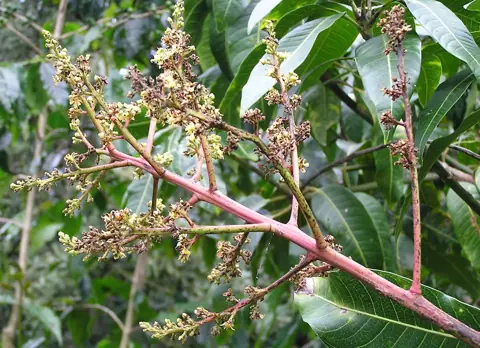 Fruits
Fungus
Local names: Kulot (twisted onion leaves)
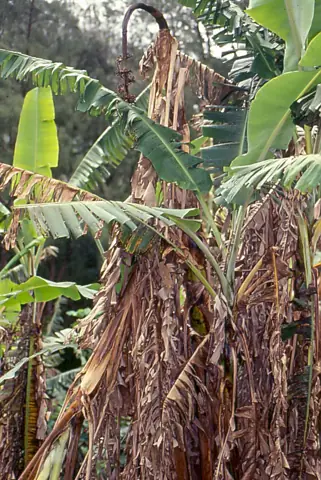 Fruits
Fungus
Local names: Panama disease (banana)
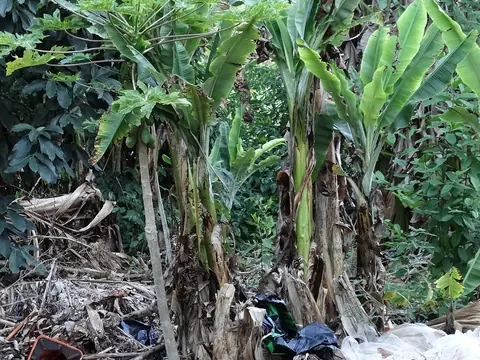 Fruits
Virus
New leaves come out narrow, short and stiff, and they crowd together at the top of the plant.
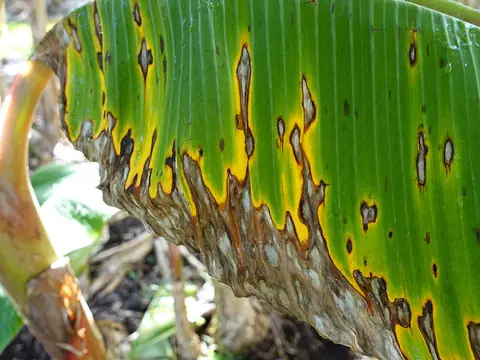 Fruits
Fungus
Small reddish brown flecks appear first on the underside of young leaves.
 Fruits
Bacterium
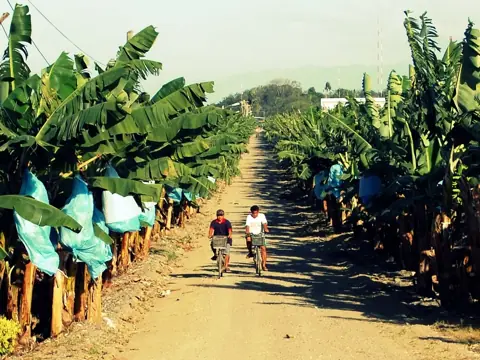
On Cavendish and other dessert bananas, leaves turn yellow and then wilt.
 Fruits
Virus
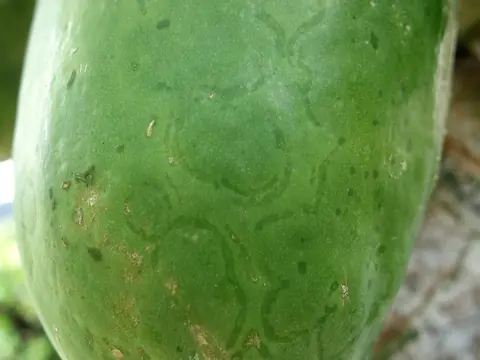
The leaves get a mottled mosaic of bright yellow and green.
 Fruits
Viroid
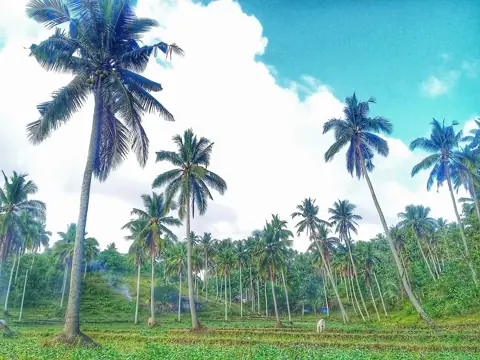
Yellow, or chlorotic, spots appear on the leaves.
 Fruits
Water mold
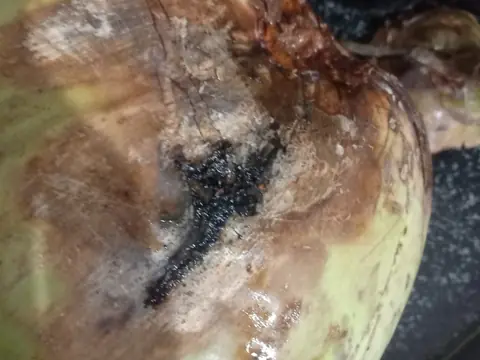
The spear leaf wilts or bends over, and may turn light green.
 Fruits
Bacterium
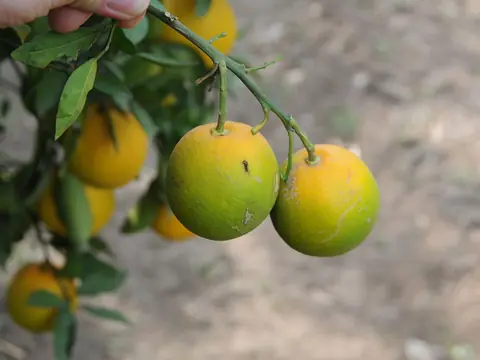
Leaves show a blotchy mottle, with yellow and green patches in an uneven pattern.
 Fruits
Water mold
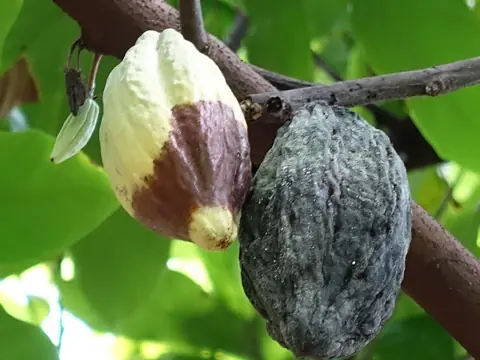
Small brown, oily spots appear on the pod and spread quickly.
 Fruits
Fungus
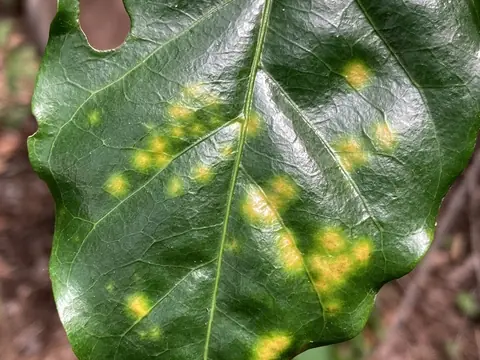
Small spots of about 2 to 3 mm appear and grow to about 15 mm.
 Corn
Fungus
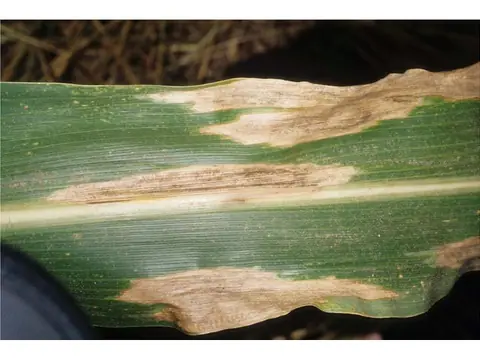
Small tan to brown oblong spots between the leaf veins that join into large dead patches across the leaf.
 Corn
Fungus
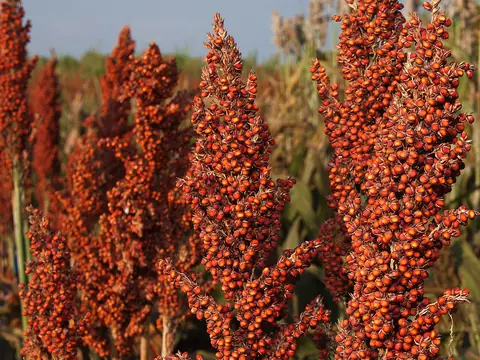
Grains turn pink, white and fluffy, or black when rain falls during flowering and grain filling, and they crumble at threshing.
 Legumes
Fungus
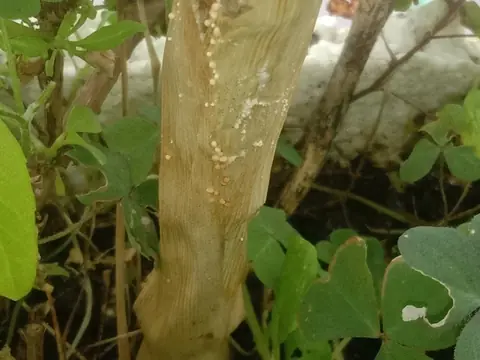
A branch or the whole plant wilts, and white cottony threads with small round seed like balls cover the stem at the soil line.
 Legumes
Fungus
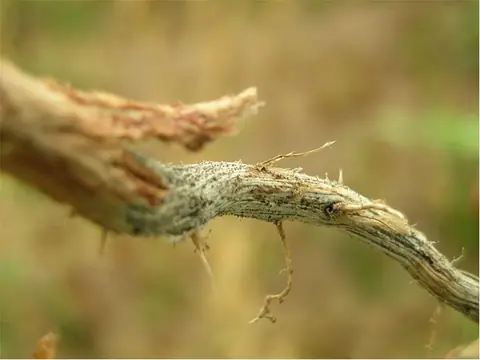
Dark brown sunken patches circle the stem near the soil, peppered with tiny black dots, and the plant wilts and breaks.
 Legumes
Fungus
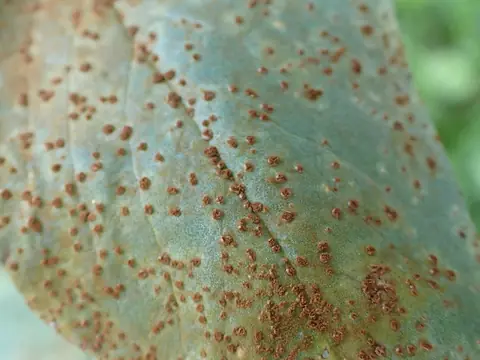
Raised reddish brown pustules ringed with yellow form on the leaf underside and rub off as a rusty powder.
 Legumes
Virus
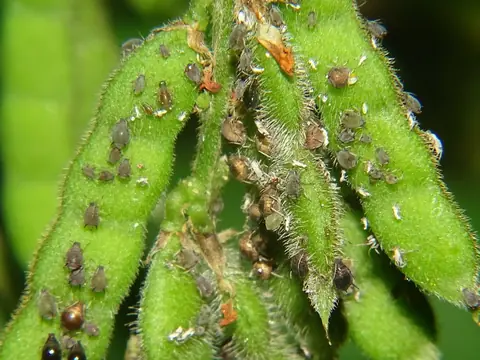
Leaves show light and dark green patches, pucker and curl down, and the pods are few and twisted.
 Legumes
Fungus
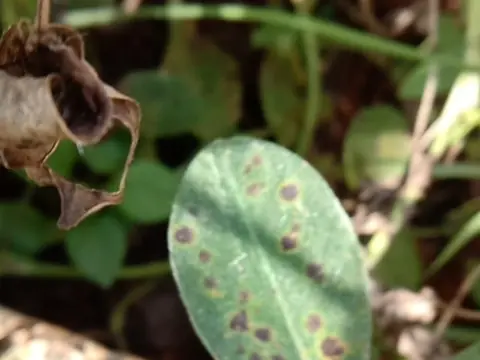
Brown spots with a yellow ring, or dark brown to black spots on the leaf underside, and the leaves drop early.
 Legumes
Fungus
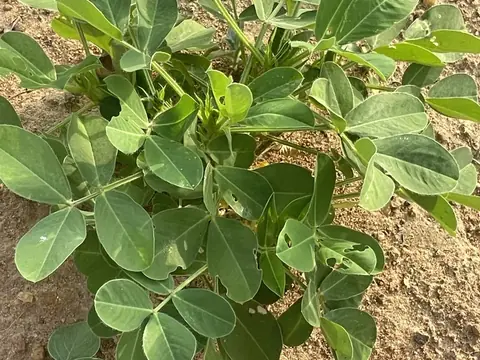
Tiny orange to reddish brown pustules under the older leaves break open and shed a rusty powder.
 Legumes
Fungus
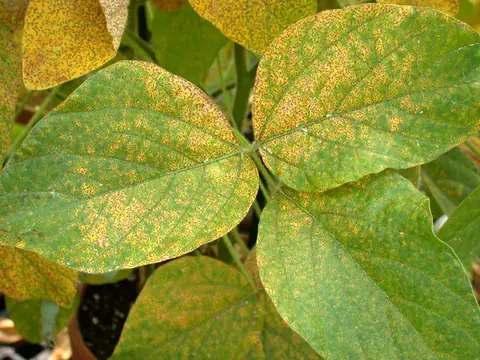
Tiny tan to reddish brown spots with raised pustules on the underside of the lower leaves, which yellow and drop early.
 Legumes
Fungus
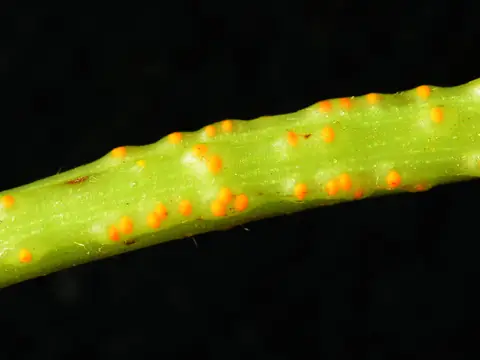
Small bright orange yellow raised galls cover the leaves, stems and pods, which twist and curl when badly hit.
 Legumes
Fungus
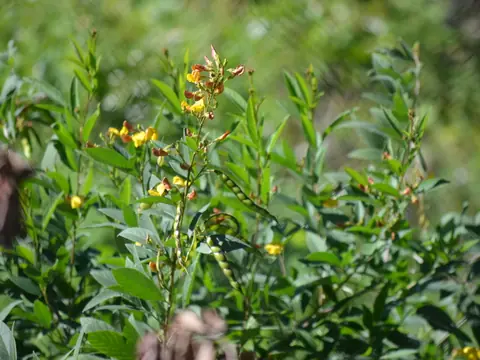
Plants yellow and wilt one by one, often at flowering and podding, with a purple band at the stem base and brown streaks inside the stem.
 Root Crops
Fungus
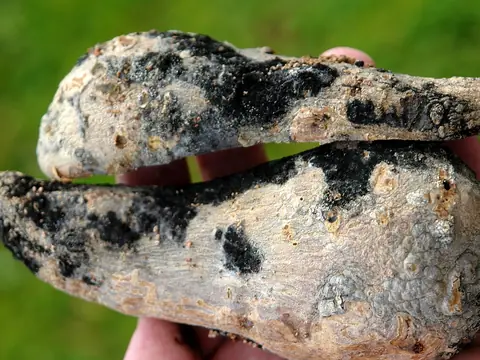
Stored tubers and roots soften, turn brown or black inside and grow white, green or black mold, starting at cuts and bruises.
 Root Crops
Water mold
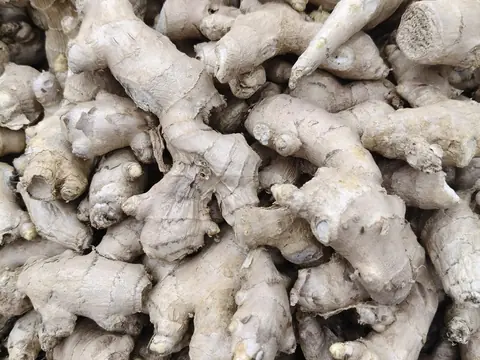
Lower leaves yellow, shoots fall over at the collar, and the rhizome or corm turns soft, watery, brown and foul smelling.
 Root Crops
Fungus
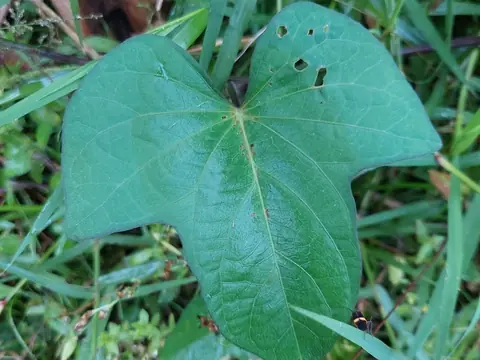
Small corky brown scabs form on leaf veins and vines, and young leaves curl, twist and stay small.
 Root Crops
Virus
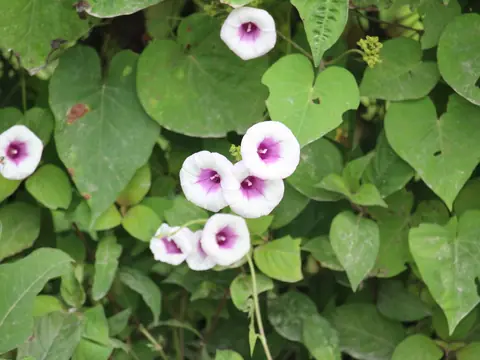
Leaves show vein clearing, mosaic or purple veins, turn small, crinkled and misshapen, and vines are stunted with short joints.
 Root Crops
Bacterium
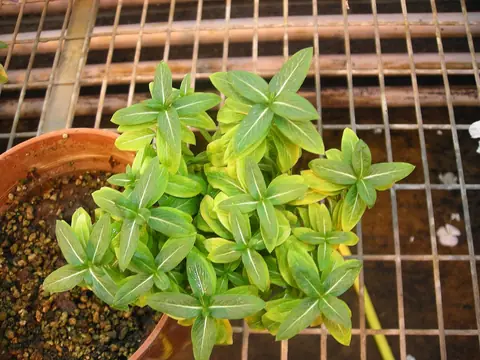
Vines turn bushy with many side shoots and tiny pale leaves, and the plant forms few or no roots.
 Root Crops
Bacterium
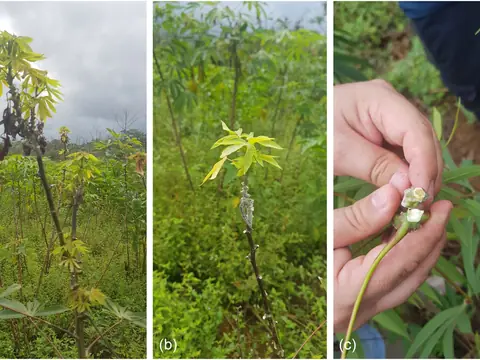
Many thin shoots bunch at the top like a broom, leaves turn small and yellow, stems dry back, and roots stay small with brown streaks inside.
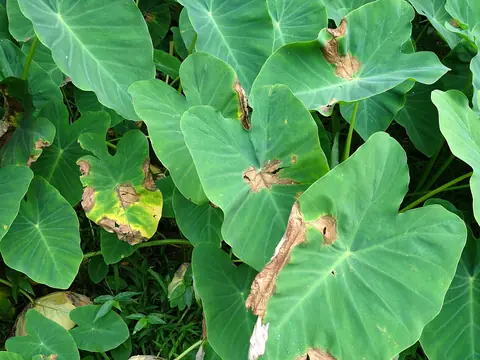 Root Crops
Water mold
Round purple brown spots with a yellow edge ooze yellow drops and spread fast in rainy weather until the whole leaf collapses.
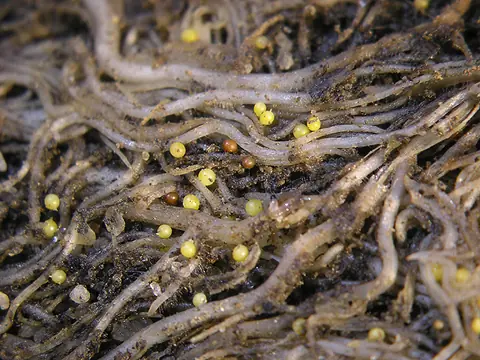 Root Crops
Nematode
Plants grow in stunted yellow patches that wilt at midday, and pinhead sized white to golden cysts cling to the roots.
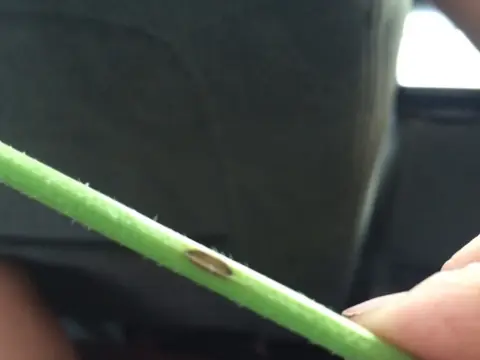 Root Crops
Fungus
Dark brown spots with yellow edges start on older leaves and stalks, then join until the tops blacken and dry as if scorched.
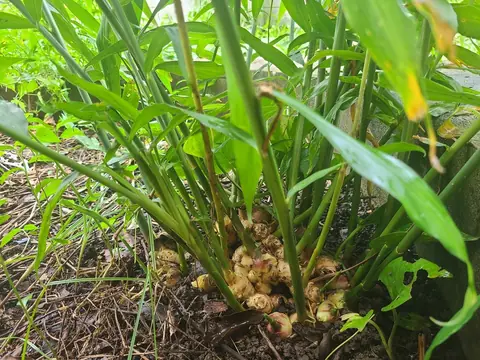 Root Crops
Fungus
Small water soaked spots on the leaves grow into yellowish then brown spots with white centers that run together.
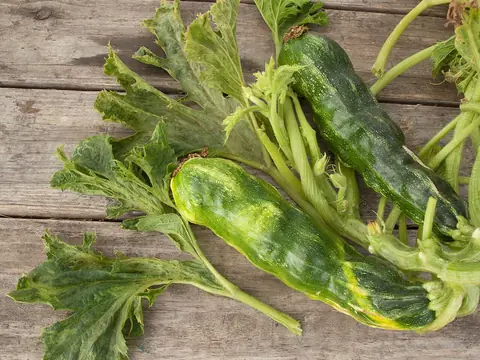 Vegetables
Virus
Leaves turn mottled yellow and green with blisters, stay small and twisted, and fruits come out bumpy or spotted.
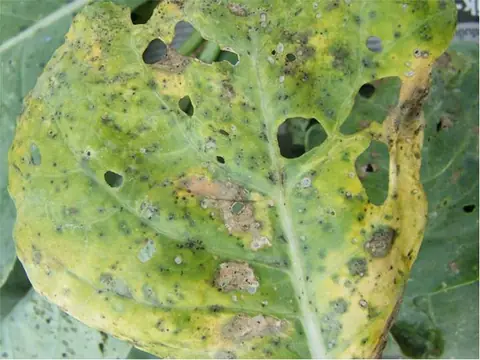 Vegetables
Fungus
Round brown to black spots with rings like a target and a yellow halo appear on older leaves, and heads may show dark specks.
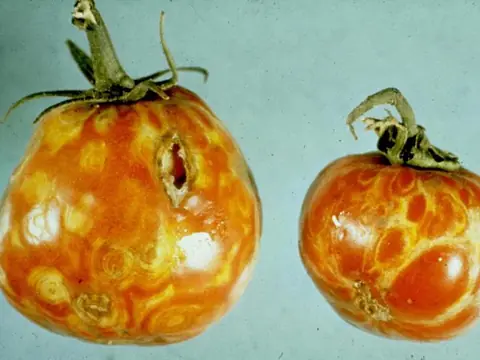 Vegetables
Virus
Leaves show pale flecks, rings or silvery mottling, shoot tips stand up stiff, and plants infected young stay small and bear little.
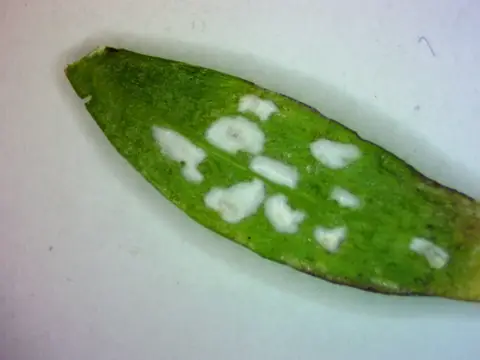 Vegetables
Water mold
Raised white blisters under the leaves burst into white powder, with yellow patches above and twisted, swollen shoots.
 Vegetables
Water mold
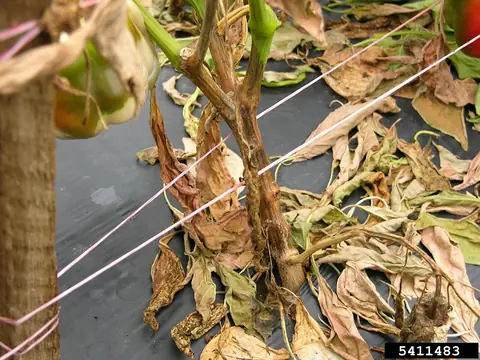
Black lesions climb the stem from the base, the crown rots and the whole plant wilts, and fruits rot under white mold in wet weather.
 Vegetables
Fungus
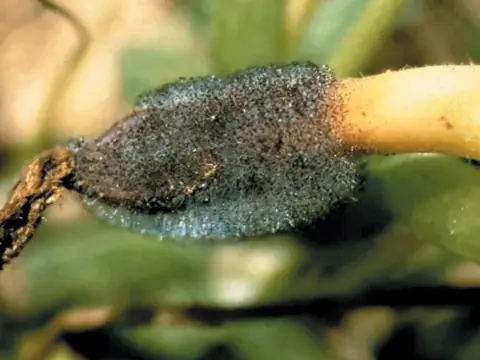
Flowers and young fruits turn soft and wet, then grow whiskers of fungus with tiny black heads, like a pincushion.
 Vegetables
Fungus
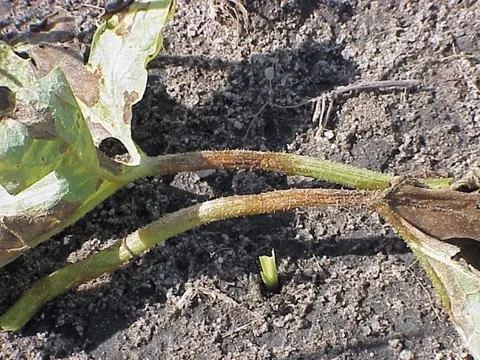
Brown V shaped spots start at the leaf edge, and the stem near the base gets long brown lesions that crack and ooze gum.
 Vegetables
Virus
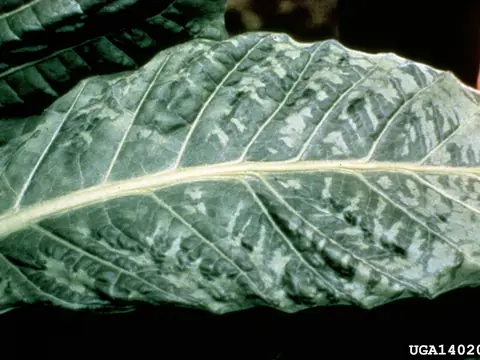
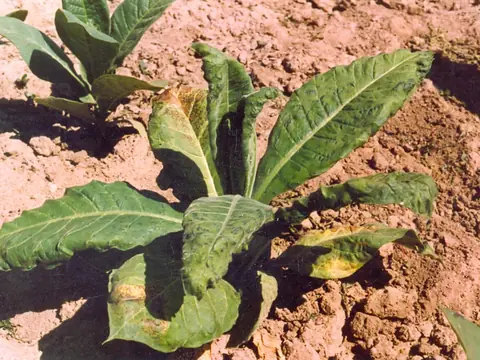
Young leaves show light and dark green mottling, turn narrow and twisted, and the plant stays stunted.
 Vegetables
Bacterium
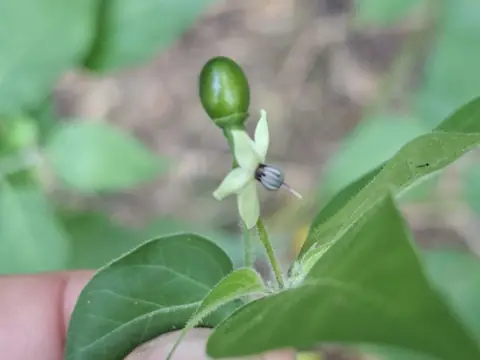
Small water soaked spots on the leaves turn brown with dead centers, and fruits get raised, rough, scabby spots.
 Vegetables
Fungus
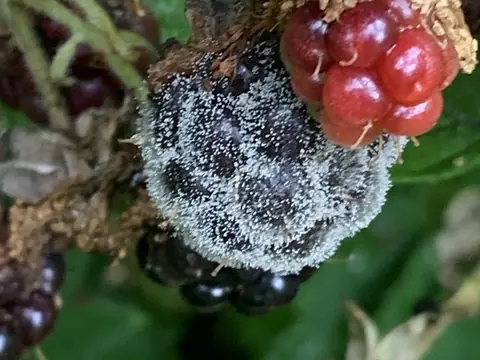
Berries get soft brown spots, often under the green cap, that grow a gray dusty mold.
 Vegetables
Virus
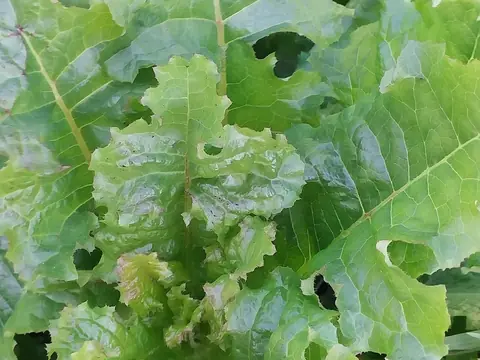
Leaves show light and dark green patches, pucker and twist, and the plants grow slowly.
 Vegetables
Bacterium
Small water soaked spots turn angular and black between the veins, dry out papery, and heads can rot from the outer leaves.
 Vegetables
Fungus
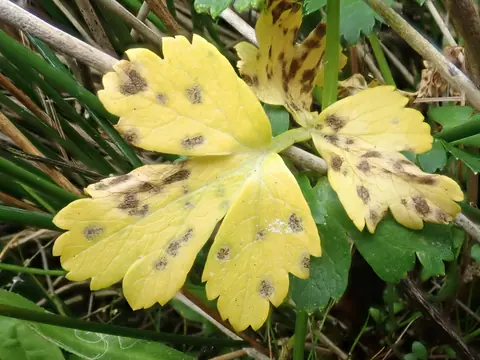
Small yellow spots turn brown with tiny black dots inside and spread over leaves and stalks until the leaves dry up.
 Vegetables
Fungus
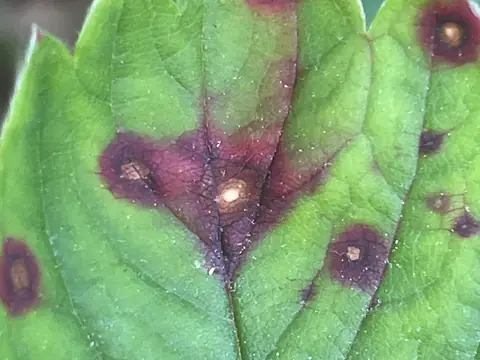
Small deep purple spots appear on the leaves, their centers turn gray to white, and many spots merge and kill the leaf.
 Vegetables
Fungus
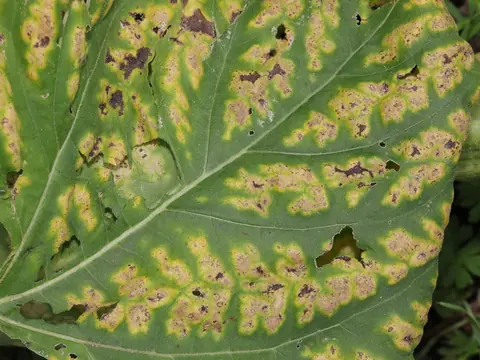
Outer leaves brown along the edges and between the veins and collapse, while the inner leaves stay green and the plant stays small.
 Onion and Garlic
Fungus
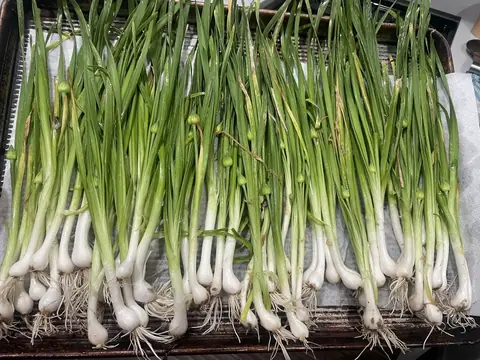
Small pale yellow water soaked spots on the leaves grow into long tan to brown blotches that dry the leaves from the tips.
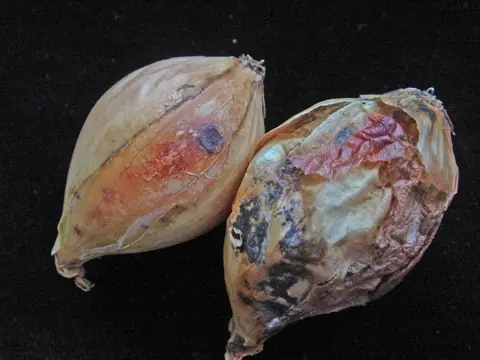 Onion and Garlic
Fungus
Local names: kulot
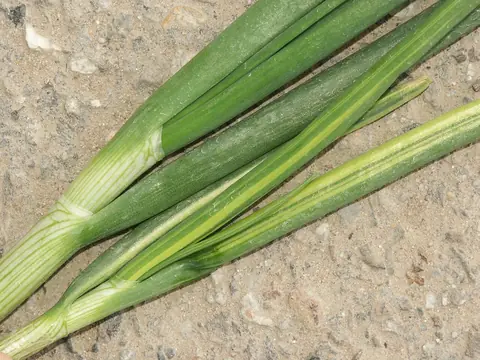 Onion and Garlic
Virus
Leaves show yellow streaks or stripes, turn flat, crinkled and floppy, and plants and bulbs stay small.
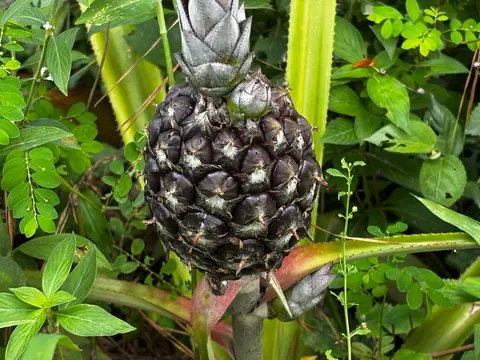 Industrial
Fungus
Planting pieces turn red then black inside from the cut ends and smell like ripe pineapple, and the shoots die or stay stunted and yellow.
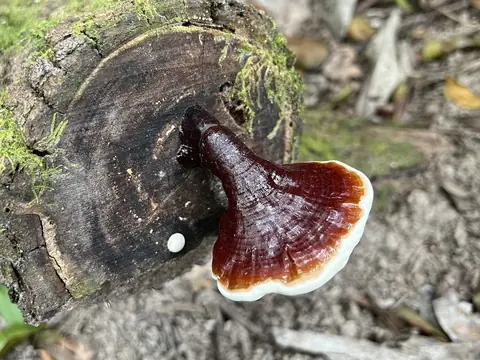 Industrial
Fungus
Several unopened spear leaves pile up, the old fronds yellow and droop, and hard brown brackets grow on the lower trunk.
 Industrial
Fungus
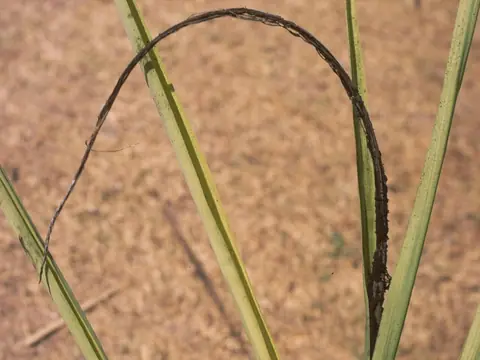
A long black whip covered in a thin silvery skin grows out of the top of the stalk and sheds black powder.
 Industrial
Bacterium
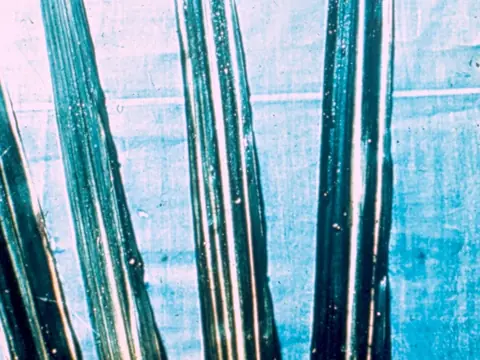
Thin white pencil lines run along the leaves, the leaves later dry from the tips, and side shoots sprout along the stalk.
 Industrial
Water mold
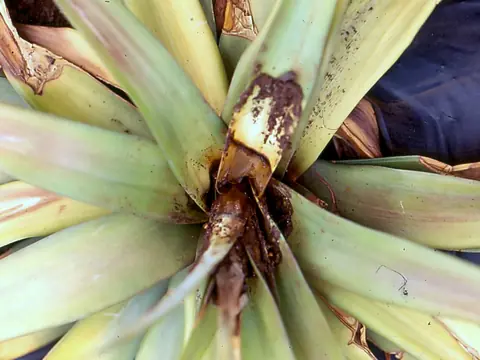
The young leaves in the center turn yellow brown, rot at the base and pull out easily with a foul smell.
 Industrial
Water mold
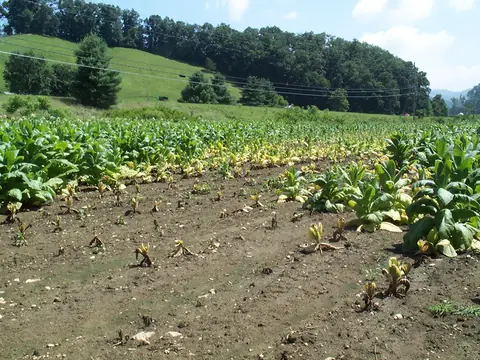
Plants wilt and stunt, the roots blacken and rot, and the stem turns black from the base, with the dried pith inside often split into discs.
 Industrial
Bacterium
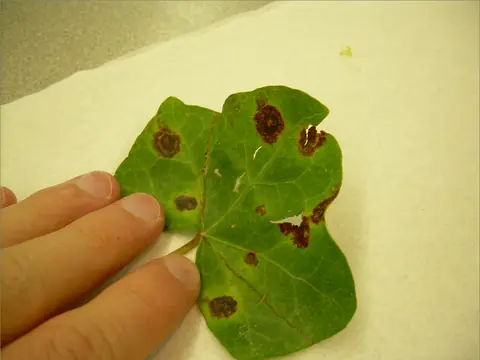
Angular, water soaked spots between the leaf veins turn brown and black, with black streaks along the veins and stems.
 Industrial
Virus
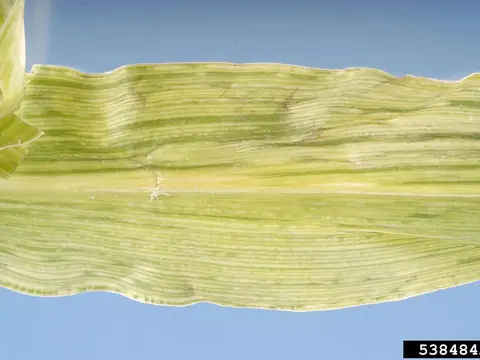
Light green to yellow streaks and stripes run along the leaf blade, and the plant grows smaller.
 Industrial
Virus
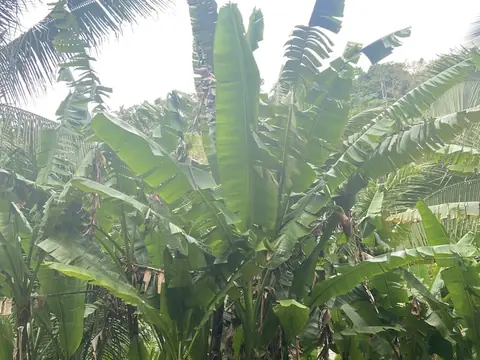
Leaves curl and roll upward, and the leaf stalks and sheaths show spindle shaped streaks like a cucumber skin.
 Industrial
Fungus
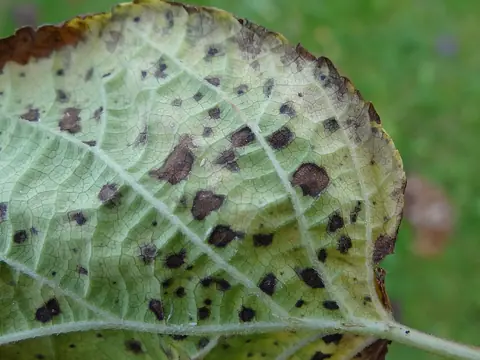
Brown spots with a yellow halo and darkened veins that look like fish bones, and the leaves yellow and fall out of season.
 Industrial
Bacterium
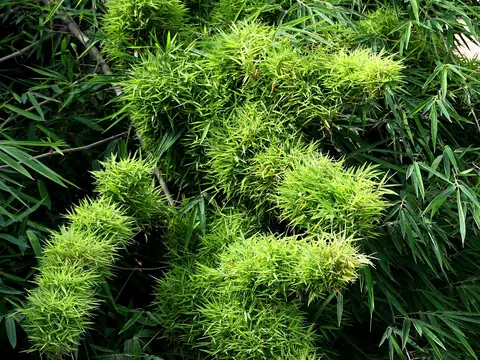
Leaves bunch into rosettes, many thin limbs sprout from one node and the internodes stay short, like a broom.
 Industrial
Fungus
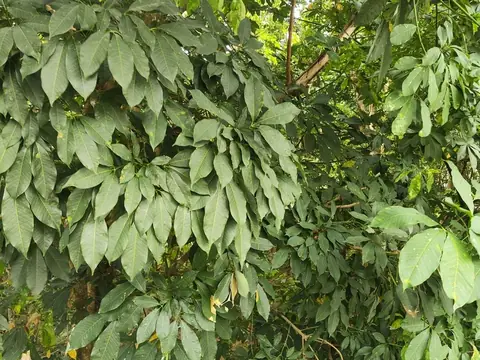
Round brown spots with a pale yellow ring appear on mature leaves, then the leaves yellow and drop until the canopy is thin and latex output falls.
 Industrial
Fungus
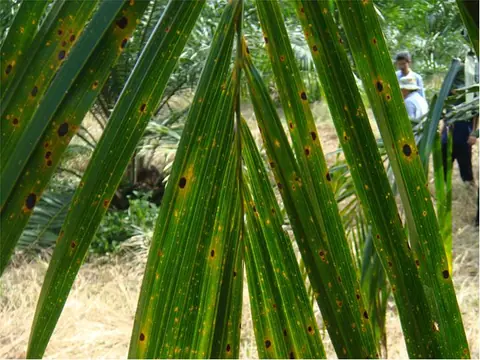
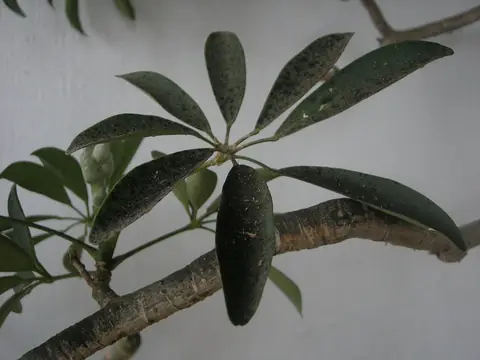
Small yellow spots on young nursery seedlings turn brown with a yellow ring and join into dry patches, and badly hit seedlings stunt or die.
 Fruits
Fungus
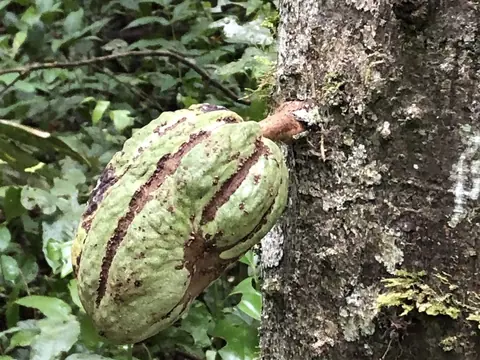
Local names: agiw
 Fruits
Fungus
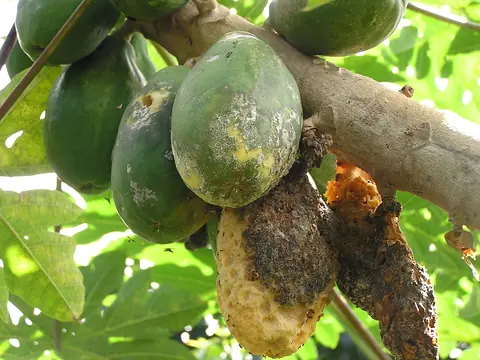
White cobweb threads, then a pink crust, cover the branches near the forks, and the leaves above die but stay hanging.
 Fruits
Water mold
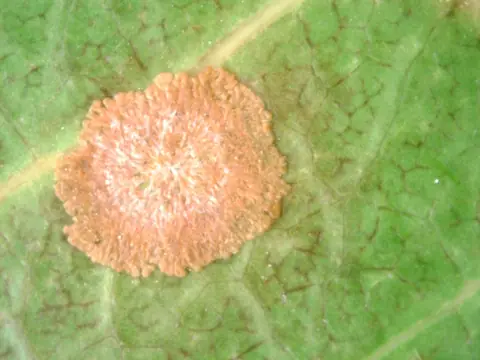
Wet dark patches on the trunk bark ooze reddish brown gum, seedlings die back, and fruits get water soaked spots that turn brown, crack and rot.
 Fruits
Fungus
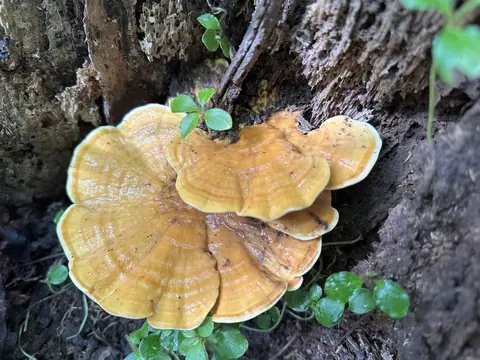
Fuzzy round green to orange spots on the upper side of the leaves, and black rough spots on guava fruit.
 Fruits
Fungus
Leaves lose their gloss, turn yellow, curl down and fall, and thick white threads cover the roots and the collar, with orange brackets at the base later.
 Fruits
Virus
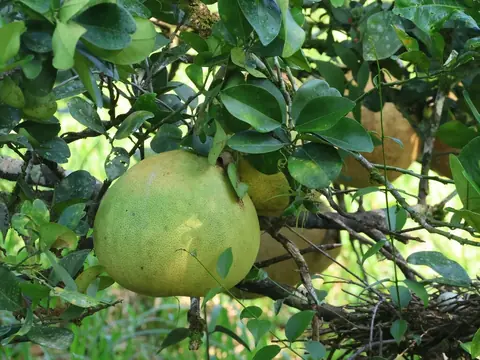
Trees slowly decline with small yellowing leaves, twig dieback and pits in the wood under the bark, often together with greening.
 Fruits
Water mold
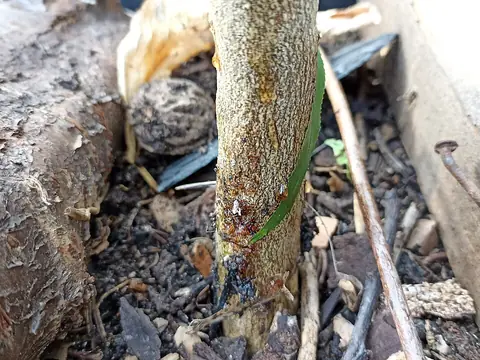
Dark sticky gum oozes from cracked bark near the base of the trunk, the bark underneath turns brown and rots, and the canopy yellows and thins.
 Fruits
Fungus
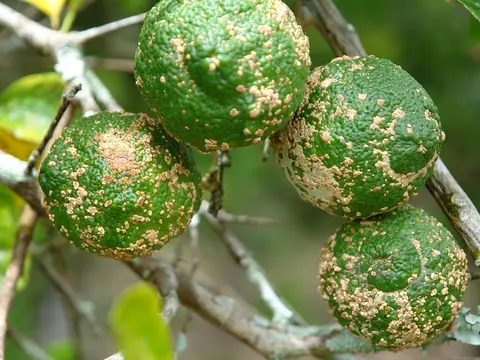
Raised corky pale orange to brown warts form on young leaves, twigs and fruits, and badly hit leaves crinkle and twist.
 Fruits
Bacterium
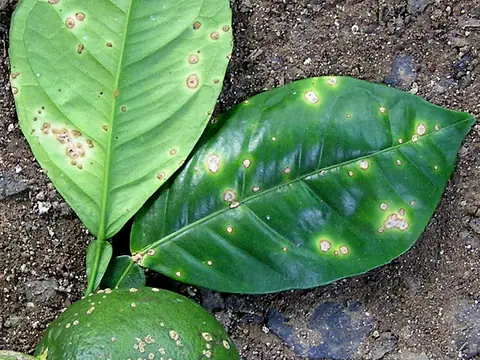
Raised corky brown spots with a yellow ring and an oily, glazed edge appear on leaves, twigs and fruits.
 Fruits
Fungus
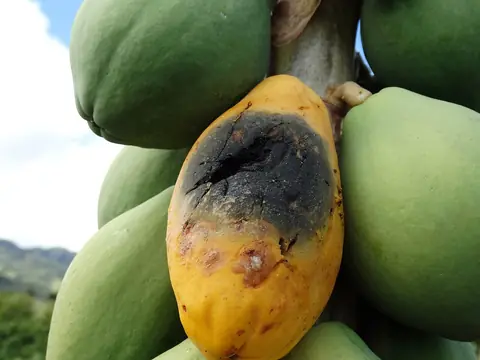
Fruits darken to brown and black from the stem end or a wound, the flesh turns dry and corky, and black sooty spores cover the skin.
 Fruits
Nematode
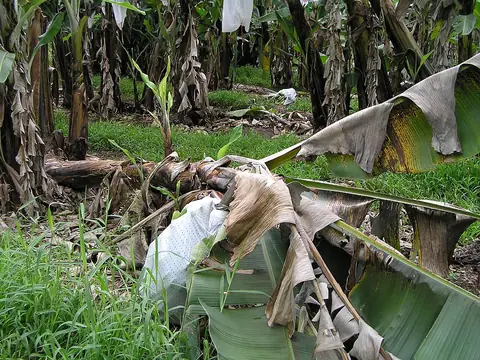
Roots show dark red to black lesions and snap easily, plants stay small with light bunches, and heavy plants topple over in wind or rain.
 Fruits
Virus
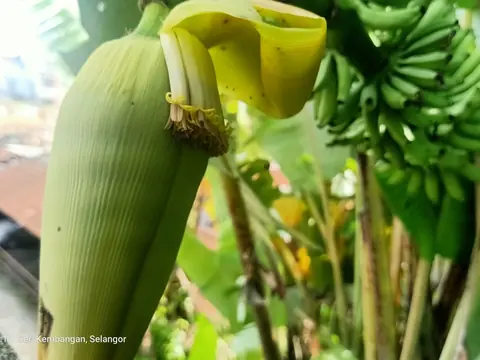
Spindle shaped streaks run along the leaves and leaf stalks, and the heart bracts and inner leaf sheaths show a dark reddish brown mosaic, mostly on saba and latundan.
 Fruits
Fungus
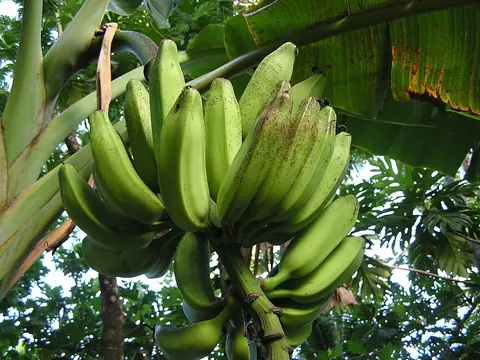
Older leaves and the fruit peel get many tiny raised black dots that feel rough like sandpaper, and the blemished fruit sells poorly.
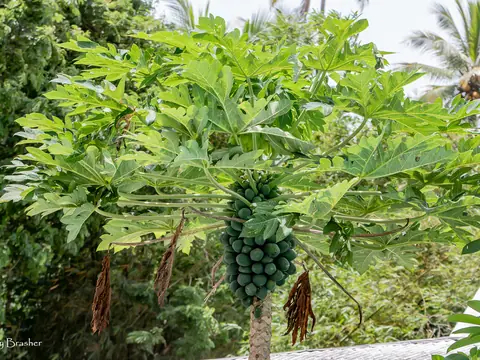 Fruits
Bacterium
Angular water soaked spots on leaves and leaf stalks spread into a soft rot of the crown, the top of the plant collapses, and fruits get firm sunken spots.
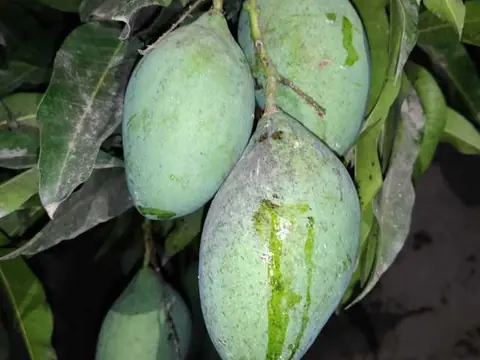 Fruits
Fungus
Young fruits get grey brown corky spots that roughen and twist the skin, and leaves show brown rough spots on the underside.
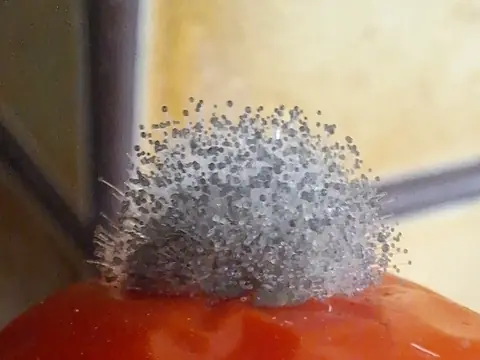 Fruits
Fungus
Male flowers and young fruits turn soft and brown, get covered with grey black fuzzy mold, and then drop.
 Fruits
Water mold
Leaves turn pale, small and wilted, branches die back from the top and feeder roots are black and rotten, worst on wet poorly drained soil.
 Fruits
Fungus
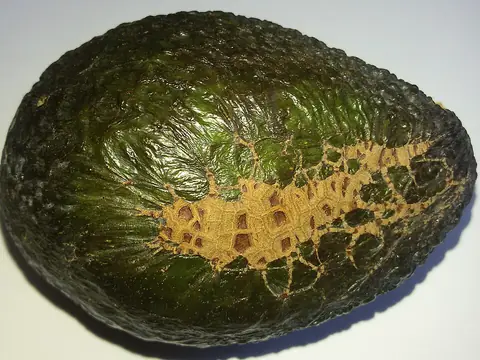
Raised brown corky scabs form on young fruits and leaves and later merge into rough patches on the skin.
 Fruits
Fungus
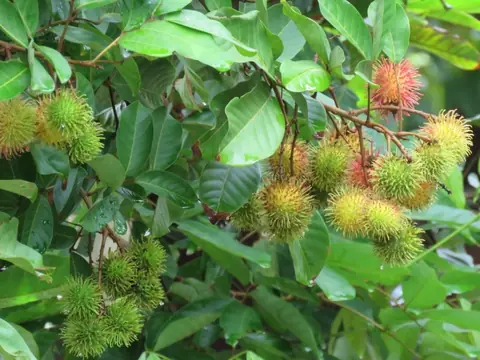
White powdery growth covers young flushes, flowers and young fruits, which turn brown, grow short spines, stay small and drop.
 Fruits
Fungus
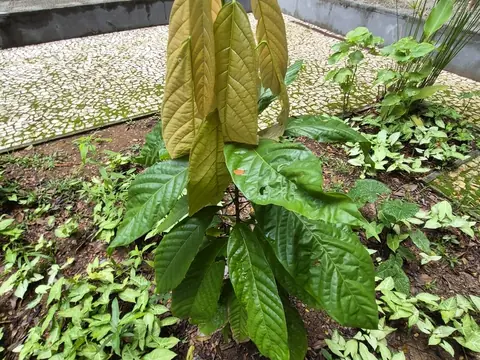
Leaves two or three behind the shoot tip turn yellow with small green spots and fall within days, and the branch dies back with brown streaks in the wood.
 Fruits
Fungus
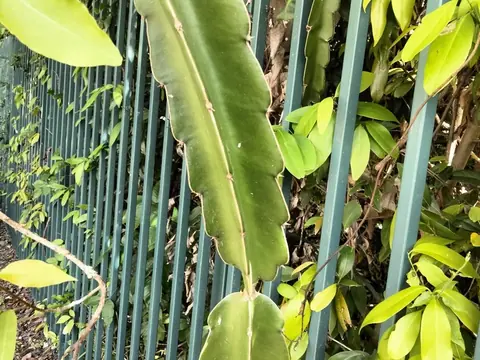
Small sunken white or orange spots on the stems become rusty brown corky cankers that crack and leave holes, and fruits get spots too.
 Fruits
Fungus
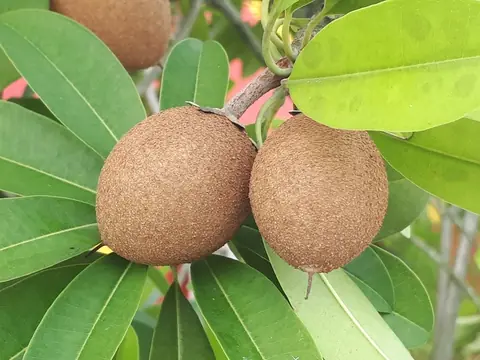
The leaves fill with tiny spots, pinkish to reddish brown, each with a pale whitish middle.
None under this crop.
Nothing by that name in the catalogue yet. Try its scientific name, or take a photo and ask Anee, the smart farm technician.
See all 117 crop diseases and how to manage each one
Every disease is open with Libre + Anee: how to tell it from look alikes, what makes it spread, and what to spray and when.
The account is free, no credit card.
Disease Guides for Filipino Farmers
How to tell a fungus from a bacterium or a virus, how diseases spread, and the diseases of palay by growth stage.
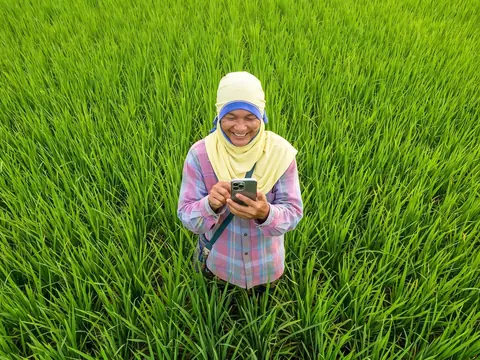
Plant diseases in the Philippines come from four living causes: fungi and water molds, bacteria, viruses and viroids, and nematodes. Each leaves its own marks on a leaf,...
Read the guide ›
Rice diseases cut into the palay harvest every season, and most of them strike at a predictable stage. This guide walks the crop from seedbed to ripening and names the di...
Read the guide ›Not sure which disease it is?
Send Anee a Photo of the Leaf
Anee, the smart farm technician in anee.io, reads the photo with your crop, its age and the weather, and tells you what it most likely is and what to do. In Tagalog or English.