

Nutrient Deficiency in Plants: Signs and Fixes by Crop
Yellow lower leaves, purple young plants, burnt leaf edges or empty grain often mean the soil is short of one nutrient. Find your crop, see where the change starts and what it looks like, then the fertilizer that fixes it, from urea and potash to zinc and boron.
The 13 Nutrients Your Crop Needs
Where the change starts tells you a lot. Nitrogen, phosphorus, potassium, magnesium and molybdenum move inside the plant, so the old, lower leaves show it first. The others stay where they are, so the young leaves and the growing tip show it first. Silicon, a helpful element for rice and sugarcane, shows on the whole plant.
Makes the leaves green and the plant grow. In 83 crops here.
PPhosphorus deficiencyPosporo · old leaves firstBuilds the roots, the first growth and the flowers. In 81 crops here.
KPotassium deficiencyPotasyo · old leaves firstFills the grain and fruit and keeps the stems strong. In 83 crops here.
SSulfur deficiencyAsupre · young leaves firstHelps make the green color and the proteins. In 34 crops here.
MgMagnesium deficiencyMagnesyo · old leaves firstSits at the heart of the green color of every leaf. In 71 crops here.
CaCalcium deficiencyKalsiyum · young leaves firstBuilds the walls of new cells in tips, fruit and roots. In 43 crops here.
ZnZinc deficiencySink · young leaves firstHelps the young leaves grow to full size. In 55 crops here.
FeIron deficiencyBakal · young leaves firstLets the young leaves make their green color. In 33 crops here.
MnManganese deficiencyManganeso · young leaves firstHelps the leaves turn light into food. In 22 crops here.
BBoron deficiencyBoron · young leaves firstFeeds the growing tip, the flowers and the fruit set. In 62 crops here.
CuCopper deficiencyTanso · young leaves firstKeeps new leaves and the grain healthy. In 6 crops here.
MoMolybdenum deficiencyMolibdenum · old leaves firstLets legumes and leafy crops use their nitrogen. In 9 crops here.
SiSilicon deficiencySilikon · the whole plantStiffens the leaves and stems of rice and sugarcane against lodging, pests and blast. In 2 crops here.
Nutrient Deficiencies by Crop
Start from the crop in front of you. Each page shows every deficiency that troubles it on Philippine farms, the photo of each, how to be sure, and the fertilizer that fixes it.
Rice12 deficiencies · Palay
Root Crops68 deficiencies · Kamote, kamoteng kahoy, gabi
Vegetables168 deficiencies · Gulay
Onion and Garlic30 deficiencies · Sibuyas, bawang
Sugarcane and Industrial Crops53 deficiencies · Tubo, tabako, abaka
Every Deficiency, Crop by Crop
584 deficiencies of 81 Philippine crops. Search a crop or a nutrient, like palay, potassium or zinc, or say it in Tagalog, like kakulangan sa nitrogen.
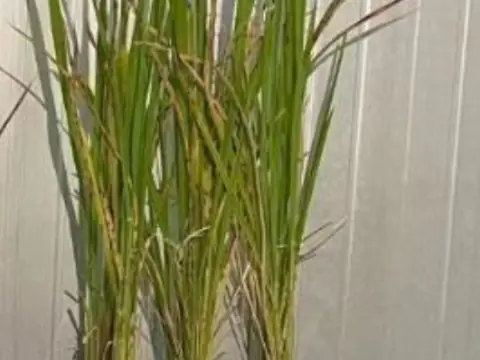 Palay
Lower leaves turn pale yellow green first and the whole field looks light green and short.
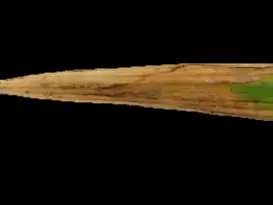 Palay
Dark green plants whose lower leaves dry yellow brown at the tips and edges.
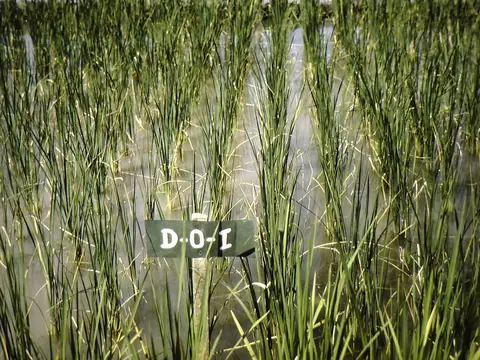 Palay
Short, very upright, dirty dark green plants with very few tillers.
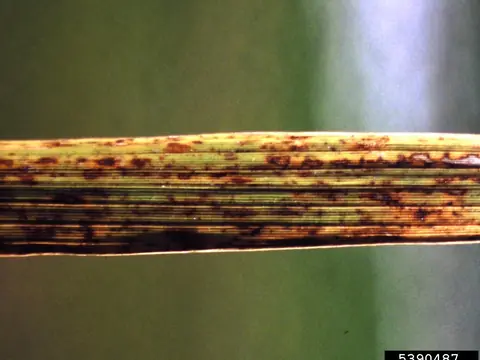 Palay
Two to four weeks after transplanting, patches of short plants with dusty brown spots and pale midribs.
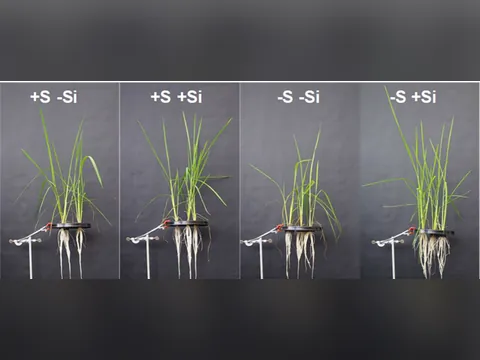 Palay
The whole plant is pale yellow, and the youngest leaves are the palest.
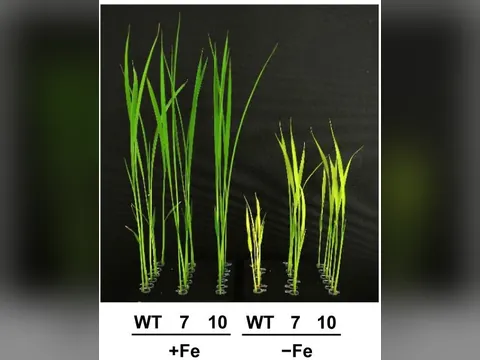 Palay
The newest leaves turn yellow between the veins, then almost white, in dry upland or alkaline fields.
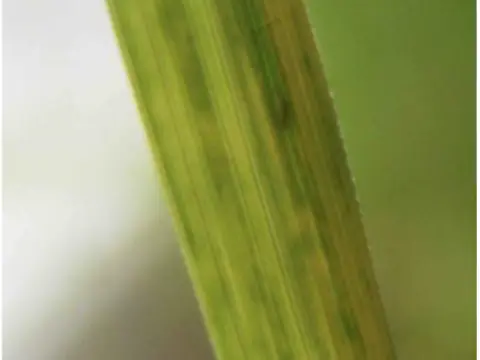 Palay
Older leaves show orange yellow stripes between the veins, like a string of beads, and hang wavy.
Young leaves turn greyish green between the veins from the tip down, then get brown spots.
Tips of the youngest leaves turn white and roll, and plants are short.
New leaves stay rolled into needles at the tip, plants are bluish green, and many grains are empty.
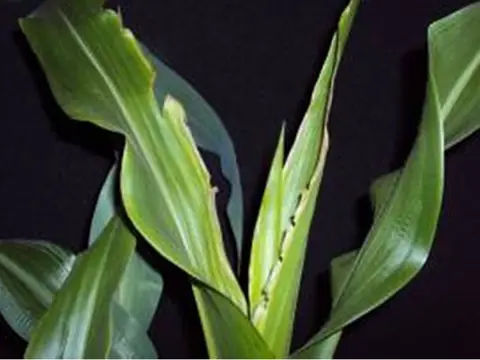 Palay
Shown on corn
Tips of the youngest leaves turn white, split and roll, only on very acid or leached soils.
Soft leaves that droop instead of standing up, more brown spot and blast than the next field, and stems that fall over.
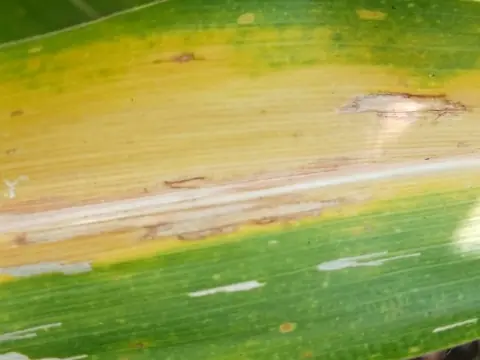 Mais
Lower leaves turn yellow in a V from the tip down the midrib, and plants are pale and thin.
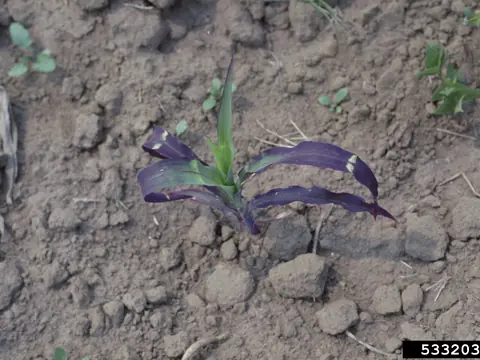 Mais
Young plants are short and dark green, with purple red edges on the lower leaves.
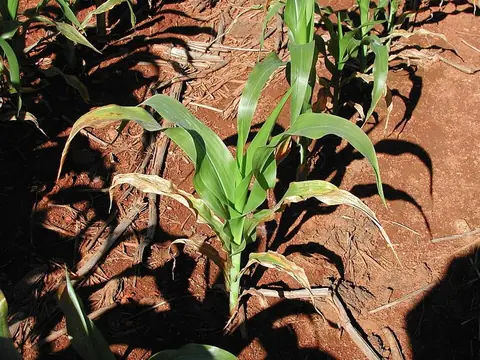 Mais
Lower leaves dry brown along the edges while the middle stays green, and stalks break and fall.
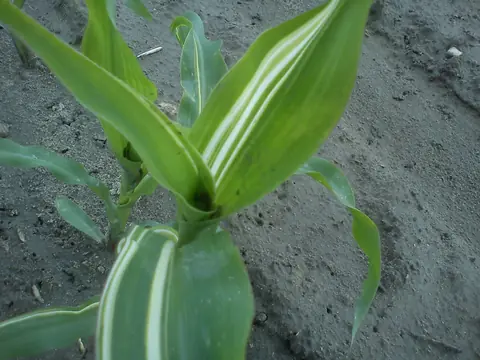 Mais
Wide white or pale yellow bands on both sides of the midrib from the leaf base, on short plants with bunched leaves.
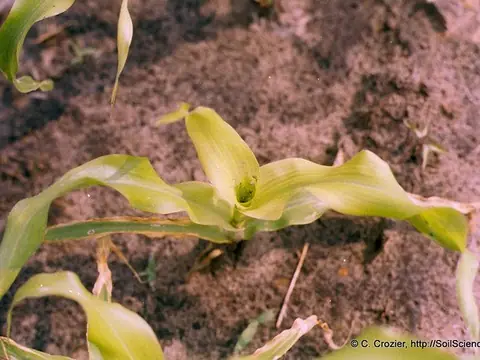 Mais
The young upper leaves are the palest, while the lower leaves stay greener.
Upper leaves have white spots and waxy brown streaks, and tassels and ears fail to come out.
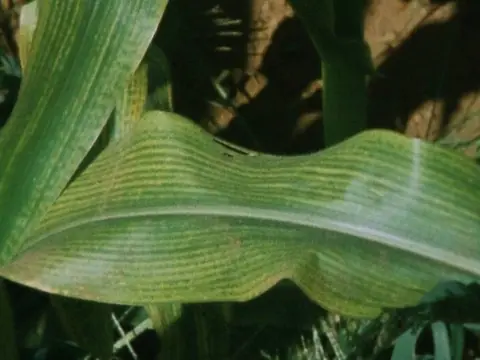 Mais
Lower leaves get yellow to white stripes between the veins, later turning reddish purple.
Mais
Tips of the young leaves stick together like a ladder, on very acid soil.
The youngest leaves come out yellow, and their tips brown, roll and break.
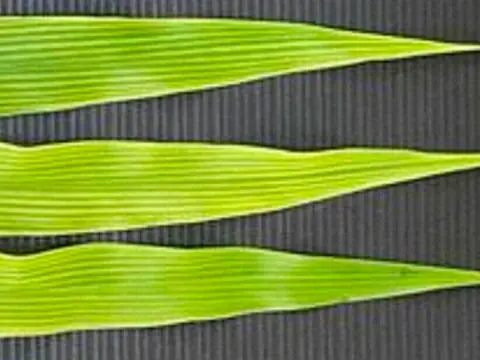 Mais
Upper leaves turn pale yellow to white between the veins along their whole length.
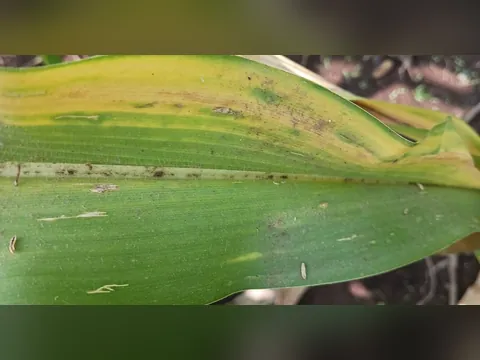 Mais na matamis
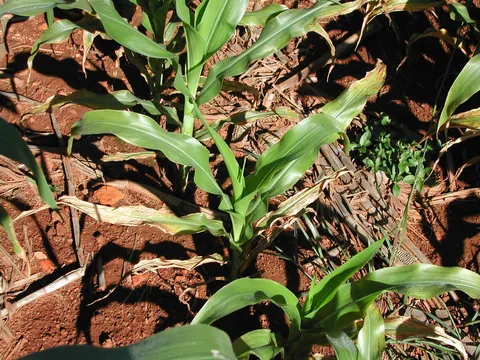
Lower leaves turn yellow in a V from the tip, and ears come out small with bare tips.
 Mais na matamis
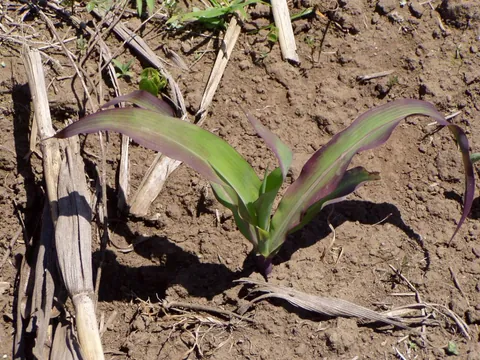
Lower leaf edges dry brown, and ears are short and pointed with unfilled tips.
 Mais na matamis
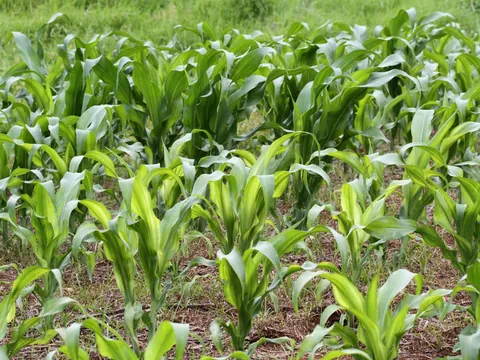
Young plants are short and dark green, with purple red edges on the lower leaves.
 Mais na matamis
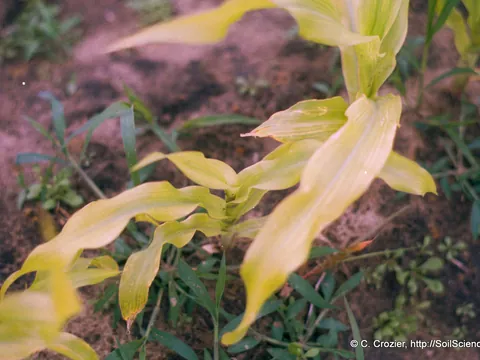
Wide white or pale yellow bands on both sides of the midrib from the leaf base, on short plants with bunched leaves.
 Mais na matamis
The young upper leaves are the palest, while the lower leaves stay greener.
Upper leaves have white spots and waxy brown streaks, and tassels and ears fail to come out.
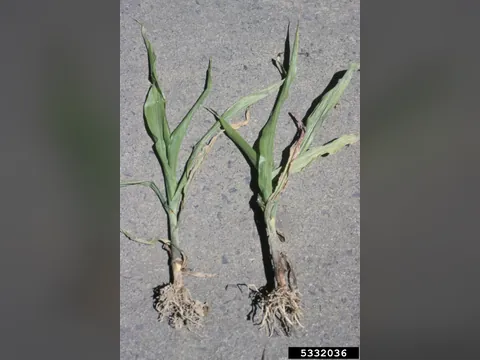 Mais na matamis
Lower leaves get yellow to white stripes between the veins, later turning reddish purple.
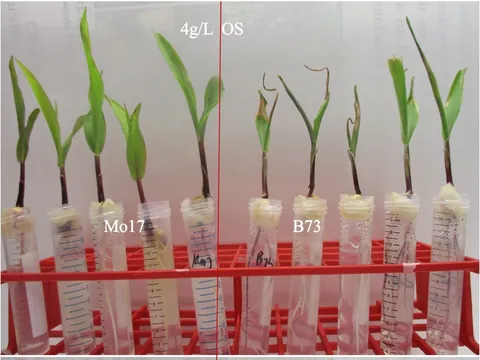 Mais na matamis
Tips of the young leaves stick together like a ladder, on very acid soil.
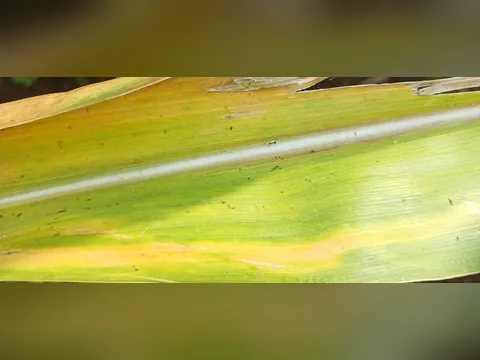 Mais na malagkit
Lower leaves turn yellow in a V from the tip down the midrib, and plants are pale and thin.
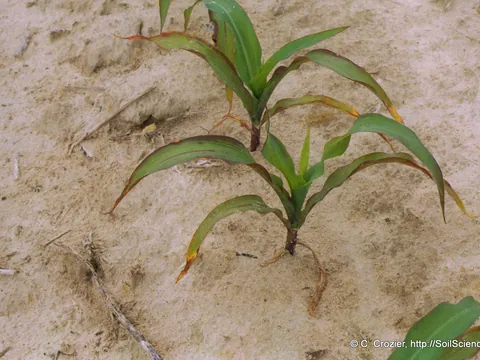 Mais na malagkit
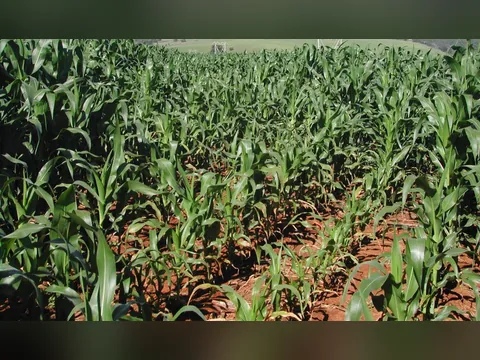
Young plants are short and dark green, with purple red edges on the lower leaves.
 Mais na malagkit
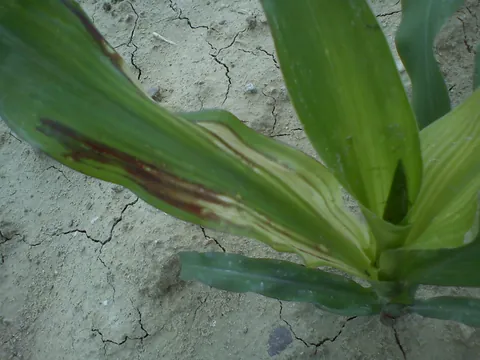
Lower leaves dry brown along the edges while the middle stays green, and stalks break and fall.
 Mais na malagkit
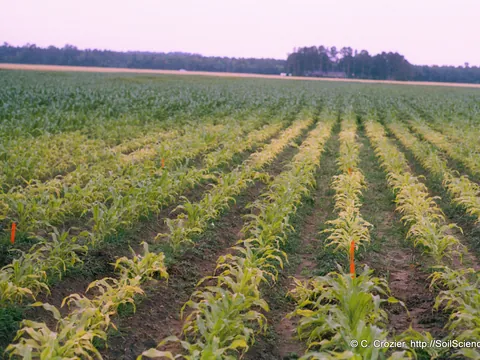
Wide white or pale yellow bands on both sides of the midrib from the leaf base, on short plants with bunched leaves.
 Mais na malagkit
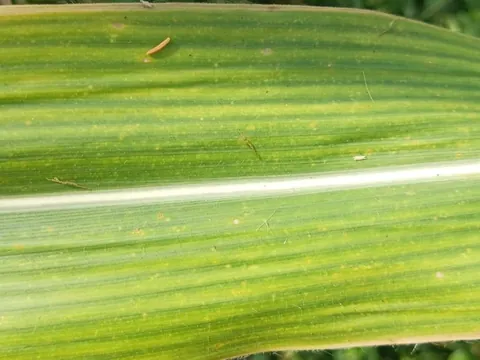
The young upper leaves are the palest, while the lower leaves stay greener.
Upper leaves have white spots and waxy brown streaks, and tassels and ears fail to come out.
 Mais na malagkit
Lower leaves get yellow to white stripes between the veins, later turning reddish purple.
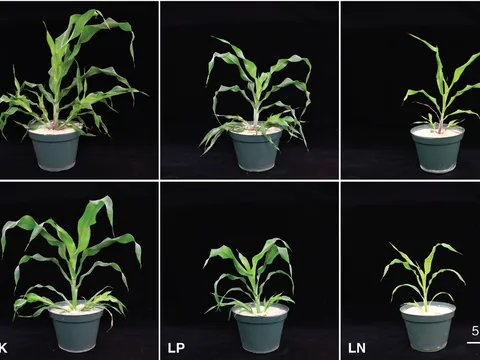 Batad
Pale, thin plants whose lower leaves yellow from the tip down the midrib.
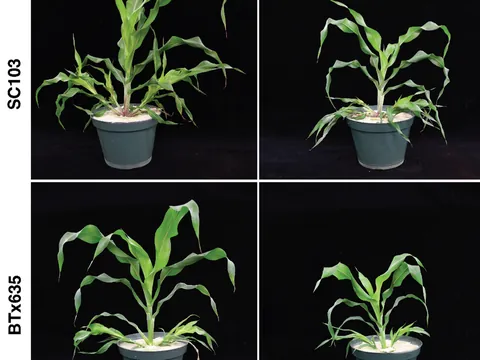 Batad
Short, stiff, dark green plants with red or purple leaves and sheaths.
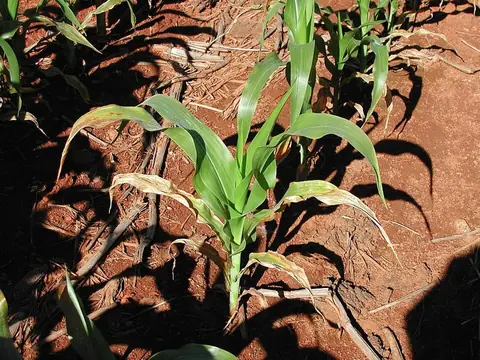 Batad
Shown on corn
Older leaves dry at the tips and edges, with red specks and brown streaks.
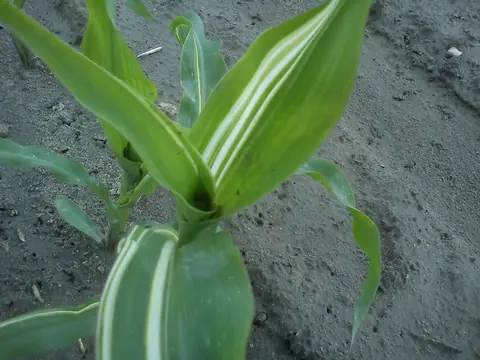 Batad
Shown on corn
White to pale yellow bands on the lower half of young leaves, with a red line on the edges.
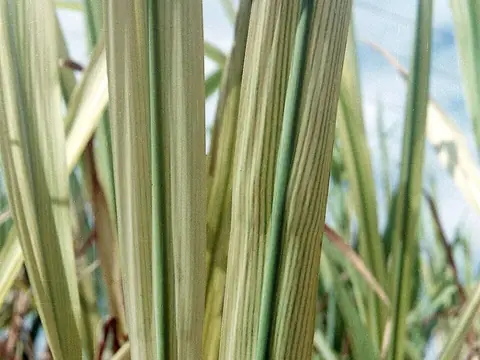 Batad
Shown on sugarcane
On limey, high pH soil, young leaves turn yellow to white between green veins, in patches of the field.
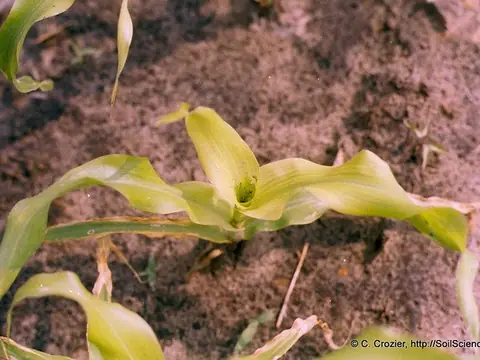 Batad
Shown on corn
The young upper leaves turn evenly pale yellow, with no dead spots.
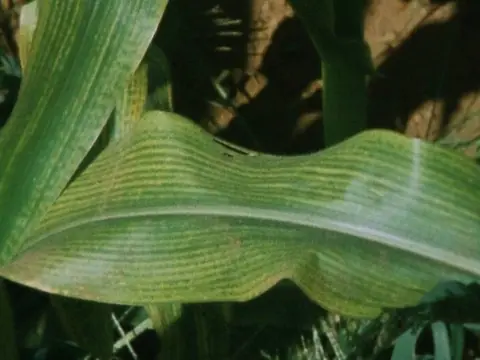 Batad
Shown on corn
Older leaves turn dark yellow between the veins, then deep red and rusty brown.
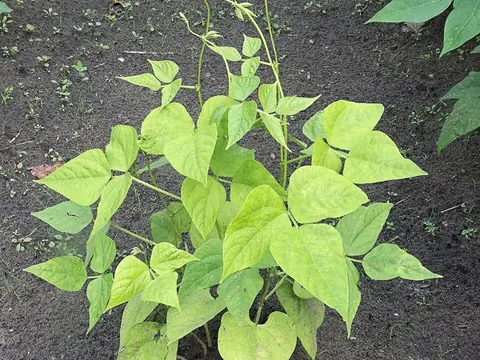 Monggo
Shown on common bean
Pale, thin plants with few branches whose lower leaves yellow and drop. The roots often have few or dead nodules.
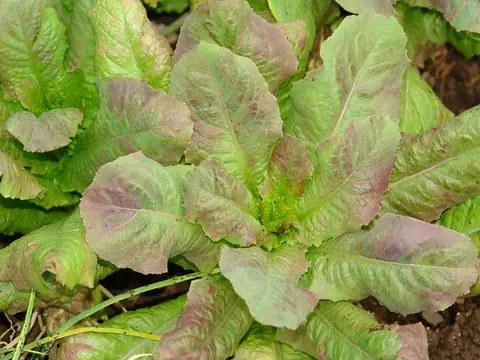 Monggo
Shown on lettuce
Plants stay small and dark green with few pods, often without clear leaf marks.
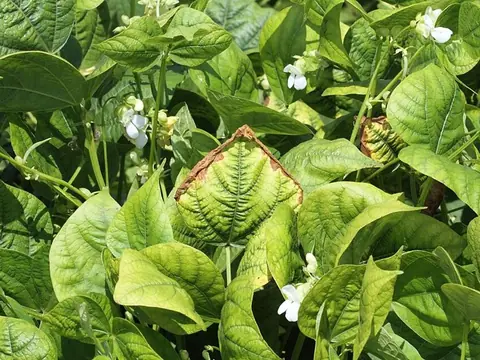 Monggo
Shown on common bean
Yellow patches on the edges of the lower leaves join up, with dark spots and curled edges.
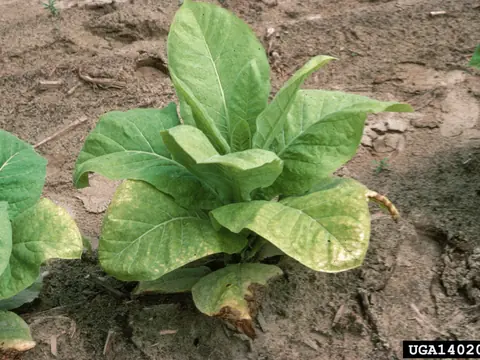 Monggo
Shown on tobacco
The young leaves turn pale yellow first, then the whole plant is evenly pale.
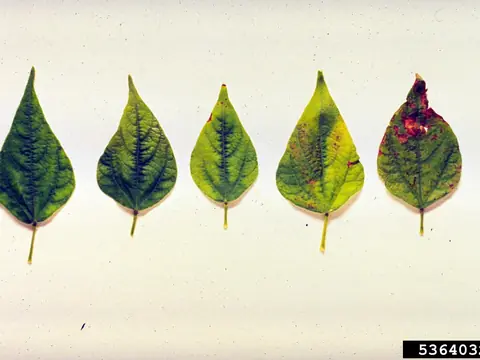 Monggo
Shown on common bean
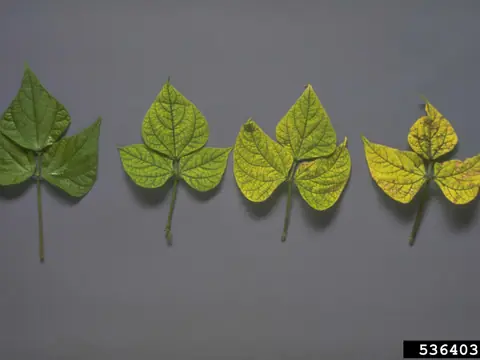
About a month after sowing, leaves turn small and yellow between green veins and the plants stop growing.
 Monggo
Shown on common bean
New leaves turn yellow green with green veins, then fully yellow, on limey or high pH soil.
 Monggo
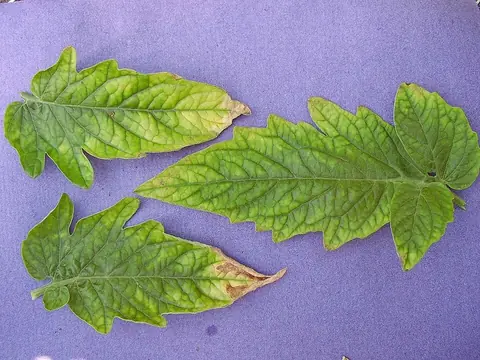
Shown on tomato
The top of the plant bunches into a rosette and the upper leaves turn yellow or reddish at the tips.
Pale, slow monggo on acid soil that looks short of nitrogen, with few nodules that are white inside.
 Mani
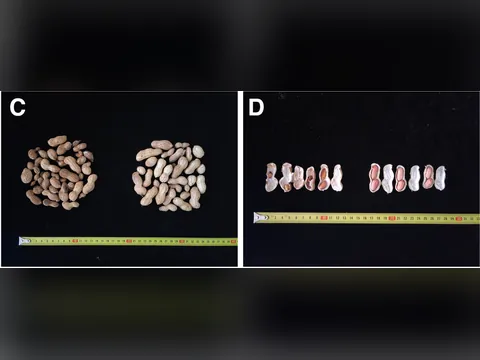
The plants look fine, but many pods are empty (pops) or the kernels are shrunken and dark.
 Mani
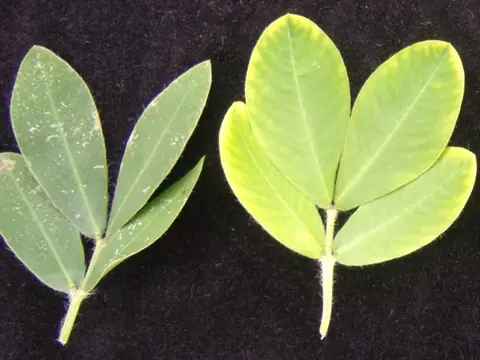
Pale yellow, stunted plants, sometimes with reddish stems, and few nodules on the roots.
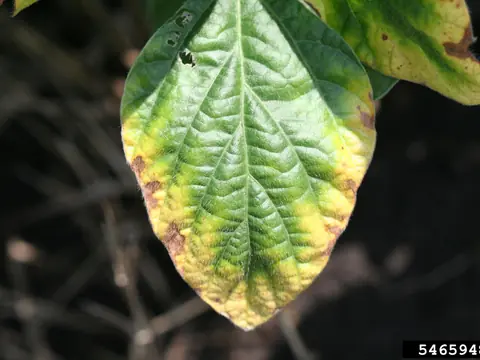 Mani
Shown on soybean
Lower leaves pale slightly between the veins, then the leaf edges turn yellow and dry.
Mani
Shown on tomato
Young leaves stay small in a rosette, and kernels have a hollow, dark heart.
Mani
Shown on tobacco
The whole plant is evenly light green, thin stemmed and spindly.
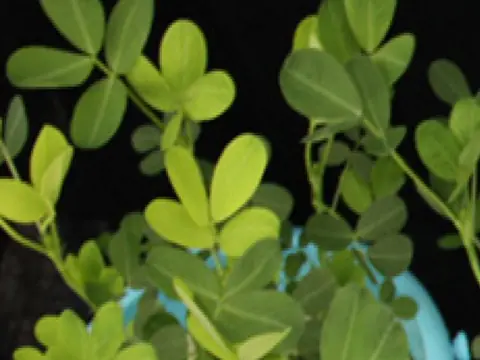 Mani
Young leaves suddenly turn yellow between green veins and stay small, on limey soil.
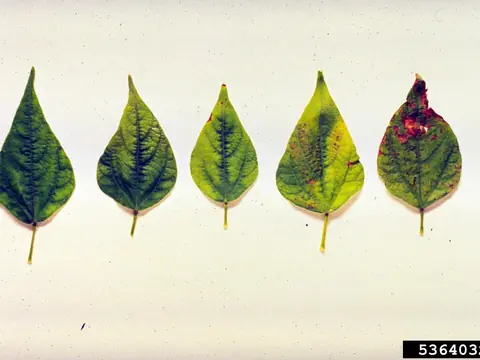 Mani
Shown on common bean
Light yellow stripes along the veins of the leaves, and the bud at the top stops growing.
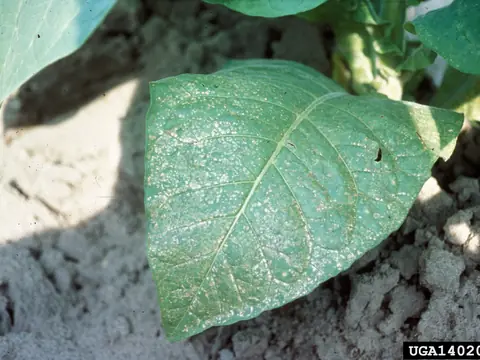 Mani
Shown on tobacco
Leaves pale between the veins and plants stay short, often after heavy liming.
Pale yellow plants that look short of nitrogen on acid soil, with small nodules that are white or green inside.
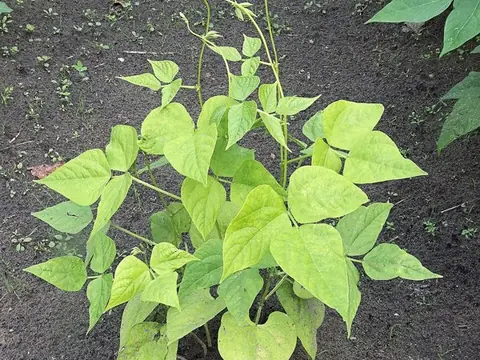 Utaw
Shown on common bean
Light green, stunted plants, often in patches or rows, with few or white nodules on the roots.
Utaw
Shown on lettuce
Short, dark bluish green plants with few pods.
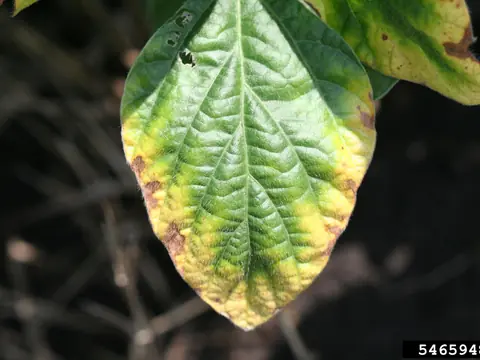 Utaw
Older leaves yellow in blotches from the edges inward.
Utaw
Shown on tobacco
The newest leaves turn pale first, then the whole plant is evenly yellow green.
Light green plants that look nitrogen starved, on very acid soil, even with nodules present.
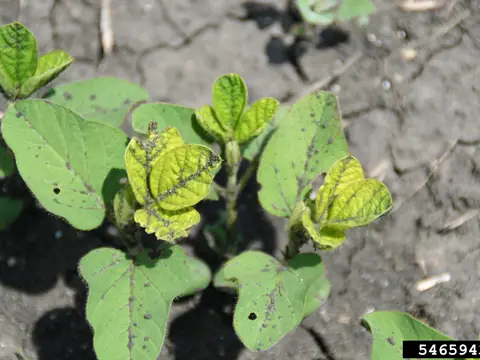 Utaw
Youngest leaves turn yellow with green veins, then almost white, on limey soil.
Utaw
Shown on tobacco
Leaves pale green to yellow between green veins, later with brown spots, often after liming.
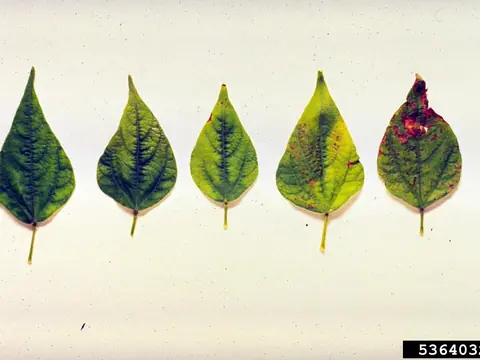 Utaw
Shown on common bean
Leaves pale evenly between green veins, then turn rusty brown.
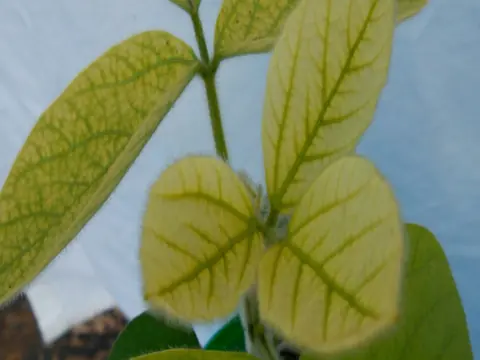 Utaw
Older leaves turn yellow between the veins, then deep yellow with rusty specks.
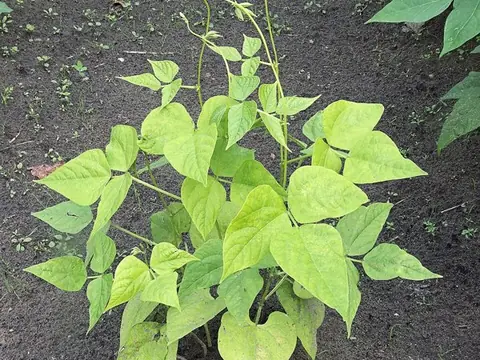 Sitaw
Shown on common bean
Vines grow weak and light green, lower leaves yellow, and the roots have few working nodules.
Sitaw
Shown on lettuce
Slow, short, dark green vines with few flowers and pods.
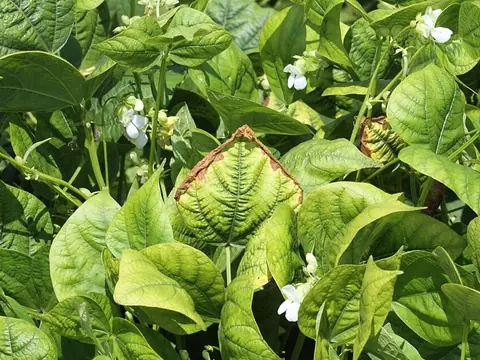 Sitaw
Shown on common bean
Older leaflets yellow at the tips and edges, then brown, while pods stay short.
Sitaw
Shown on soybean
Older leaves yellow between green veins, then deep yellow with rusty specks.
Sitaw
Shown on tomato
Top leaves crinkle and stay small, and flowers drop.
Sitaw
Shown on tobacco
New leaves pale between green veins, often where lime was spread heavily.
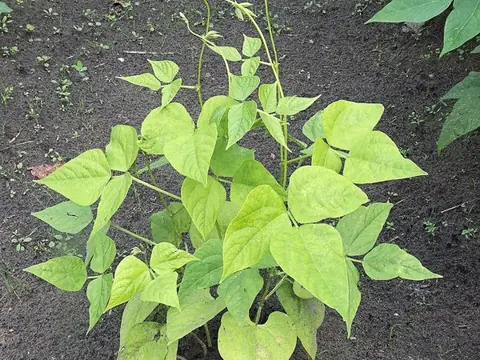 Paayap
Shown on common bean
Pale yellow green plants with weak growth and few working nodules on the roots.
Paayap
Shown on lettuce
Small, dark green plants that grow slowly and set few pods.
 Paayap
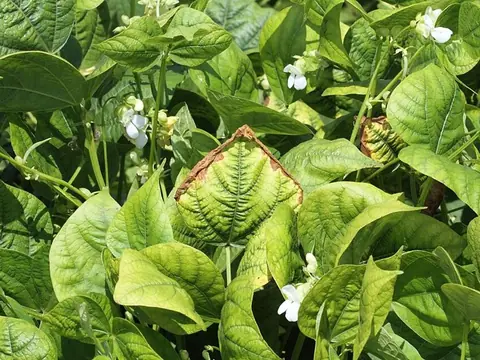
Shown on common bean
Older leaflets yellow at the tips and margins, go brown, then fall.
Paayap
Shown on soybean
Older leaves yellow between the veins, then deep yellow with rusty specks.
Paayap
Shown on tobacco
Young leaves pale between green veins, later with brown spots, often on limed sandy soil.
 Paayap
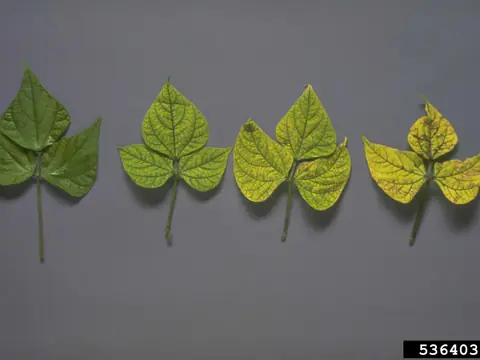
Shown on common bean
Young leaves turn yellow, veins and all, then nearly white, on limey soil.
Paayap
Shown on tomato
New leaves come out small and crinkled.
Sigarilyas
Shown on lettuce
Vines stay short and weak on red, acid soil, with few pods and small roots.
 Sigarilyas
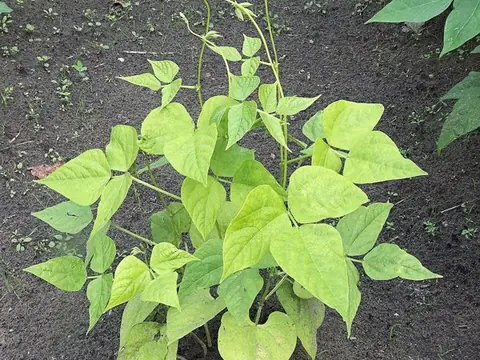
Shown on common bean
Pale, slow vines whose roots have few pink nodules.
 Sigarilyas
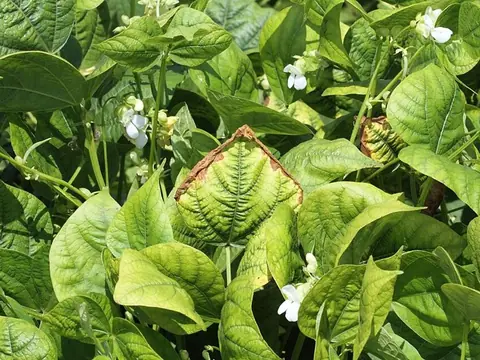
Shown on common bean
Older leaves yellow and scorch at the edges, and the vines fix less nitrogen.
Sigarilyas
Shown on peanut
Growing tips and roots fail to develop on very acid soil.
Pale, nitrogen starved vines on very acid soil even when nodules are present.
 Patani
Shown on common bean
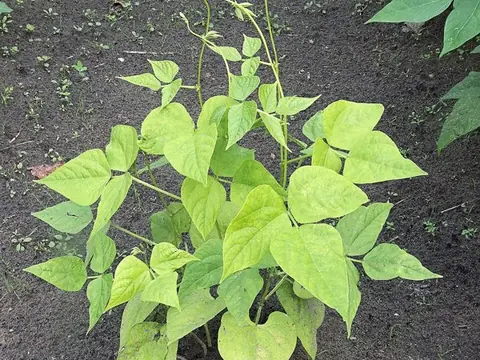
Pale, slow plants whose lower leaves yellow, with few working nodules.
Patani
Shown on lettuce
Short, dark bluish green plants, sometimes purple tinted, with few pods.
 Patani
Shown on common bean
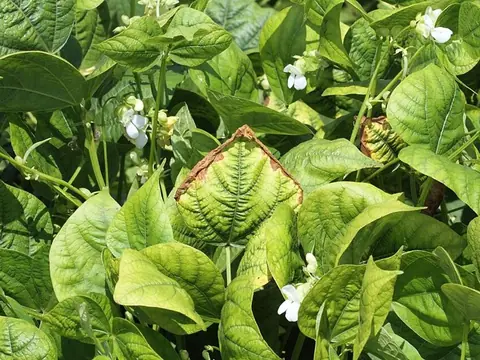
Edges of the older leaves yellow and scorch.
Patani
Shown on tobacco
Top leaves turn yellow between green veins, often where the soil was limed too much.
 Patani
Shown on common bean
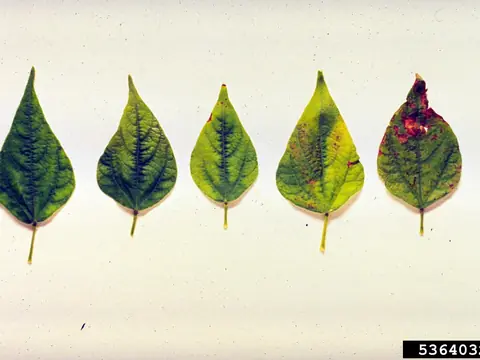
Leaves yellow between green veins, internodes stay short and pod set drops.
Patani
Shown on tomato
New leaves curl and crinkle, and flowers and pods are few.
 Kadyos
Shown on common bean
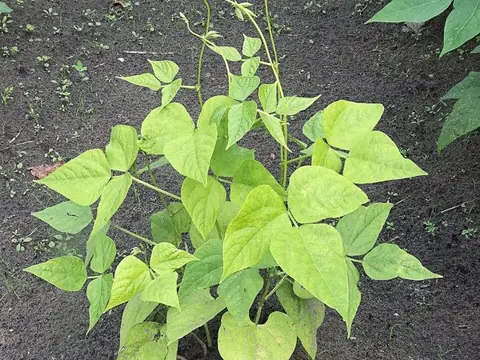
Young bushes stay pale and thin, with few pink nodules on the roots.
Kadyos
Shown on lettuce
Small, stunted, dark green plants with no clear leaf marks.
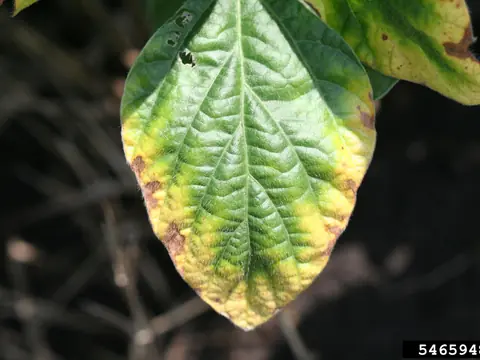 Kadyos
Shown on soybean
Leaf tips yellow then scorch, with a yellow band between the dead edge and the green.
Kadyos
Shown on tobacco
New leaves yellow first, then the whole plant is evenly yellowish.
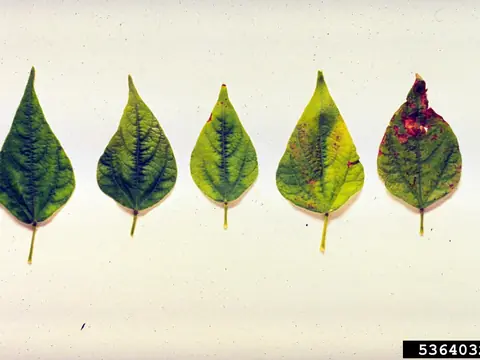 Kadyos
Shown on common bean
Narrow, pale leaves that yellow between the veins from the tip, leaving only the midrib green.
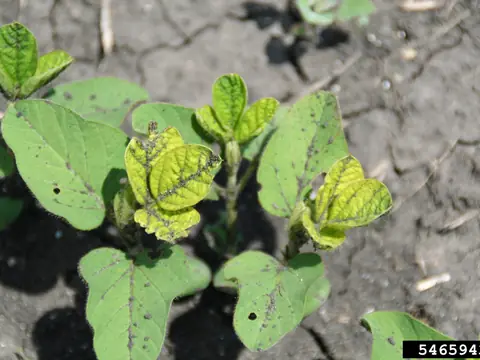 Kadyos
Shown on soybean
Young leaves turn light green between dark green veins, on limey soil.
Kadyos
Shown on soybean
Mild yellow between dark green veins that turns rusty brown in streaks.
Kadyos
Shown on tomato
The top bunches into a rosette and upper leaves yellow or redden at the tips.
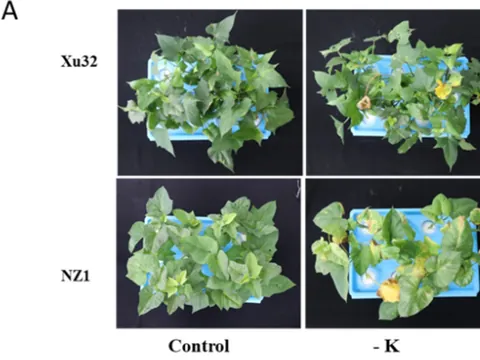 Kamote
Older leaves yellow and scorch at the edges and roll up, and roots stay small.
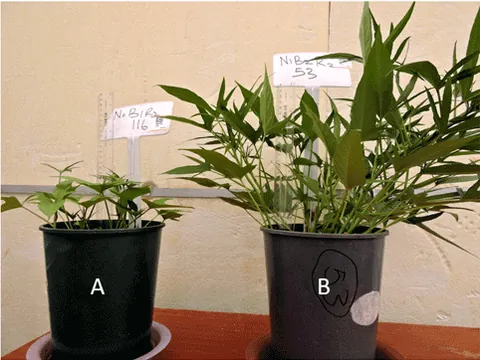 Kamote
Pale green vines that spread slowly, with the oldest leaves yellowing and drying.
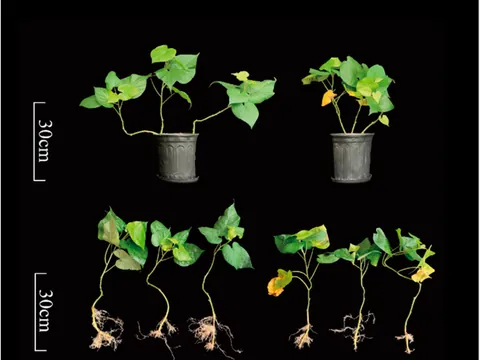 Kamote
Small, stunted vines with dark old leaves and purple red color under the leaves.
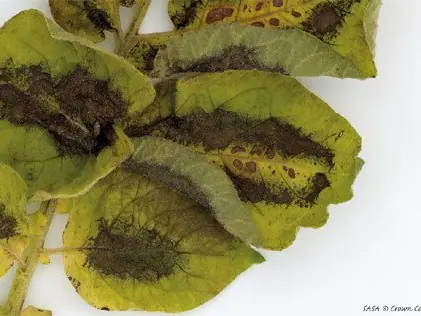 Kamote
Shown on potato
Older leaves yellow between the veins, sometimes with red or purple on top, and cup.
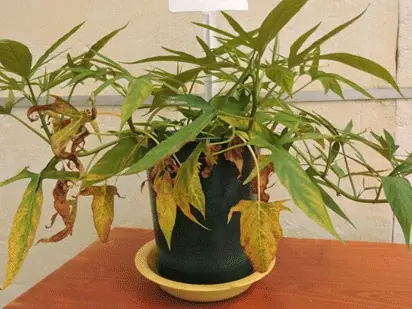 Kamote
Young leaves are distorted and brittle, and storage roots have hollow or brown spots inside.
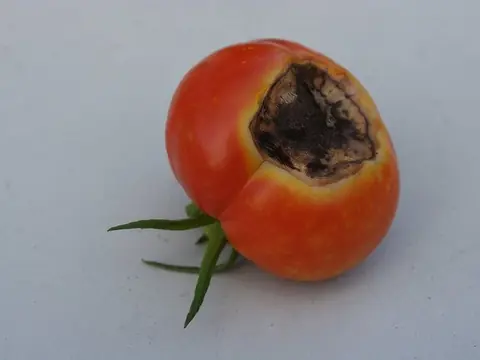 Kamote
Shown on tomato
Leaf tips die back and storage roots come out soft, small and misshapen, on very acid soil.
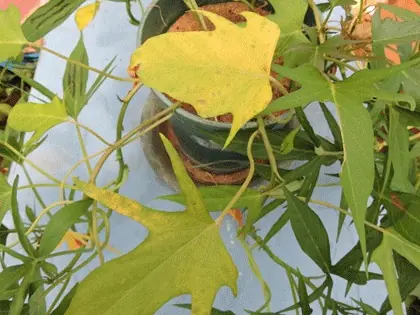 Kamote
Leaves yellow from the tip to the base, veins included, and vines stay short with few branches.
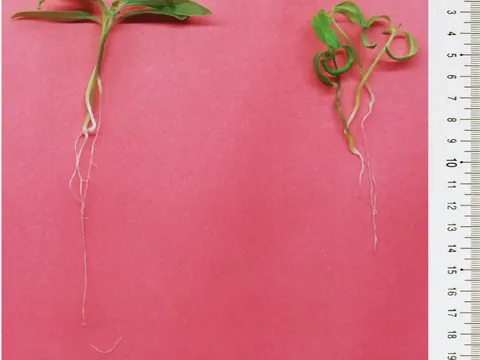 Kamote
Shown on tomato
Short internodes, small pale young leaves, and purple shoot tips.
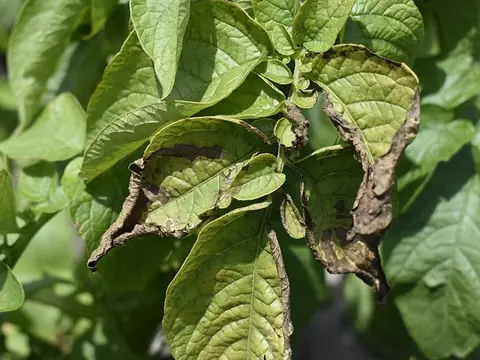 Kamoteng kahoy
Shown on potato
Older leaves yellow between the veins and scorch at the edges. Plants branch a lot and sprawl.
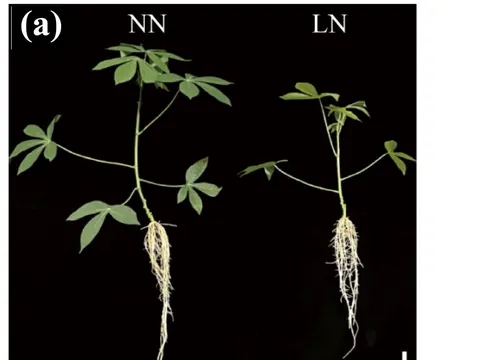 Kamoteng kahoy
Pale green plants with short stems and small leaves, yellowing from the bottom up.
Kamoteng kahoy
Shown on lettuce
Stunted plants with a few yellow lower leaves and purple under the leaves, and late harvest.
Kamoteng kahoy
Shown on tomato
Young leaves have narrow, pale lobes that curl up, on short internodes.
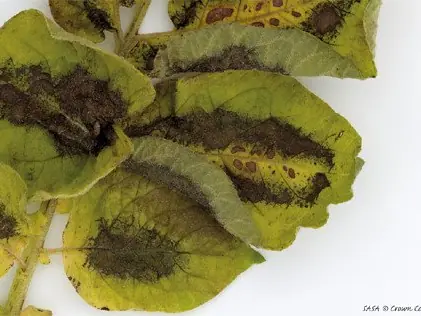 Kamoteng kahoy
Shown on potato
Lower leaves turn yellow between green veins and cup inward.
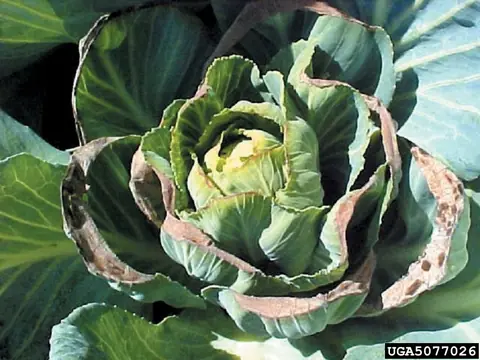 Kamoteng kahoy
Shown on cabbage
Upper leaves curl and get brown to black spots at the tips and edges, on very acid soil.
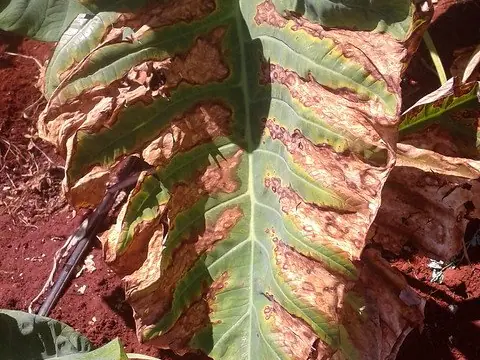
Kamoteng kahoy
Shown on tobacco
The young upper leaves yellow first, and stems are thin and weak.
Kamoteng kahoy
Shown on tomato
Small deformed young leaves on short stalks with brown gummy spots on the stalks and stem tips.
Older leaf blades yellow first, then all of them, with stunted plants and few suckers.
 Gabi
Slow plants that wilt easily, with scorched edges or brown spots in the middle of older leaves.
Stunted plants with darker green old leaves dotted with light spots.
The youngest leaf yellows between the veins and cups, with brown edges, and roots die back.
Older leaves yellow between dark green veins, then the edges brown and die.
Younger leaves are small and evenly yellow, and roots stay short.
Young leaves yellow between the veins, then bleach evenly, in dry upland fields.
Plants are just stunted with small leaves. There are few other signs.
Dull, light green vines with small leaves and short internodes.
Lighter green crop with fine yellow between the veins of young mature leaves. Lower leaves brown from the tips at tuber filling.
Growth slows with no clear marks, then young leaves get small, stiff and curl down at the tip.
Light green crop with yellow between the veins of young mature leaves and light brown stains on old leaves.
Smaller, narrow, curled or wavy leaves on short internodes, and cracked tubers.
Young leaves show fine pale, sunken spots between the veins that turn into dead spots, on limey soil.
On coral or limey ground the young leaves go pale while thin green veins stay visible like a net, then they bleach white.
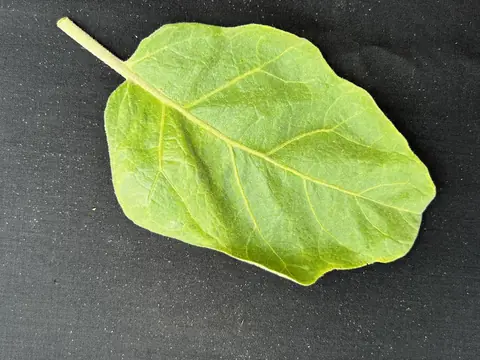 Patatas
Shown on eggplant
Whole leaves, veins included, turn evenly pale yellow, starting low on the plant.
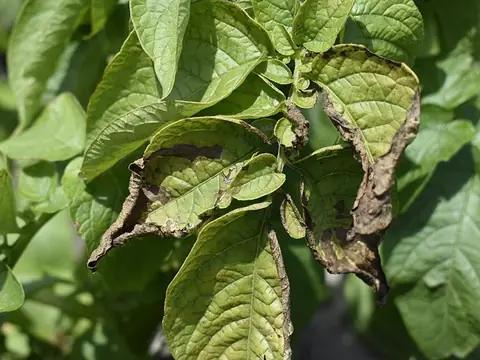 Patatas
Leaflets crinkle, tips burn and dead patches form between green veins, turning the leaf scorched and dark.
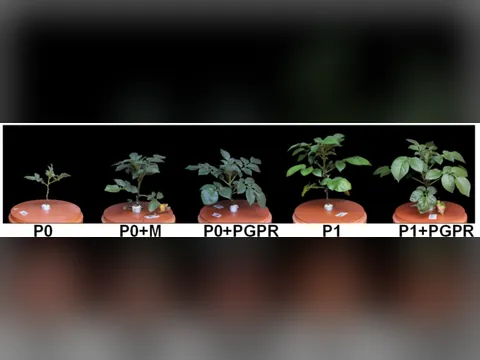 Patatas
Short, dark plants with purple stems and leaf undersides, and leaflets curled upward.
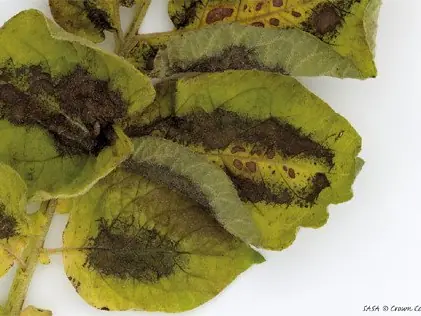 Patatas
Mottled yellow between the veins of young mature leaves, then dead scorched patches.
 Patatas
Shown on tomato
Young leaves small, pale and curled, sprout tips black, and rusty spots inside the tubers.
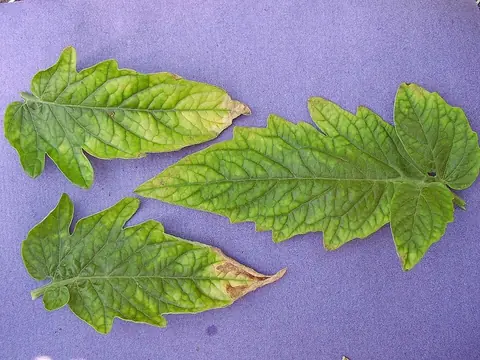 Patatas
Shown on tomato
The growing tip dies and the plant turns bushy. Young leaves wilt even with enough water.
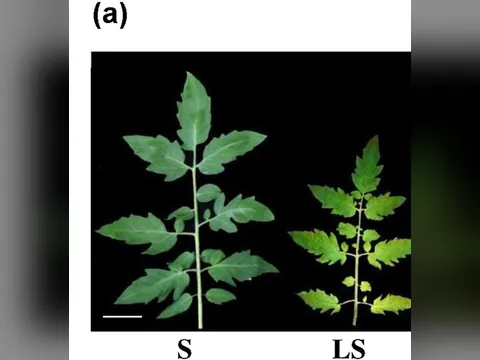 Patatas
Shown on tomato
The whole plant, young leaves included, yellows evenly, with reddish veins and leaf stalks.
Patatas
Shown on tomato
Young leaves yellow and mature leaves get pitted, dead spots between green veins.
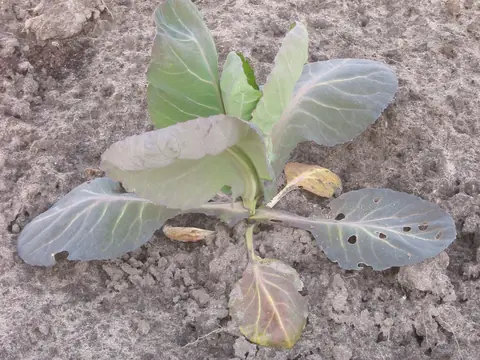 Karot
Shown on cabbage
Fewer, smaller tops that turn yellow green from the oldest leaves, and thin, stiff roots.
 Karot
Shown on potato
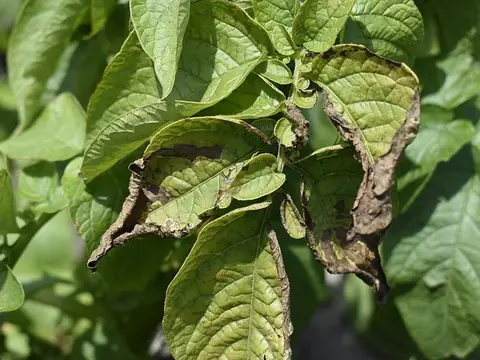
Older leaves pale and scorch at the edges, which cup backward, and roots show violet streaks.
Karot
Shown on lettuce
Short plants with small, distorted leaves tinged pink or purple, and late root formation.
 Karot
Shown on radish
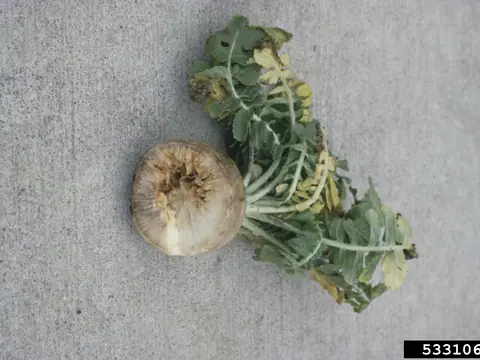
Crinkled young leaves, a dead growing point, orange tinted old leaves and small carrots.
Karot
Shown on cabbage
The tips of young leaves and roots brown and die, leaf edges turn ragged, and roots stay small.
 Karot
Shown on potato
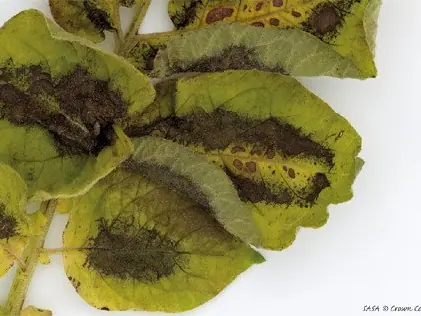
Mature leaves yellow between green veins and drop, and roots are small and pale.
Karot
Shown on tomato
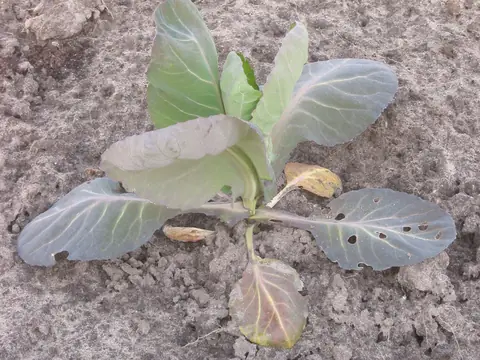
Young leaves stay small (little leaf) and turn yellow.
 Labanos
Shown on cabbage
Small, pale tops that yellow from the oldest leaves, with thin, fibrous roots.
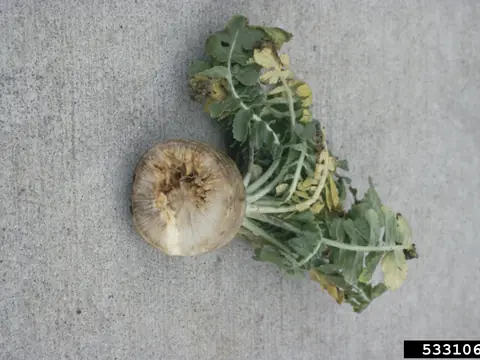 Labanos
Roots crack and develop poorly, and the growing point may die.
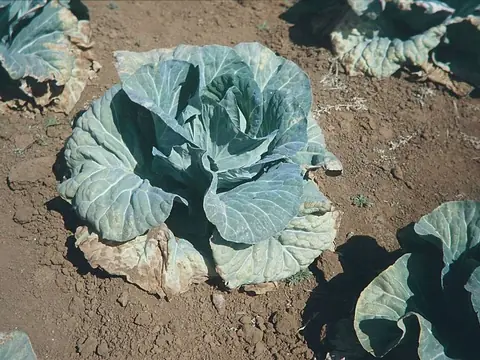 Labanos
Shown on cabbage
Older leaves scorch at the edges, brown and collapse, and curl backward.
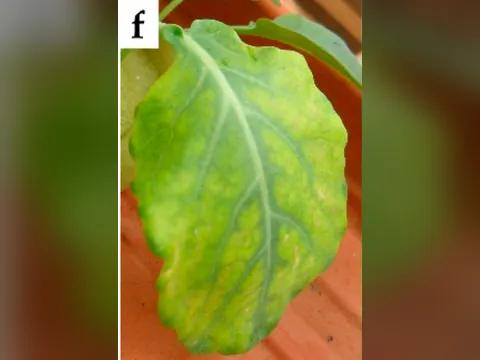 Labanos
Shown on broccoli
Older leaves turn strongly purple and die early, and plants stay small.
Labanos
Shown on tobacco
A general yellowing of the leaves about midway through the season, on high pH soil.
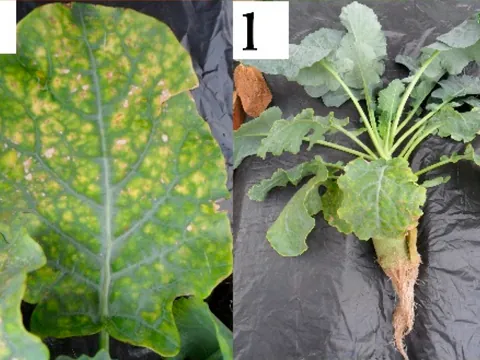 Labanos
Shown on broccoli
Bottom leaves yellow between dark green veins, then redden and get dead spots.
 Labanos
Shown on cabbage
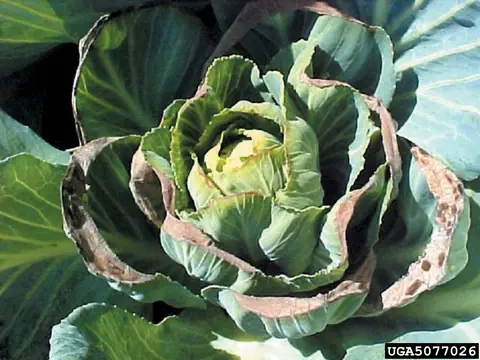
Growing tips of leaves and roots brown and die, and leaf stalks collapse.
 Luya
Shown on ornamental ginger
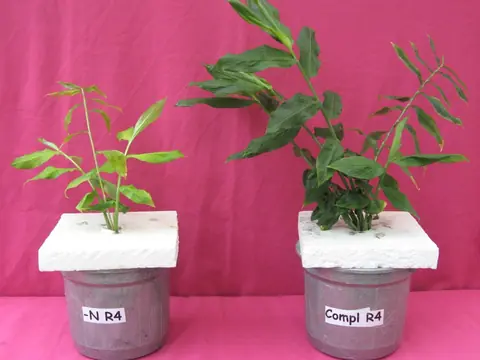
Lower leaves turn pale yellow, leaves are small and the clump grows weak.
 Luya
Shown on ornamental ginger
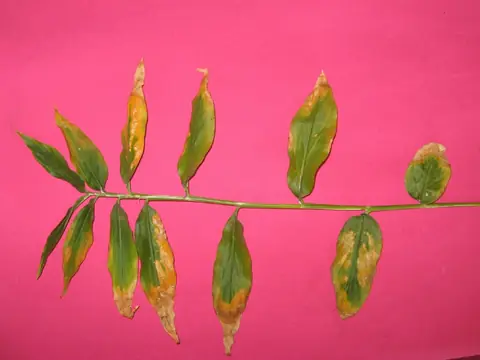
Older leaves yellow and burn at the edges, with dead spots, and plants wilt easily.
 Luya
Shown on abaca
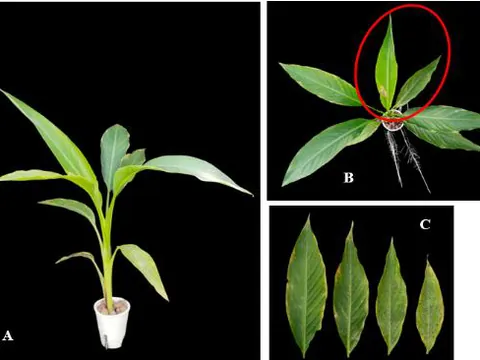
Dark green plants with purple leaf undersides and small, stunted rhizomes.
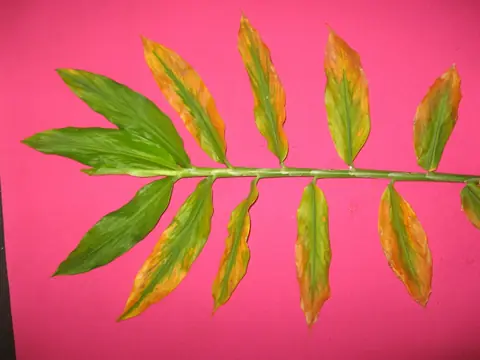 Luya
Shown on ornamental ginger
Older leaves yellow between green veins with brown spots, sometimes with a yellow arrowhead at the leaf base.
 Luya
Shown on banana
Small, puckered leaves bunched at the top, yellow between the veins.
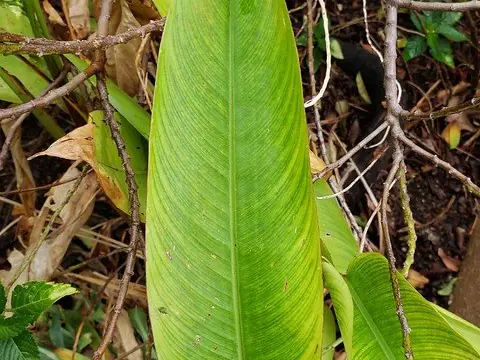 Luya
Shown on flowering ginger
Young leaves yellow between green veins, then bleach almost white.
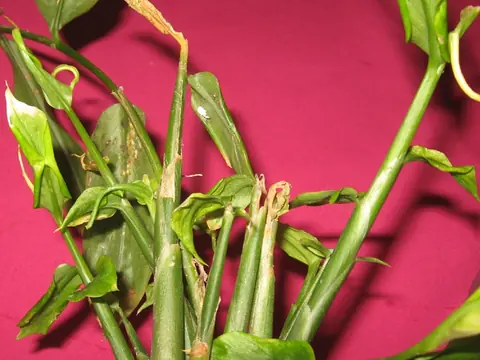 Luya
Shown on ornamental ginger
Young leaves crinkle and twist with dead edges, and roots are stunted and rot.
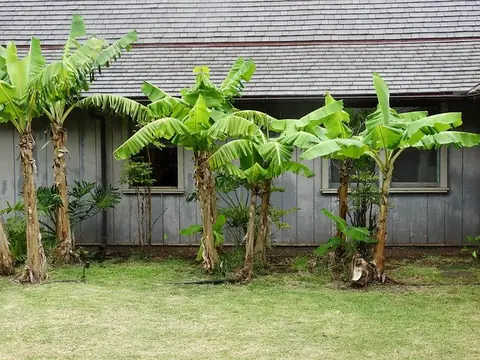 Luyang dilaw
Shown on banana
Older leaves pale yellow green with red tints creeping from the edges to the midrib.
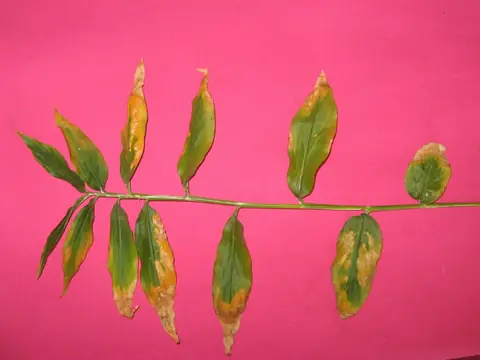 Luyang dilaw
Shown on ornamental ginger
Leaf edges burn brown, with dead spots, short internodes and plants that wilt easily.
Luyang dilaw
Shown on abaca
Slow plants with deeper color or purple browning, thin stems and lost lower leaves.
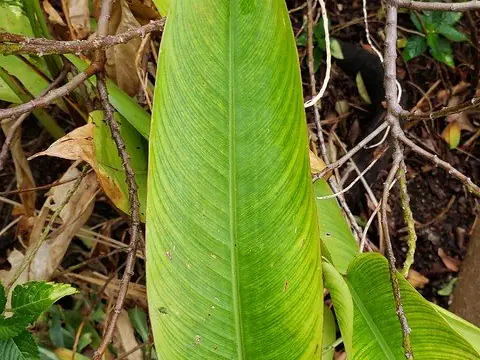 Luyang dilaw
Shown on flowering ginger
Young leaves yellow between the veins, fast spreading over the whole leaf until it is white.
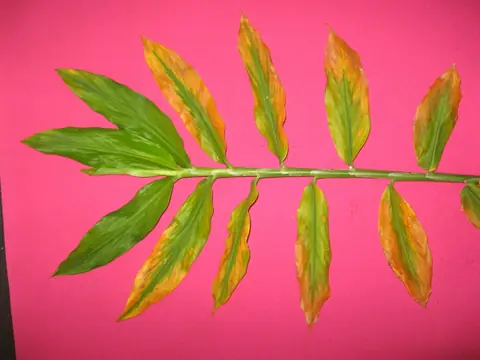 Luyang dilaw
Shown on ornamental ginger
Older leaves yellow at the edges and between the veins, often with an arrowhead shape at the leaf base.
Luyang dilaw
Shown on banana
Small, distorted, bunched leaves at the top with yellow between the veins.
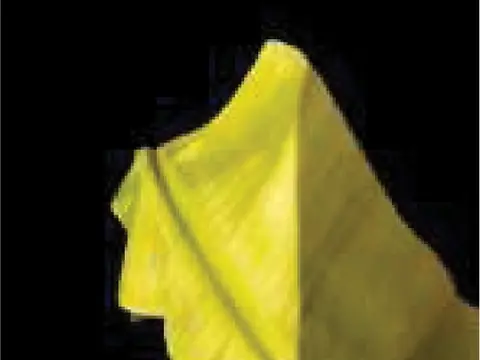 Luyang dilaw
Shown on banana
Stunted plants whose leaves turn pale yellow, veins included.
 Luyang dilaw
Shown on banana
New leaves look mottled, light green to yellow green between the veins.
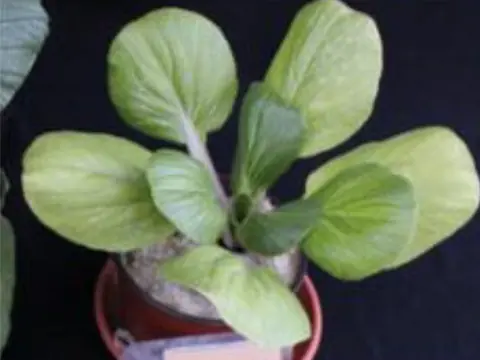 Petsay
Outer leaves turn pale yellow and the plants stay small and slow.
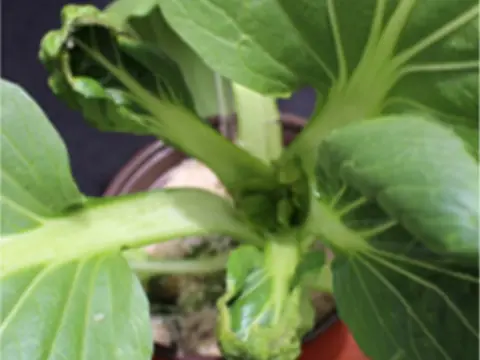 Petsay
The tips and edges of the young centre leaves turn brown and dry, and soft rot can follow.
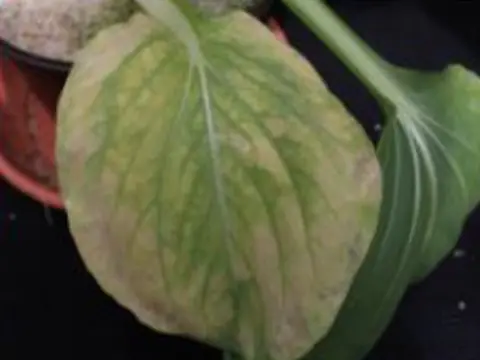 Petsay
Older leaves get a light brown, dry band along the edges that curls up.
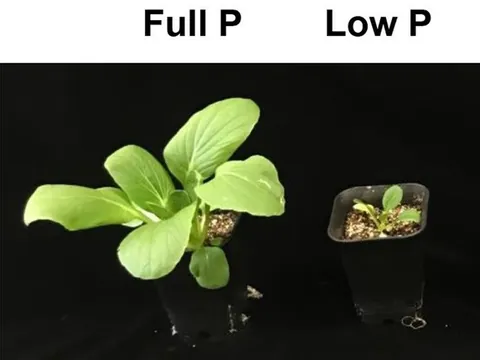 Petsay
Seedlings and young plants stay small and dark, sometimes with purple undersides.
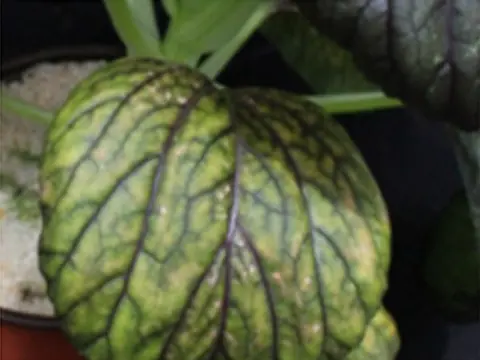 Petsay
Outer leaves yellow between the veins while the veins stay green.
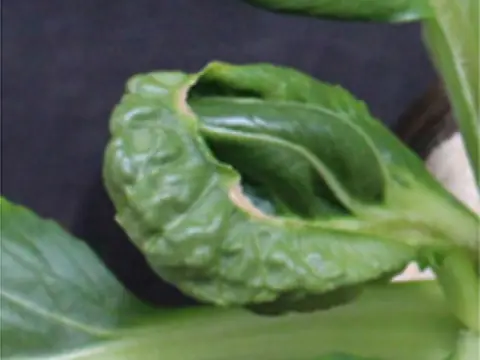 Petsay
New centre leaves come out small, thick and crinkled, and stalks may crack.
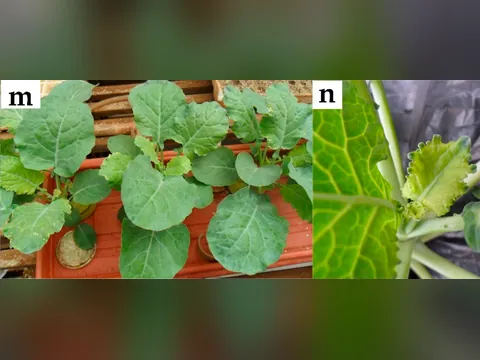 Petsay
Shown on broccoli
Young centre leaves turn pale with blue green veins and purple undersides.
Repolyo
Outer leaves turn yellow green with a red or orange tint and the head stays small or never forms.
Repolyo
Shown on pechay
Hollow, brown centre of the stem and light, loose heads.
Repolyo
Brown, dry edges on the inner leaves of the head, seen only when you cut it open.
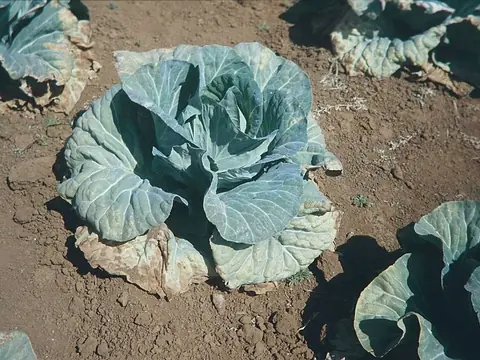 Repolyo
Older leaves get a light brown, withered band along the edges that curls up.
Repolyo
Shown on broccoli
Plants simply stay small and slow, sometimes with a pink or purple tint.
Repolyo
Shown on broccoli
Outer leaves yellow between the veins and turn orange or red, while big veins stay green.
Repolyo
Shown on broccoli
Young inner leaves turn pale yellow and the plant is slow to head.
On acid soil, faint yellow green plants with narrow, toothed leaves that bend down and loose heads.
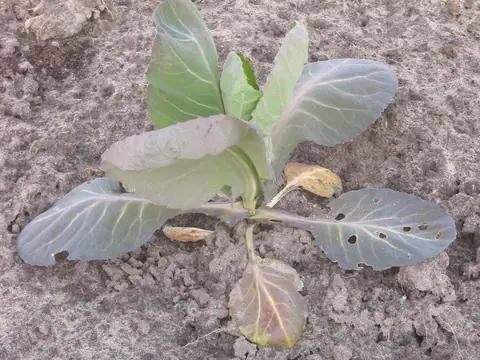 Litsugas
Shown on cabbage
Outer leaves turn light green to yellow and the head stays loose and small.
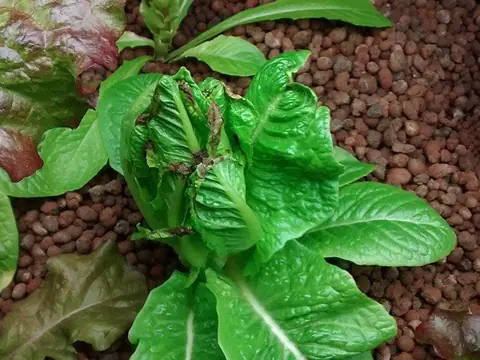 Litsugas
Brown or grey dead edges on the young inner leaves, worse in hot weather.
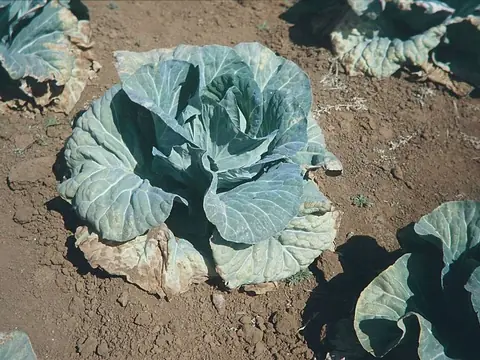 Litsugas
Shown on cabbage
Older leaves get yellow spots on the edges that die and scorch, and heads stay loose.
Litsugas
Stunted, dull dark green plants that are late to head.
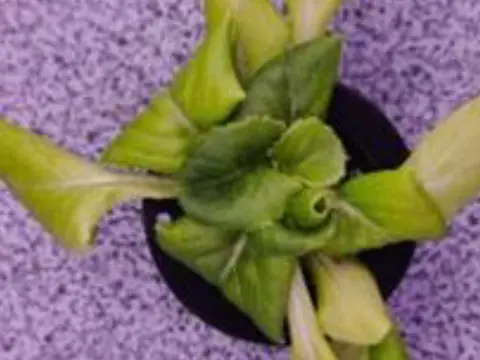 Litsugas
Older leaves get yellow to orange edges and yellow between green veins.
 Litsugas
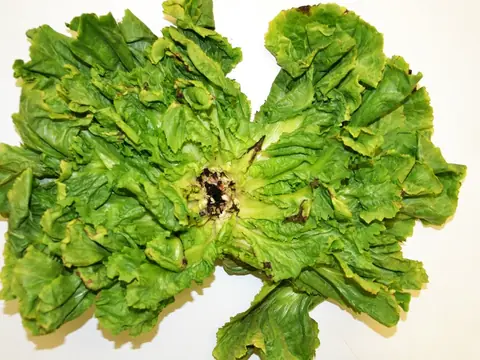
Shown on endive
Damage sits at the growing point of the youngest leaves, with poor, stubby roots.
On acid soil, pale stunted plants whose leaf edges wilt and die back, with clear spots between veins.
Kangkong
Shown on sweet potato
Lower leaves turn pale yellow and shoots stay thin and short.
Kangkong
Shown on sweet potato
Plants stay short with dark green leaves and thin, woody stems.
Kangkong
Shown on sweet potato
Older leaves look greyish, then bronze, with brown edges.
 Kangkong
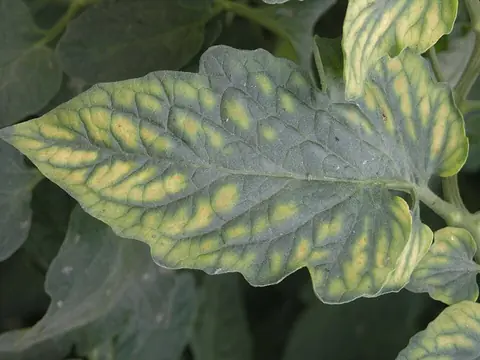
Shown on tomato
Older leaves yellow between the veins while the veins stay green.
 Kangkong
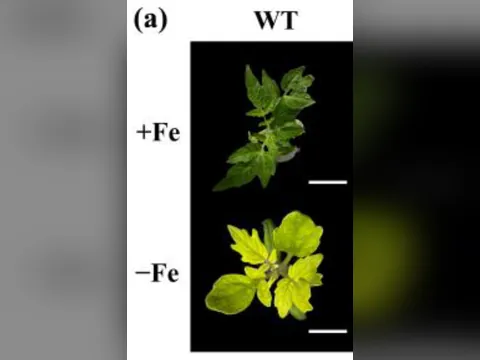
Shown on tomato
The newest shoot tips turn pale yellow between green veins, then fully yellow.
 Mustasa
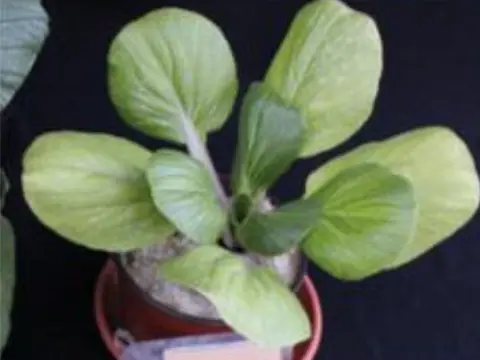
Shown on pechay
Lower leaves turn pale yellow, sometimes with red tints, and leaves stay small.
Mustasa
Shown on broccoli
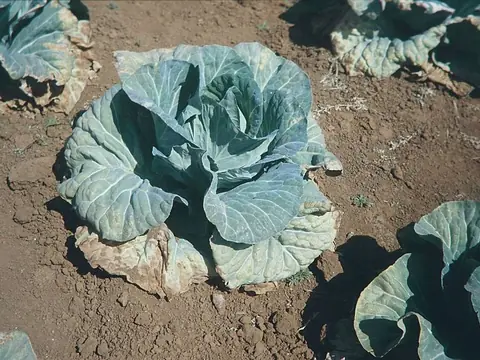
Young leaves turn pale between blue green veins, cup, and get purple undersides.
 Mustasa
Shown on cabbage
Older leaves get light brown, dry edges that curl up.
Mustasa
Shown on broccoli
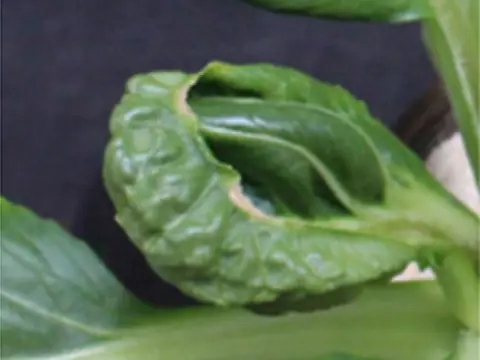
Small, slow plants with reddish or purple older leaves.
 Mustasa
Shown on pechay
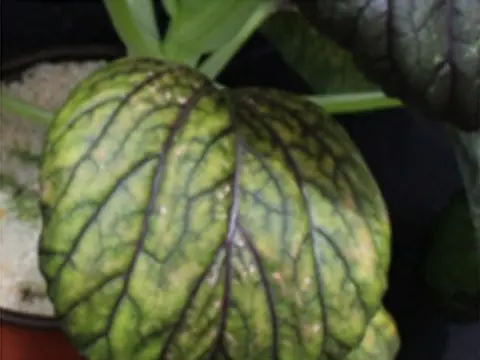
New leaves come out small, crinkled and brittle, and stalks may crack.
 Mustasa
Shown on pechay
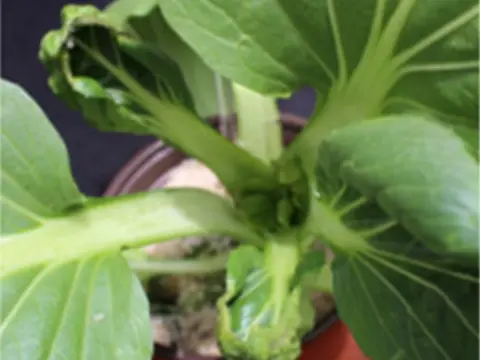
Older leaves yellow between green veins, starting from the edge.
 Mustasa
Shown on pechay
Brown, dead tips on the youngest leaves in hot, dry weather.
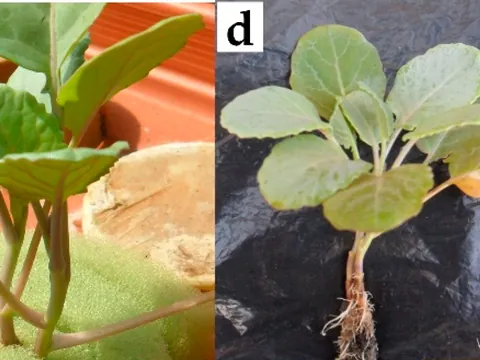 Brokoli
Pale plants with orange to red edges on old leaves, and small, loose heads.
Brokoli
Shown on pechay
The stem is hollow with brown tissue inside, and new leaves look crinkled.
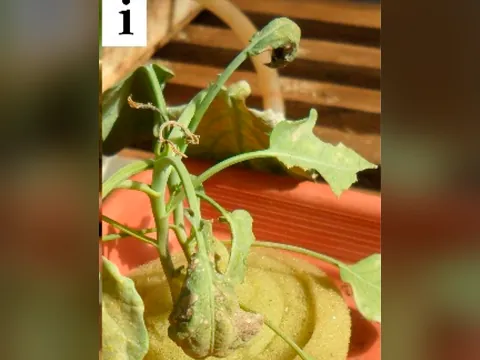 Brokoli
Burnt, dead tips and edges on the youngest leaves.
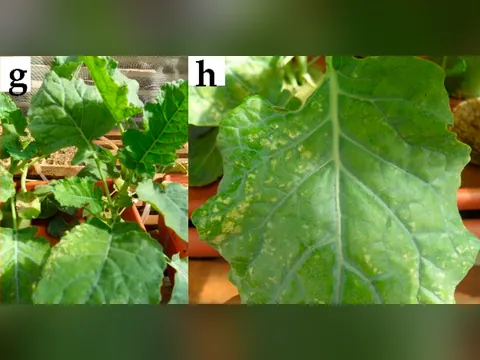 Brokoli
Older leaves yellow, then brown from the edges with a sharp border.
Brokoli
Older leaves turn reddish from the edges with a yellow green band, in cold or dry soil.
Brokoli
Older leaves get a mottled yellow look between green veins, from the edges inward.
Brokoli
Young leaves turn pale, stiff and purplish, with narrow spoon shaped leaves on long stalks.
On acid soil, narrow, cupped young leaves with yellow, scorched edges in patches of the field.
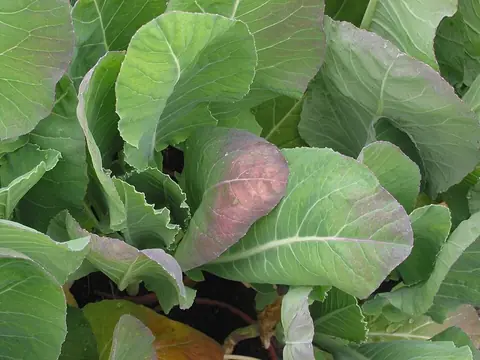 Koliplor
Older leaves yellow with red edges, and small button curds form too early.
Koliplor
Shown on pechay
Brown or pink patches on the curd and a hollow, water soaked stem.
New leaves are narrow and strap like, sometimes only the midrib, and no proper curd forms.
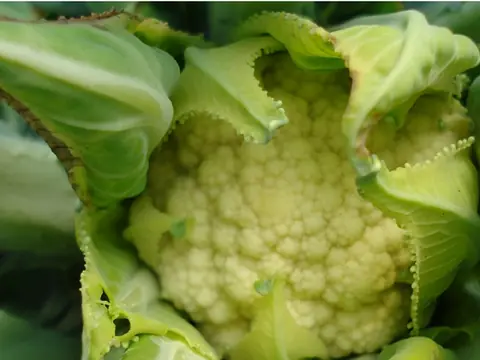 Koliplor
Young leaves get dead, burnt tips and claw like curling. Curd segments turn brown and glassy.
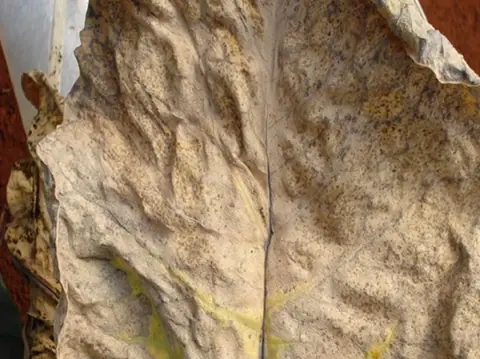 Koliplor
Older leaf edges turn yellow, then light to dark brown, and curl up.
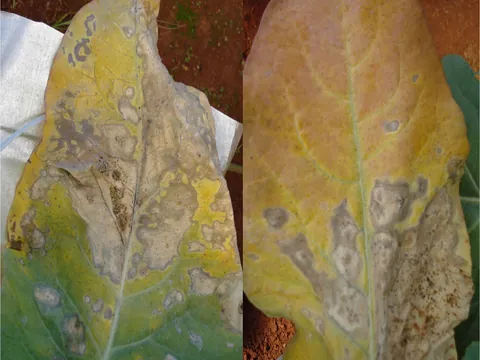 Koliplor
Older leaves turn dull bluish green with purple color and red undersides.
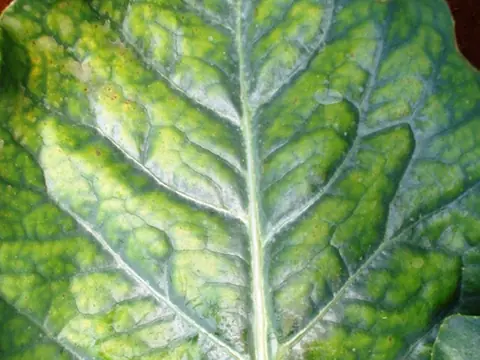 Koliplor
Older leaves yellow from the edges toward the midrib while the veins stay green.
Koliplor
Shown on broccoli
Young leaves turn evenly pale, stiff and reddish, with thin leaf stalks.
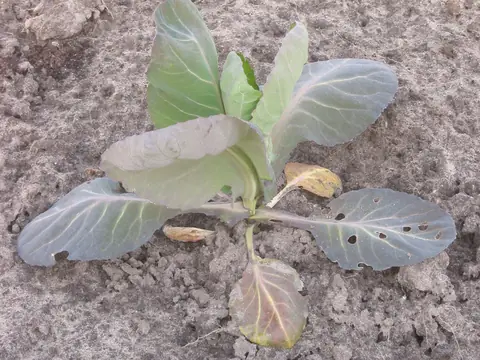 Alugbati
Shown on cabbage
Older leaves fade to pale yellow and new shoots come thin and slow after cutting.
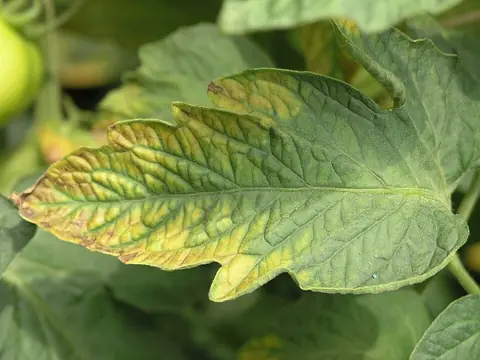 Alugbati
Shown on tomato
Older leaves get bronze, brown edges that curl down.
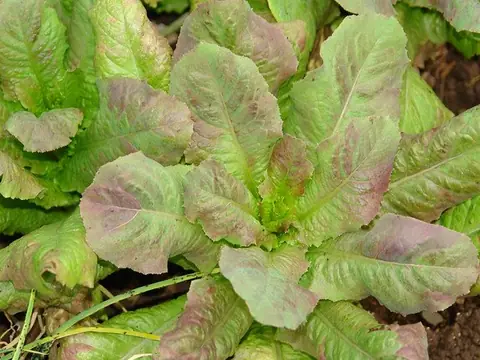 Alugbati
Shown on lettuce
Cuttings root and grow slowly, with small, dark green leaves.
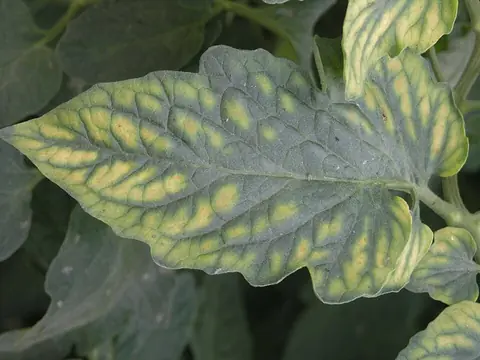 Alugbati
Shown on tomato
Older leaves yellow between the veins, sometimes with a reddish purple tint.
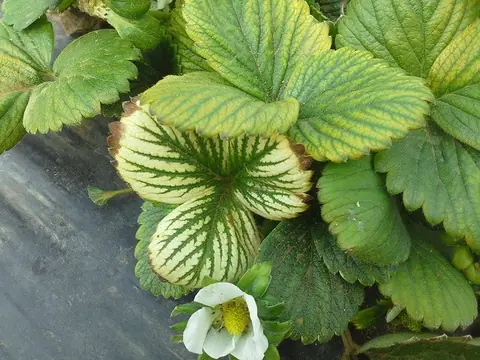 Alugbati
Shown on strawberry
On limed or alkaline soil, the newest leaves turn pale yellow between green veins.
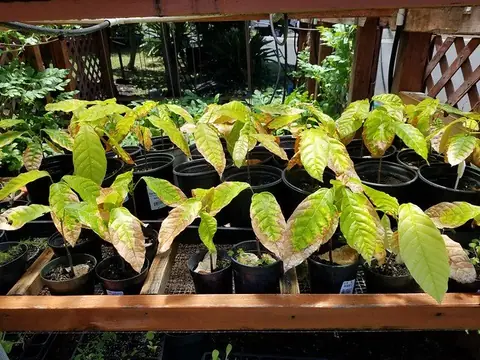 Saluyot
Shown on cacao
Lower leaves turn pale yellow and plants grow thin, hard stems with few tender tops.
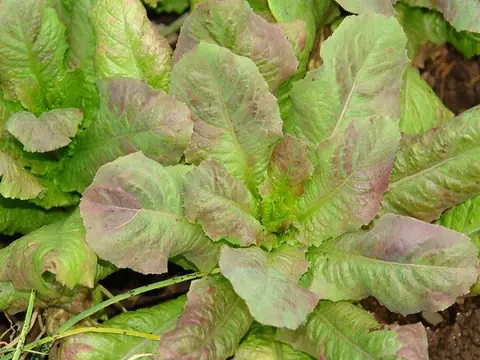 Saluyot
Shown on lettuce
Seedlings stay small and dark green with thin, woody stems.
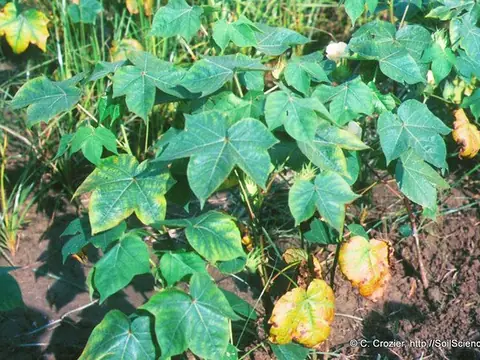 Saluyot
Shown on cotton
Older leaves bronze and brown at the edges and curl down.
Saluyot
Shown on strawberry
On limed or alkaline soil, the newest top leaves turn pale yellow between green veins.
Saluyot
Shown on tomato
New leaves and tips are small, brittle and deformed, and roots stay short.
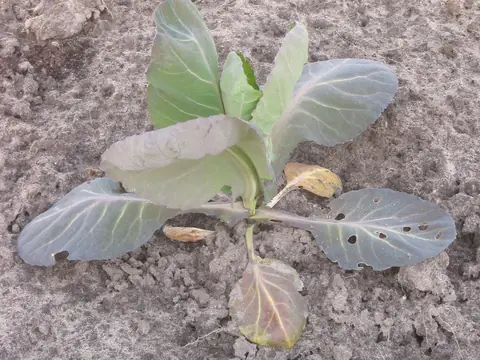 Kintsay
Shown on cabbage
Oldest outer stalks turn evenly yellow and then almost white.
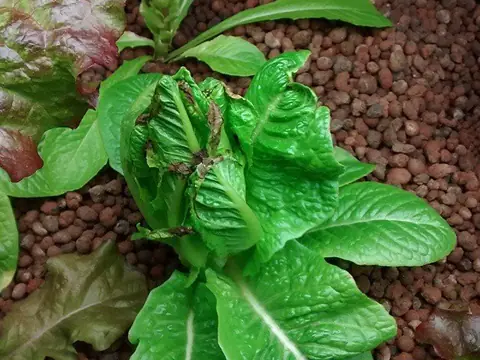 Kintsay
Shown on lettuce
The young heart leaves in the centre turn brown to black and rot.
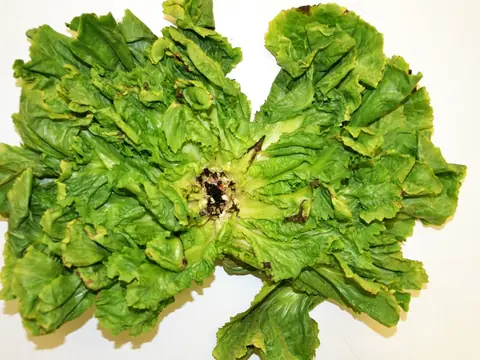 Kintsay
Shown on endive
Stalks crack across or split along the veins, like claw marks.
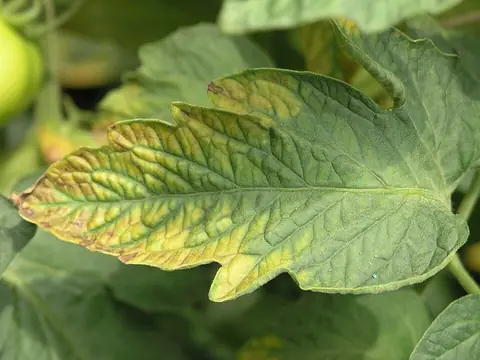 Kintsay
Shown on tomato
Older leaves look ashy grey green, then bronze, with brown, downturned edges.
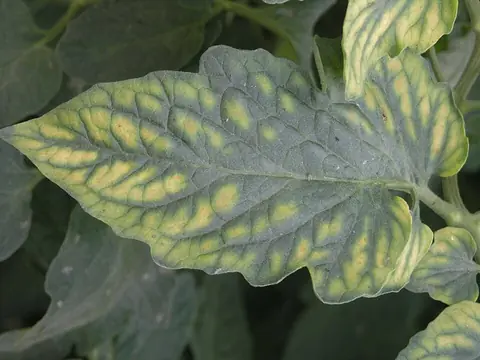 Kintsay
Shown on tomato
Older leaves yellow between the veins while the veins stay green.
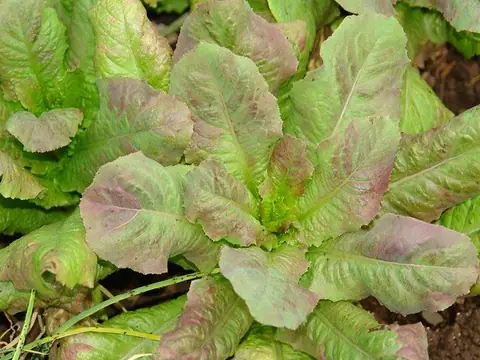 Kintsay
Shown on lettuce
Plants stay small with slender stalks and dark green leaves.
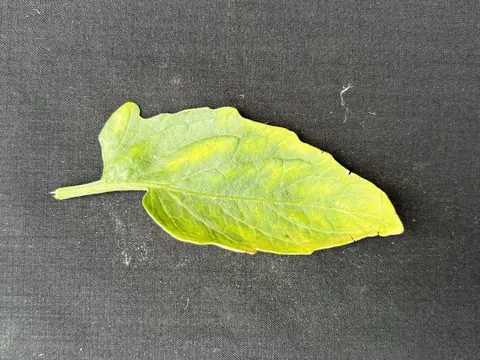 Kamatis
Lower leaves turn pale yellow first and the plant looks thin and spindly.
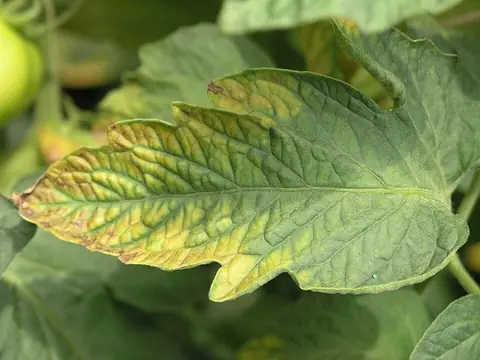 Kamatis
Old leaves get scorched, curled edges and the fruit ripens in green or yellow blotches.
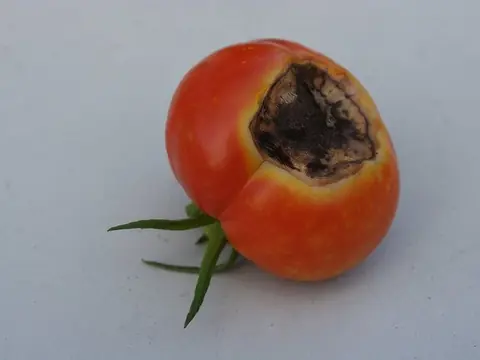
Kamatis
A dark, sunken, leathery patch at the bottom end of the fruit, opposite the stem.
 Kamatis
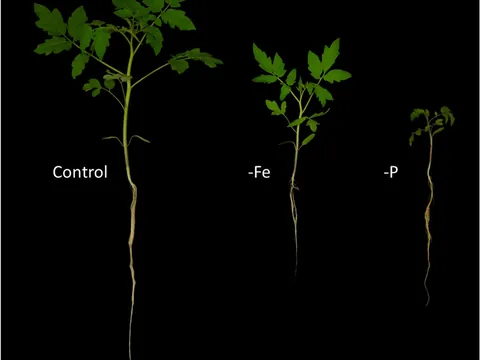
Small, stiff, dark bluish green plants with purple undersides on the lower leaves.
 Kamatis
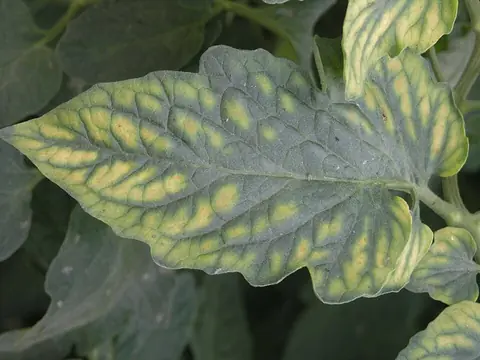
Lower leaves turn yellow between green veins, starting from the leaf edge, while fruits are filling.
Kamatis
Brittle leaf stalks that snap, a dying tip, and fruits with rough, cracked or corky skin.
Kamatis
Short, bunched shoots with small, stiff, leathery leaves that curl down.
Kamatis
Young top leaves turn pale yellow green, stiff and curled down, with purple stems.
Kamatis
New top leaves turn yellow with a fine net of green veins, but keep their normal shape.
Kamatis
Shown on tobacco
Young leaves get orange yellow mottling between green veins with tiny dark brown dots.
Talong
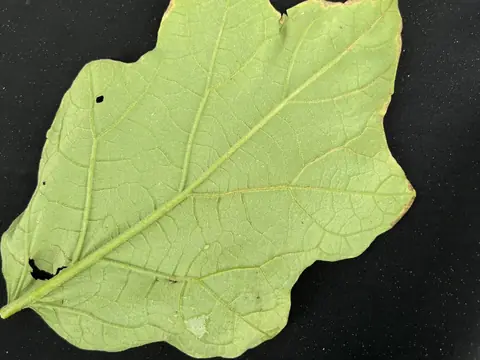
Bottom leaves turn pale yellow, plants stay thin, and fruits come small and pale.
 Talong
Older leaves get scorched, crinkled edges and stems feel weak.
Talong
Shown on tomato
Stems, leaf stalks and the undersides of old leaves turn purplish and the plant stays short.
 Talong
Shown on tomato
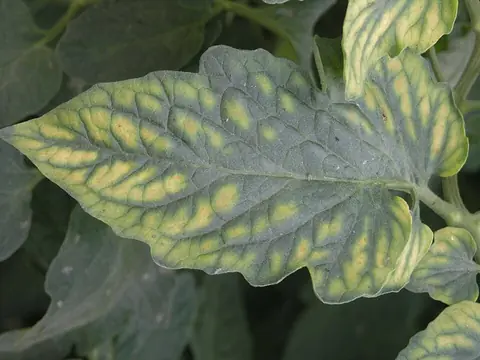
Mature leaves turn yellow in the middle between green veins, with spotted dead patches.
 Talong
Shown on tomato
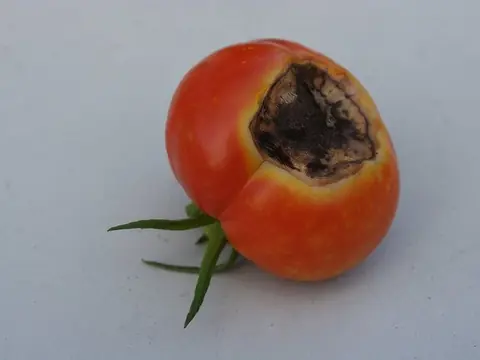
Brown to black leathery spots at the bottom end of the fruit and curled, hard young leaves.
 Talong
Shown on tomato
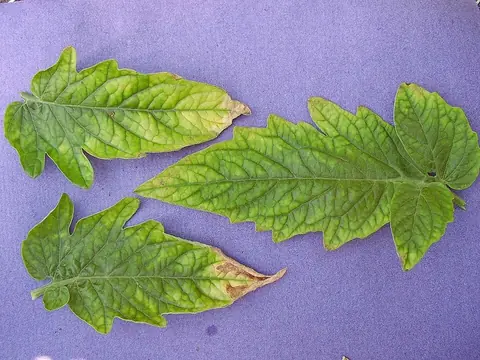
New leaves come out wrinkled and brittle, tips die, and the plant stops branching and flowering.
Talong
Shown on tomato
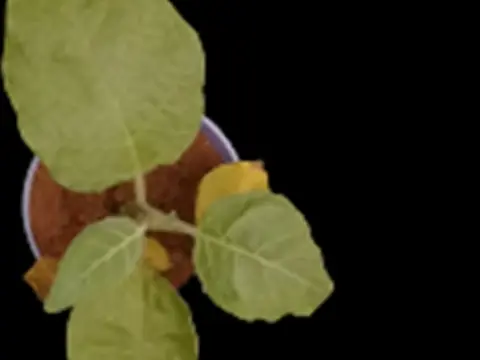
Small, bunched rosettes of yellowish new leaves and flowers that drop without fruiting.
 Talong
Shown on scarlet eggplant
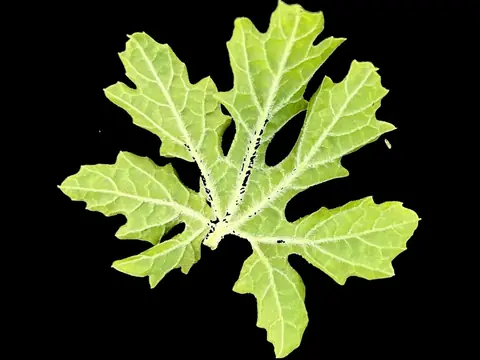
Young leaves turn evenly yellow, stay narrow and pointed, and veins look reddish.
 Ampalaya
Lower leaves turn pale yellow and drop, and fruits come small, pale and thick.
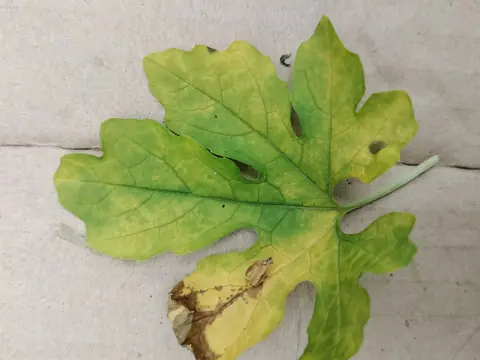 Ampalaya
Old leaves scorch and cup, shoot tips die back and fewer female flowers open.
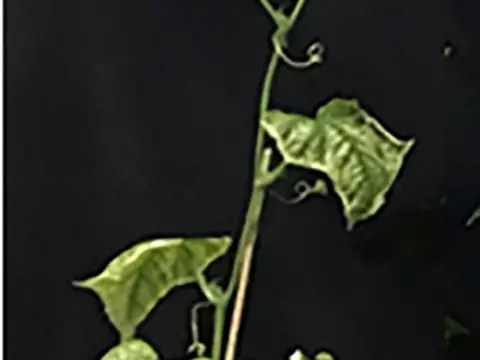 Ampalaya
Shown on cucumber
Mature leaves yellow in the middle while the edges and veins stay green.
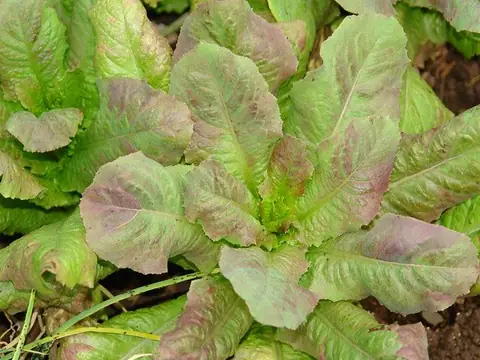 Ampalaya
Shown on lettuce
Short, thin shoots and dull leaves with purple veins.
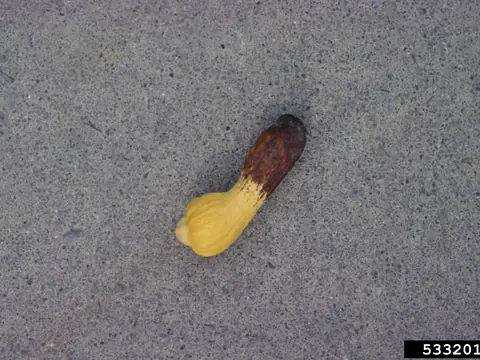 Ampalaya
Shown on squash
New leaves come out hooked and scorched, the vine tip dies, and fruits fail to set.
Ampalaya
Shown on tomato
Young fruits drop, and fruits that stay show yellow streaks, corky skin and cracks.
Ampalaya
Shown on tomato
Young leaves are small, pale with green veins, and bunched on short vines.
 Kalabasa
Shown on zucchini
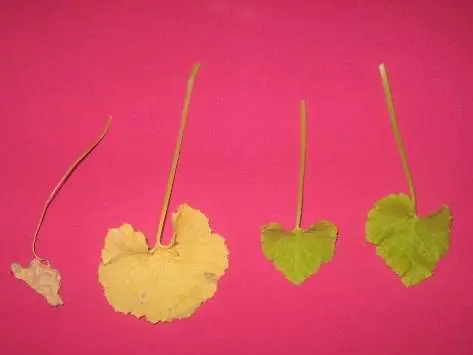
Older leaves yellow from the tips and drop, and fruits are small and pale.
 Kalabasa
Shown on zucchini
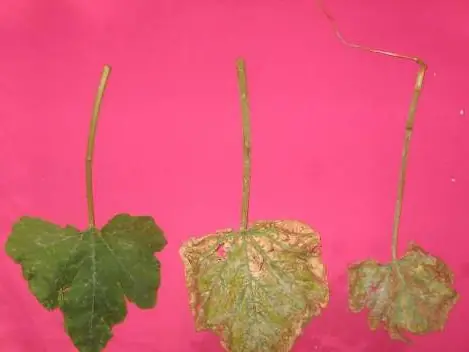
Old leaves scorch and cup up, and fewer female flowers and good fruits form.
 Kalabasa
Shown on zucchini
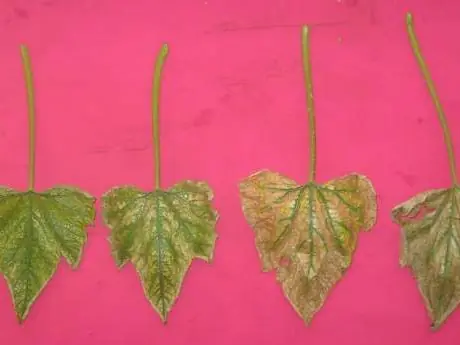
Older leaves yellow between the veins, and the yellow patches die and fall out.
 Kalabasa
Shown on lettuce
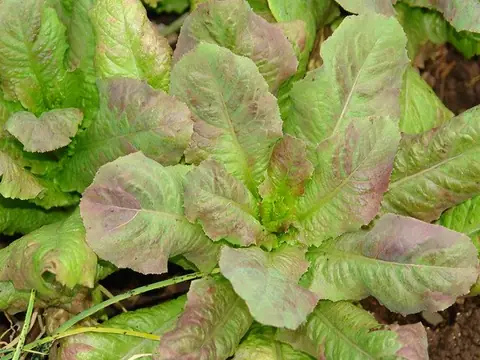
Purplish leaves and veins, short thin runners and poor yield.
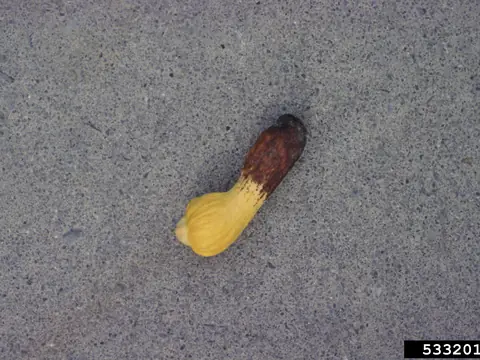 Kalabasa
Young fruits rot at the flower end, and new leaves crinkle and scorch.
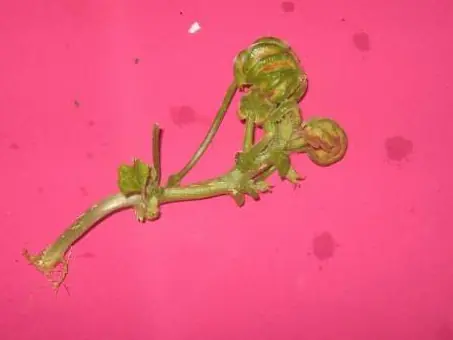 Kalabasa
Shown on zucchini
Young fruits drop, and fruits show corky streaks and cracks.
Kalabasa
Shown on tomato
Young leaves are pale with green veins and bunched on short runners.
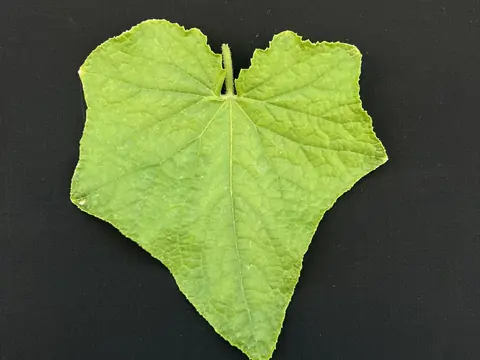 Pipino
Old leaves bleach yellow, vines are thin, and fruits come pale and misshapen.
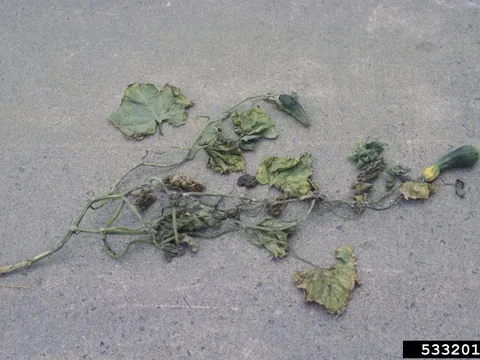 Pipino
Old leaf edges yellow and scorch to dry paper, and fruits stay thin at the stem end.
Pipino
Older leaves yellow between the big veins, leaving a narrow green band along each vein.
 Pipino
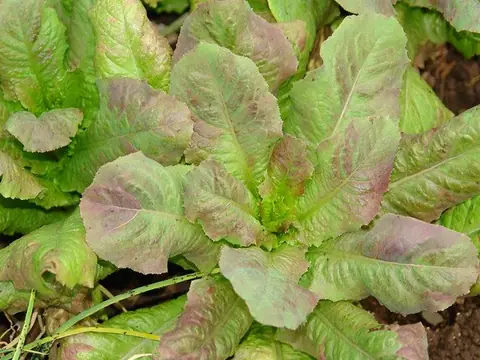
Shown on lettuce
Stunted vines with small, dull grey green leaves and weak roots.
 Pipino
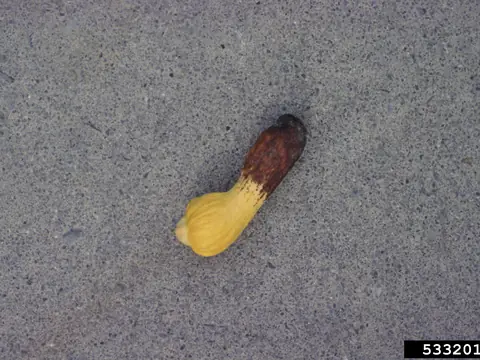
Shown on squash
Youngest leaves scorch and cup downward, the tip dies, and fruits fail at the blossom end.
Pipino
Shown on tomato
Young fruits drop, and older fruits show yellow streaks that turn corky near the blossom end.
Pipino
Shown on tobacco
Middle and upper leaves turn pale yellow while the veins stay green.
Okra
Shown on cacao
Lower leaves pale and drop, and pods come small, pale and misshapen.
 Okra
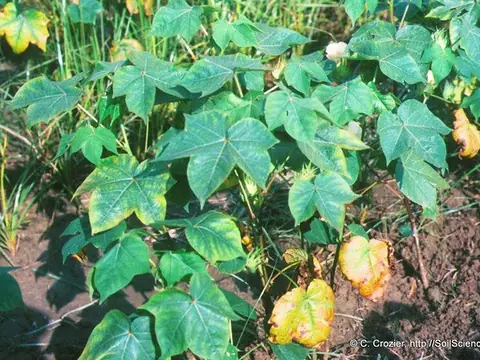
Shown on cotton
Older leaves yellow and scorch at the edges while the leaf base stays dark green.
 Okra
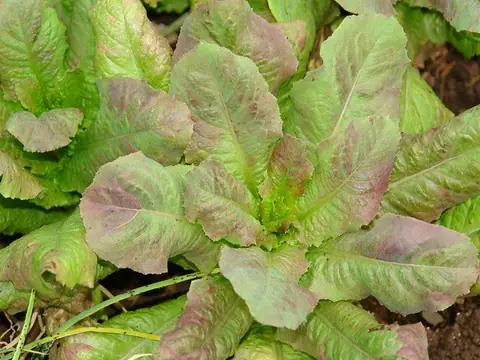
Shown on lettuce
Older leaves look extra green, then purple, on short, thin plants.
Okra
Shown on tomato
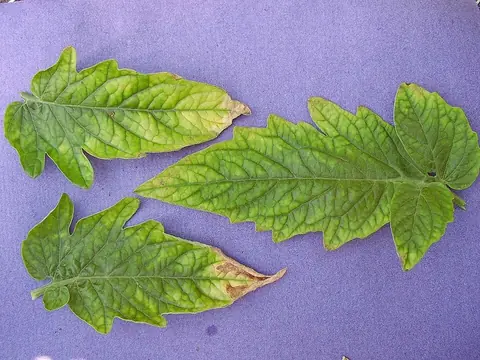
Young leaves yellow between the veins, turn whitish and stay few and small.
 Okra
Shown on tomato
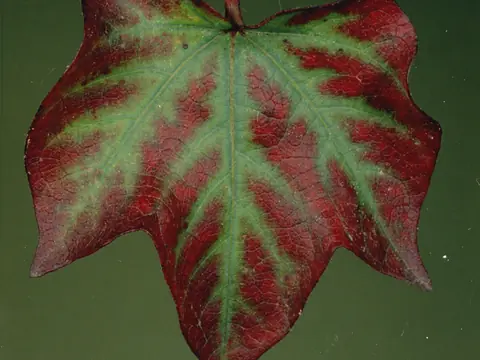
New leaves are small and brittle, and pods stay short and misshapen with few seeds.
 Okra
Shown on cotton
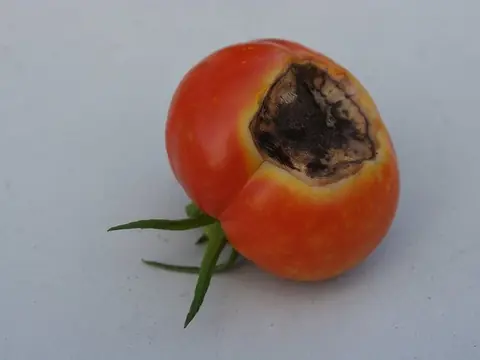
Fully grown leaves yellow in the middle while the edges stay green.
 Okra
Shown on tomato
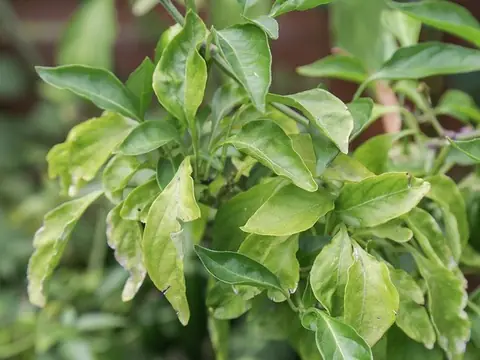
Growing tips brown and die, and young leaves rosette with ragged, upturned edges.
 Sili
Lower leaves turn pale yellow, veins included, and plants branch little.
 Sili
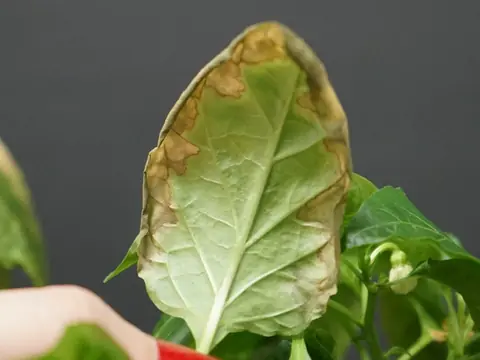
Leaf tips and edges burn brown and leaves crinkle and curl.
 Sili
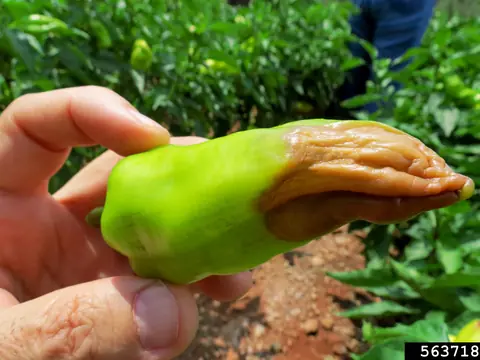
Sunken, water soaked spots at the tip of the fruit that dry out and turn black.
 Sili
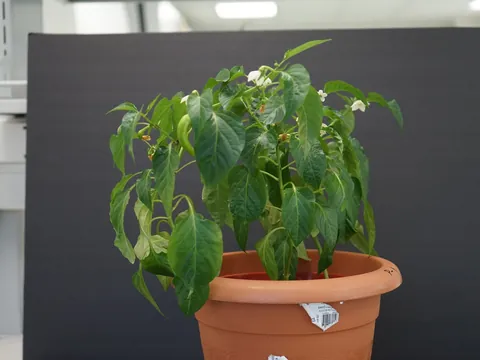
Purple stems and leaf undersides, few branches, and late flowering.
 Sili
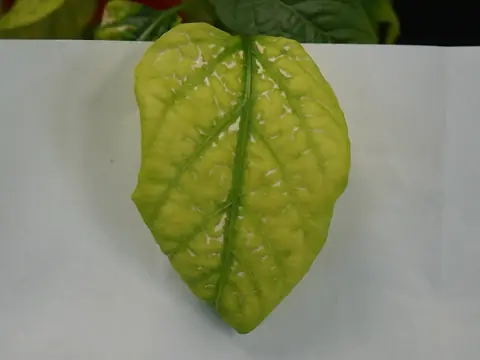
Leaves that just reached full size turn yellow between the big green veins and drop early.
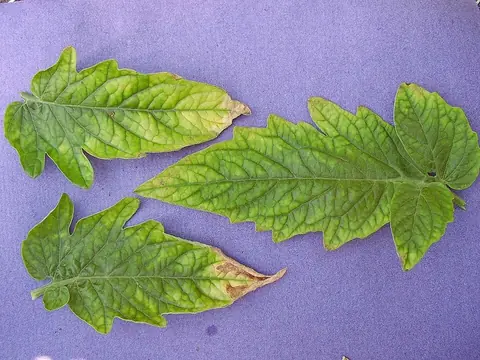 Sili
Shown on tomato
Brittle, twisted new leaves and fruits that crack or drop.
Sili
Shown on tomato
Young leaves are small, stiff and mottled yellow, and the plant is short jointed.
Sili
Shown on tobacco
Young top leaves turn evenly pale and curl down, with reddish veins.
Sili
Shown on tobacco
Young leaves are mottled yellow with a fine net of green veins and dark spots along the veins.
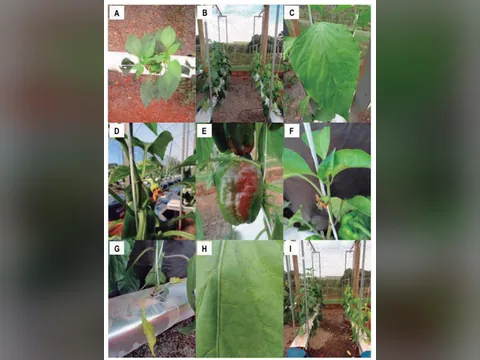 Atsal
Lower leaves yellow and fall early, and the whole plant looks pale and small.
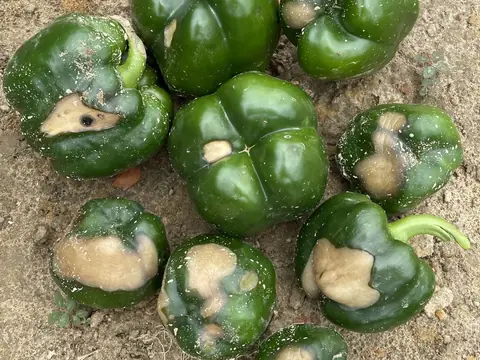 Atsal
Large sunken, water soaked patches near the bottom of the fruit that turn black and leathery.
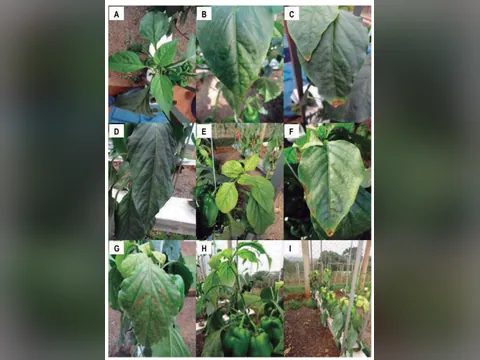 Atsal
Dark green leaves droop and wilt, with small sunken whitish spots and burnt edges.
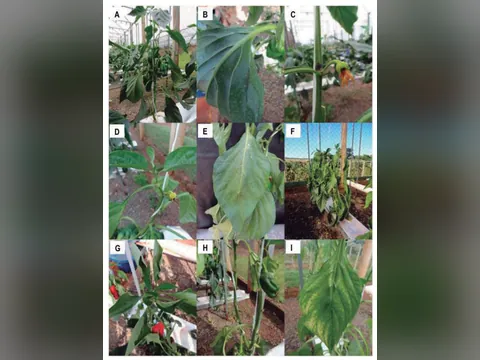 Atsal
Small, wilting plants with mottled leaves and short, narrow fruits.
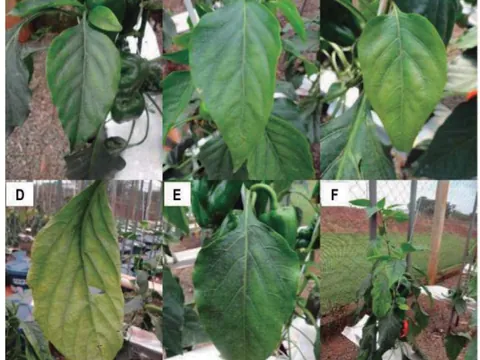 Atsal
Older leaves go pale between the veins while a green band stays along each main vein.
Atsal
Shown on tobacco
The youngest top leaves look evenly pale from a distance, with short jointed stems.
Atsal
Shown on tomato
Short, stunted plants with small leaves crowded on short stems.
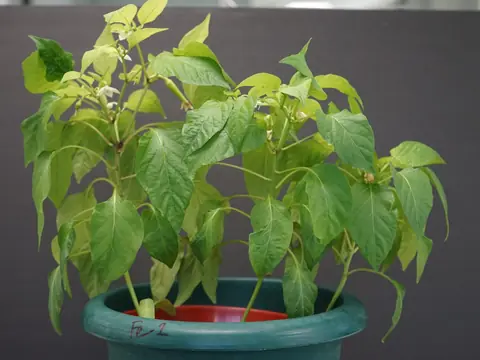 Atsal
Shown on chili
Newest leaves at the tip turn yellow green between dark green veins.
Atsal
Shown on tobacco
Young leaves go pale between the veins while even the small veins stay dark green.
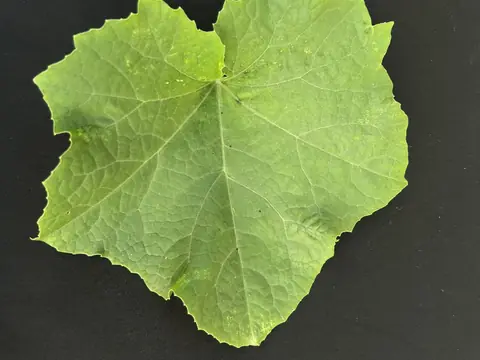 Patola
Older leaves turn yellow, vines grow slowly and fruits stay small and pale.
Patola
Shown on bitter gourd
Old leaf edges yellow, then brown and cup, while fruits fill poorly.
Patola
Shown on cucumber
Oldest leaves yellow between the veins while fruits enlarge, and the yellow tissue falls out.
 Patola
Shown on lettuce
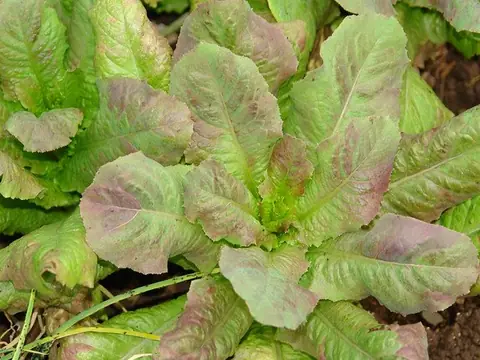
Slow vines with small, dark leaves and late flowering.
Patola
Shown on tomato
New leaves come out deformed and brittle, and young fruits drop or crack.
 Upo
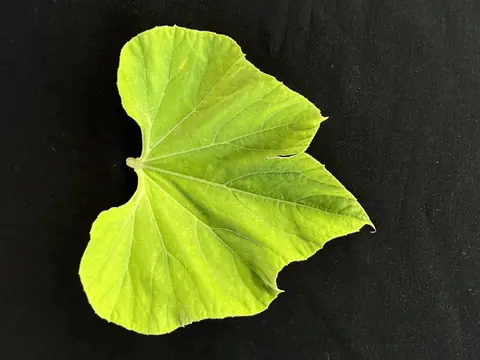
Older leaves pale and yellowing up the vine, with small, pale fruits.
 Upo
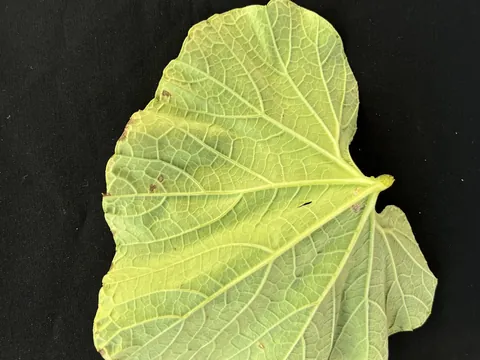
Old leaves scorch and cup up, shoots die back, and few female flowers open.
 Upo
Shown on lettuce
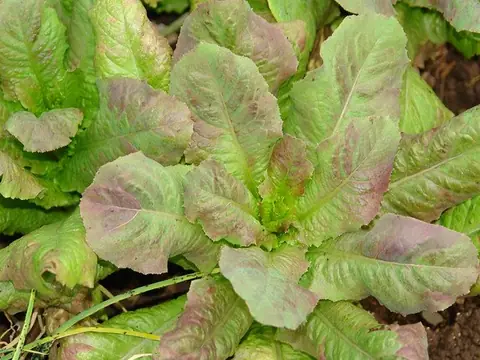
Purplish leaves along the veins and short, thin runners.
Upo
Shown on cucumber
Mature leaves yellow in the middle with green edges and green veins.
 Upo
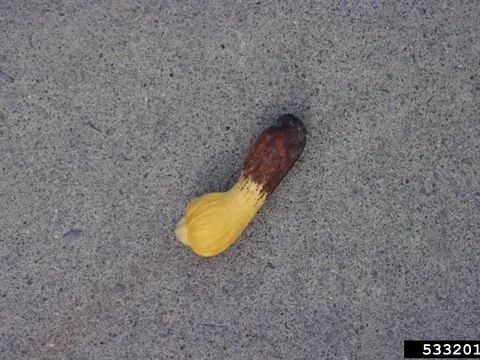
Shown on squash
New leaves crinkle and curl, vine tips die, and fruits fail to set or rot at the end.
Upo
Shown on tomato
Young fruits drop, and fruits show corky marks and cracks.
Sayote
Shown on bitter gourd
Older leaves on the vine turn pale yellow and tops for harvest grow slowly.
Sayote
Shown on bitter gourd
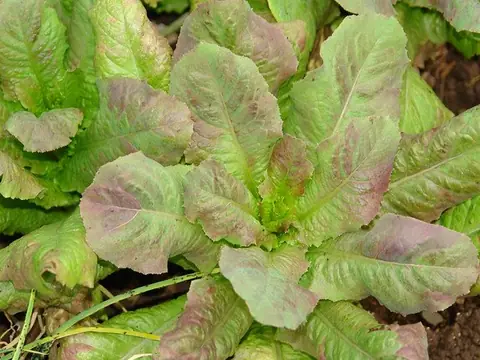
Older leaves look grey green, then bronze with brown, downturned edges.
 Sayote
Shown on lettuce
Slow vines with small, dark green leaves and late flowering.
Sayote
Shown on tomato
New leaves and tips come out brittle and deformed, with few female flowers and fruits.
Sayote
Shown on cucumber
Oldest leaves yellow between the veins while the veins stay green.
Sayote
Shown on tomato
New leaves are small and mottled yellow, with many dead spots.
Pakwan
Shown on bitter gourd
Old leaves pale and yellow up the runner, with small, misshapen fruits.
Pakwan
Shown on bitter gourd
Old leaves scorch and cup up, and fruits have poor flesh and weak flavour.
Pakwan
Shown on cucumber
Mature leaves yellow in the middle with green edges, and the yellow turns red and dies.
 Pakwan
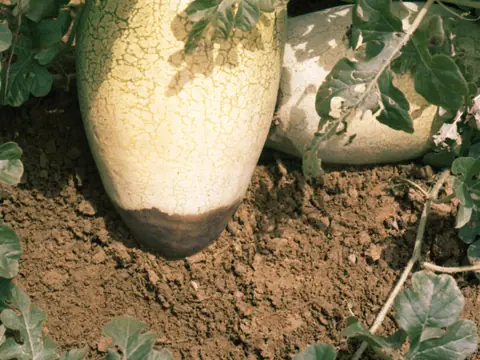
A dark rot at the flower end of young fruits, opposite the stem.
Pakwan
Shown on tomato
Young fruits drop, and fruits show yellow streaks, corky scurf and cracks.
 Pakwan
Shown on lettuce
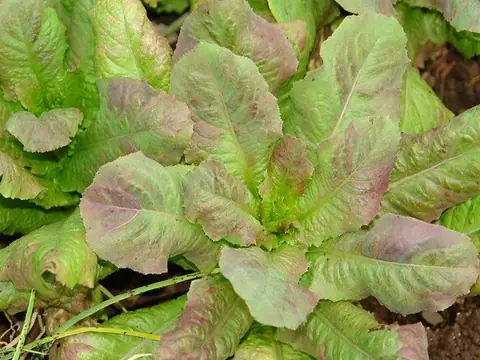
Older leaves turn purple along the veins and young leaves are small, stiff and dark.
Pakwan
Shown on tomato
Young leaves pale with green veins, small and bunched on short runners.
Milon
Shown on cucumber
Old leaves pale and yellow up the vine, and fruits are small and misshapen.
Milon
Shown on cucumber
Old leaves scorch and cup up, and fruits are poorly flavoured and spotted.
Milon
Shown on cucumber
Oldest leaves yellow between the veins while fruits are swelling, and the yellow patches fall out.
On acid soil, crown leaves turn pale between the veins as vines start to run, then leaf edges burn.
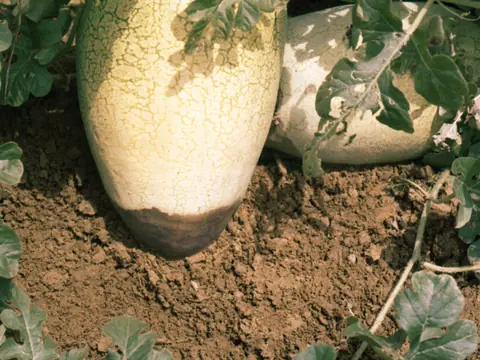 Milon
Shown on watermelon
New leaves crinkle and hook, vine tips die, and fruits are small, soft or tasteless.
Milon
Shown on tomato
Young fruits drop, and fruits show yellow streaks, corky marks and cracks.
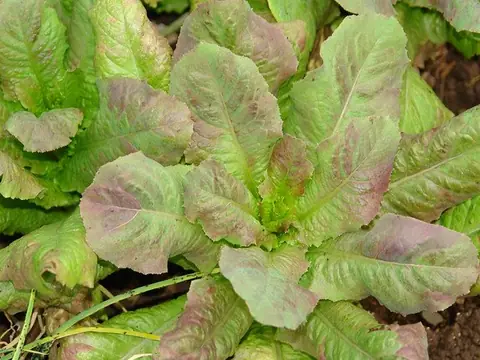 Milon
Shown on lettuce
Purplish leaves along the veins, small stiff dark young leaves and weak vines.
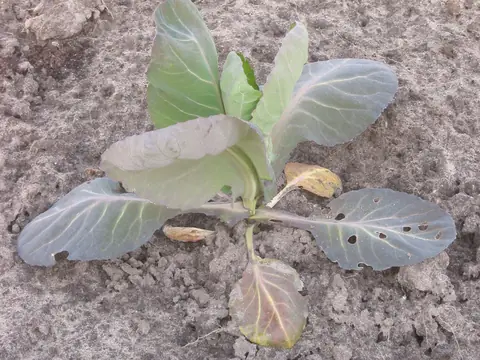 Presa
Shown on cabbage
Mature leaves turn pale then evenly yellow, with reddish stalks and edges.
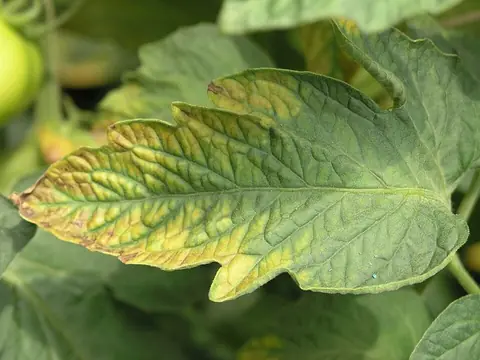 Presa
Shown on tomato
Mature leaves brown and dry along the edges, with sunken brown spots and dark leaf stalks.
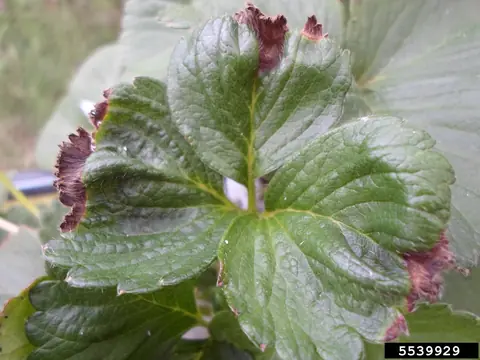 Presa
Young leaves crinkle with dead tips, and berries are small, hard and seedy at the tip.
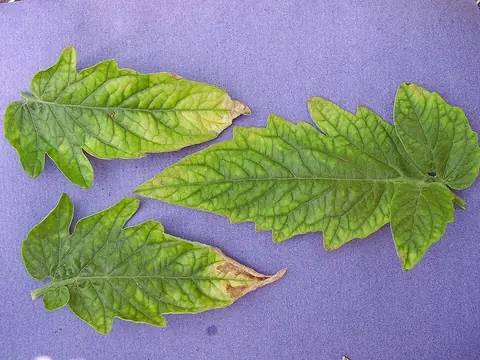 Presa
Shown on tomato
Misshapen, bumpy berries, aborted flowers and small young leaves with dark dead tips.
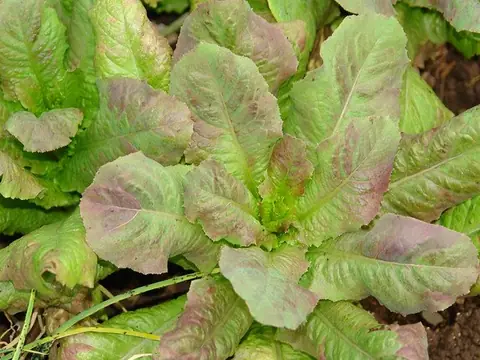 Presa
Shown on lettuce
Older leaves turn dull deep green with a metallic sheen and purple undersides.
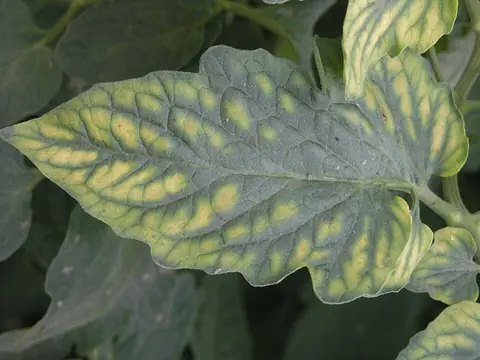 Presa
Shown on tomato
Older leaf edges yellow and scorch, then the leaf turns bright yellow while its base stays green.
Presa
The youngest centre leaves turn pale yellow between the veins and can bleach.
Pale, stiff, upright leaves that yellow and die back from the tips, and small bulbs.
Young leaves turn evenly yellow, plants are thin and spindly, and bulbing is late.
Leaves first turn darker green, then the tips of older leaves wilt, droop and turn papery.
Slow, dull green plants whose leaf tips die back without yellowing, and many thick necked bulbs.
Stunted plants with twisted, bent leaves and faint yellow stripes.
Brittle, bluish green, distorted leaves with yellow cross lines and cracks near the base.
Older leaves turn evenly yellow along their whole length, with white tips.
Bulb scales are thin and pale yellow, bulbs are soft, and leaf tips burn.
Older leaves yellow between veins, tips burn and curl, and bulbs have thick necks.
Thin, pale tops whose older leaves yellow from the tips. Stalks stay short.
Dark green leaves whose older tips wilt, droop and turn papery.
Young leaves are evenly pale yellow and the plants thin and weak.
Slow, dull green plants whose leaf tips die back without yellowing.
Stunted plants with twisted leaves and faint yellow stripes.
Older leaves turn evenly yellow along their length, with white tips.
Older leaves turn pale to yellow, plants stay thin, and bulbs are small.
Young leaves turn evenly yellow, plants are thin and weak, and bulbs are light with weak flavour.
Older leaves yellow and die along the edges, and bulbs stay small and store poorly.
Dark green, slow plants, sometimes reddish purple, with small roots and bulbs.
Young leaves distorted, the growing point dies, and bulbs crack or are misshapen.
Young leaves pale and stay small, and bulbing is late.
Older leaves yellow, with whitish tips, and bulbs grow slowly.
Young leaf tips die, roots are short, and bulbs are soft and store poorly.
Pale, upright leaves dying back from the tips, few side bulbs and small clusters.
Young leaves turn evenly yellow, plants are thin, and bulbs are light and mild.
Leaves turn darker, older tips wilt and burn, and bulbs stay small.
Slow, dull green plants with tips dying back and bulbs failing to fill.
Stunted plants with twisted, bent leaves and yellow stripes.
Brittle, distorted leaves with cracks near the base, and split bulbs.
Older leaves turn evenly yellow with white tips.
Tubo
Shown on corn
The whole field looks pale yellow green, the lower leaves dry early and the stalks stay thin.
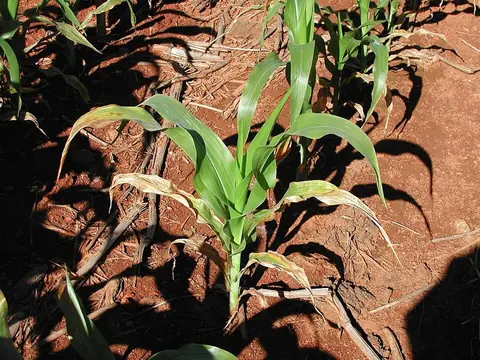 Tubo
Shown on corn
Old leaves turn yellow orange with scorched edges and red midribs, while the young leaves stay dark green.
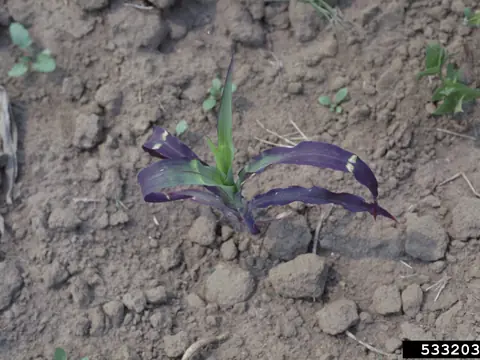 Tubo
Shown on corn
Leaves look dark bluish green with purple tips and edges, tillers are few and the stalks stay short.
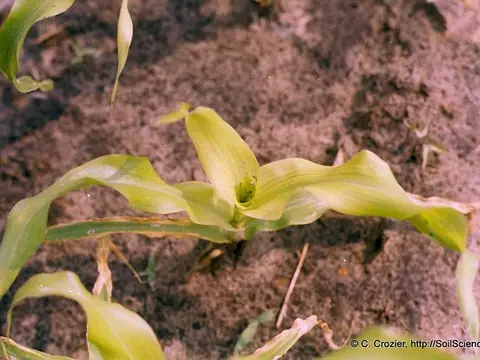 Tubo
Shown on corn
The top young leaves turn yellow green with purple edges, while the old leaves stay greener.
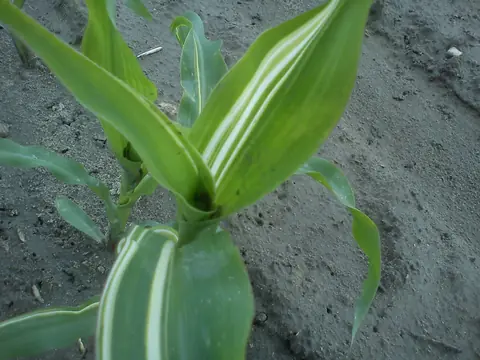 Tubo
Shown on corn
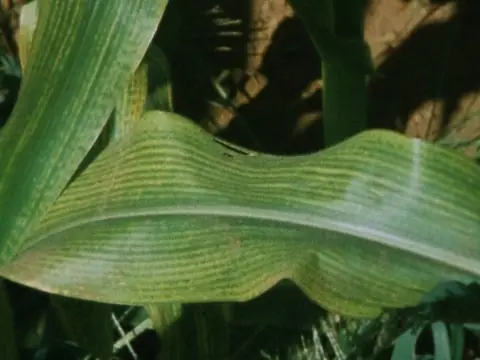
Young leaves show a broad yellow band across the middle of the blade, while the midrib and edges stay green.
 Tubo
Shown on corn
Older leaves look rusty, covered with small orange brown freckles.
Tubo
Shown on corn
Older leaves get tiny dead spots and a rusty look, and in bad cases the spindle tip dies.
 Tubo
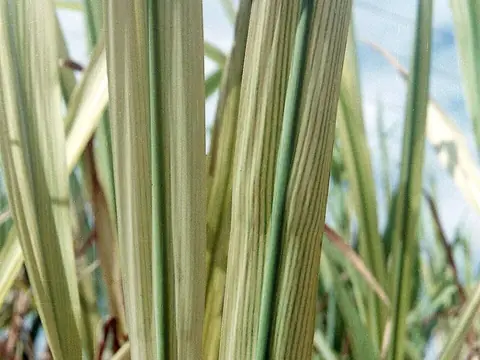
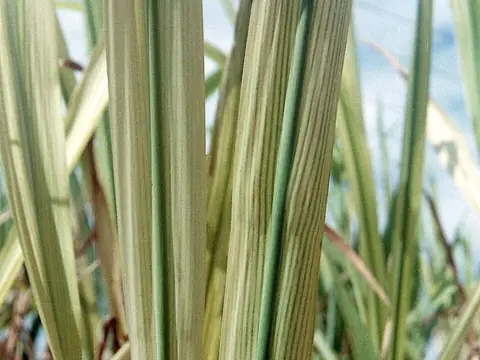
Young leaves show pale stripes from base to tip and can turn almost white.
Pale stripes on the young leaves start in the middle of the blade and run to the tip. The leaves split in the wind.
Older leaves dotted with tiny pale or white freckles on the sunny side, and ratoons that grow weaker each year.
Pinya
Shown on corn
Plants look pale yellow green with narrow leaves, and the fruits come out small (batterball).
Pinya
Shown on corn
Old leaves get yellow to orange spots and dry tips while young leaves stay dark green. The fruit is small and sour.
 Pinya
Shown on sugarcane
The young heart leaves turn pale yellow, often on acid red soils that are high in manganese.
Pinya
Shown on corn
The heart leaves bunch together and the top bends over to one side, called crookneck.
Pinya
Shown on corn
Older leaves turn yellow between the veins, most often where potash is applied heavily.
Pinya
Shown on corn
Leaves stay small and narrow with a purple or bronze color, and the plant barely grows.
The fruitlets crack and turn corky between the eyes, and the flesh browns inside.
Pinya
Shown on corn
Young leaves go pale and curl down, then turn pinkish red, and the fruit is soft or brown inside.
Young leaves fold up into a narrow gutter shape and their tips droop, then die.
 Tabako
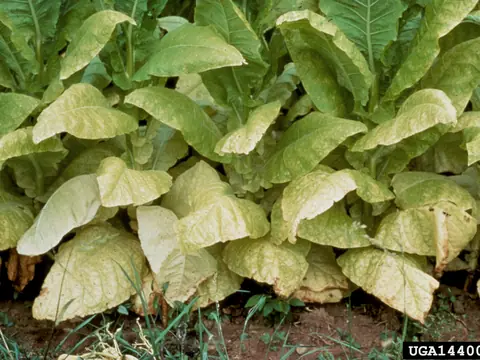
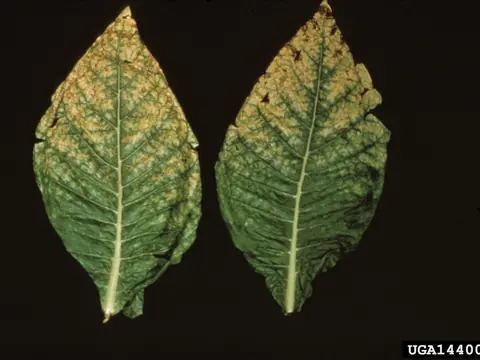
Lower leaves turn paler than the top leaves and dry up early. The plant stays small and the cured leaf is pale and thin.
 Tabako
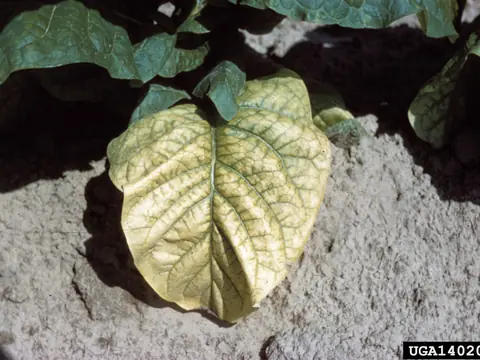
The tips and edges of the middle leaves turn yellow, then brown to black, and the cured leaf burns poorly.
 Tabako
Lower leaves yellow between the veins, starting near the tip and edge, while the top stays green.
Tabako
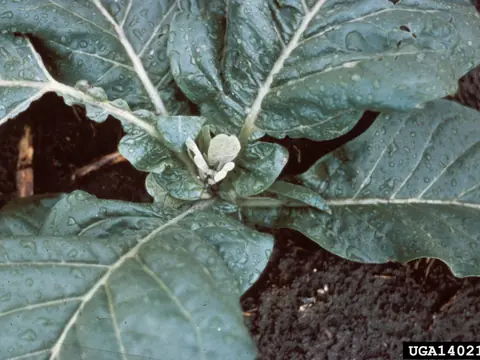
The bud and the top leaves pale first, and the whole plant slowly turns light green from the top down.
 Tabako
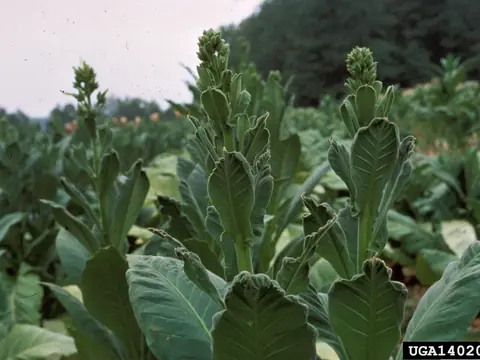
The bud twists and dies, the top leaves are thick, brittle and curled down, and the midribs crack across.
 Tabako
New leaves bend down like a shepherd's crook, their edges yellow and die, and the bud can rot.
Tabako
Yellow netting between the veins with small white spots, on fields that were limed too much.
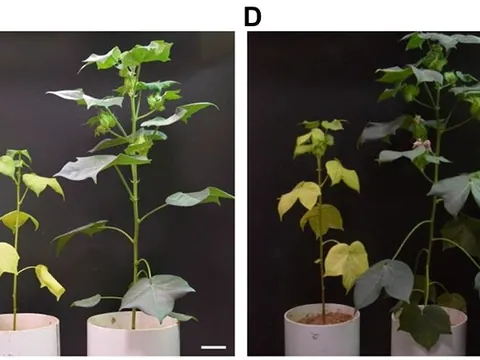 Bulak
Lower leaves turn pale yellow, then reddish. Plants stay short with few fruiting branches and shed their squares.
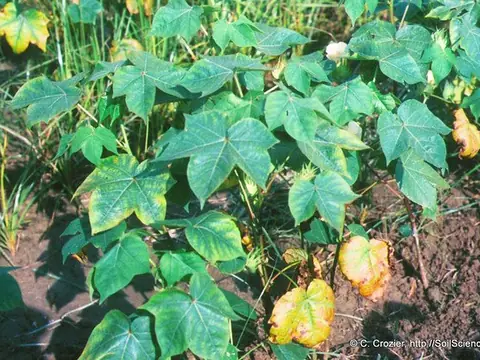 Bulak
Yellow white mottling on leaf tips and edges that turns brown. Leaves curl, turn reddish brown and drop early, and bolls stay small.
Bulak
Shown on tomato
Dark green rings on the leaf stalks, many squares and young bolls dropping, and small, misshapen bolls.
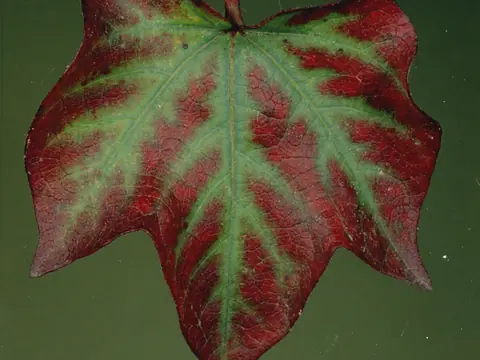 Bulak
Lower leaves turn purple red between green veins, then drop early.
Bulak
Shown on lettuce
Dark green, stunted plants with reddish purple old leaves and late flowering.
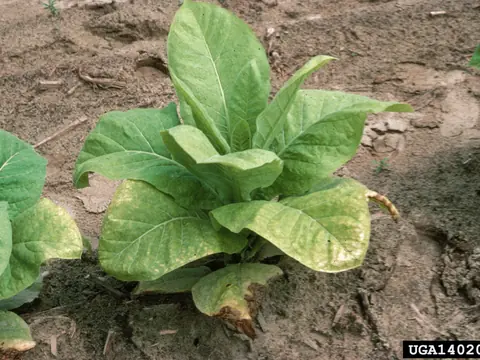 Bulak
Shown on tobacco
The young top leaves turn pale green to yellow while the old leaves stay green. Plants are small and spindly.
Bulak
Shown on tomato
Young leaves thick, leathery and cupped upward, yellow between the veins, on short, bushy plants.
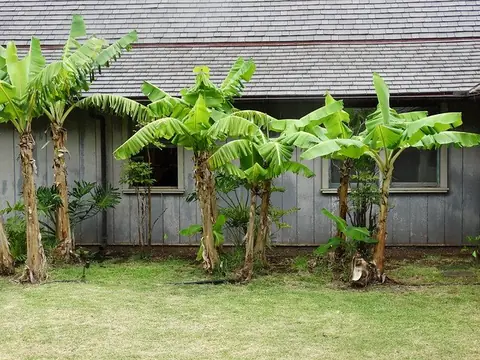 Abaka
Shown on banana
Pale yellow green plants that stay short, with thin stalks and small leaves.
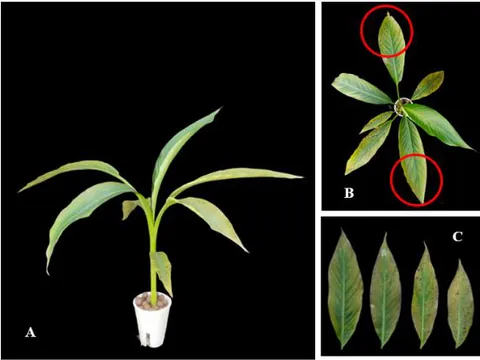 Abaka
Old leaves yellow and scorch orange brown from the tip and edges. Short plants.
Abaka
Short pseudostems and narrow leaves. Old leaf edges yellow and young leaves look bluish.
Old leaves yellow in the middle of the blade, edges stay green, leaf stalks show purple blotches.
Abaka
Shown on banana
Young leaves narrow with yellow stripes between the veins, but no dark streaks like bunchy top.
Goma
Shown on cassava
Leaves of the lower storeys turn evenly pale yellow green, worst on leaves in full sun, and the canopy stays thin.
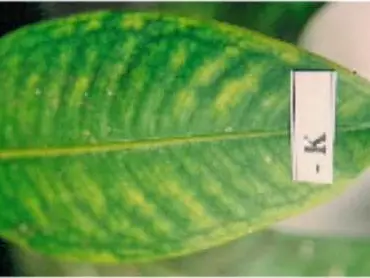 Goma
Shown on mangosteen
Old leaves yellow at the tips and edges, then the edges die brown. Leaves come out smaller.
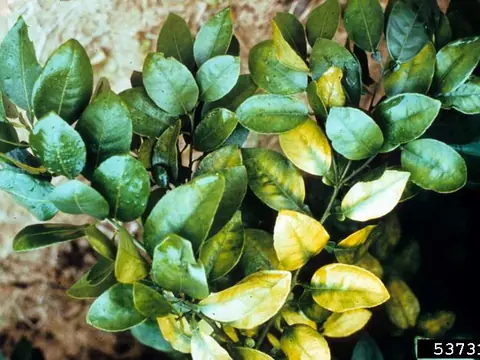 Goma
Shown on citrus
Old leaves in the lower storeys yellow between the veins, the yellow moving in from the edge while the veins stay green.
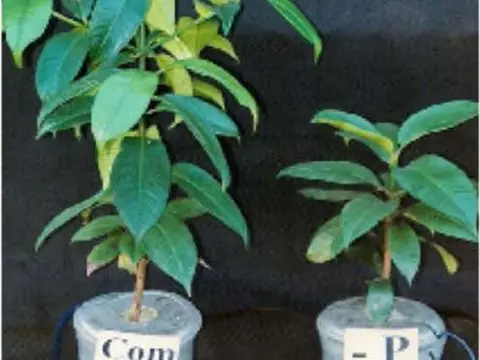 Goma
Shown on mangosteen
Bronzing under part of the leaf, often on one half and at the far end, with dying leaf tips and early leaf fall.
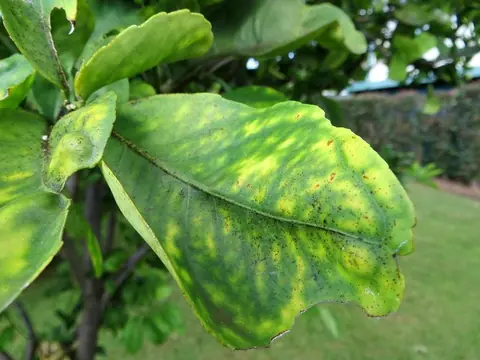 Goma
Shown on citrus
In young plants, new leaflets come small, narrow, hooked like a claw and wavy edged, with yellow between the veins.
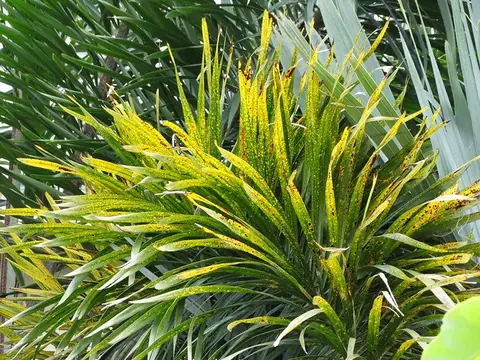 Palma
Shown on another palm
Orange spots on the leaflets of old fronds that join into orange patches.
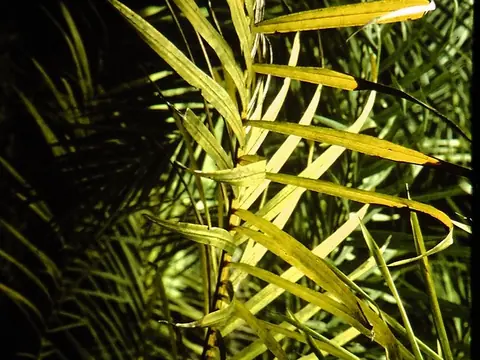 Palma
Old fronds pale yellow green with bright yellow midribs, and slow growth.
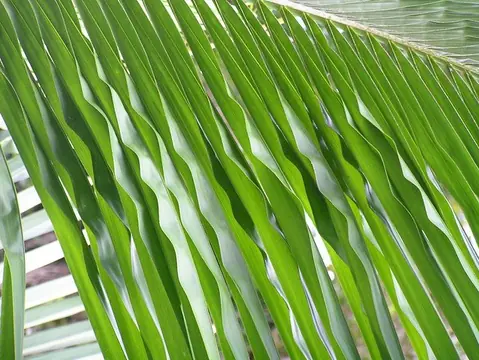 Palma
Shown on another palm
Leaflet tips on new fronds bend into a hook. In bad cases fronds look like a fish bone.
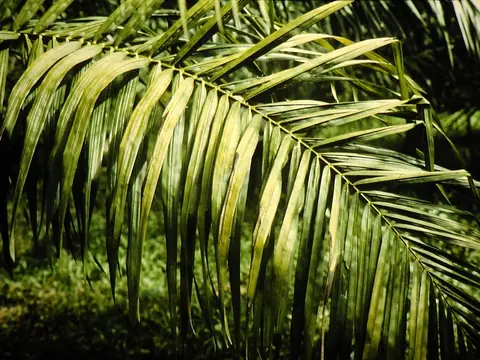 Palma
Old fronds turn bright orange yellow, but the shaded part of each leaflet stays green.
Old fronds dull olive green and dying early. A thin, tapering trunk and small bunches.
Kawayan
Shown on corn
The clump turns pale yellow green, older leaves yellow first, and new shoots come few and thin.
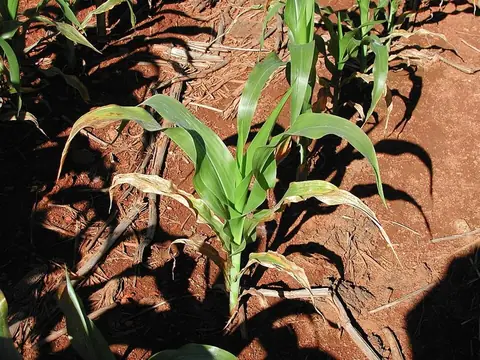 Kawayan
Shown on corn
Older leaves yellow and scorch brown at the tips and edges.
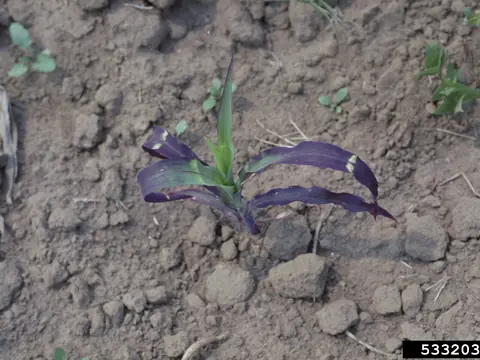 Kawayan
Shown on corn
Clumps spread slowly and send up few shoots. Leaves may look dull dark green.
 Kawayan
Shown on corn
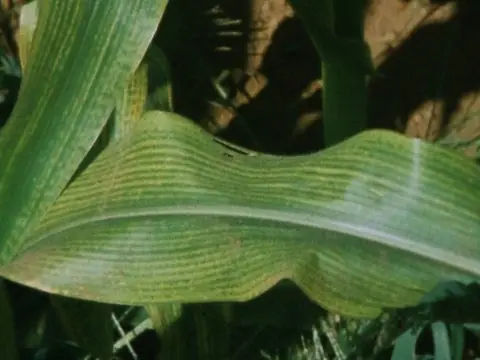
Older leaves get yellow streaks between green veins. Culms stay thin.
 Kawayan
Shown on sugarcane
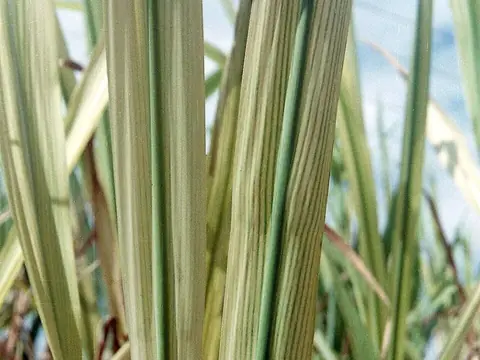
New leaves turn yellow with green veins, on limestone or high pH soils.
 Saging
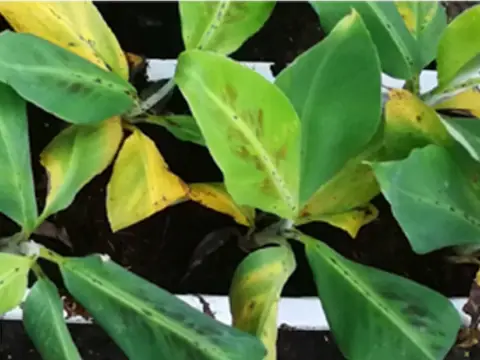
Old leaves turn orange yellow from the tip, the edges scorch brown and the midrib bends.
 Saging
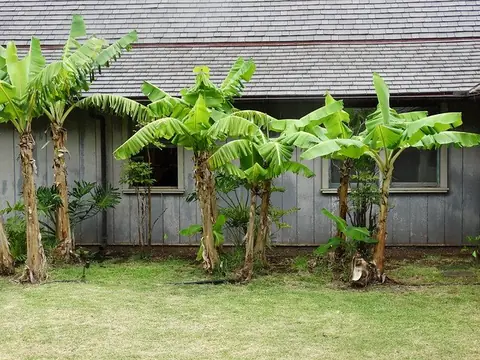
Pale green to yellow leaves, pinkish red leaf stalks and a thin, slow plant.
Old leaves yellow in the middle of the blade while the edge stays green. Purple blotches on the leaf stalk.
Saging
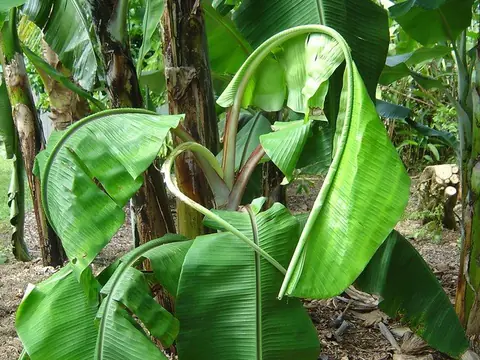
Young leaves narrow and pointed, with yellow and green stripes and a purple tint underneath.
 Saging
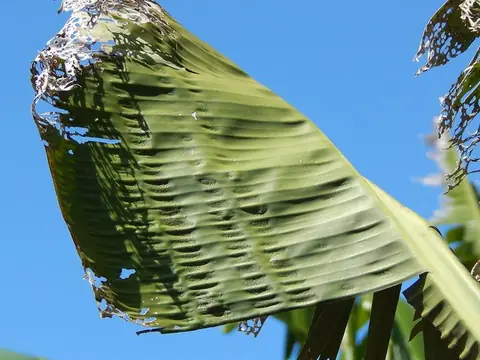
Young leaves curl and crumple, with white streaks across the veins on the underside.
 Saging
New leaves come out as a spike with little or no blade. Ripe fruit peel splits.
Saging
Shown on abaca
Short plant with weak roots. Old leaf edges yellow in a saw tooth pattern and young leaves look bluish.
Saging
Young leaves even pale yellow, veins included, on a small slow plant.
Saging
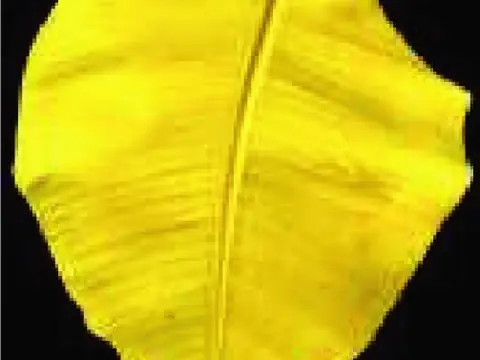
The second or third youngest leaf yellows from the edge inward along the veins, like the teeth of a comb.
 Saging
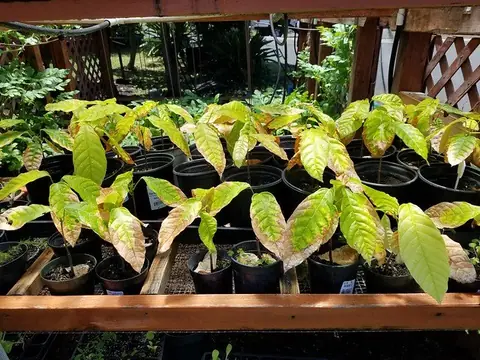
Young leaves turn yellow to almost white while the veins stay green for a while.
 Papaya
Shown on cacao
Lower leaves go pale green from the tip, new leaves come small and slow, and leaf stalks are short, thin and pinkish.
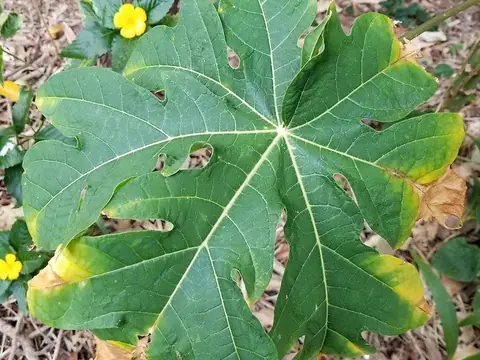 Papaya
Old leaves get lemon yellow edges that die brown, purplish brown patches show at the base of leaf stalks, and fruit come out misshapen.
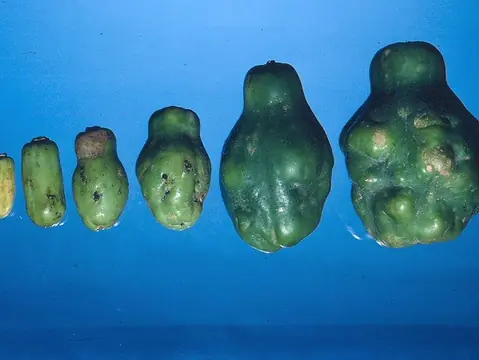 Papaya
Bumpy, lumpy fruit that bleed latex, with empty or poorly formed seeds inside.
Papaya
Shown on broccoli
Lower leaves yellow between the veins while green bands stay along the edge and the midrib. Leaf stalks look purple mottled.
Papaya
Shown on cabbage
New leaves pale with curled edges and small dead spots, a bunched top, and soft fruit flesh.
Papaya
Shown on broccoli
Dark bluish green leaves on a tree that stops growing taller, with dead patches on the old leaves.
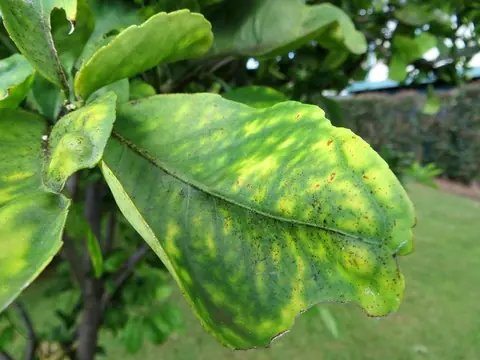 Papaya
Shown on citrus
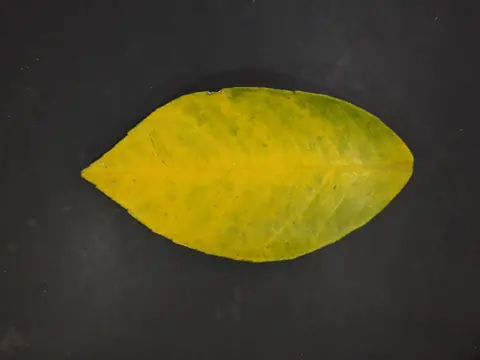
New leaves come small and yellow between the veins, and the top bunches up.
 Mangga
Shown on citrus
Small, pale yellow leaves over the whole tree, yellowish twigs, weak flushes and small fruit.
 Mangga
Shown on avocado
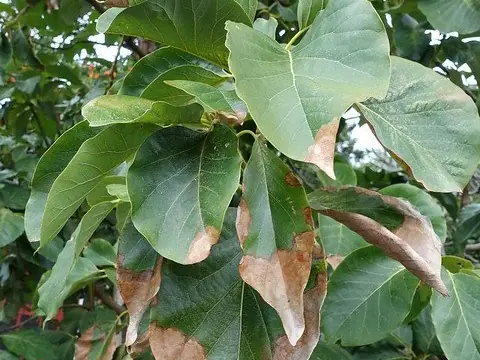
Old leaves get grey to brown dead edges and scattered yellow to orange spots. Fruit stays small.
 Mangga
Shown on citrus
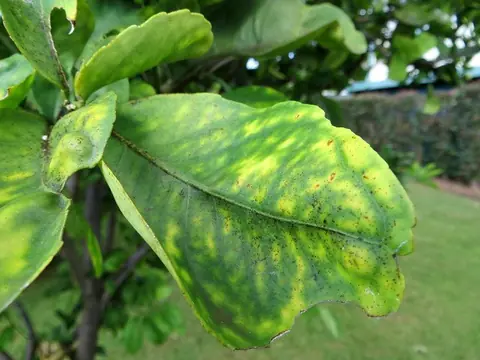
New leaves small, thick, brittle and crowded in a rosette at the shoot tip, pale between green veins (little leaf).
 Mangga
Shown on citrus
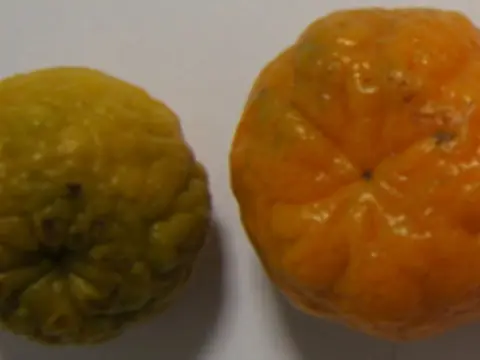
Fruit cracks and shows brown, soft, watery flesh inside. Many flowers drop. New leaves thick and misshapen.
 Mangga
Shown on coffee
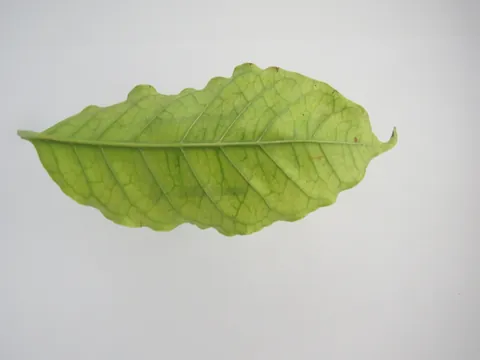
Ripening fruit go soft and watery at the tip (soft nose) or brown and jelly like inside near the seed.
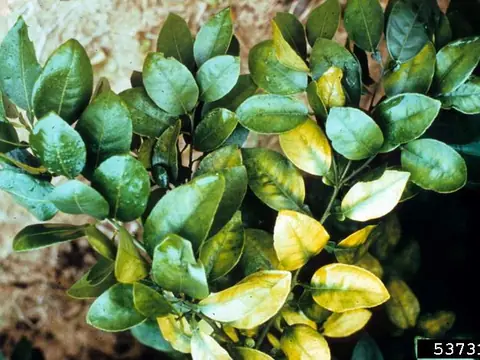 Mangga
Shown on citrus
Old leaves yellow between the veins while the veins stay dark green like a fishbone. Edges bronze.
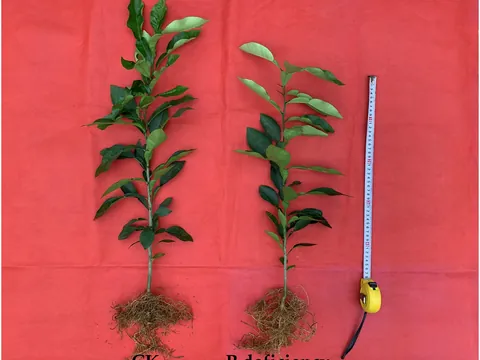 Mangga
Shown on pomelo
Slow growth, old leaves fall early, shoot tips die back and new leaves stay small and dark green.
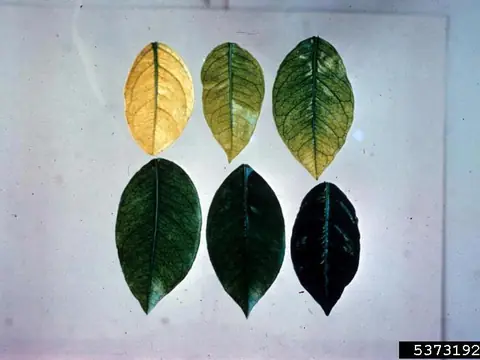 Mangga
Shown on citrus
Newest leaves pale yellow to almost white with a fine net of green veins.
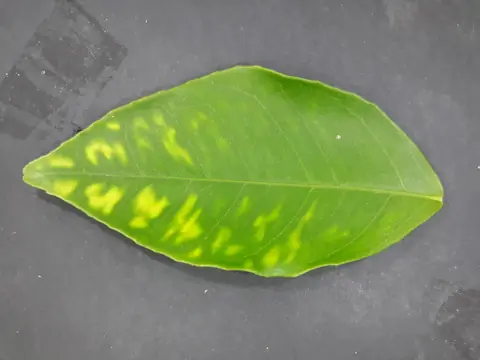 Mangga
Shown on citrus
Leaves just reaching full size turn yellowish green with a fine net of green veins and grey specks.
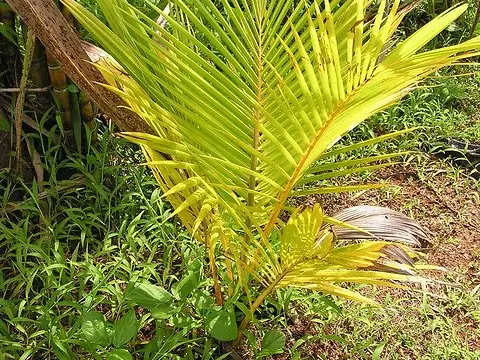 Niyog
The whole crown is pale yellow green, the fronds taper, and few palms bear nuts.
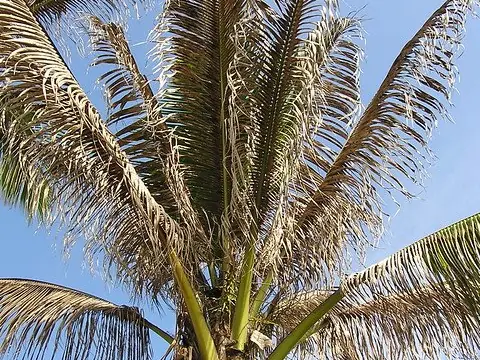 Niyog
Old fronds show see through yellow to orange spots near the tips, then dead leaflet edges.
Fronds pale yellow to orange, fewer nuts, and copra that comes out rubbery and shrunken.
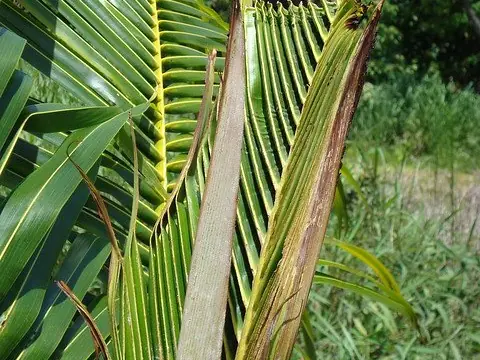 Niyog
New fronds stay crinkled and unopened, leaflet tips hook, and young nuts (buttons) fall.
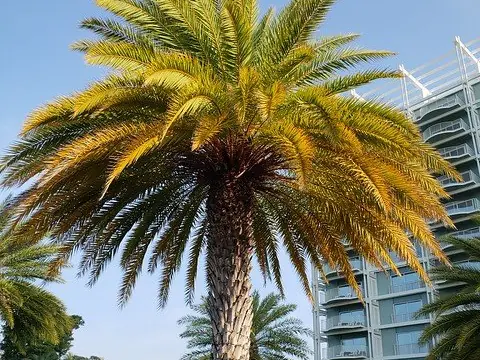 Niyog
Shown on date palm
Old fronds show a wide yellow band along the leaflet edges while the centre stays green.
Old fronds dark or purplish green, small fronds, and flowering comes late.
New fronds come out yellow with dead streaks, then wither and frizzle. Leaflet tips drop off.
 Kalamansi
Shown on citrus
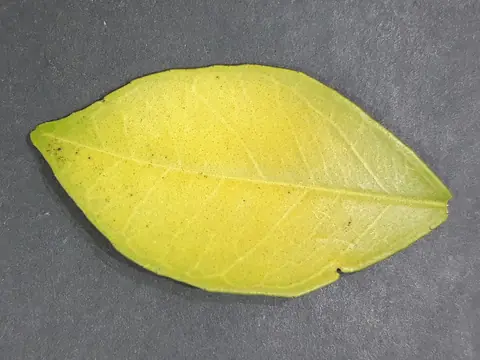
The whole tree turns light green to yellow, old leaves drop early and the canopy thins.
 Kalamansi
Shown on citrus
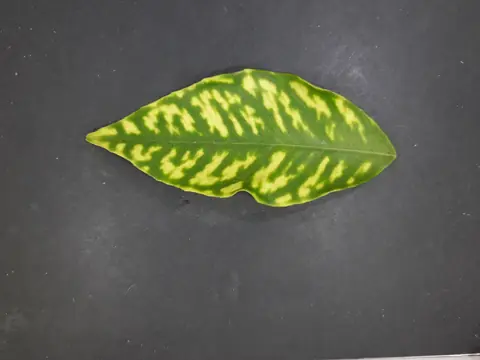
Young leaves with yellow patches between green veins (mottle leaf), small, narrow and standing upright.
 Kalamansi
Shown on avocado
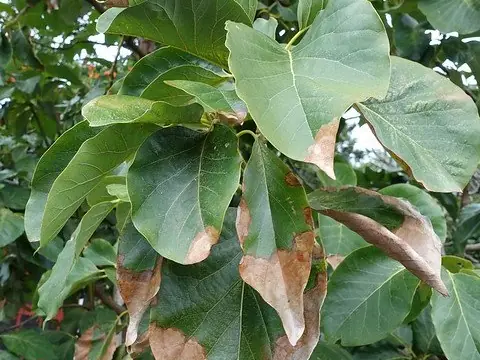
Old leaf edges pale yellow to bronze, small wrinkled leaves, and small thin skinned fruit that may split.
 Kalamansi
Shown on citrus
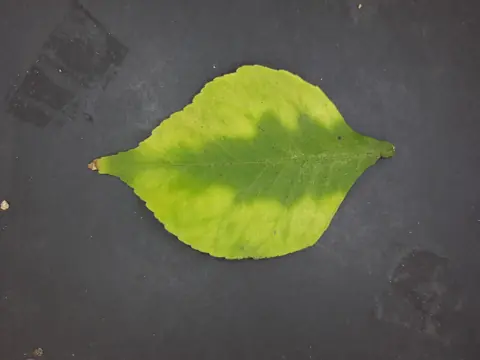
Old leaves near the fruit yellow from the sides inward, leaving a green V shape at the leaf base.
 Kalamansi
Shown on citrus
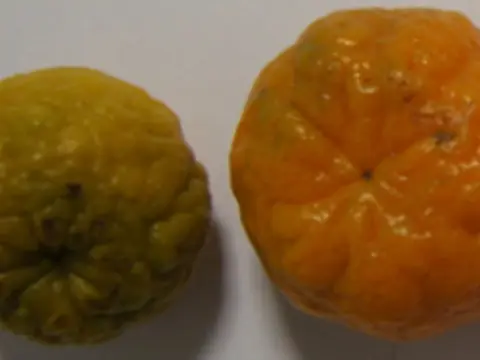
Fruit small, hard and lumpy with gum spots in the white peel. Leaves curl and shoot tips die, sending out many shoots.
 Kalamansi
Shown on citrus
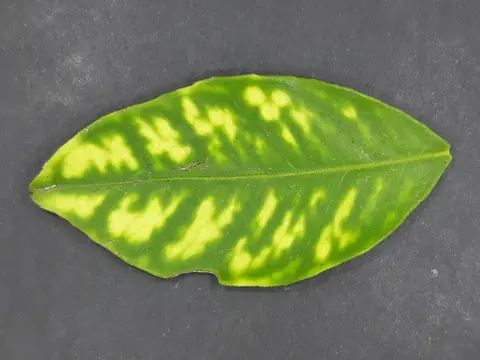
Young full size leaves pale between the veins with broad dark green bands along the veins. Leaf size stays normal.
 Kalamansi
Shown on citrus
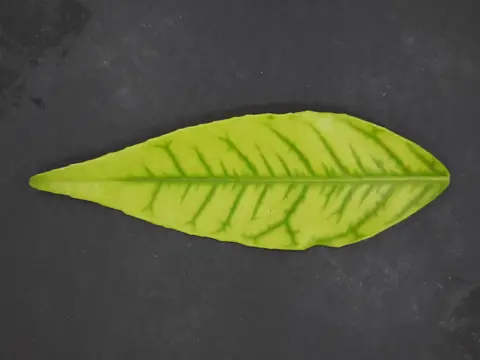
Newest leaves yellow to ivory with green veins. Worst in wet, poorly drained or limey spots.
Kalamansi
Shown on pomelo
Old leaves dull with bronze or purplish freckles. Fruit coarse with a thick peel, and few flowers.
 Kalamansi
Shown on an ornamental tree
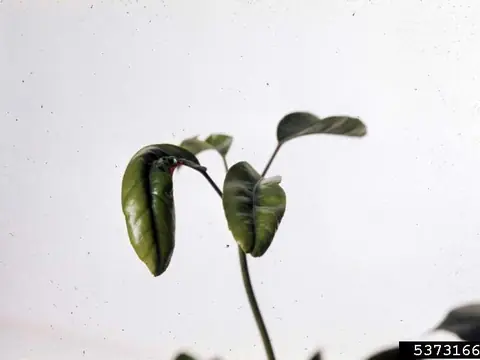
Oversized dark green leaves on long, soft shoots that bend like an S, blisters of gum at the nodes, and twigs dying back.
Citrus, dalandan or ponkan
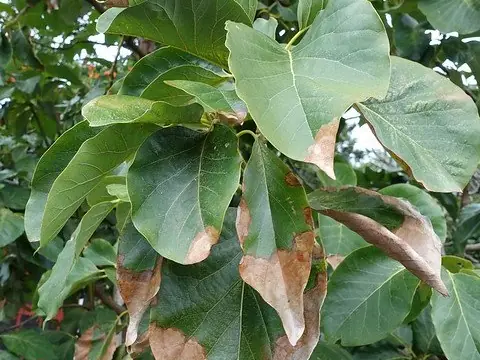
Older leaves pale green to yellow and falling early, so the inside of the canopy goes bare.
 Citrus, dalandan or ponkan
Shown on avocado
Old leaf edges yellow to bronze. Small fruit that split from the blossom end or show sunken creases in the peel.
Citrus, dalandan or ponkan
Young leaves mottled yellow between green veins, small, narrow and upright. Small, smooth, pale fruit.
Citrus, dalandan or ponkan
Mature leaves next to the fruit yellow on both sides of the midrib, leaving a green V at the leaf base (bronzing).
Citrus, dalandan or ponkan
Small, hard, lumpy fruit with gum pockets in the white peel. Many fruit drop. Shoot tips die and branch out.
Citrus, dalandan or ponkan
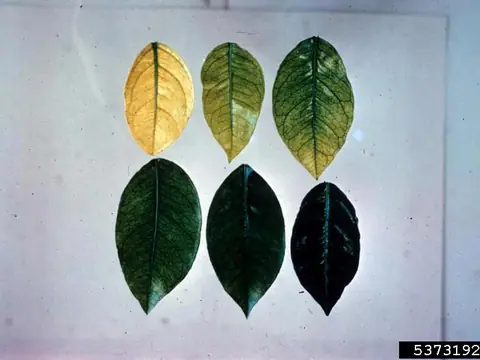
Young and medium leaves light green between dark green vein bands. Leaves keep their size. Fruit pale and soft.
 Citrus, dalandan or ponkan
Newest leaves yellow to white with green veins. Tops of trees die back on wet or limey ground.
Citrus, dalandan or ponkan
Shown on pomelo
Rough fruit with a coarse, thick peel, a hollow core and sour juice. Old leaves dull with bronze freckles.
Citrus, dalandan or ponkan
Shown on an ornamental tree
Brown gum stains on the fruit peel, fruit that split, and long, soft, S shaped shoots with big dark leaves.
 Suha
Shown on citrus
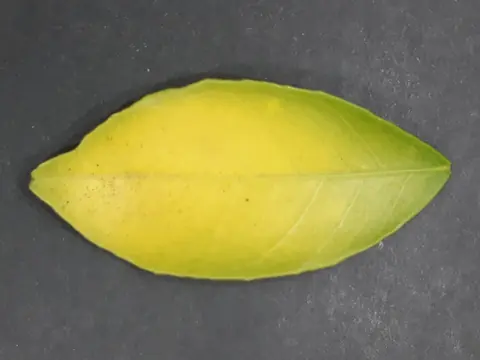
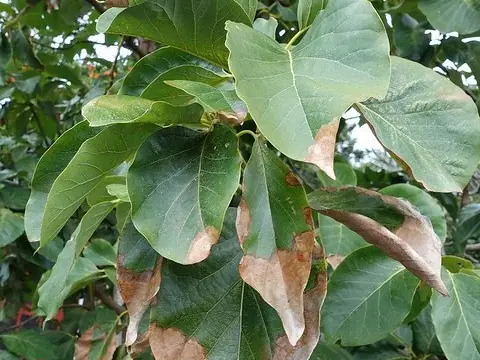
The whole tree pale green to yellow, old leaves falling early, thin canopy and few flowers.
 Suha
Shown on avocado
Few flowers and fruit, poor fruit set and light fruit. Older leaf edges yellow to bronze.
 Suha
Shown on citrus
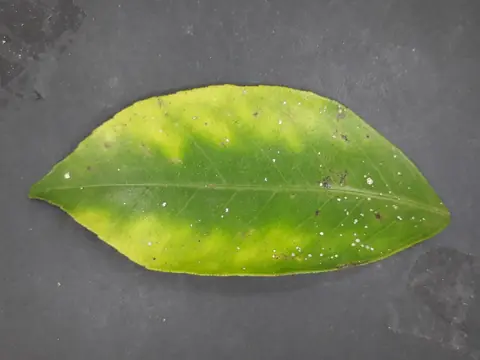
Older and middle leaves yellow between the veins, leaving a green V at the leaf base, worst near the fruit.
 Suha
Shown on citrus
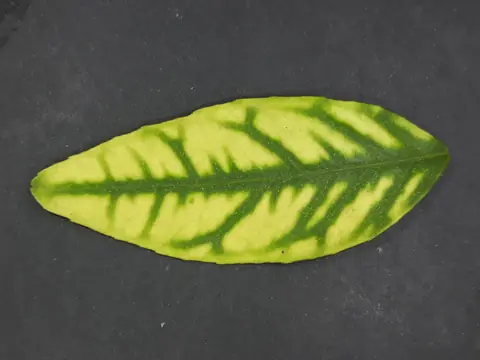
Young leaves mottled yellow between green veins, small, narrow and upright.
Suha
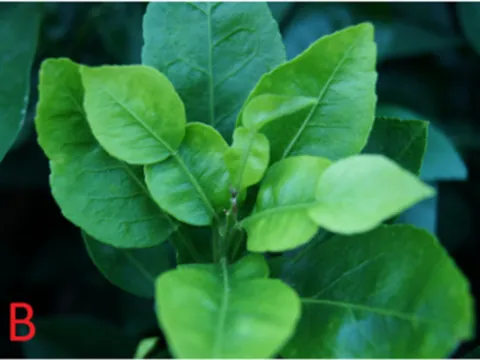
Few flowers and a light crop. Old leaves dull with bronze freckles. Fruit coarse with a hollow core and sour juice.
 Suha
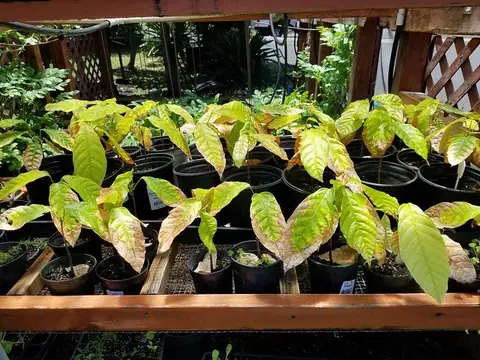
Small, hard, lumpy fruit with gum spots in the thick white peel. Many fruit drop. Shoot tips die.
 Langka
Shown on cacao
The whole canopy turns pale green, older leaves go yellow and drop, and new shoots stay short.
 Langka
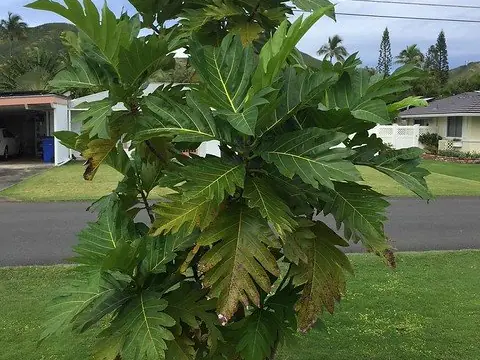
Shown on breadfruit
Edges of older leaves yellow and then burn brown. Fruits stay small with thin flakes.
Langka
Shown on mangosteen
A slow, stunted tree whose older leaves turn dull with a purple or bronze tint underneath.
 Langka
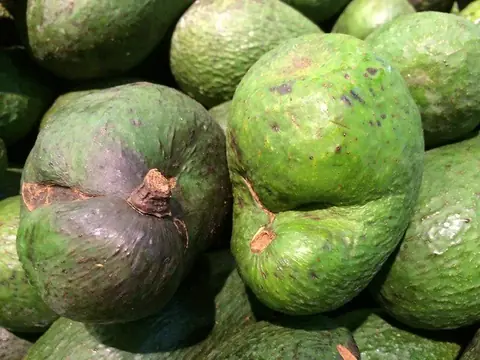
Shown on avocado
Fruits split or crack with a reddish purple color and gum in the cracks. Young leaves yellow and brittle.
 Langka
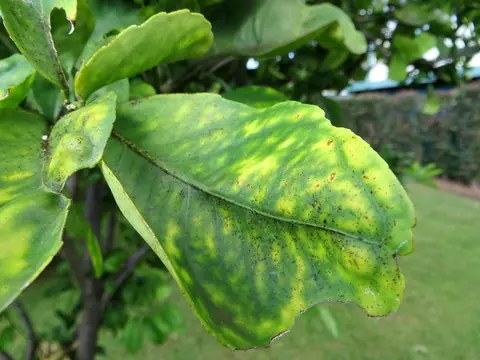
Shown on citrus
Small leaves on short stalks crowd into a rosette and yellow between the veins. Many fruits drop.
 Langka
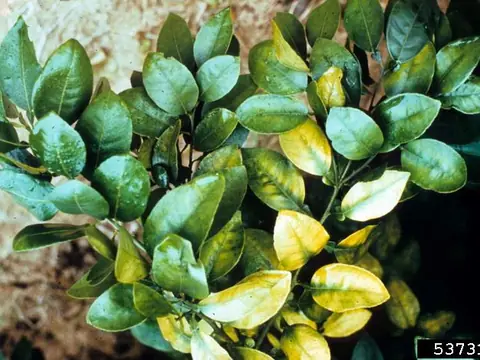
Shown on citrus
Older leaves yellow between the side veins, from the edge in toward the midrib, while the veins stay green.
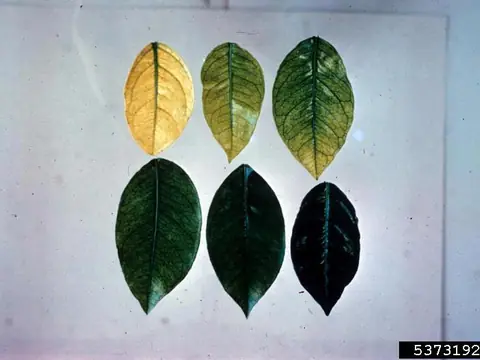 Langka
Shown on citrus
Young leaves turn yellow between green veins. In bad cases the whole new leaf goes yellow.
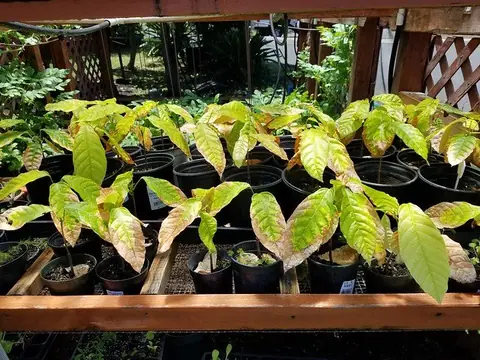 Abukado
Shown on cacao
Leaves fade from dark green to light green or yellow. Thin canopy of small leaves and few fruits.
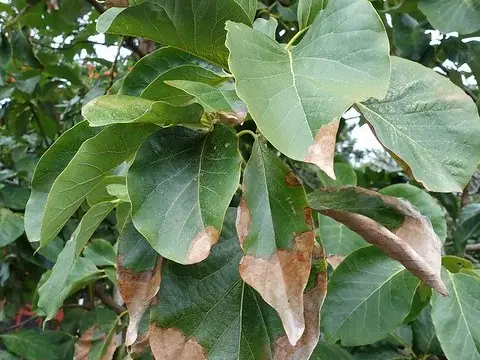 Abukado
Old leaves yellow between the veins and along the edge, turning tan then brown. Leaves curve down.
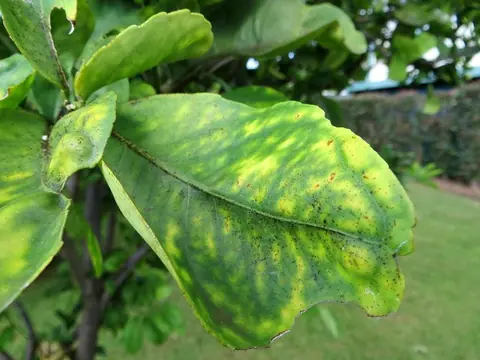 Abukado
Shown on citrus
Little leaf: new leaves small, mottled yellow between the veins and crowded in tufts at the twig tips. Fruit small and round.
Abukado
Shown on mangosteen
Dull or bronzed leaves with purple veins underneath and purplish leaf stalks. Slow growth.
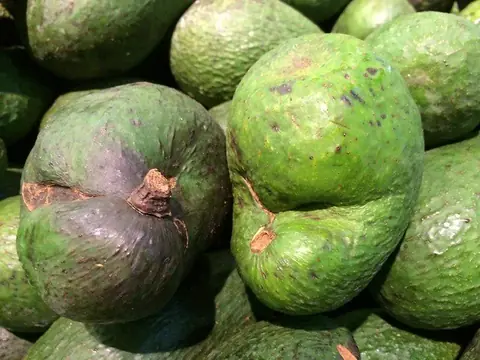 Abukado
Tip growth discolored and burnt, leaves twisted with corky split veins. Lumpy, misshapen fruit.
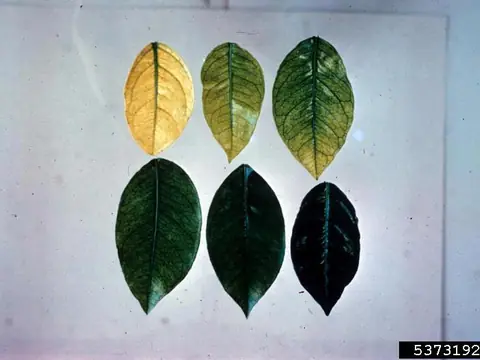 Abukado
Shown on citrus
Young leaves go yellow, leaving thin dark green lines on each vein. Later the veins pale too and leaves drop.
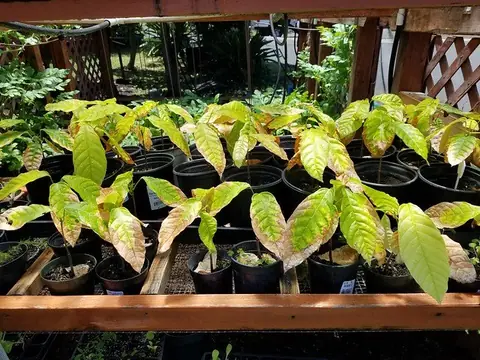 Bayabas
Shown on cacao
Old leaves pale green to light yellow from the tip. Slow, thin tree with few fruits.
Bayabas
Shown on mangosteen
Older leaves dark blue green or bronzed with purple to red specks. Weak, slow tree and poor fruit.
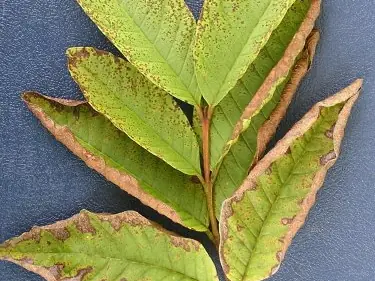 Bayabas
Older leaves yellow and scorch at the edges. Weak stems, small and few fruits.
 Bayabas
Shown on citrus
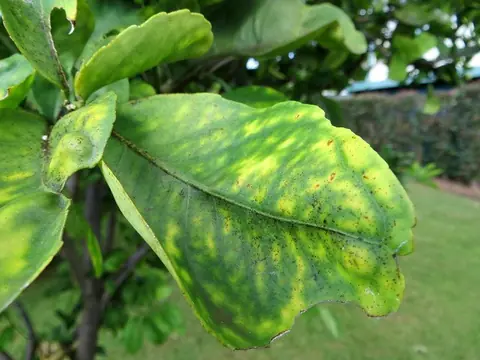
Newest leaves small, narrow and pointed, strongly yellow between bright green veins, with tiny brown dots.
 Bayabas
Shown on citrus
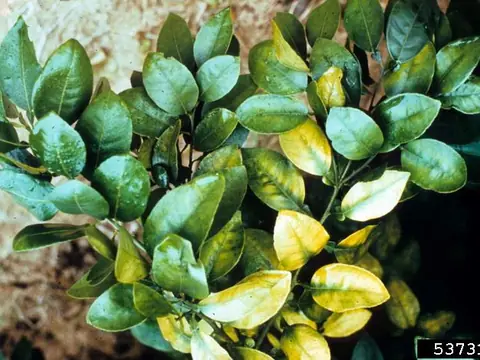
Old leaves get yellow, bronze or reddish patches between the veins while the veins stay green.
 Bayabas
Shown on avocado
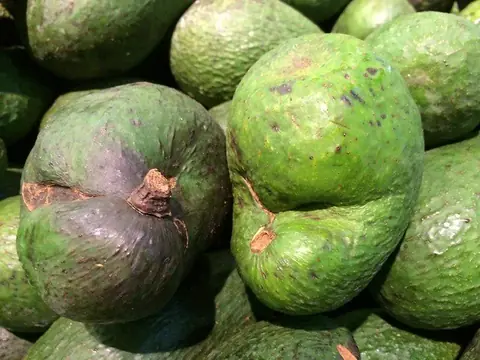
Newest leaves narrow, thick and brittle, bent down as if the stalk were broken. Shoot tips die back.
Lansones
Shown on citrus
Pale yellow green trees with few, small new leaves, and the older leaves yellow and drop.
 Lansones
Shown on avocado
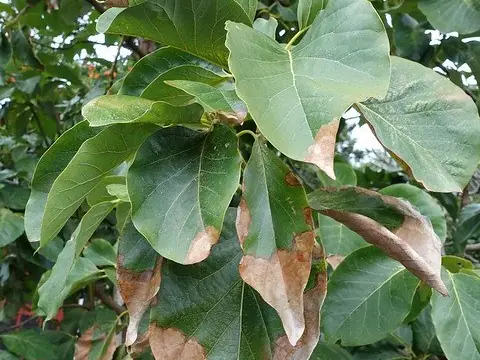
Older leaflets scorch brown at the tips and edges. Bunches carry small, sour fruits.
Lansones
Shown on pomelo
Slow, stunted trees with dull older leaves tinged purple or bronze underneath, and poor flowering.
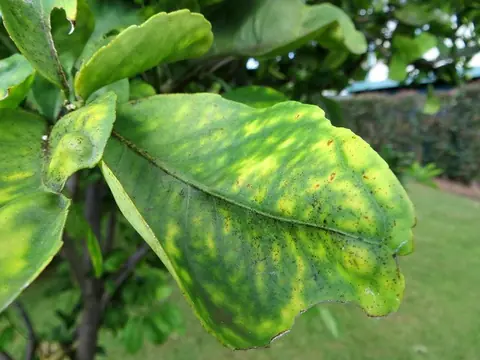 Lansones
Shown on citrus
New leaflets come out small, narrow and bunched, yellow between the veins.
Lansones
Shown on citrus
Shoot tips stunt and die back, flowers and young fruits drop, and some fruits crack or come out misshapen.
Rambutan
Shown on citrus
Pale canopy, yellow older leaves that drop, and weak, short flushes after harvest.
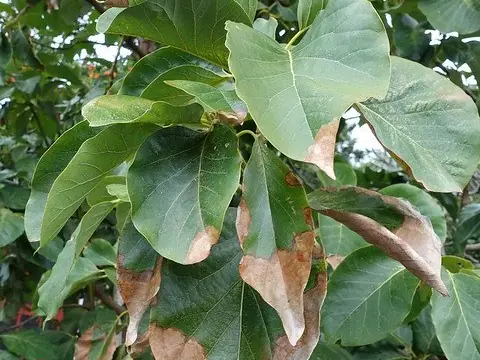 Rambutan
Shown on avocado
Older leaflets scorch brown at the edges. Fruits stay small and less sweet.
Rambutan
Shown on pomelo
Slow growth, dull older leaves with a purple or bronze tint underneath, and weak flowering.
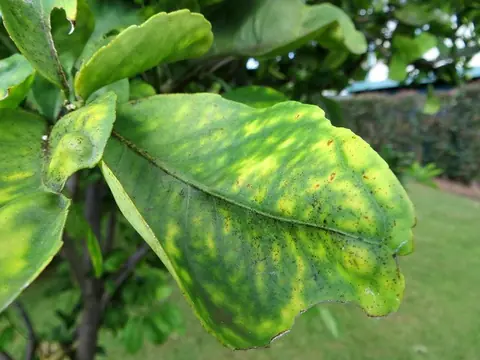 Rambutan
Shown on citrus
New leaflets small, narrow and bunched, yellow between the veins. Few, short flower panicles.
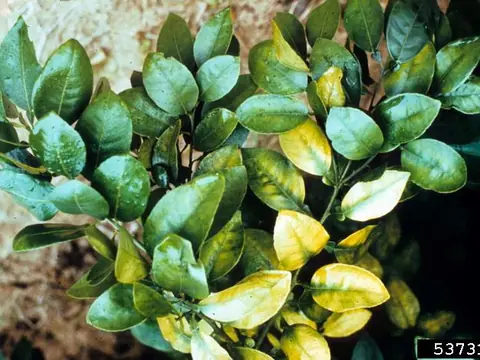 Rambutan
Shown on citrus
Older leaflets yellow between green veins. In bad cases lower leaves drop.
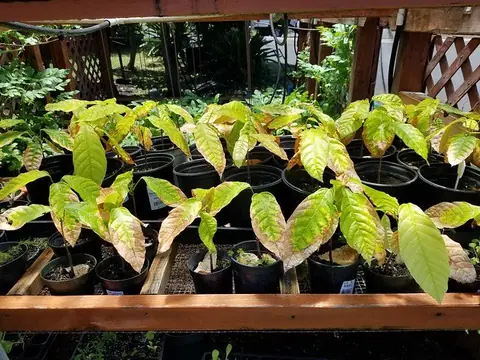 Duryan
Shown on cacao
Pale canopy, older leaves yellow and fall, and the flush after harvest comes out short and thin.
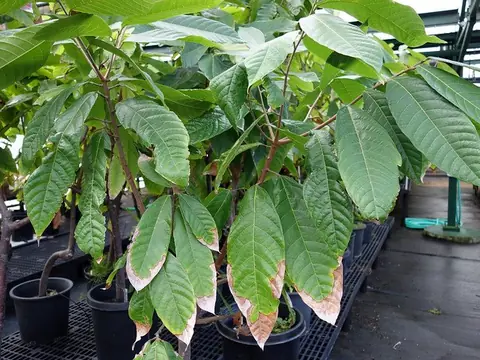 Duryan
Shown on cacao
Older leaf edges burn brown. More young fruits drop and the flesh is less sweet.
Duryan
Shown on mangosteen
Slow growing trees with dull older leaves, a purple or bronze tint underneath, and weak flowering.
Duryan
Shown on avocado
Poor fruit set, small or lopsided fruits, cracked husks, and hard, leathery flesh inside.
Duryan
Shown on coffee
New leaf tips burn and shoot tips die back on acid soils. Fruit quality drops.
Duryan
Shown on cotton
Older leaves yellow between green veins. Lower leaves may drop.
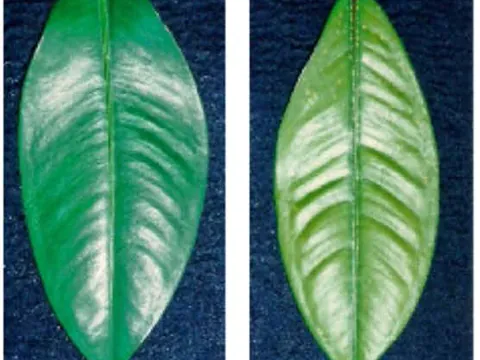 Mangostan
Pale, slow trees whose older leaves yellow evenly and drop, with few new flushes.
Mangostan
Slow growth, dull older leaves with a purple or bronze tint, and many flowers and young fruits dropping.
Mangostan
Older leaf edges yellow and burn brown. Fewer flowers set fruit.
Mangostan
Shown on coffee
Glassy, water soaked flesh inside the fruit, and yellow gum (gamboge) in the flesh or oozing on the rind.
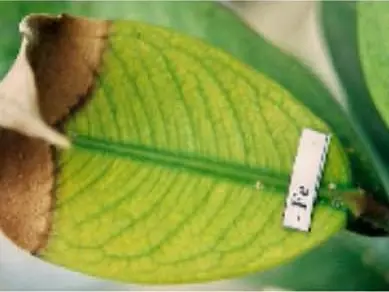 Mangostan
Seedlings in the nursery whose young leaves turn more and more yellow while old leaves stay green.
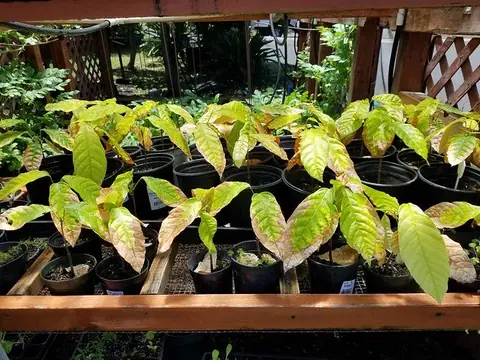 Sapodilla
Shown on cacao
Small, yellow green mature leaves, amber to red new leaves, thin shoots and few small fruits.
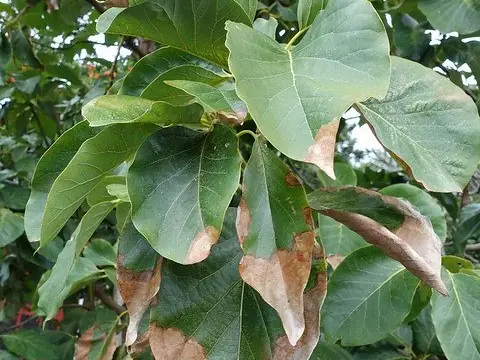 Sapodilla
Shown on avocado
Light brown specks over the leaf that join into dead patches between the large veins.
Sapodilla
Shown on mangosteen
Older leaves take on a dull purplish tint and leaves come out smaller than normal.
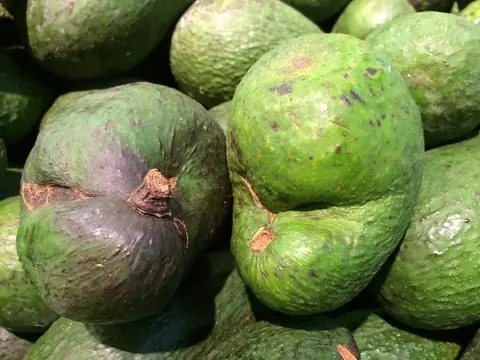 Sapodilla
Shown on avocado
Yellowish green leaves with burnt tips and edges, and split midribs on the leaf underside.
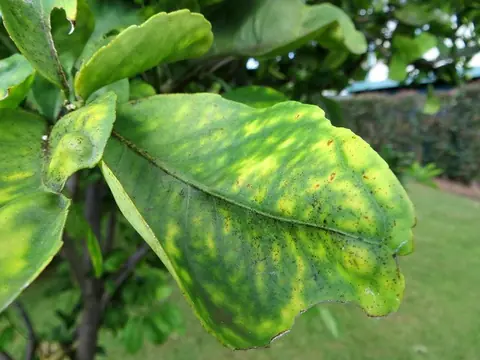 Sapodilla
Shown on citrus
Young leaves come out small and pale, crowded at the shoot tip.
 Sapodilla
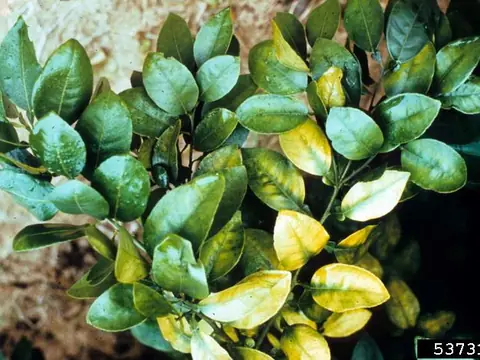
Shown on citrus
Older leaves turn greenish yellow between the veins while the midrib and big veins stay deep green.
Sapodilla
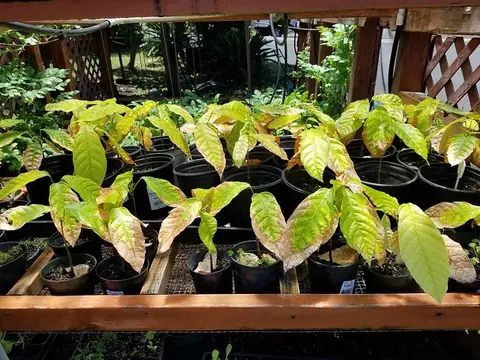
Shown on citrus
Pale yellow between the veins with wide green bands along the veins, light spots and early leaf drop.
 Atis
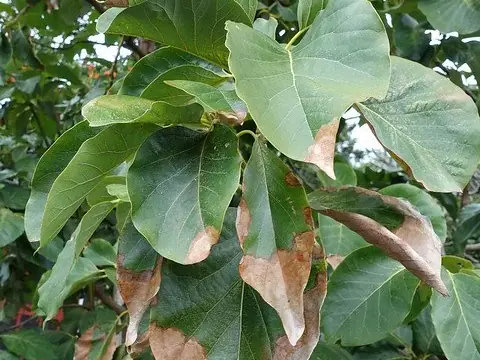
Shown on cacao
Older leaves fade to an even pale green, then yellow and drop early. The tree grows slowly and sets few fruits.
 Atis
Shown on avocado
Yellowish spots along the leaf edges that spread and turn brown, starting on older leaves.
Atis
Shown on mangosteen
Bluish green or purplish trees with small mature leaves that later yellow with purple veins.
 Atis
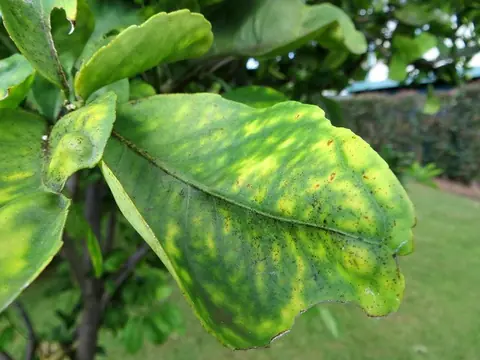
Shown on citrus
Young leaves yellow between the veins, bend downward and crowd on short shoots.
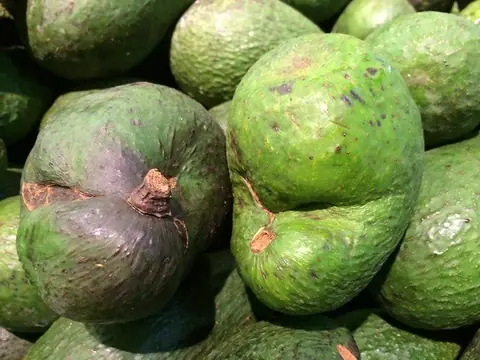 Atis
Shown on avocado
Few fruits set, misshapen or cracked fruits, and shoot tips that stop growing.
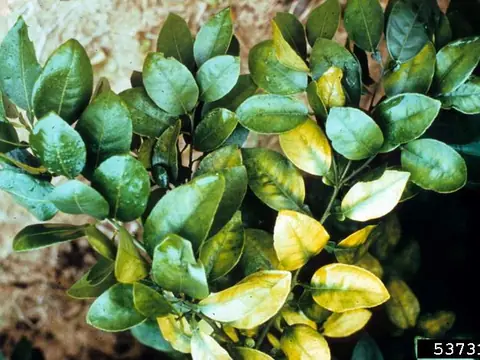 Atis
Shown on citrus
Leaves yellow or greenish yellow between the veins while the leaf margins stay green.
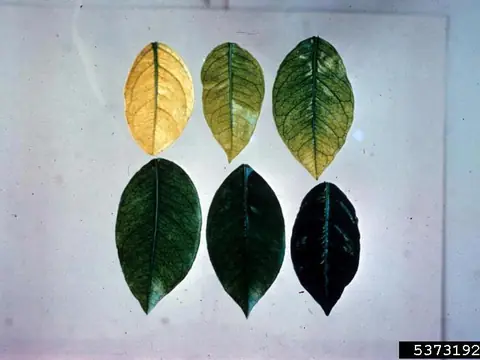 Atis
Shown on citrus
The newest leaves turn yellow with a fine net of green veins, and later go fully yellow.
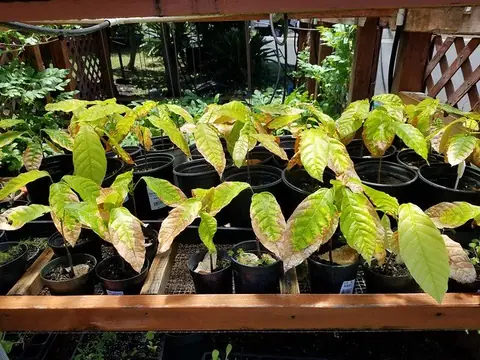 Guyabano
Shown on cacao
Lower leaves fade evenly to pale green, then the whole tree turns dull yellow and stays short.
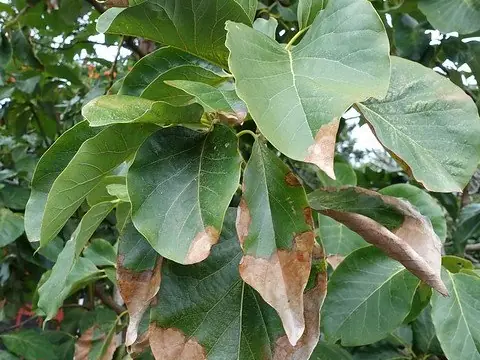 Guyabano
Shown on avocado
Older leaves yellow from the tip and edges inward, then the edges brown and die.
Guyabano
Shown on mangosteen
Narrow, small leaves with edges curled and tips bent down. Lower leaves pale and held close to the stem.
Guyabano
Shown on coffee
The tips of the youngest leaves burn dark brown and roll up while the rest of the leaf stays green.
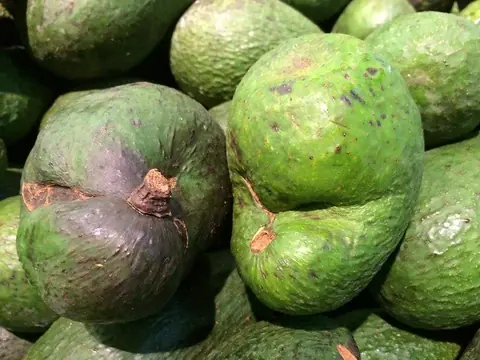 Guyabano
Shown on avocado
Many flowers but few fruits set, lopsided or cracked fruits, and shoot tips that stop growing.
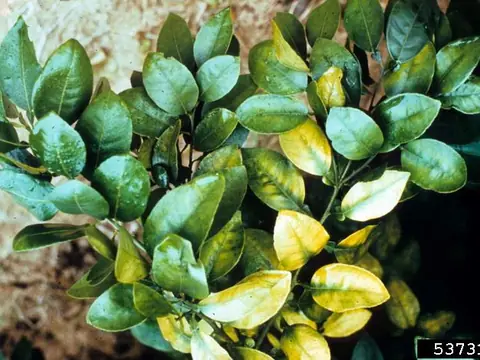 Guyabano
Shown on citrus
A yellow to orange band along the midrib of older leaves while the leaf margins stay green.
Santol
Shown on citrus
A pale, light green tree with yellowing older leaves, short new shoots and a light crop.
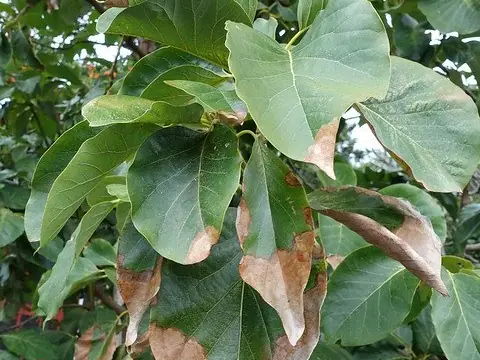 Santol
Shown on avocado
Older leaflets scorch brown along the edges and tips. Fruits stay small and poor.
Santol
Shown on pomelo
Slow, stunted growth with a purplish tint on older leaves, most on the underside.
 Santol
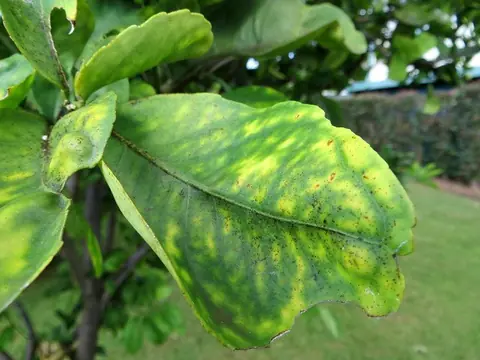
Shown on citrus
New leaflets come out small, pale between the veins and crowded on short shoots.
 Kaimito
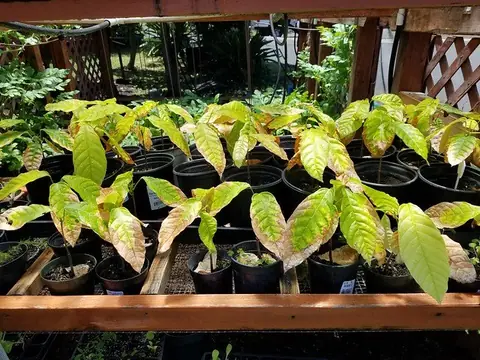
Shown on cacao
The upper side of the leaves turns pale, older leaves yellow and drop, and new shoots stay short.
 Kaimito
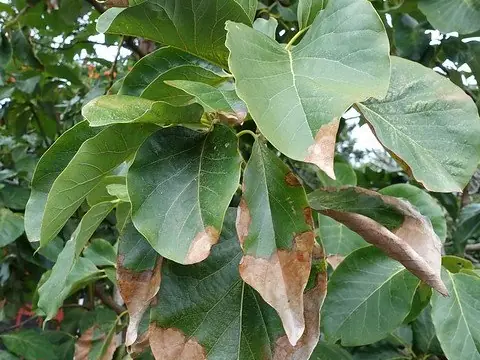
Shown on avocado
Edges and tips of older leaves scorch brown. Fruits stay small and poor in quality.
Kaimito
Shown on mangosteen
Young trees grow slowly and older leaves take on a purplish tint, most on the underside.
 Kaimito
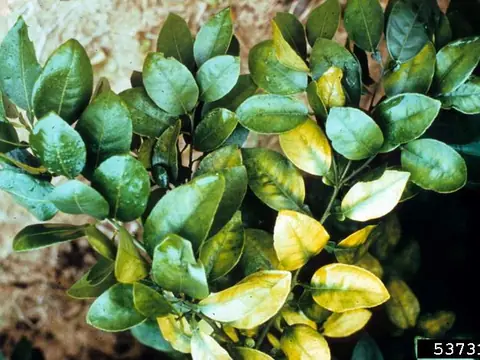
Shown on citrus
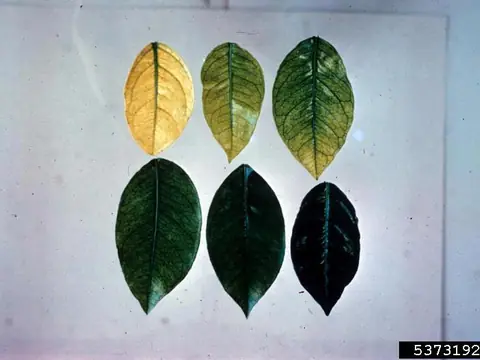
Older leaves yellow between the veins while the veins stay green.
 Kaimito
Shown on citrus
New leaves turn pale yellow with green veins, mostly on limestone or high pH soil.
Sampalok
Shown on peanut
Pale, thin crowns with yellowing older leaflets, slow growth and few pods.
Sampalok
Shown on soybean
Tips and edges of older leaflets scorch brown. Pods stay small and poorly filled.
Sampalok
Shown on mangosteen
Seedlings and young trees grow slowly, with a purplish tint on older leaflets.
 Sampalok
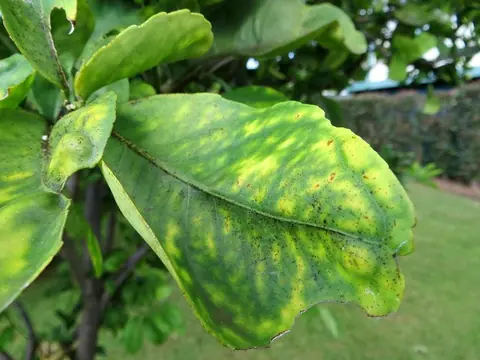
Shown on citrus
New leaflets come out small and pale, bunched on short shoots.
Kasoy
Shown on citrus
Old leaves pale from the tip, then yellow and droopy. Small leaves, small nuts.
Kasoy
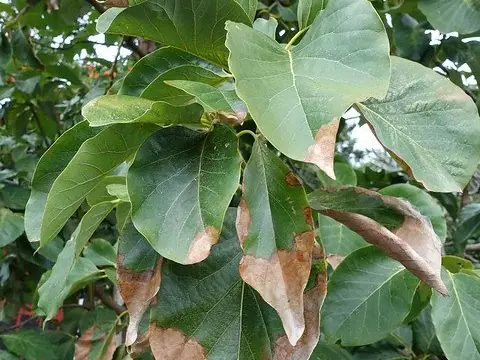
Shown on pomelo
Leaves dark green, then dull red, green or purple. Slow tree with some dying branch tips.
 Kasoy
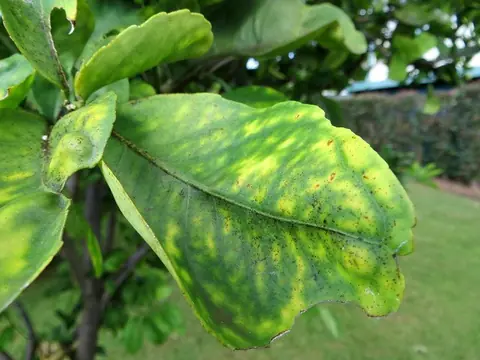
Shown on avocado
Old leaf edges turn pale yellow then brown. Purple spots under the leaf. Light nuts.
 Kasoy
Shown on citrus
Newest leaves small, long and pale with green veins, on short shoots with few side branches.
Kasoy
Shown on citrus
Growing buds and young leaves die, flowers drop, apples split and nuts stay empty.
Stems turn pale green to yellowish all over, new shoots come slowly and thin, and few flowers form.
Older stems yellow and dry at the edges, and fruit come small, light and less sweet.
Plants grow slowly with weak roots and few new shoots, and flower poorly.
Older stem segments turn yellow while the young shoots stay green.
New shoots come out pale yellow on high pH or limestone soils.
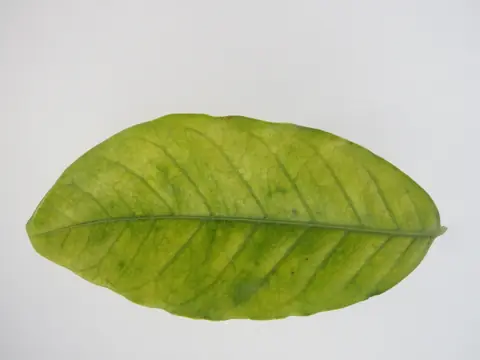 Kape
The whole tree turns pale yellow green, leaves lose their shine and new shoots barely grow.
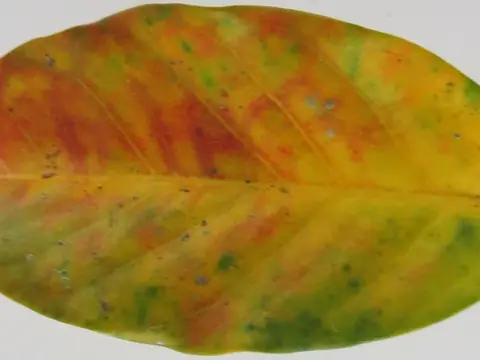 Kape
Old leaves go mottled yellow or take a pink to purple tint. Roots and new growth stay weak.
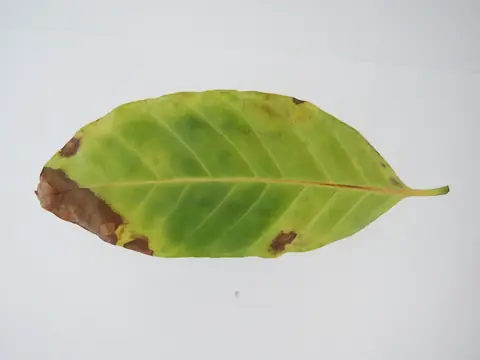 Kape
Old leaves get a yellow band at the edge, then dark brown dead spots that join into a burnt edge. The centre stays green.
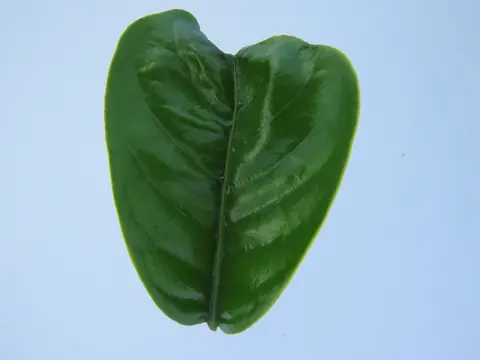 Kape
New leaves come out small, bent and misshapen with dead tips, and the shoot tip dies.
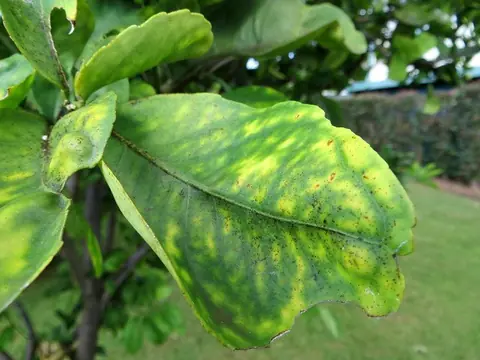 Kape
Shown on citrus
New leaves narrow and strap like, yellow between dark green veins, bunched at the branch tip.
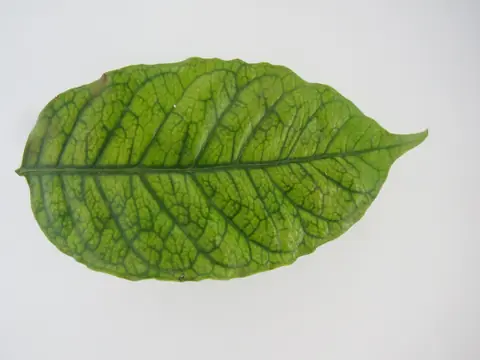 Kape
Old leaves yellow along the edges and between the veins, with a wide band of sunken light brown spots.
Kape
Young leaves turn bronze at the edges and cup downward. The shoot tip dies back.
Young leaves pale yellow, a little more along the midrib, but they keep their shine.
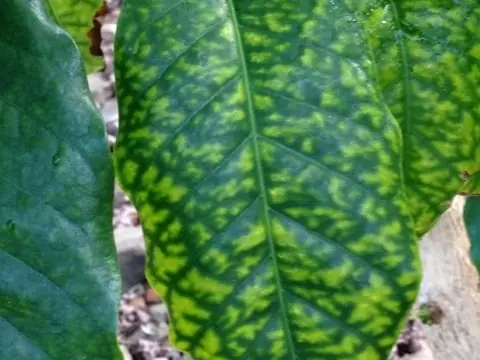 Kape
Young leaves light yellow to creamy white with a sharp net of green veins. Old leaves stay green.
Kakaw
Small, evenly soft yellow green leaves on a slow tree. New leaves come out almost white.
Kakaw
Shown on mangosteen
Old leaves blotchy pale between the veins, then die back from the tip with a sharp edge. New leaves small and narrow.
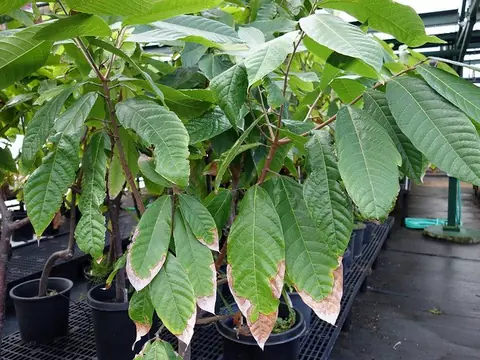 Kakaw
Old leaves get reddish yellow patches between the side veins that die from the tip and edge, with a wavy yellow border.
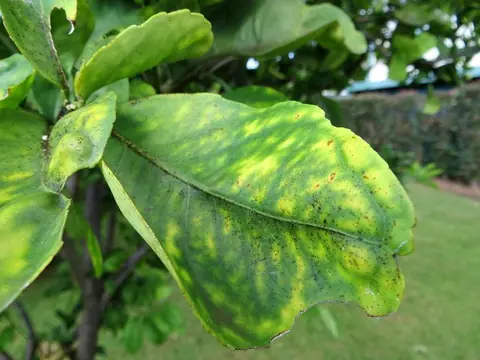 Kakaw
Shown on citrus
Sickle leaf: new leaves narrow, curved and lopsided, with wavy edges and pale bands between prominent veins.
Kakaw
Shown on cotton
Old leaves get tiny black pinpoints with yellow halos between the veins, then a marbled dead edge.
Kakaw
Shown on avocado
Many chupons, new leaves twisted and falling before they harden, brittle old leaves with dead tips.
Kakaw
Shown on coffee
Small yellow green leaves with tiny white spots seen against the light, and dead tips and edges.
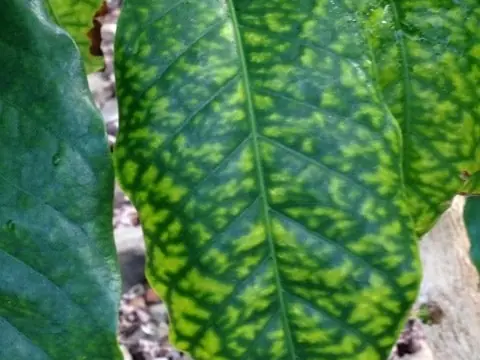 Kakaw
Shown on coffee
Leaves dull yellow green with sharp green veins and a bumpy surface between them.
The newest mature leaves evenly yellow green on a very short last flush.
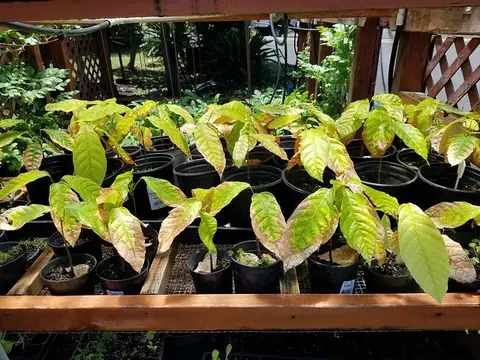 Malunggay
Shown on cacao
The whole plant turns light yellow, new leaves come small, and plants stay thin and weak.
Malunggay
Shown on papaya
Older leaflets yellow and scorch at the edges, and pods stay short and thin.
Malunggay
Shown on broccoli
Slow growing young plants with dull dark green leaves, sometimes purplish, and weak roots.
Malunggay
Shown on papaya
Few flowers and few pods set on trees that look healthy, with new shoots that may twist.
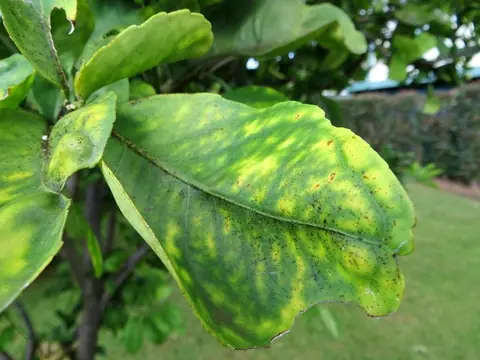 Malunggay
Shown on citrus
New leaflets come small and pale between the veins, and shoots stay short.
None under this crop.
Nothing by that name in the catalogue yet. Try the nutrient's name, or take a photo and ask Anee, the smart farm technician.
See all 584 nutrient deficiencies and the fertilizer for each
Every deficiency of every crop is open with Libre + Anee: the photo, how to tell it from look alikes, how to be sure, what to apply and the fertilizers sold here that supply it.
The account is free, no credit card.
Not sure which nutrient it is?
Use the Nutrient Deficiency Finder
In anee.io, pick your crop, where the leaves change first and what they look like. The finder shows the likely deficiency and the fertilizers sold here that fix it, and Anee, the smart farm technician, reads a photo of the leaf in Tagalog or English.