Corn Kernel and Corn Husk: Parts of the Corn Plant, Kinds, Uses and Price
A corn kernel is both the seed and the grain of the corn plant. Farmers plant it, feed mills buy it and families cook it as mais. This guide explains the parts of the corn plant and ear and how each kernel forms. It also covers the kinds grown in the Philippines, their uses from feeds to corn flakes, and the latest corn kernel price.
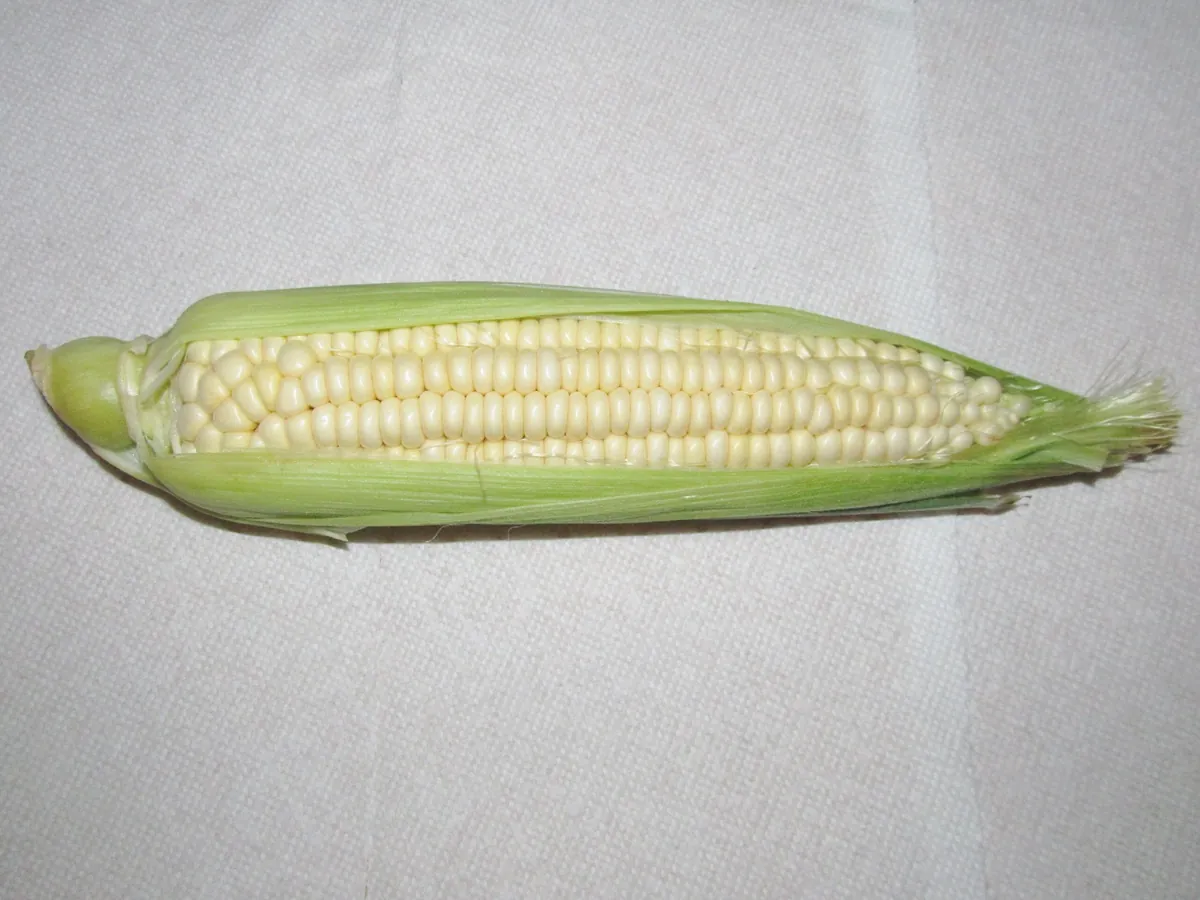
What a corn kernel is
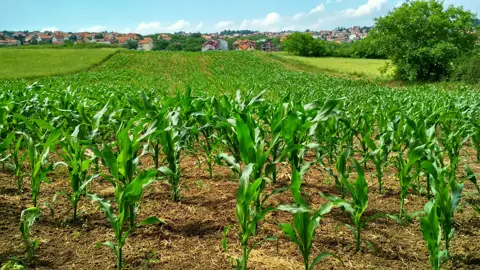
If you searched for corns in Tagalog, the word is mais, and a field planted to corn is a maisan. A single grain is a butil ng mais. Every corn kernel is a complete seed, so the grain you sell and the seed you plant are the same thing, only handled differently.
Corn scientific name: Zea mays
The corn scientific name is Zea mays L. Corn belongs to the grass family, Poaceae, the same family as palay and sugarcane. That is also why a few pests, such as the fall armyworm, can feed on both corn and rice.
Inside the corn kernel
Inside, a corn kernel has three main parts. The hull, or pericarp, is the thin outer skin. Most of the grain is endosperm, the starch that feeds the young plant. Near the narrow end lies the germ, or embryo, which grows into the new seedling. That narrow end, the tip cap, is where the kernel joined the cob.
Parts of the corn plant and ear
A corn plant carries its male and female flowers in different places. Knowing each part helps you read the crop, because pests and stress show up on different parts at different stages.
| Part | What it does |
|---|---|
| Roots | Seminal roots feed the seedling first. Permanent roots then grow from the lower nodes, and brace roots near the soil help hold the stalk up. |
| Stalk | Moves water and food between roots, leaves and ear. The Asian corn borer tunnels inside it. |
| Leaves | Make food for the plant. Losing leaves close to flowering hurts yield more than early leaf damage. |
| Tassel | The male flower at the top. It sheds the pollen. |
| Ear shoot | The female flower. It forms at a node on the stalk and becomes the ear you harvest. |
| Corn husk | Leafy layers that wrap the ear and shield the kernels from rain, birds and insects. |
| Silk | Long threads from the tip of the ear. Each silk leads to one ovule, a future kernel. |
| Cob | The core that holds the kernels in rows. |
| Kernel | The grain and the seed. It fills with starch after fertilization. |
Corn husk: more than a wrapper
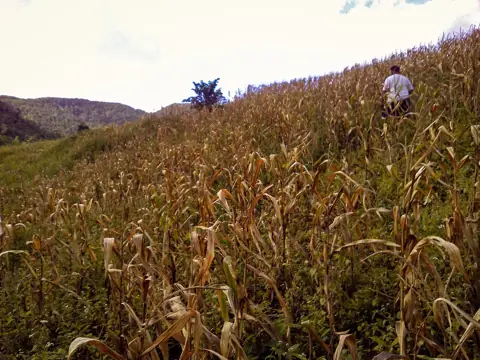
In Tagalog the corn husk is balat ng mais, the silk is buhok ng mais and the cob is busal. The husk also tells you when to harvest. When the husk and some leaves turn from green to dry, and a black layer forms at the base of the kernels, the grain has reached maturity.
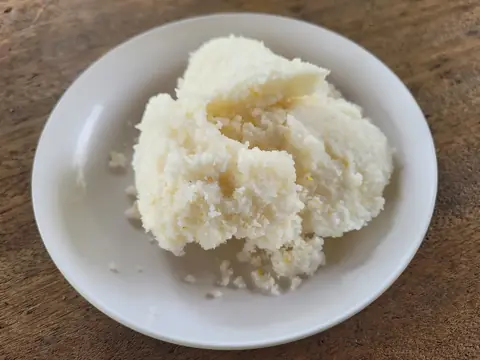
After harvest, husks still have uses. Cooks in Bukidnon and Bogo, Cebu wrap binaki, a steamed sweet corn cake, in corn husks. Dry husks also go to cattle and goats, into compost, or into handicrafts.
When fertilization occurs in corn
Corn flowers only once, and those few days decide how full each cob will be. Fertilization occurs when a grain of pollen from the tassel lands on a fresh silk. The pollen grows a tube down the silk to its ovule, and fertilization follows within about 24 hours.
Every ovule on the ear has its own silk. So one silk that catches pollen gives one corn kernel, while a silk that misses leaves a gap on the cob. Silks stay receptive for about ten days, and a whole field sheds pollen over roughly 10 to 14 days.
Drought or poor nutrition at this stage delays silking more than pollen shed, so the ear ends up with poor seed set. That is why the reproductive stage is the time to give supplemental water. On anee.io, the growth stages view shows which lots are near tasseling and silking on any date you pick, along with the weather forecast for each lot.
Kinds of corn kernel in the Philippines
When farmers ask which corn breed to plant, they usually mean one of four kernel types. Each variety of corn fits a market, so pick the type first and the brand second.
| Kernel type | What it looks like | Main use |
|---|---|---|
| Yellow corn | Hard yellow kernels, mostly hybrid seed | Hog and poultry feeds, starch, oil |
| White corn | Hard white flint kernels, hybrid or OPV | Corn grits and mais rice, flour, snacks |
| Glutinous corn (lagkitan) | White kernels that turn sticky when cooked | Boiled or roasted green corn, soups, sticky snacks |
| Sweet corn | Soft, sweet kernels picked young | Boiled corn, soups, maja blanca |
For help choosing a variety, see our guide to corn seeds. It covers hybrids, open pollinated varieties and the GM corn approved in the Philippines. For a planting guide in Filipino, read pagtatanim ng mais.
What corn kernels become
- Feeds. Yellow corn goes mainly into hog and poultry feeds, so feed mills and traders are its main buyers.
- Corn grits and mais rice. White corn milled into small grits and cooked like rice is a daily staple in parts of the Visayas and Mindanao, and in some towns of Isabela and Cagayan.
- Corn bran. Milling strips off the hull and some of the germ. This corn bran goes into animal feeds, and food makers also use it as a source of fiber.
- Starch, oil and syrup. Processors also turn corn into starch, cooking oil, syrup and flour.
Gulay na mais: corn eaten as a vegetable
Gulay na mais, also said mais na gulay, means corn picked green and cooked as a vegetable. Glutinous and sweet corn fill this market. Young glutinous corn is a favorite snack, boiled or roasted, and it also goes into soups and vegetable dishes.
At home that means nilagang mais, sinabawang mais with malunggay, and ginataang mais. For a bigger green ear, use a wider spacing of 30 by 75 centimeters.
Corn kernel price in the Philippines
Buyers quote corn per kilo of shelled grain, and the price moves with the season. Below are national farmgate averages. June 2026 was the latest month when we checked, and June 2025 sits beside it for comparison.
| Commodity | June 2025 | June 2026 |
|---|---|---|
| Yellow corn grain | PHP 14.96 per kg | PHP 19.06 per kg |
| White corn grain | PHP 13.65 per kg | PHP 20.23 per kg |
| White green corn (fresh ears) | PHP 26.43 per kg | PHP 28.50 per kg |
Your own corn kernel price can sit far from these averages. Buyers pay less for wet grain, broken kernels, dirt and moldy corn. Dry the grain to 14 percent moisture or lower for safe storage. The aflatoxin limits are 20 ppb for food corn and 50 ppb for feeds. Distance to the buyer matters too, and prices often dip when every maisan in the area harvests at once.
On the paid plans of anee.io, the farm reports keep each buyer, price and yield per season, so next year you can compare. For rice prices, see our palay price guide.
Pull back the husk on a few ears from different parts of the field. Gaps at the tip point to poor pollination or cut silks, while holes and frass point to borers. Write down what you see so you can plan next season.
Set your planting date and anee.io dates every task by days after planting. It also shows each lot's growth stage and weather, and lets you ask Anee, the smart farm technician, in Tagalog or English. Anee can look at a photo of a damaged ear and suggest what to check.
Sign up freePests that damage the kernel
Watch for these pests from the whorl stage to harvest. The asiatic corn borer bores into stalks, tassels and ear shanks, and in bad attacks the ears break and drop. The fall armyworm feeds in the whorl and can later bore into the ears. Corn earworms also cut the silks, which leaves unfilled kernels at the tip.