Common Weeds in the Philippines: Grasses, Sedges and Broadleaves in Rice and Corn
The common weeds in the Philippines fall into three groups: grasses, sedges and broadleaves. In rice and corn fields they steal light, water and fertilizer, and they shelter pests. This guide names the main weeds of each group, with the local names farmers use, and shows how to control them before they cut your harvest.
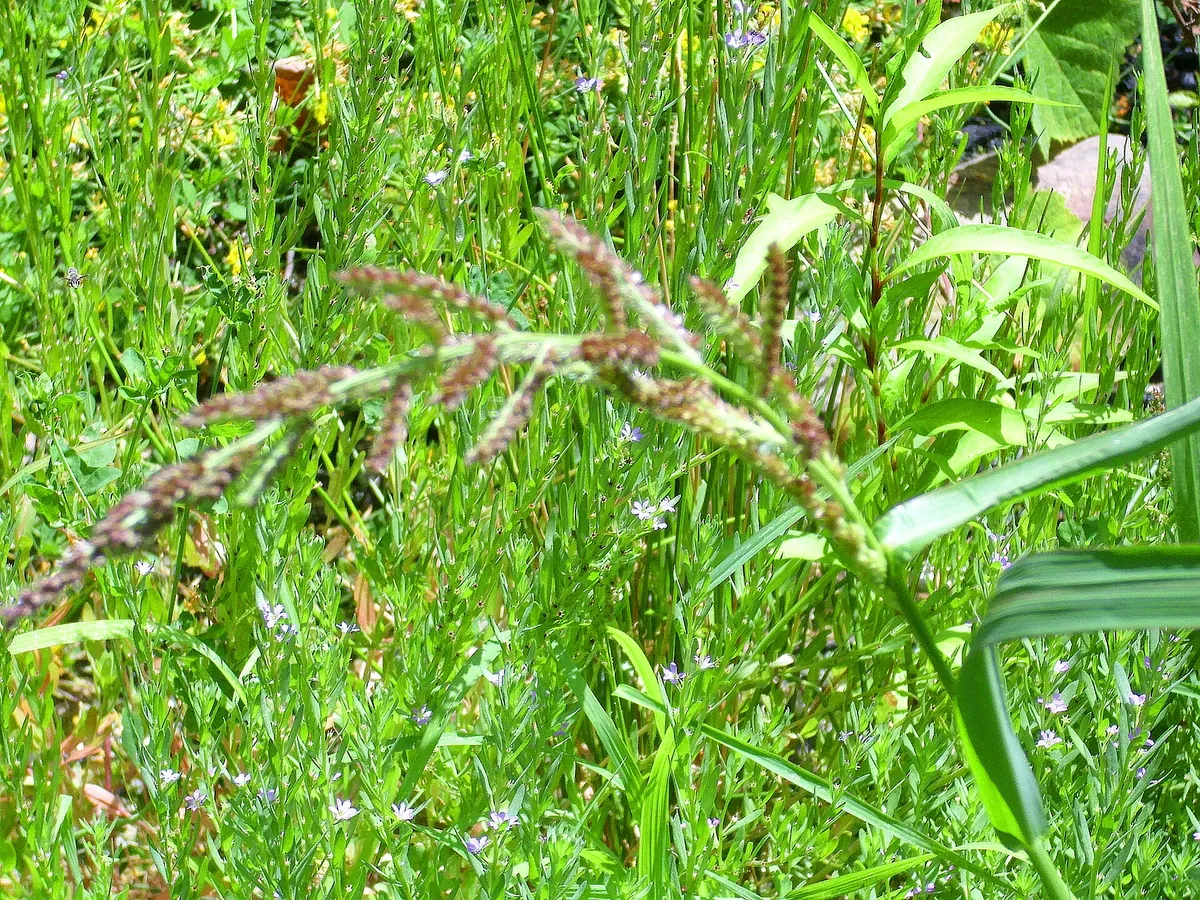
Why weeds cost you so much palay
Weeds take the sunlight, nutrients and water that should go to the palay. They also shelter insects, rats and diseases. For example, Ischaemum rugosum is an alternate host of tungro.
Timing decides the damage. Keep the rice field free of weeds from planting or sowing up to about 40 days, the critical age when young palay competes poorly. In corn, weeds cost the most from about 2 to 6 weeks after planting.
The losses add up fast. Ischaemum rugosum left uncontrolled can cut rice yield by as much as 60 percent. Chinese sprangletop can cut it by as much as 48 percent when 16 plants compete in each square meter. So a few weeks of neglect early in the season can cost more than the herbicide or the weeding labor you tried to save.
Weeds in Tagalog and their local names
Weeds in Tagalog are damo, and so is grass in Tagalog. That is why farmers name each weed by its look, and the names change from province to province. The names below are the common local names. For more field words, see our glossary of farm words in Tagalog.
First, learn the three groups, because each group needs a different herbicide. Grasses have narrow leaves and round, hollow stems. Sedges look like grass, but most have solid, triangular stems. Broadleaves have wide leaves with a net of veins. You can search 81 weeds of rice by their local names in our catalogue of rice weeds.
Grasses: the grass weeds of rice and corn
Among weeds, grasses are the hardest to spot early, because their seedlings look like palay. These are the grasses to know:
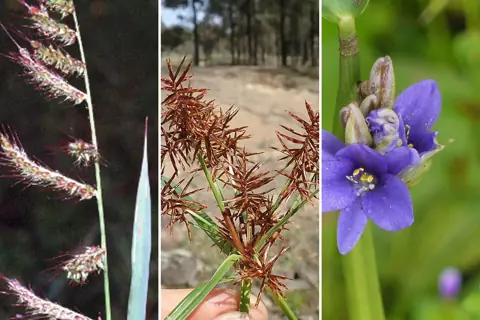
- Barnyard grass, Echinochloa crus galli. A tall grass whose seed head rises above the rice. Its local names are telebisyon, antena and bayakibok. In Iloilo and Nueva Ecija, some populations already resist butachlor and propanil, with cross resistance to pretilachlor.
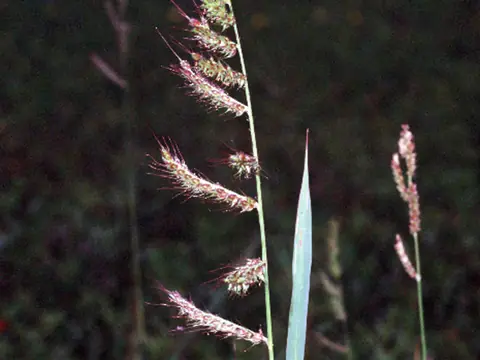
- Chinese sprangletop, Leptochloa chinensis. Called kuring kuring, salay maya or palay maya. It is a growing problem in wet seeded rice and it contaminates rice seed. In direct seeded rice, bispyribac sodium is recommended for annual grasses, except this one.
- Ischaemum rugosum. Called bulo bulo, limba limba or tinitrigo. It is aggressive in wet direct seeded rice, tolerates shade, and is one of the commonest seed contaminants.
- Weedy rice, or damong palay. A wild type of rice that looks like the crop but shatters its grain early. Use the stale seedbed technique against it.
- Itchgrass or aguingay, Rottboellia cochinchinensis. A main grass weed of corn. Control it with recommended pre emergence herbicides.
Sedges: the sedge weeds with triangular stems
Sedges are weeds that thrive in wet fields. To check if a plant is a sedge, roll its stem between your fingers. If you feel three edges, it is a sedge, and a grass herbicide may not touch it.
- Purple nutsedge, Cyperus rotundus. Called mutha, sudsud or barsanga. It spreads by underground tubers. It has adapted from dry uplands to flooded lowlands, so flooding alone no longer controls it.
- Smallflower umbrella sedge, Cyperus difformis. Its local names are payong payong and siraw siraw. It grows thick in wet rice fields.
- Globe fringerush, Fimbristylis miliacea. Called gumi or bungot bungot. Another sedge weed of wet rice fields, with fine, grasslike leaves.
For mutha, use the stale seedbed method. Plow the field again and again during the fallow period so the weed sprouts, then kill the new shoots. Herbicides reach only some of the tubers, and new shoots grow from the rest. If you spray, glyphosate is one of the pre plant herbicides, used before the rice is transplanted or sown.
Broadleaves: the broadleaf weeds of wet fields
Broadleaves are the easiest weeds to see, but they spread quickly in standing water. Many broadleaves also flower early, so pull or spray them before they set seed.
- Monochoria vaginalis. Called gabi gabi, bilagut or lapalapa. It has shiny, heart shaped leaves like a small gabi and purple blue flowers.
- Gooseweed, Sphenoclea zeylanica. Its local names are mais mais and silisilihan. It grows upright with narrow, pointed leaves and a short spike of flowers at the tip.
- Water primrose, Ludwigia species. Several species with yellow flowers, some upright, that grow in wet paddies and along levees.
- Corn broadleaves. They include mara kamote (Ipomoea triloba) and kalunay or kulitis (Amaranthus), which grow fast in the wet season.
| Group | Weed | Local names | Main crop |
|---|---|---|---|
| Grass | Echinochloa crus galli | bayakibok, telebisyon | Rice |
| Grass | Leptochloa chinensis | kuring kuring, salay maya, palay maya | Rice |
| Grass | Ischaemum rugosum | bulo bulo, limba limba | Rice |
| Grass | Rottboellia cochinchinensis | aguingay | Corn |
| Sedge | Cyperus rotundus | mutha, sudsud, barsanga | Rice, corn |
| Sedge | Cyperus difformis | payong payong, siraw siraw | Rice |
| Broadleaf | Monochoria vaginalis | gabi gabi, bilagut, lapalapa | Rice |
| Broadleaf | Sphenoclea zeylanica | mais mais, silisilihan | Rice |
| Broadleaf | Amaranthus | kalunay, kulitis | Corn |
How to control common weeds in the Philippines in rice
No single method works alone. Combine clean seed, good land preparation, water, hand weeding and herbicides. In most lowland fields, this order works:
For what to do at each age of your rice, open the weed control helper in anee.io. For the whole season in order, read our weed management guide.
Start clean
Use certified seed so you do not plant weed seed with the palay. Keep the seedbed, canals, levees and tools free of weeds too.
Prepare and level the land well
Plow, then keep the field flooded for about 7 days so the soil softens. Drain it, let the weeds sprout, and plow again 2 to 3 times within a week before leveling. This stale seedbed approach flushes out mutha and weedy rice before you plant.
Use water as a weed killer
In transplanted rice, keep 2 to 3 cm of water from 3 to 4 days after transplanting. In direct seeded rice, flood to 3 to 5 cm at 7 to 10 days after sowing. Then raise the water to 5 to 7 cm as the crop grows.
Weed early by hand or rotary weeder
Pull weeds while the palay is still small. Remove flowering weeds with their seeds and bury them so they cannot spread to the next crop.
Use herbicides the right way
Pick the product that matches the weed group and the crop stage, follow the label rate and timing, and rotate modes of action between seasons to slow resistance.
Pre emergence herbicides for rice
A pre emergence herbicide stops weeds as they sprout, before you can even see them. In rice, the ones registered here include pretilachlor, butachlor, oxadiazon and pendimethalin, and ready mixes such as pretilachlor plus butachlor. Pretilachlor works on grasses, sedges and broadleaves in transplanted and direct seeded rice, Chinese sprangletop among them, and goes on in the first days after sowing or transplanting. In wet seeded rice, pick a pretilachlor made with a safener, which protects the sprouting palay.
The label on your pack gives the rate and the days, so read it each time. Also remember that some barnyard grass already shows cross resistance to pretilachlor. So rotate to a herbicide from another group in later seasons.
Use only herbicides registered with the Fertilizer and Pesticide Authority, at the rate and timing on the label. Wear long sleeves, gloves and eye and face cover, and stand upwind when you mix. Never clear a blocked nozzle by blowing into it.
Weed control in corn
Corn needs clean rows from about 2 to 6 weeks after planting. For conventional hybrids and open pollinated varieties, do two cultivations, off barring and then hilling up, followed by spot weeding. Where aguingay dominates, spray a pre emergence herbicide right after planting. Atrazine, pendimethalin, linuron, and isoxaflutole with thiencarbazone methyl are registered here for corn. Sorghum takes atrazine only.
Apply a pre emergence herbicide when the soil surface is moist, and do not disturb the soil after spraying. Once the corn is up, tembotrione, tolpyralate and topramezone with atrazine take grasses and broadleaves while they are small, and 2,4 D handles broadleaves like kulitis and mara kamote. Keep 2,4 D off sweet corn. Later, use only directed sprays such as glufosinate or glyphosate with a shield, aimed at the weeds and kept off the corn leaves. For glyphosate tolerant corn, follow the seed company's advice. Our guide to pagtatanim ng mais covers the rest of the season.
Put weeding on your calendar
Most weed losses come from doing the right thing a week late. In anee.io, the cropping calendar dates every task from each lot's own day zero. So the pre emergence spray lands on day 0 to 4 and hand weeding lands well before day 40, even when you run several lots. The weather forecast for each lot helps you avoid spraying right before rain.
You can also log each herbicide in inventory, so you know the stock, the cost and which lot used it. If a weed you do not know shows up, take a photo and ask Anee, the smart farm technician, in Tagalog or English. For step by step rice planting, see pagtatanim ng palay.
Build your season on anee.io and every spray and weeding date follows each lot's own planting day.
Start freeQuestions about weeds in rice and corn
What are the common weeds in the Philippines?
What is the difference between grasses, sedges and broadleaves?
What is pretilachlor used for?
When should I control weeds in rice?
What is weeds in Tagalog?
Read the whole guide and keep your field clean
With Libre + Anee, read the whole guide: how to tell the weeds apart, and what to do and spray at every age of your crop.
The account is free, no credit card.