Fertilizer and Pesticide Authority: What the FPA Does and How to Check a Product
The Fertilizer and Pesticide Authority, or FPA, is the government agency that decides which fertilizers and pesticides may be sold in the Philippines and who may sell them. Every bag of urea and every bottle of insecticide in a legal store has passed through its registration. This guide explains what the FPA does, how you can check a product yourself in a few minutes, and where to report fakes.
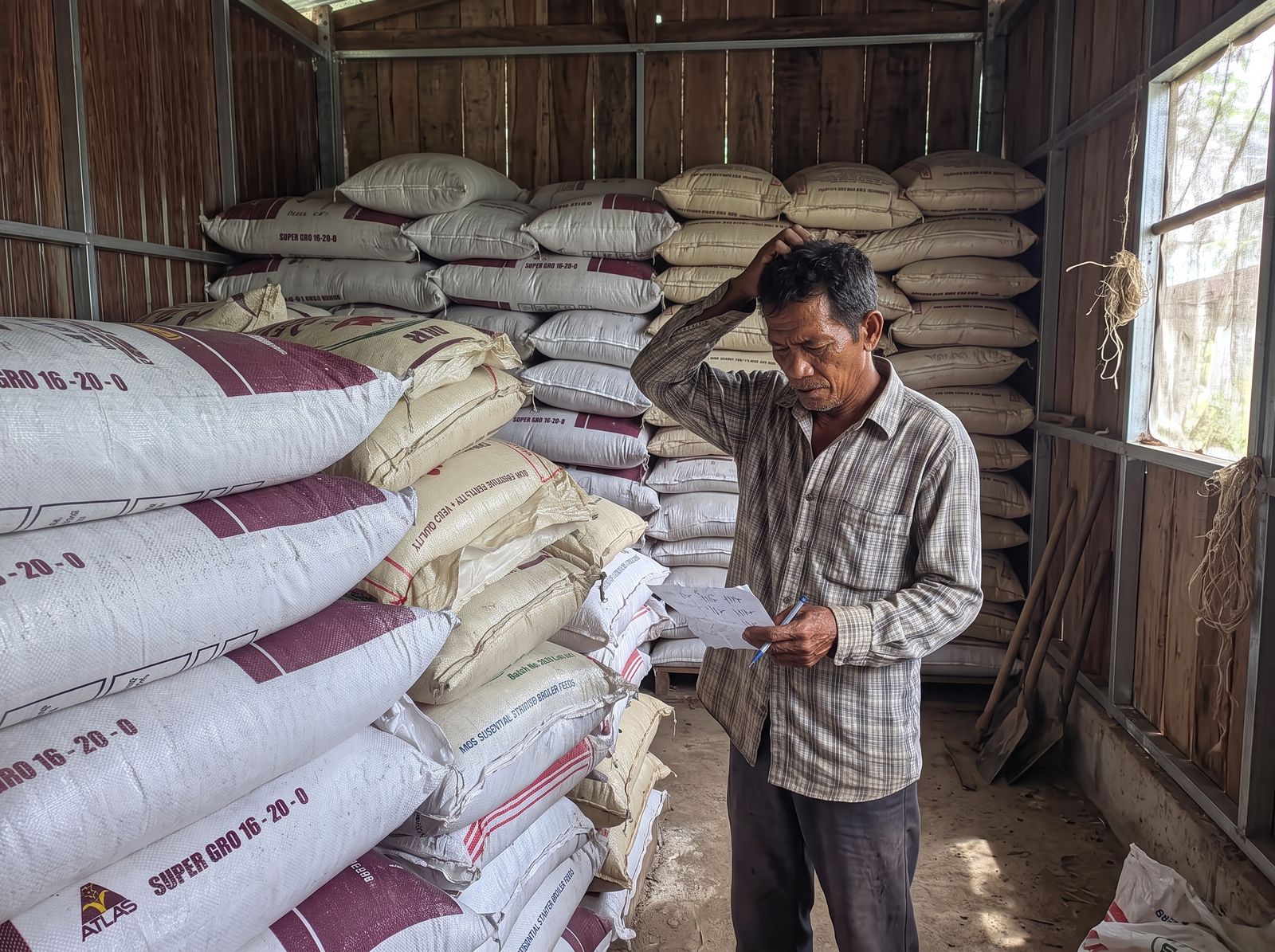
Fertilizer and pesticide are among the biggest costs in a cropping season. A fake bag of complete fertilizer or a diluted bottle of insecticide does double damage. You lose the money, and you lose the yield the product was supposed to protect. So knowing how the FPA works is not paperwork. It protects your harvest.
Many farmers search for it as the Fertilizer Pesticide Authority. Its full name is the Fertilizer and Pesticide Authority, the FPA, and it registers every fertilizer and pesticide that may be sold.
What the Fertilizer and Pesticide Authority is
President Ferdinand Marcos Sr. created the FPA through Presidential Decree 1144, signed on May 30, 1977. It replaced the Fertilizer Industry Authority, which had been created in 1973. The new agency took on pesticides too, because both inputs share the same buyers, stores and field technicians.
The FPA is attached to the Department of Agriculture. It moved to the office of the Presidential Assistant for Food Security in 2014 and came back to the DA in 2018. In Filipino its name is Pangasiwaan sa Pataba at Pestisidyo.
Its job, as the law sets it, has four parts. First, it makes sure farmers can get enough fertilizer and pesticide at fair prices. Second, it brings order to how fertilizer is made and sold. Third, it guards the public against the dangers of pesticides. Finally, it teaches farmers how to use both inputs well.
What the FPA does
- Registers products. Under PD 1144, no fertilizer, pesticide or other agricultural chemical may be imported, made, stored, sold or used unless the FPA has registered it.
- Licenses handlers. Importers, manufacturers, formulators, repackers, distributors, dealers and even warehouses need an FPA license before they can deal in these inputs.
- Controls pesticide imports. The Bureau of Customs releases a pesticide shipment only if the FPA has issued a permit for it.
- Trains people. Dealers and pesticide applicators go through FPA training, and the agency runs sessions on the safe and careful use of inputs.
- Watches the market. Regional teams inspect stores for unregistered, fake and off spec products, and the FPA posts weekly fertilizer prices by province.
What the FPA does not cover
The FPA cannot set fertilizer prices. It lost that power in 1986, when the government removed import limits on fertilizer. Pesticides for household and urban use, such as house ant baits and termite treatments, went to the Food and Drug Administration after a 2007 Supreme Court ruling. And organic fertilizers and organic pesticides now fall under the Bureau of Agriculture and Fisheries Standards, following the Organic Agriculture Act.
Every fertilizer dealer and supply store needs a license
A fertilizer dealer or farm supply store must hold a valid FPA license to sell to you. Before the license, a dealer attends the FPA training for accredited safety dispensers, which covers safe handling, first aid for poisoning and the rules on selling farm chemicals. The advice at one such training in Cagayan Valley was simple: buy only from handlers the FPA has licensed, and call the FPA whenever a product looks doubtful.
You can ask to see the license, and you can look up the store in the FPA list of licensed handlers. Our guide to fertilizer brands and dealers covers what to ask a dealer before you buy.
How to check if a product is registered
Open the FPA website
Go to fpa.da.gov.ph, then Resources, Reports and Registered Products.
Pick the right list
Choose Fertilizer, Pesticide or Pesticide for Drone Use. Each list shows the date it was last updated and can be downloaded as a spreadsheet or PDF.
Search the product name
Match the company, the product name and the registration number on your bag or bottle. Read the expiry date of the registration and make sure it has not passed, because a product can stay on a list after its registration lapses.
Check the contents
For fertilizer, compare the guaranteed analysis, such as 46 0 0 for urea. For pesticide, compare the active ingredient and its concentration.
Check the crop
The pesticide list also shows the crops and pests each product is registered for, plus the waiting days before harvest. Use a product only on a crop it lists.
How to read a fertilizer or chemical label
| Look for | On a fertilizer bag | On a pesticide bottle |
|---|---|---|
| Who made it | company and brand name | company and brand name |
| Registration | FPA registration number | FPA registration number |
| What is inside | guaranteed analysis, such as 14 14 14 | active ingredient and concentration, such as lambda cyhalothrin |
| Where to use it | target crops | crops, pests and rates |
| Safety | storage and handling notes | color band, first aid and antidote notes |
| Timing | your own fertilizer program | pre harvest interval and reentry time |
The color band at the bottom of a pesticide label shows how toxic the product is to people and animals. The FPA describes four bands: red for dangerous, yellow for harmful, blue for caution and green for the least toxic. Red label pesticides are already banned in the Philippines. For the numbers on a fertilizer bag, see our guide to urea fertilizer and complete fertilizer 14 14 14.
Pesticide in Tagalog, and other label words
Pesticide in Tagalog is pestisidyo, and fertilizer is pataba, though most farmers simply say abono. A pesticide is any product that kills or controls pests, so the word covers insecticides for insects, fungicides for fungi and herbicides for weeds. Our list of farm words in Tagalog covers more of the terms you see in stores and on labels.
Fake, smuggled and underweight products
The FPA warns that unregistered products can harm health and the environment and cause money losses. It asks the public to avoid sellers of products that are unregistered, smuggled, underweight, expired or below standard. Online sellers must also follow a 2022 joint order on online businesses from the DA and other agencies.
- No FPA registration number, or a number that does not match the FPA list
- A price far below what every other store charges
- Labels with spelling errors, blurry print or missing first aid instructions
- Torn seals, resewn bags or bottles that look refilled
- A seller who will not give a receipt
Email the FPA at focu@fpa.da.gov.ph, message the FPA official Facebook page, or call (02) 8927 3647. You can also walk into the nearest FPA regional field unit. Bring the product, the receipt and a photo of the store if you can.
Keep your own records in anee.io
In anee.io, every bag and bottle you buy can go into the farm inventory with its price and the activity that used it. Keep a photo of the label and the receipt in your notes. When a pest shows up, send a photo to Anee, the smart farm technician, before you buy a chemical, and date every spray on the cropping calendar.
Track fertilizer and chemicals per lot, keep label photos in your notes, and ask Anee before you spray.
Create a free account