Rice Varieties in the Philippines: Inbreds, Hybrids and Special Rice
The NSIC has approved a long list of rice varieties in the Philippines, but most farms plant only a handful. This guide compares the popular NSIC inbreds, the main hybrids, special rice like Jasponica and the store brands you see at the market. Maturity and yield figures come from field trials and the seed companies.
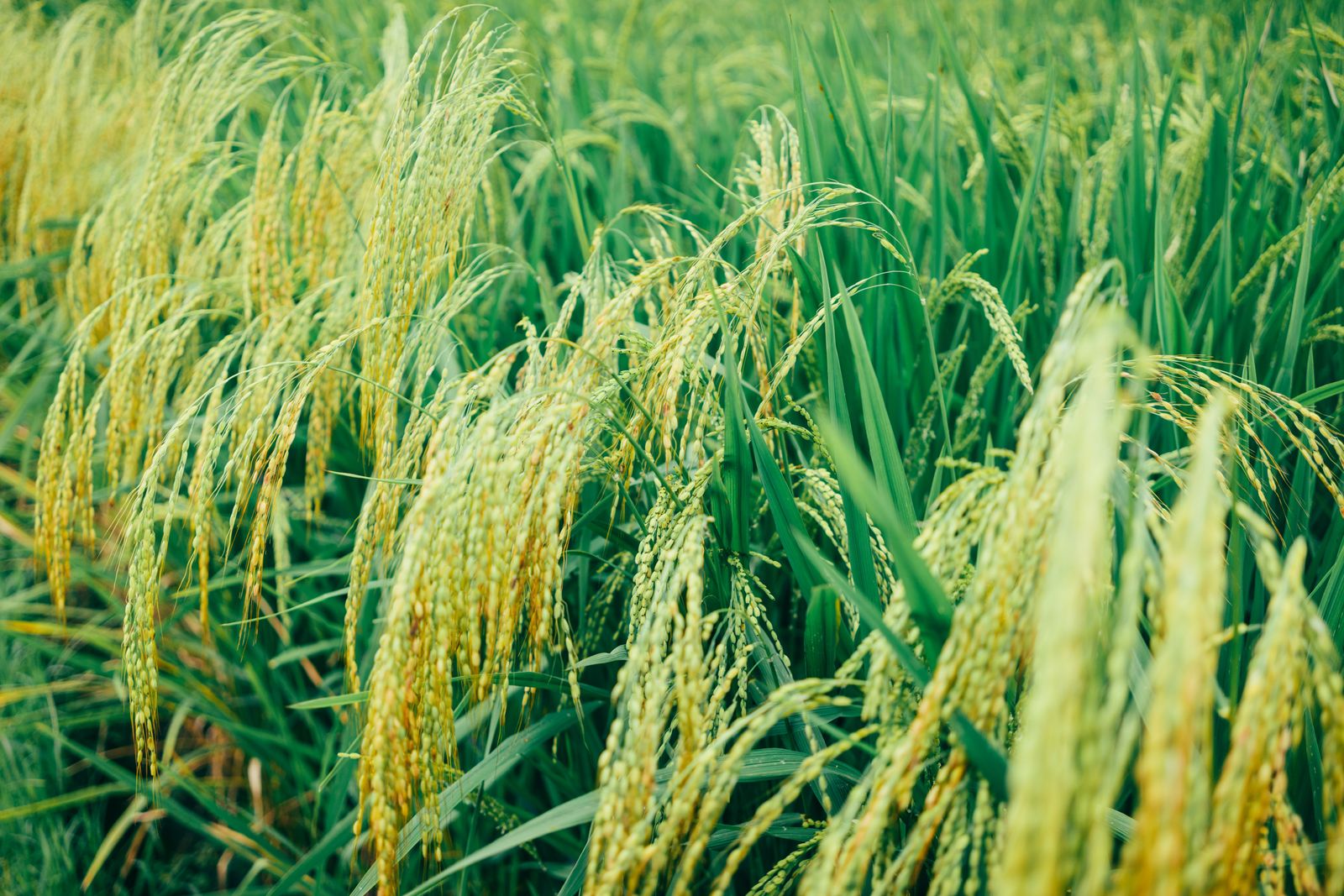
A rice variety, or rice breed as some farmers call it, is a line of rice with fixed traits. It sets how tall the plant grows, how many days it needs, how the rice tastes and which pests it tolerates. The right choice can add sacks per hectare. But the wrong one can lose a season to a typhoon or a planthopper outbreak. That is why no single variety of rice in the Philippines wins in every town.
The rice varieties Philippines farmers plant most are NSIC inbreds and a handful of hybrids. Choosing a rice variety, Philippines wide, starts with three questions: irrigated or rainfed, wet or dry season, and how fast you need the harvest.
One more thing to know before you buy: every hybrid rice variety, rice from its seed included, does not breed true. Saved hybrid seed gives an uneven field, so buy new seed each season.
Kinds of rice in the Philippines
Most seed you can buy falls into three groups.
- Inbred rice. Varieties such as NSIC Rc 216 and Rc 222. If the crop is pure, you can save seed for next season after a germination test.
- Hybrid rice. First generation (F1) seed from two parent lines, such as SL 8H or Jackpot 102. A rice hybrid has higher yield potential, but saved grain does not grow true to type, so you buy new seed every season.
- Special rice. Aromatic, glutinous (malagkit), japonica and pigmented rice, grown for taste and a higher price.
Inbreds also carry local names by environment. For example, Tubigan varieties suit irrigated lowland, while Sahod Ulan varieties suit rainfed lowland. The Binhing Palay app lets you search registered varieties and their traits, so it works as a Philippine rice variety list in your pocket. To compare every registered variety side by side, with its days, yield and pest ratings, open our rice variety finder.
Popular rice varieties in the Philippines: the inbreds
These are the inbreds farmers ask about most. The figures come from trials across many sites, so your own field may do better or worse.
| Variety | Local name | Maturity, transplanted | Average yield, transplanted | Direct seeded |
|---|---|---|---|---|
| NSIC Rc 216 | Tubigan 17 | 112 days after sowing | 6.0 t/ha | 104 days, 5.7 t/ha |
| NSIC Rc 222 | Tubigan 18 | 114 days after sowing | 6.1 t/ha | 106 days, 5.7 t/ha |
| NSIC Rc 300 | Tubigan 24 | 115 days after sowing | 5.7 t/ha | 105 days, 5.3 t/ha |
| NSIC Rc 402 | Tubigan 36 | 114 days after sowing | 5.5 t/ha | 107 days |
Rice variety 216 (NSIC Rc 216, Tubigan 17)
Rc 216 is early maturing, at 112 days transplanted and 104 days direct seeded. In trials it averaged 6.0 t/ha transplanted, with a top yield of 9.7 t/ha. It is moderately resistant to brown planthopper, green leafhopper and yellow stem borer. Still, it is susceptible to blast, so scout for blast closely. Its full numbers are on the NSIC Rc 216 page.
Rice variety 222 (NSIC Rc 222, Tubigan 18)
Rc 222 is now one of the most planted inbreds. It matures in 114 days transplanted and 106 days direct seeded. It averaged 6.1 t/ha transplanted, up to 10.0 t/ha. In the wet season it has a yield edge, and it adapts well to both irrigated and rainfed fields. That is why it is the usual pick for both seasons in Central Luzon. Its full numbers are on the NSIC Rc 222 page.
NSIC Rc 402: rice variety characteristics
Rc 402 came out in 2015 as a variety for direct seeding in Luzon. It averages 5.5 t/ha and matures in 107 days direct seeded, or 114 days transplanted. The plant stands about 95 cm tall. Its grain is long and slender, and milling recovery reached 70.3 percent in trials, a premium grade. Its full numbers are on the NSIC Rc 402 page.
Rice hybrid varieties
A rice hybrid costs more per kilo of seed, but you plant less of it. The usual seeding rate for hybrids in mechanical transplanting is lower because the seed is expensive.
At a 2023 field day in Bicol, nine seed companies showed their hybrids to farmers. With good weather, management and fertilizer, they said, these can reach up to 14 tonnes per hectare. Maturity ranged from 104 to 118 days after sowing. Those are best case numbers, so compare them with your own records.
SL Agritech Corporation and SL 8H
SL Agritech Corporation (SLAC) is a private company that breeds, produces and sells hybrid rice seed and premium rice. Its best known hybrid is SL 8H. For SL 8H the company lists 7 to 17 t/ha, 105 to 115 days to maturity, 118 cm plant height and 12 to 28 productive tillers. SLAC also says SL 8H shatters little, so you can harvest it up to 90 percent grain maturity. Those are company claims, so test them on your own lot.
Jackpot 102 and other hybrids
Jackpot 102, registered as NSIC Rc 666H, comes from Leads Agri Ventures, which calls it its first hybrid seed, introduced in 2019. We found no official figure for the Jackpot rice variety maturity. The field day gave one range, 104 to 118 days after sowing, for all the hybrids shown, so it is not a number for Jackpot alone. Read the days to maturity on the seed bag, or ask your dealer, before you date your season.
Other hybrids at the same field day included Bigante Plus and Habilis Plus from Bayer and TH82 from SeedWorks. There were also NK 5017 from Syngenta, LP 2096 from LongPing and Mestizo 30 from Allied Botanical.
Seed company yields usually describe best case fields. For scale, the national average palay yield was 4.14 tonnes per hectare in 2025. So compare any new variety with your own last seasons, not with a brochure.
Special rice: Jasponica rice and japonica
Jasponica rice comes from SL Agritech, which describes it as a cross of Thai jasmine rice and Japanese rice. It is sold as premium milled rice under the Doña Maria brand, named after the mother of chairman Henry Lim. A 2011 Philstar report described the cooked grain as soft, sticky and chewy, with an aroma. Treat that as the company's description, since we found no trial data for it.
For a true japonica, look at NSIC Rc 414, named Japonica 4, which came out in 2016. Aromatic and glutinous types, like the malagkit used for kakanin, also belong to special rice.
Rice brands in the Philippines are not varieties
Walk into any public market and you will see names like Sinandomeng or Dinorado on the rice box. These are popular rice brands. In 2018 the NFA limited local rice labels to four classes: regular milled, well milled, premium and special rice. The rule replaced brand names like Sinandomeng and Dinorado, although some retailers still used them in 2021.
Company brands, such as Doña Maria from SL Agritech Corporation, are a different thing. They tell you who packed the rice. But the seed you plant should carry an NSIC name on a certified tag, so when a buyer asks what you planted, answer with the variety.
How to choose the right rice variety in the Philippines
Use four tests to choose a rice variety in the Philippines, plus one habit.
- It suits your environment and season: irrigated or rainfed, dry or wet season.
- It answers your local problem. In typhoon areas, pick a maturity that lets the crop escape the worst months.
- It held up through two or more seasons of trials in your area.
- Your buyer or miller wants it.
- Rotate varieties every 2 to 4 croppings as part of pest management.
Then buy certified rice seeds with a valid blue tag, because every figure above assumes clean palay seeds. Our palay guide explains the seed classes, and our pagtatanim ng palay guide gives seeding rates for transplanting and direct seeding.
In anee.io, each lot keeps its own variety and day count. So a 104 day hybrid and a 114 day inbred on the same farm each get their own dated tasks in the cropping calendar. You can also check the planting analysis tools for your town before you buy seed. Once you harvest, our palay price guide shows what buyers pay.
anee.io keeps each lot's variety, day count and yield, so you can compare one season with the next in the reports on the paid plans. You can also ask Anee in Tagalog or English which variety fits your town.
Try anee.io free