Vegetables in the Philippines: What to Grow, When, and How to Feed Them
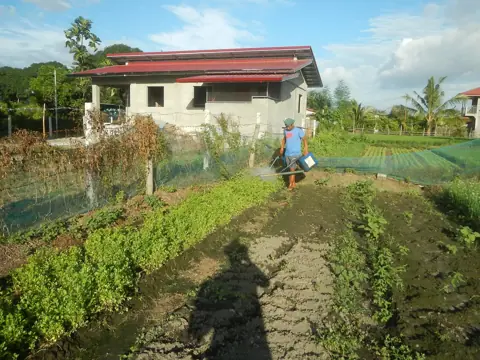
Vegetables in the Philippines come from two very different farms. In the lowlands it is the gulayan of ampalaya, sitaw, talong, okra, kalabasa, pechay, kangkong and tomato. Up in Benguet it is the cool terraces that send cabbage, carrots and potatoes to Manila. This guide covers what to plant, when to plant it, how to feed each crop, and which pests take the most harvest.
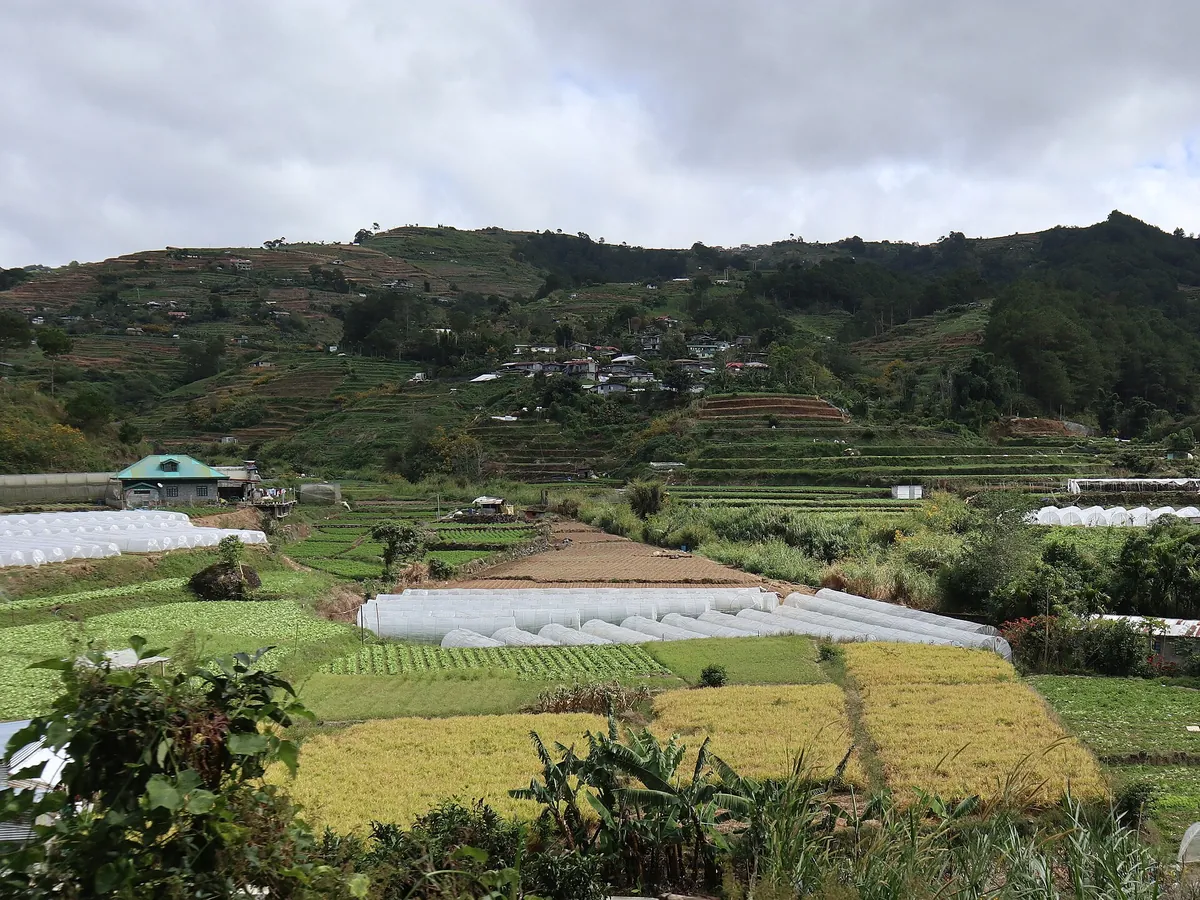
Many farmers grow gulay (vegetables) on a small lot next to their palay or mais, because pechay can be sold five to seven weeks after sowing. But vegetables also punish mistakes quickly. A week of heavy rain on ripening tomatoes can wipe out much of the harvest.
The rates below are for fields without a soil test. So when you can, have your soil analyzed at the provincial soils laboratory.
The main vegetables in the Philippines
Lowland vegetables
In the lowlands the common crops are the pinakbet and sinigang vegetables: ampalaya (bitter gourd), sitaw (string beans), talong (eggplant), okra, kalabasa (squash), pechay, kangkong and tomato. Most want full sun and well drained loam rich in organic matter.
| Vegetable | Part harvested | First harvest |
|---|---|---|
| Pechay | Whole plant | 3 to 4 weeks after transplanting |
| Kangkong | Leaves and tops | 30 to 90 days after planting, then regrowth |
| Okra | Young pods | Flowers 40 to 75 days after planting, pods 4 to 6 days after flowering |
| Ampalaya | Young fruit | 18 to 20 days after flowering |
| Tomato | Fruit | 55 to 65 days after transplanting |
| Kalabasa | Young green fruit | 30 to 40 days after pollination |
| Talong and sitaw | Fruit and pods | Varies by variety, so check the seed pack |
Highland vegetables of Benguet
In the Cordillera the cool air lets farmers grow crops that struggle in lowland heat. The Cordillera is the country's top producer of cabbage, carrots and potatoes, and Benguet is its largest producing province. Much of that harvest passes through the La Trinidad trading post.
A survey of about 100 farmers per crop put average yields at 22 tons of cabbage, 20 tons of carrots and 16 tons of potatoes per hectare. It also found that fertilizer and soil amendments make up 23 percent of the cost of growing cabbage.
When to plant
The calendar follows the rain. Tomatoes go in from November to February in the lowlands, and from September to January up in the hills. Ampalaya can go in any time, but it does best from October to February.
Off season planting, May to September for tomato, pays more because prices climb when supply drops. But wet season fields need raised ground and good drainage. Typhoons are the other risk, so stagger your plantings instead of betting one lot on one month.
For your own town, the anee.io When to Plant Analysis reads the local weather first, and the forecast for each lot tells you when to hold a spray.
Best fertilizer for vegetables
There is no single best fertilizer for vegetables. The pattern is the same for most crops. First, build the soil with organic matter. Next, give a complete fertilizer at planting. Then side dress with nitrogen and potash while the crop grows.
Organic base: compost and chicken dung
Start with organic fertilizer. Ampalaya takes 10 to 20 tons of compost or decomposed manure per hectare before field preparation. In the Cordillera, organic plots get 2 to 4 kilograms of compost per square meter.
Chicken dung as fertilizer is popular because it is cheap and rich. For pechay, a common rate is one sack of chicken dung, one kilo of complete fertilizer and four kilos of urea on every 20 meter bed. For talong, one eggplant leaflet uses 0.5 kilograms of decomposed chicken manure with 0.4 kilograms of 16 20 0 per 10 meters of furrow. We saw that rate only in reprints, so confirm it with your agriculture office.
Use only well rotted dung. Raw organic matter releases acids and ties up nitrogen while it decays, so young plants turn yellow. Some farms go fully natural. Visitor accounts describe Palaya Natural Farm in Tanay, Rizal, better known for its dragon fruit, as growing vegetables with organic methods, which we could not confirm officially. For more options, see our organic fertilizer examples.
Complete fertilizer: triple 14 and 16 16 16
Fertilizer 14 14 14, which many farmers call triple 14 fertilizer, carries 14 percent each of nitrogen, phosphorus and potassium. It is the standard basal fertilizer for vegetables. For example, ampalaya gets 20 grams, about two tablespoons, per hill, while tomato gets one tablespoon per plant.
Some dealers also stock fertilizer 16 16 16. It does the same job with a little more of each nutrient per bag, so use slightly less. Our guide to complete fertilizer 14 14 14 shows the bag math.
The 16 20 fertilizer, sold as 16 20 0 ammonium phosphate, has no potash but more phosphorus for young roots. Some eggplant guides use it as a basal fertilizer, and a soil test tells you whether the potassium is already enough. See our 16 20 0 fertilizer guide.
Side dress with urea and potash
After planting, vegetables need nitrogen for leaves and potassium for fruit. For ampalaya, side dress 10 grams of urea, about one tablespoon, per hill three to four weeks after planting. After that, repeat the dose every two weeks for two or three more rounds. Cover each dose with fine soil so the urea does not escape into the air.
Foliar fertilizer spray
A foliar fertilizer spray feeds the plant through its leaves. Treat it as a supplement to soil feeding, because leaves take in only small amounts at a time. Organic growers often use fish amino acid. They mix 2 tablespoons in 1 liter of water and spray every 7 days, from new seedlings until fruiting.
For a commercial foliar fertilizer, follow the label. More in our foliar fertilizer guide.
Fertilizer for tomato plants
Here is a simple tomato program for fields without a soil test.
| When | What to apply | How much |
|---|---|---|
| Before land preparation | Well rotted animal manure, or an organic fertilizer bought in bags | 20 bags per hectare |
| At transplanting | Complete fertilizer 14 14 14 in the hole, covered with compost | 1 tablespoon per plant |
| 2 weeks after transplanting | Urea (46 0 0) and muriate of potash (0 0 60), buried 1 inch deep and 3 to 4 inches from the stem | 1 tablespoon of each per plant |
| 30 days after transplanting | Urea and muriate of potash, same method | 1 tablespoon of each per plant |
During flowering and fruit set, you can also spray calcium made from eggshells. Water only to keep the root zone moist, because tomato is very sensitive to flooding and excess moisture brings blight.
In anee.io, each dose becomes a dated task on the cropping calendar, counted from each lot's transplanting day. On Solo Farmer and Farm Owner, the inventory then takes the urea and potash off your stock as each activity uses them.
Common pests and diseases
Thrips
Thrips are tiny insects that rasp leaves and suck the sap, leaving silvery scars that turn brown. Melon thrips (Thrips palmi) attack ampalaya, melons, talong and tomato. Check the undersides of young leaves and the flowers, then see our page on thrips.
Aphids
Aphids are soft green or black insects that cluster on shoots and under leaves, curling them and spreading viruses. Two common aphids cause much of the damage, and their scientific names help when you read farm bulletins and pesticide labels. The cotton or melon aphid, Aphis gossypii, feeds on talong, okra, sili and gourds. The green peach aphid, Myzus persicae, prefers pechay, cabbage and potato. See our page on mites and aphids.
Cutworms
Cutworms are moth larvae that hide in the soil by day and feed at night, often cutting seedlings at the soil line. The common cutworm, Spodoptera litura, also strips pechay and cabbage leaves. Handpick them, spray botanicals and net the seedlings. More on our cutworm page.
Anthracnose
Anthracnose is a fungal disease caused by Colletotrichum. It makes sunken, dark spots on fruit and leaves, and it spreads fastest in warm, wet weather. It is among the prevalent diseases of tomato, and it also hits sili and ampalaya. Plant tolerant varieties where you can, remove infected fruit, and read our anthracnose page for the fungicide groups used against it.
Use only products registered with the Fertilizer and Pesticide Authority for your crop. Follow the label rate and the waiting days before harvest, which matter most on leafy vegetables.
Send a photo of the curled leaf or spotted fruit to Anee, the anee.io smart farm technician. Anee checks your crop's stage and the weather first, then answers in Tagalog or English.
Meet AneeGrowing vegetables in the Philippines with anee.io
anee.io has growth stages for 85 Philippine crops, including tomato, pechay, ampalaya, talong, okra, kalabasa, cabbage, carrots and potato. Pick a date and you see each lot's stage, what to do, and what to watch for.
For the planting steps in Tagalog, read our guide to pagtatanim ng gulay.
What are the most common vegetables in the Philippines?
What is the best fertilizer for vegetables?
Is fertilizer 16 16 16 better than 14 14 14?
How often should I spray foliar fertilizer?
Set up a cropping schedule on anee.io and every fertilizer, spray and harvest gets a date from each lot's own day zero.
Sign up free