Hanip Insect: Mites, Aphids and How to Control Them
In Tagalog dictionaries, hanip is the chicken louse or flea. In the field the word stretches to tiny crop pests. Kayumangging hanip is a name for the brown planthopper of rice, and a survey in Bulacan recorded hanip na puti, white mites, on sampaguita. So when someone reports a hanip insect problem on a crop, look for mites, aphids and thrips, and for planthoppers if the crop is rice. This page shows how to tell them apart and how to control them without wiping out their natural enemies or your budget.
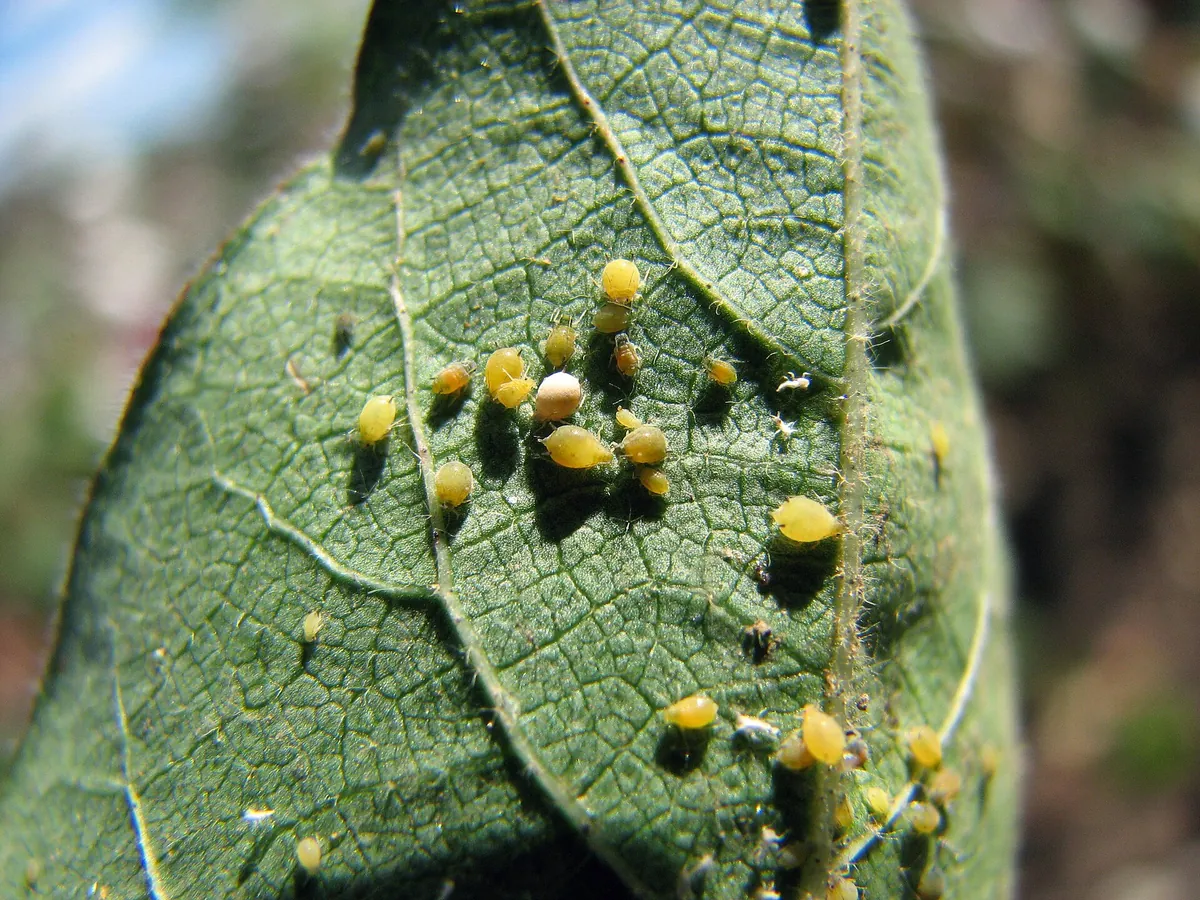
Mites and aphids are small enough to miss and breed fast enough that a few this week can be a colony by the next. In warm weather a newborn aphid can start giving birth within about a week, all without mating. A single spider mite colony under a leaf can hold hundreds.
The right product can knock them back. The hard part is finding them early, and not making them worse with the wrong spray.
What hanip means in Tagalog
Tagalog dictionaries define hanip as the chicken louse or chicken flea, the tiny pest that crawls in the feathers of backyard hens. Tungaw is a related word for the tiny red itch mite that bites fowls in the skin folds. Both words name something small that crawls and bites or sucks.
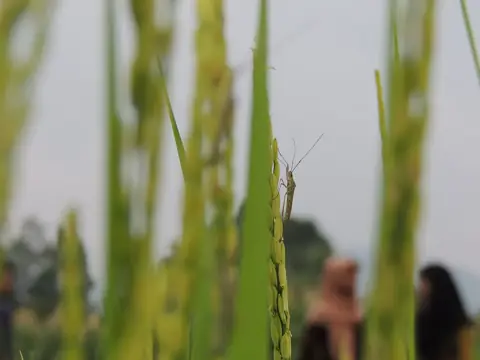
Farmers carry the word into the field, and its meaning shifts with the crop. On rice, kayumangging hanip is a Tagalog name of the brown planthopper, and some write hanip sa palay. Our page on the brown planthopper covers that pest. On sampaguita, a survey in San Miguel, Bulacan recorded 'hanip na puti', or white mites, among the growers' pests, next to green worms and small grasshoppers. That is one survey, so do not treat hanip as the fixed name of one pest.
Mites in Tagalog and mite in Tagalog
Ask for mites in Tagalog and you get a few answers, because dictionaries and farmers do not agree on one word. In farm talk, hanip is the closest fit for a plant mite. Tungaw, according to Wiktionary, is the tiny mite that bites chickens. For more terms like these, see our list of farm words in Tagalog.
Is a mite an insect?
Strictly speaking, no. Adult mites have eight legs like spiders, while insects such as aphids and thrips have six. The name hanip insect sticks anyway, and since the control steps overlap, it pays to learn all three.
Spider mites and broad mites on vegetables
The two spotted spider mite, Tetranychus urticae, feeds on a long list of crops, beans, eggplant, tomato and cucurbits among them. Colonies live under the leaves, often with fine webbing. Their feeding leaves pale speckles on top of the leaf, and a heavy attack turns leaves bronze and yellow until they drop. Hot, dry and dusty weather favors them, and plants short of water suffer most.
The broad mite, Polyphagotarsonemus latus, is smaller still, too small to see without a strong hand lens. Its main hosts are sili, bell pepper and tomato, but it also feeds on beans, eggplant, mango and papaya. Infested leaves turn bronze and stiff and roll under at the edges. Flowers drop, and the fruit comes out scarred and misshapen. That downward roll is a good clue, because chilli thrips curl sili leaves upward instead.
Aphids and the aphids scientific name
Aphids are soft, pear shaped insects that suck sap through a long, slender beak. Their color runs from green and yellow to brown or black. The aphids scientific name at family level is Aphididae, in the order Hemiptera, the true bugs. Within that family, these species turn up often on vegetable crops:
| Scientific name | Common name | Crops it attacks |
|---|---|---|
| Aphididae | The aphid family | Every aphid belongs here, in the order Hemiptera |
| Aphis gossypii | Cotton aphid or melon aphid | Ampalaya, cucumber, squash, melon, eggplant, sili, okra |
| Myzus persicae | Green peach aphid | Pechay, mustasa, cabbage, pepper, potato |
| Aphis craccivora | Cowpea aphid | Sitaw, mungbean, peanut and other legumes |
Aphids multiply fast, and one female can give birth to many young a day. They also leave sticky honeydew that turns black with sooty mold, and ants guard them to get it. Worse, aphids carry plant viruses, and a probe of a few minutes is enough to pass one on. Papaya ringspot virus, for example, spreads through aphids such as Aphis gossypii and Myzus persicae.
Hanip insect or thrips? How to tell them apart
| Pest | Legs and size | Where it hides | Damage |
|---|---|---|---|
| Spider mite | Eight legs, a tiny moving dot | Under leaves, in fine webbing | Pale speckles, bronze leaves, webbing |
| Broad mite | Eight legs, too small to see without a lens | New leaves and buds | Bronze leaves that roll down, dropped flowers |
| Aphid | Six legs, soft pear shaped body | Tips and under young leaves, in colonies | Curled leaves, honeydew, sooty mold, ants |
| Thrips | Six legs, slender body, fringed wings | Inside flowers and leaf folds | Silvery streaks, scars, sili leaves that curl up |
Tap a leaf over a white sheet of paper. Mites show up as slow moving dots, aphids as soft round bodies, and thrips as fast little dashes. A cheap 10x hand lens settles most arguments.
How to control hanip insects: mites and aphids
Scout the underside
Turn leaves over at least once a week, and more often in hot, dry spells. Check the youngest leaves and buds for broad mites and aphids, and the lower leaves for spider mites.
Wash them off
A strong spray of water knocks aphids and spider mites off the plant and rinses away the dust that mites like. Keep the crop watered too, because water stressed plants suffer most.
Protect the natural enemies
Aphids are eaten by lacewings, lady beetles, tiny parasitic wasps and the larvae of syrphid flies. Puffed up, crusty aphid mummies are a sign the wasps are at work. Predatory mites and some lady beetles eat spider mites.
Use soft sprays first
Insecticidal soap and horticultural oils, neem oil among them, kill aphids and mites on contact. They must hit the pests, so cover the underside of the leaves and repeat as the label directs. Use products registered with the FPA.
Go easy on nitrogen and ants
Heavy nitrogen feeds aphid outbreaks, so do not overdo urea fertilizer. Keep ants off the plants too, because they guard aphids from their enemies.
Choose the right chemical
If counts keep rising, use a miticide for mites and an aphicide for aphids, because many insecticides do not kill mites. Rotate IRAC groups, follow the label rate and the days before harvest, and pick only products registered for your crop.
A broad spectrum insecticide sprayed for another pest can wipe out predatory mites and lady beetles, and spider mites then explode. If you must spray, spot treat the hot spots instead of the whole field, and check the Fertilizer and Pesticide Authority registration of every product.
How anee.io helps with hanip insects
Mites and aphids build up between visits, so a routine beats a rescue. Set a weekly scouting task on the cropping calendar, and check the forecast in growth stages and weather. A hot, dry week is your cue to turn leaves over.
Found something you cannot name? Take a close up photo of the underside and ask Anee, the smart farm technician. You can type in Tagalog, for example 'may hanip ang talong ko', and Anee answers in Tagalog or English with what to check next. Your photos stay in your notes and gallery, and the inventory tracks the soap, oil or miticide you buy and use.
Sign up for anee.io, add your lots, and send Anee a photo whenever tiny pests show up. You get an answer in Tagalog or English that fits your crop and its stage.
Sign up for anee.ioHanip insect questions farmers ask
What is hanip in English?
What is mite in Tagalog?
What is the scientific name of aphids?
Does neem oil kill mites and aphids?
Are the hanip on chickens the same as the mites on plants?
Read the whole guide and protect your harvest
With Libre + Anee, read the whole guide: how to tell the pests apart, when it pays to act, and what to spray, by active ingredient.
The account is free, no credit card.