Brown Planthopper: Symptoms, Hopperburn and Control
The brown planthopper, Nilaparvata lugens, is a tiny brown insect that sucks sap at the base of the rice plant. In Tagalog it is kayumangging ngusong kabayo. When its numbers explode, whole patches of palay dry up in a condition called hopperburn. In 2017 it damaged rice in 18 provinces.
What the brown planthopper is
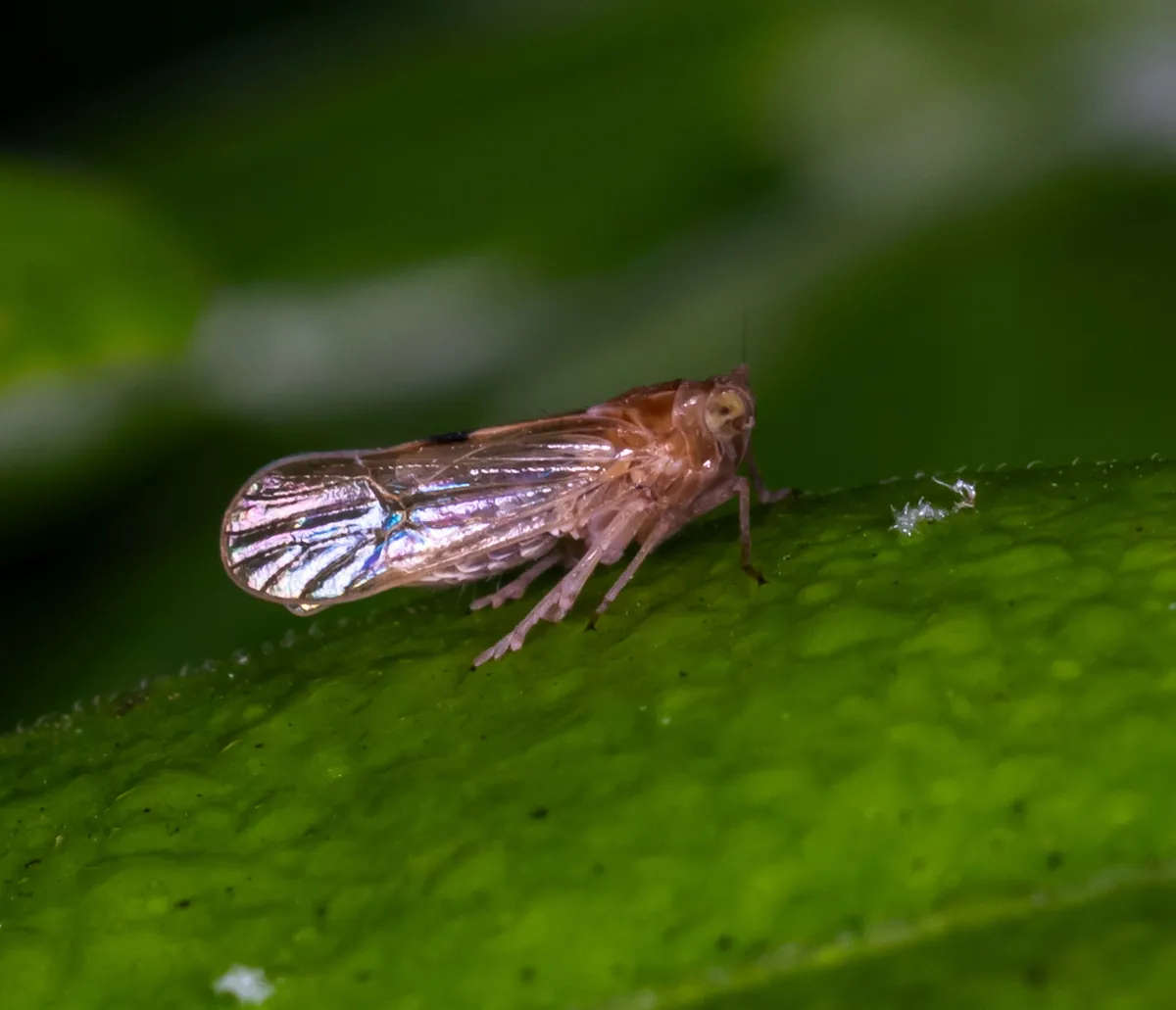
Planthoppers are small insects that suck plant sap. Two kinds attack rice: the brown planthopper, or BPH, and the whitebacked planthopper, Sogatella furcifera. You will also see the name written as brown plant hopper, in two words. Its Tagalog names are kayumangging ngusong kabayo and kayumangging hanip, and it is also called hanip sa palay. Farmers use hanip for other tiny pests as well, which our page on hanip, mites and aphids covers.
The adult is only 2.5 to 3 millimeters long. Some adults have long wings and fly to lights, while others have short wings and stay on the plant. Females lay eggs in batches inside the leaf sheath and the midrib. The brown nymphs molt five times before they become adults.
Brown plant hopper symptoms
BPH feeds at the base of the tillers, so look low. Often, the first sign is yellowing plants. As numbers climb, the leaves turn orange yellow, then brown and dry. Heavy infestation leaves round patches of dead, dried plants. That is hopperburn, and at that level the crop loss can reach 100 percent. The usual loss is 10 to 50 percent or more per hectare.
- Honeydew and black sooty mold on the lower stems
- Hoppers crowded on the base of the tillers, dropping onto the water when you tap the hill
- Crescent shaped white eggs inside the midrib or leaf sheath, with egg laying marks that let fungi and bacteria in
- Short, stunted hills sick with ragged stunt or grassy stunt, two viruses BPH carries that no spray can cure
Hopperburn looks a lot like the bugburn caused by the rice black bug. The check is the sooty mold at the base of the plant, which planthopper attacks leave.
Why brown planthopper outbreaks happen
Put plainly, planthoppers are not pests until you apply insecticides carelessly. In a healthy field, spiders, mirid bugs, water striders, small wasps and other natural enemies keep BPH in check. Early or needless sprays kill these predators. Then the hopper eggs hatch unchecked and the population explodes. This is a main cause of outbreaks, along with long winged hoppers that the wind carries in.
A 1986 study in South Cotabato, reported by Agriculture Monthly, showed it in the field. After insecticide sprays against leaf eating caterpillars, the spiders dropped and BPH numbers climbed sharply.
Other things that favor BPH
- Too much nitrogen, such as extra urea fertilizer, which softens the plant
- Dense planting and a closed, humid canopy
- Staggered planting in neighboring fields
- Continuous standing water and shade
- Direct seeded fields, which suffer more than transplanted ones
BPH counts climb highest near harvest. In the wet season that is most often September to October, and in the dry season March to April. The 2017 outbreak across 18 provinces caused an estimated 17.87 million pesos in damage.
How to monitor the planthopper
Check the seedbed daily
Make daily checks in the seedbed and weekly checks in the field. Look along each side of the seedbed.
Tap the base
Grasp a hill, bend it over slightly and tap it near the base. Count the hoppers that fall onto the water.
Walk diagonally
In transplanted rice, cross the field corner to corner and look at the base of 10 to 20 hills along the way.
Count the helpers too
Note the spiders and other predators. If natural enemies outnumber the hoppers, the risk of hopperburn is low.
Stop at the milk stage
Once the grain reaches the milk stage, you can stop checking for BPH.
At one BPH per stem or less, you still have time to act if numbers rise. Drain the field for three to four days once counts reach about 10 per hill, since BPH prefers cool, humid conditions at the base.
A light trap can warn you early: set it against a pale wall or above a basin of water. If hundreds of BPH land in it, check your seedbed and fields at once and scout daily for the next few weeks. Keep the lights away from seedbeds and fields.
anee.io helps you keep that rhythm. Your cropping calendar counts days after transplanting for every lot, so you can set a weekly hopper check from early tillering to the milk stage. The growth stages view shows when each lot enters its risky weeks. Snap a photo of the insects at the base and send it to Anee, the smart farm technician, who helps you tell a planthopper from a leafhopper in Tagalog or English.
Management that keeps BPH down
Resistant varieties
These are BPH resistant varieties: PSB Rc2, PSB Rc10, and NSIC Rc212, Rc222, Rc224, Rc226, Rc298, Rc300 and Rc308. Ask your Municipal Agriculture Office which ones suit your area, and see our guide to rice varieties in the Philippines.
Resistance does not last forever. IR26, the first BPH resistant variety, lost its resistance in 1976 to 1977 when a new BPH biotype appeared. IR36, with a different resistance gene, held for 14 years. So combine resistant seed with the practices below.
Cultural control
- Where BPH is attacking, plant a resistant variety and transplant. Do not broadcast the seed during an attack.
- Plant together with your neighbors and leave a one to two month fallow between crops to break the BPH life cycle.
- Use 20 by 20 centimeter spacing, because dense planting raises planthopper numbers.
- Split nitrogen into three applications, as in our guide to fertilizer for rice.
- Irrigate by alternate wetting and drying, or AWD. It works with split nitrogen against BPH. Start it 21 to 30 days after transplanting, and add water only when the observation well, a perforated bamboo or PVC tube set in the paddy, has run dry.
- Keep potassium adequate. More potash makes the plant less susceptible.
- Keep seedbeds far from lights.
- Raise the water from time to time to drown eggs at the base, and alternate drying and flooding at the milk stage.
- Flood the seedbed for a day so only the seedling tips show. This controls BPH there.
- Plow under ratoons and volunteer rice after harvest.
Do not spray early
Do not spray in the first 30 days after transplanting or 40 days after seeding. The plants recover from early damage by making new leaves and tillers. Early sprays also stop friendly insects from settling in the field.
Active Ingredients on Philippine Labels
| Active ingredient | IRAC group | On Philippine labels |
|---|---|---|
| Pymetrozine | IRAC 9B | A first choice. 26 registered products name it on rice. |
| Dinotefuran | IRAC 4A | A first choice. 10 registered products name it on rice. |
| Pymetrozine plus dinotefuran | IRAC 9B plus 4A | A first choice. 3 registered products name it on rice. |
| Triflumezopyrim | IRAC 4E | A first choice. 3 registered products name it on rice. |
| Thiamethoxam | IRAC 4A | A sound second choice. 23 registered products name it on rice. |
| Buprofezin | IRAC 16 | A sound second choice. 7 registered products name it on rice. |
| Chlorantraniliprole plus thiamethoxam | IRAC 28 plus 4A | A sound second choice. 6 registered products name it on rice. |
| Clothianidin | IRAC 4A | A sound second choice. 3 registered products name it on rice. |
| Cartap hydrochloride | IRAC 14 | Older or broad chemistry: a last resort. 83 registered products name it on rice. |
| Fipronil | IRAC 2B | Older or broad chemistry: a last resort. 32 registered products name it on rice. |
The table stops at the ten best. 7 more on Philippine labels for it are older or broad chemistry. The Pest Finder in anee.io lists every one, crop by crop, with the products sold here.
These are on Philippine labels for it, but we leave them off the list above, for the reasons below.
- Diazinon: Known in trials to make brown planthopper come back worse after spraying.
- Fenobucarb (BPMC) plus chlorpyrifos: Hoppers here resist BPMC, and chlorpyrifos kills their enemies, so outbreaks can follow.
- Acephate: Trials in South Asia saw brown planthopper come back in bigger numbers after acephate sprays.
- Cypermethrin, alpha cypermethrin, beta cypermethrin, esfenvalerate and permethrin: Pyrethroids kill the spiders and bugs that eat hoppers, and planthoppers come back worse after the spray.
- Chlorpyrifos: Field trials saw hoppers rise and their predators fall after chlorpyrifos sprays, ending above unsprayed rice.
- Lambda cyhalothrin plus thiamethoxam and bifenthrin plus clothianidin: The pyrethroid in it kills spiders and lets planthoppers come back worse.
- Chlorpyrifos plus cypermethrin: The pyrethroid and the organophosphate kill the hoppers' enemies, and planthoppers come back worse.
- Fenobucarb (BPMC): Brown planthopper in the Philippines and much of Asia now resists BPMC strongly. It no longer pays.
- Phenthoate plus fenobucarb (BPMC): Hoppers here resist BPMC, and the mix kills the spiders that hold them down.
- Acephate plus imidacloprid: Imidacloprid no longer controls this hopper well, and acephate can bring it back in bigger numbers.
Resistance. Brown planthopper in Asia resists imidacloprid and BPMC, and resistance to buprofezin, fipronil and thiamethoxam is rising. Use each group at most once a crop and switch among pymetrozine (9B), triflumezopyrim (4E), buprofezin (16) and dinotefuran (4A).
When to spray for brown planthopper
| Count | Crop stage | What to do |
|---|---|---|
| 1 hopper per tiller or fewer | Any stage | No insecticide. Keep scouting every week |
| 25 or more hoppers per hill | Booting to ripening | A recommended insecticide may be used, by its label |
| Any count | First 30 days after transplanting | No insecticide at all |
Between those two counts, keep scouting each week and let the predators work. Our guide on when to spray rice pests puts these numbers next to the other rice pests, so you can plan the whole season.
Do not spray even rice already hit by hopperburn if natural enemies outnumber the planthoppers. Count both before you mix anything.
Chemical control with pymetrozine
Use insecticide only as a last resort, and choose a selective one if the infestation is very high. In a seedbed, spray only if all three are true: the stems average over one planthopper each, hoppers outnumber their natural enemies, and you cannot flood the seedbed.
Pymetrozine is a common choice. It belongs to IRAC Group 9B, and it stops the hoppers from feeding. Chess insecticide (Chess 50 WG) from Syngenta contains pymetrozine, and its Philippine product page lists brown plant hopper on rice. Syngenta calls it highly selective for beneficial insects. Insect growth regulators also work against the nymphs.
Treat these as examples. Follow the label and the FPA registration, and never add a broad spectrum insecticide to the tank just to be sure. Our guide to Alika, Virtako and Chess compares these products.
Set weekly hopper checks on the anee.io calendar, see each lot's growth stage and the week's weather, and ask Anee about a photo from the field.
Try anee.io freeBrown planthopper questions
What does a brown planthopper look like?
What are the first brown plant hopper symptoms?
Why did BPH attack after I sprayed?
Which insecticide is for the brown planthopper?
Is the planthopper the same as the green leafhopper?
Stop Brown Planthopper from costing you the harvest
With Libre + Anee, read the whole guide: how to be sure it is this pest, when it pays to act, and what to spray, by active ingredient.
The account is free, no credit card.