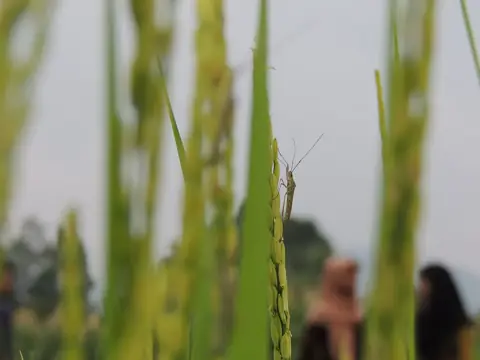
Whitebacked Planthopper: Hopperburn and How to Prevent It
The whitebacked planthopper is a small sap sucking insect found at the base of rice plants. Heavy numbers cause stunting and hopperburn, where patches of plants dry out. This page shows how to spot it and how to protect the spiders and bugs that keep it in check.
What Is Whitebacked Planthopper?
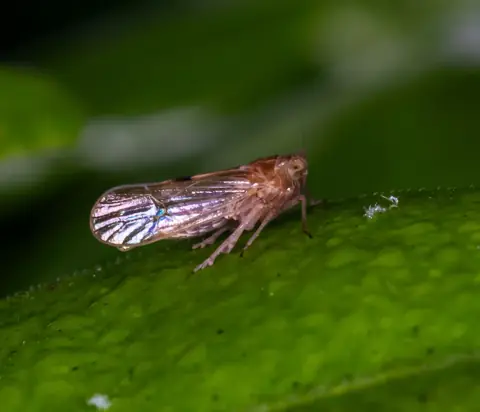
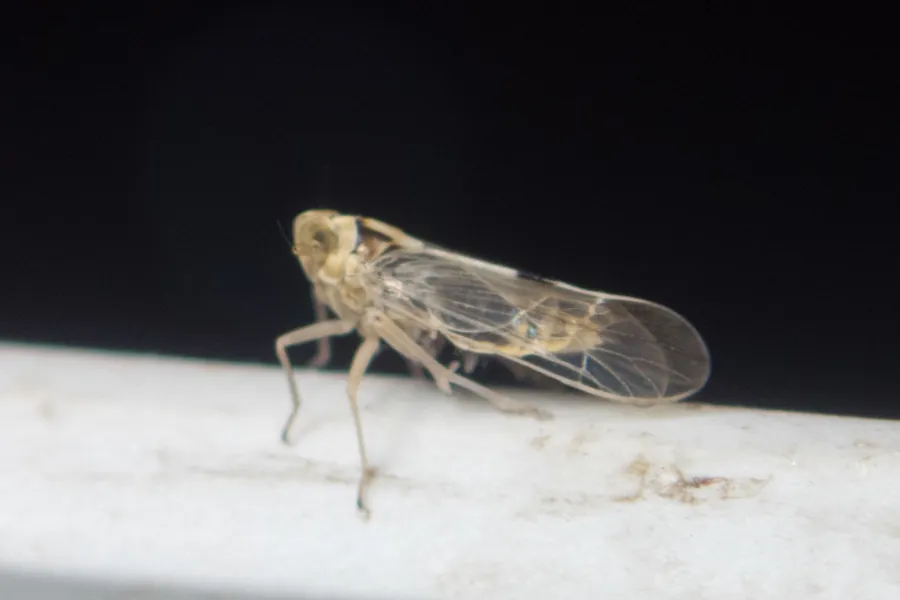
The whitebacked planthopper (Sogatella furcifera) is a pest of rainfed and irrigated rice. It is pale brown and only 2 to 3 millimeters long, and a white band runs along the middle of its back. Females may have short or long wings, while males always have long wings.
It lives side by side with the brown planthopper, and farmers often blame both for the same patches. In Asia it also carries the Southern rice black streaked dwarf virus. It matters in the Philippines because early insecticide sprays are known to trigger planthopper outbreaks.
| Fact | Details |
|---|---|
| Name | Whitebacked planthopper |
| Scientific name | Sogatella furcifera |
| Kind | Insect |
| Crops it attacks | Rice |
| Local names | None recorded |
| Where it strikes | The whole plant and stems and tillers |
| When it strikes | Any time in the crop, in dense fields with heavy nitrogen, with migrating adults arriving from other fields. |
| Life cycle | Females lay eggs in stems and leaf midribs, nymphs pass five stages in 12 to 18 days, and long winged adults fly to new fields when numbers surge. |
How to Identify Whitebacked Planthopper
Part the hills and look at the base of the plants, near the water. Look for tiny pale brown insects with a white stripe on the back. If the stripe is missing and the insect is darker brown, you are likely looking at the brown planthopper instead. Both hop when disturbed. Check also for the green insects of the green leafhopper, which are wedge shaped and green.
- Small pale brown insects with a white stripe on the back sit low on the plant.
- Plants are stunted, with fewer tillers and lighter grain.
- Patches of plants wilt, dry out and die, which is called hopperburn.
- Eggs sit inside stems and along the midribs of the leaves.
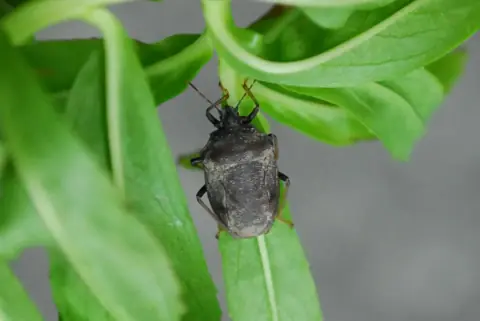
- Natural enemies such as the mirid bug are fewer than the hoppers.
The brown planthopper is darker brown and lacks the white stripe. The green leafhopper is green and wedge shaped.
How Whitebacked Planthopper Hurts Your Palay
Both nymphs and adults suck phloem sap. This causes stunting, fewer tillers and a loss of grain weight. In severe attacks, the plants wilt, dry and die, which is hopperburn.
At 400 to 500 nymphs per plant, or 200 adults, the crop can be lost completely through hopperburn. There is also a nursery rule. Use a pesticide on the seedbed only if you find more than one planthopper per stem, or more planthoppers than natural enemies.
How to Control Whitebacked Planthopper
- Plant together with the farms around you, within about three weeks, so crops do not overlap.
- Use early maturing or tolerant varieties, and grow no more than two rice crops a year.
- Split the nitrogen into doses. Too much nitrogen builds up planthoppers.
- Drain the field for three to four days if the numbers are high.
- Do not keep a ratoon crop, and plow the stubble in after harvest.
- Watch the mirid bug Cyrtorhinus lividipennis and the egg wasps of the genus Anagrus. They are the main natural enemies, and broad spectrum sprays wipe them out.
When a Spray Makes Sense
Use no insecticide early in the crop, because early sprays kill spiders and wasps and cause planthopper outbreaks. Spray only when the count passes the nursery rule above or a technician confirms an outbreak. Choose selective products, and do not repeat the same product again and again.
| Active ingredient | IRAC group | On Philippine labels |
|---|---|---|
| Thiamethoxam | IRAC 4A | A first choice. 23 registered products name it on rice. |
| Clothianidin | IRAC 4A | A sound second choice. 2 registered products name it on rice. |
| Dimethoate | IRAC 1B | Older or broad chemistry: a last resort. 4 registered products name it on rice. |
These are on Philippine labels for it, but we leave them off the list above, for the reasons below.
- Cypermethrin: Pyrethroids kill the spiders and mirid bugs that eat hoppers, and planthoppers come back worse after the spray.
- Lambda cyhalothrin plus thiamethoxam and bifenthrin plus clothianidin: The pyrethroid in it kills spiders and lets planthoppers come back worse.
Resistance. Whitebacked planthopper in East and Southeast Asia resists fipronil (IRAC 2B), so do not lean on it. Rotate among groups 4A, 9B and 16, and never use one group twice in a row.
Use only products registered with the Fertilizer and Pesticide Authority, and follow the label for the rate, the timing and the protective clothing. Switch to a different insecticide group next time, so the pest does not learn to survive it. Our guide to integrated pest management explains how.
Keep It Out Next Season
- Plant within about three weeks of the farms around you, and grow no more than two rice crops a year.
- Split the nitrogen into doses. Too much nitrogen, often on hybrid rice, builds up this hopper fast.
- Drain the field for three to four days when the numbers climb.
- Do not keep a ratoon crop, and plow the stubble in after harvest.
- No insecticide in the first 30 to 40 days after transplanting unless the count passes the threshold.
Natural Enemies and Biological Help
- The mirid bug Cyrtorhinus lividipennis and Anagrus egg wasps are its main enemies. Broad spectrum sprays wipe them out.
- Wolf spiders and lady beetles eat the nymphs. Count them with the hoppers before you decide.
Not Sure What You Are Seeing?
Take a clear photo of the insect, the damage and the whole plant, then ask Anee, the smart farm technician in anee.io, in Tagalog or English. Anee tells you what it most likely is and what to do at the age of your crop. You can also put your scouting days on the cropping calendar, so the team knows when to walk the field.
anee.io keeps your scouting, spraying and harvest on one calendar, and Anee answers when something looks wrong.
- Scouting days dated from each lot's own planting day
- Photos and notes for every lot
- Anee, the smart farm technician, in Tagalog or English
Questions Farmers Ask About Whitebacked Planthopper
Is the whitebacked planthopper the same as the brown planthopper?
What is hopperburn?
Why do early sprays make planthoppers worse?
Stop Whitebacked Planthopper from costing you the harvest
With Libre + Anee, read the whole guide: how to be sure it is this pest, when it pays to act, and what to spray, by active ingredient.
The account is free, no credit card.