Green Leafhopper: The Small Insect That Spreads Tungro
The green leafhopper is a small, wedge shaped insect that lives on rice leaves. Its sap feeding hurts the plant a little, but its real danger is tungro virus. This page shows how to spot it and why spraying often fails to stop the disease.
What Is Green Leafhopper?
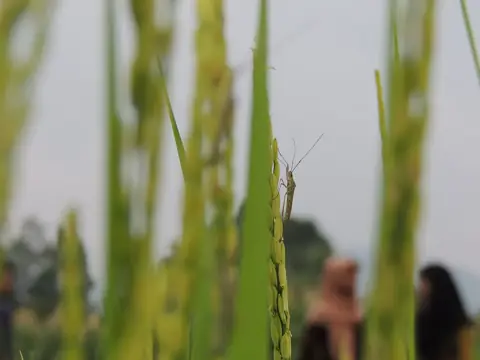
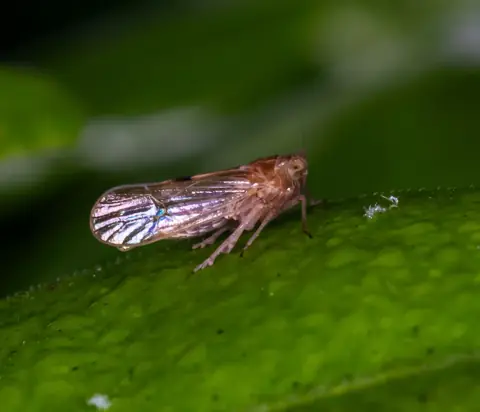
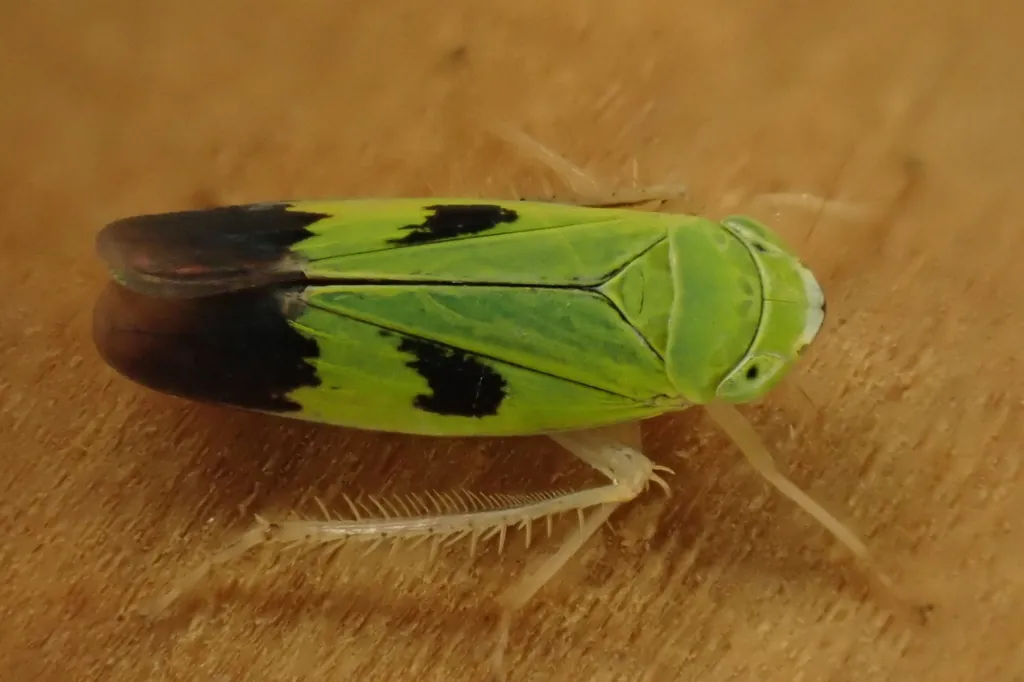
No leafhopper turns up more often in rice fields than the green leafhopper. Adults are 3 to 5 millimeters long, bright green with variable black marks, and they move sideways in a quick diagonal run. The nymphs are soft bodied and yellowish white. Two species spread tungro, Nephotettix malayanus and Nephotettix virescens, and N. virescens is the most efficient carrier.
Across the country, the green leafhopper is one of the five major rice insect pests. The sap feeding alone rarely ruins a crop. The virus it carries does the worse harm.
| Fact | Details |
|---|---|
| Name | Green leafhopper |
| Scientific name | Nephotettix virescens |
| Kind | Insect |
| Crops it attacks | Rice |
| Local names | None recorded |
| Where it strikes | Leaves and the whole plant |
| When it strikes | In the vegetative stage, most of all in fields next to a tungro source. |
| Life cycle | Females lay pale eggs inside the leaf sheaths and midribs, the nymphs feed on the sap, and the adults fly to new fields and carry tungro with them. |
How to Identify Green Leafhopper
Tap the hills or sweep the canopy with a net. A small green insect that jumps or runs sideways is probably a green leafhopper. Check the base of the leaf sheath too, where the pale eggs sit. If the plants are yellow and stunted, do not blame the insect alone. Tungro, nitrogen shortage and iron toxicity can look the same, so compare with our page on rice tungro.
- Small green wedge shaped insects jump or run sideways when you disturb the hills.
- Plants are stunted and lack vigor, and tillers are fewer than they should be.
- Leaves yellow or orange and may wither in heavy attacks, and the plant can dry out.
- Pale, white to yellow eggs sit inside the leaf sheaths or along the midrib.
- Insects crowd under a light trap at night, which is how technicians monitor them.
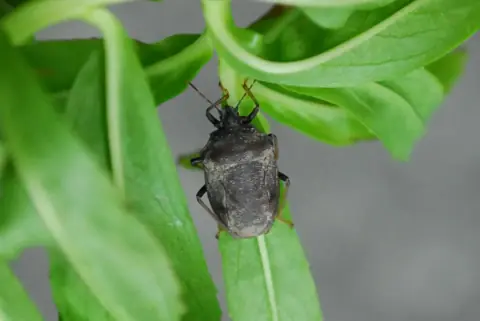
It is often mixed up with the whitebacked planthopper and the brown planthopper. Leafhoppers are green and wedge shaped, while planthoppers are brown or white backed and sit at the base of the hill.
How Green Leafhopper Hurts Your Palay
Both nymphs and adults pull sap out of the plant with needle like mouthparts. This reduces vigor and the number of productive tillers. In heavy cases the plant withers or dries completely.
The bigger loss comes from tungro. The sources we read give no percent loss and no numeric threshold for the insect, so we state none. What they do say is important: in an area without a tungro source, insecticides are not needed. Even where tungro is present, a spray often cannot prevent or reduce the infection.
How to Control Green Leafhopper
- Plant resistant varieties. Leafhopper and tungro resistance is the first line of defense.
- Synchronize planting with your neighbors and avoid planting at the peak of leafhopper activity shown by past records.
- Reduce the number of rice crops per year, and rotate with a non rice crop where you can.
- Transplant older seedlings, more than three weeks old, and plant early.
- Use the right amount of nitrogen. Too much invites outbreaks, so follow the leaf color chart.
- Remove weeds, and use a light trap to watch the numbers. Spiders, dragonflies and mirid bugs feed on the insects, so spare them. The brown planthopper page explains why.
When a Spray Makes Sense
Do not spray in areas without a tungro source. Where tungro is present, an insecticide often cannot prevent infection. Leave the natural enemies alone and ask a technician before you decide.
Active Ingredients on Philippine Labels
| Active ingredient | IRAC group | On Philippine labels |
|---|---|---|
| Thiamethoxam | IRAC 4A | A first choice. 23 registered products name it on rice. |
| Dinotefuran | IRAC 4A | A first choice. 10 registered products name it on rice. |
| Pymetrozine plus dinotefuran | IRAC 9B plus 4A | A first choice. 3 registered products name it on rice. |
| Triflumezopyrim | IRAC 4E | A first choice. 3 registered products name it on rice. |
| Pymetrozine | IRAC 9B | A sound second choice. 25 registered products name it on rice. |
| Chlorantraniliprole plus thiamethoxam | IRAC 28 plus 4A | A sound second choice. 8 registered products name it on rice. |
| Buprofezin | IRAC 16 | A sound second choice. 7 registered products name it on rice. |
| Clothianidin | IRAC 4A | A sound second choice. 3 registered products name it on rice. |
| Imidacloprid | IRAC 4A | A sound second choice. 3 registered products name it on rice. |
| Buprofezin plus isoprocarb (MIPC) | IRAC 16 plus 1A | A sound second choice. 1 registered product names it on rice. |
The table stops at the ten best. 32 more on Philippine labels for it are older or broad chemistry. The Pest Finder in anee.io lists every one, crop by crop, with the products sold here.
Resistance. Green leafhoppers in East Asia resist many organophosphates and carbamates after decades of use. If an old product stops working, switch to group 4A, 9B or 4E, and do not repeat one group in a crop.
Use only products registered with the Fertilizer and Pesticide Authority, and follow the label for the rate, the timing and the protective clothing. Switch to a different insecticide group next time, so the pest does not learn to survive it. Our guide to integrated pest management explains how.
Keep It Out Next Season
- Plant a tungro resistant or leafhopper resistant variety where tungro has struck before.
- Plant at the same time across the barangay, and avoid the weeks when leafhoppers peaked in past seasons.
- Transplant seedlings older than three weeks, and destroy stubble, ratoons and volunteer rice after harvest.
- Use the right nitrogen rate, guided by the leaf color chart. Too much nitrogen invites outbreaks.
- Keep weeds down, and run a light trap to see when the numbers rise.
Natural Enemies and Biological Help
- Spiders, dragonflies, damselflies and mirid bugs eat leafhoppers. Avoid early sprays so they stay.
- Ducks in the paddy once the plants are well rooted eat leafhoppers along with planthoppers.
Not Sure What You Are Seeing?
Take a clear photo of the insect, the damage and the whole plant, then ask Anee, the smart farm technician in anee.io, in Tagalog or English. Anee tells you what it most likely is and what to do at the age of your crop. You can also put your scouting days on the cropping calendar, so the team knows when to walk the field.
anee.io keeps your scouting, spraying and harvest on one calendar, and Anee answers when something looks wrong.
- Scouting days dated from each lot's own planting day
- Photos and notes for every lot
- Anee, the smart farm technician, in Tagalog or English
Questions Farmers Ask About Green Leafhopper
Does the green leafhopper kill palay by itself?
Will spraying stop tungro?
How do I tell it from a planthopper?
Stop Green Leafhopper from costing you the harvest
With Libre + Anee, read the whole guide: how to be sure it is this pest, when it pays to act, and what to spray, by active ingredient.
The account is free, no credit card.