Rice Tungro: How to Spot the Yellowing Virus and Stop It
Rice tungro is a virus disease that turns palay leaves yellow to orange, stunts the plants and leaves the panicles small and half empty. Two viruses cause it together, and the green leafhopper carries them from field to field. Once a plant has tungro it cannot be cured, so the fight happens before and during planting.
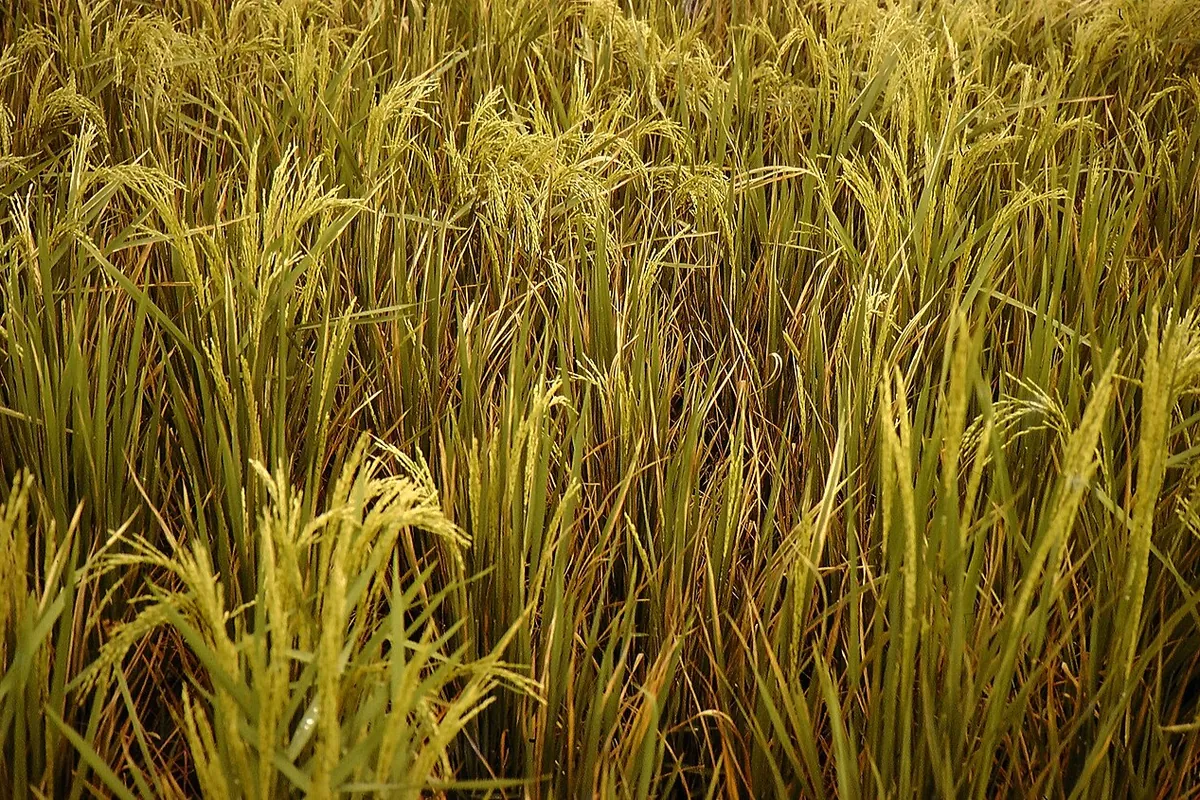
What Is Rice Tungro?
Tungro comes from two viruses working together: rice tungro bacilliform virus and rice tungro spherical virus. The leafhopper cannot pass on the bacilliform virus unless the spherical virus is also present. Besides cultivated rice, the viruses infect some wild rice relatives and grassy weeds in and around the paddy.
Tungro is among the most damaging diseases of rice in South and Southeast Asia, and among the major diseases to watch in the rainy season. It moves fast in young fields, because the green leafhopper prefers young plants and picks up the viruses more easily from them. So a field planted weeks after its neighbors is the one most at risk.
| Fact | Details |
|---|---|
| Name | Rice tungro |
| Scientific name | Rice tungro bacilliform virus and rice tungro spherical virus |
| Kind | Virus (spread by insects) |
| Crops it attacks | Rice |
| Local names | None recorded |
| Where it strikes | Leaves, the whole plant and panicles and ears |
| When it strikes | Tungro can infect rice at any stage, but it shows most in the vegetative phase, and young plants at tillering are the most vulnerable, above all in late or staggered plantings. |
| How it spreads | The green leafhopper picks up the two viruses in a short feed on a sick plant and passes them on within 5 to 7 days, then loses them unless it feeds on a sick plant again. Between crops the viruses wait in stubble, ratoons, volunteer rice, grassy weeds and nearby infected fields. |
How to Identify Rice Tungro
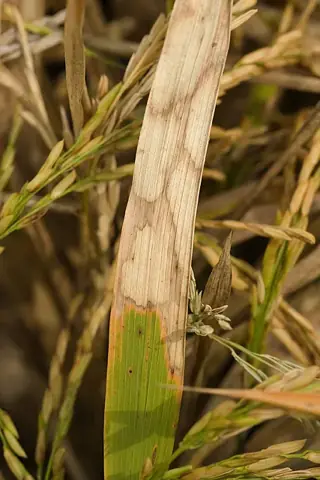
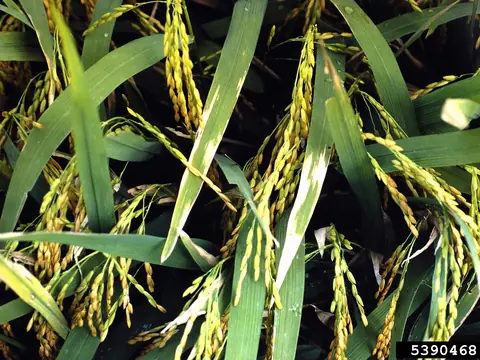
Check the leaves and the insects together. Infected plants turn yellow or orange yellow, starting at the leaf tip and moving down the blade. Young leaves look mottled or striped, and some show rust colored spots. The plants stay short with fewer tillers, so infected hills sit lower than their neighbors. Then look for green leafhoppers on the leaves. Where a laboratory is near, a serological test such as ELISA gives the final answer.
- Leaves that turn yellow or orange yellow, starting at the tip and spreading down the blade.
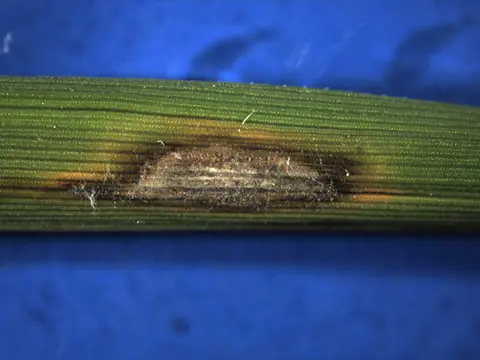
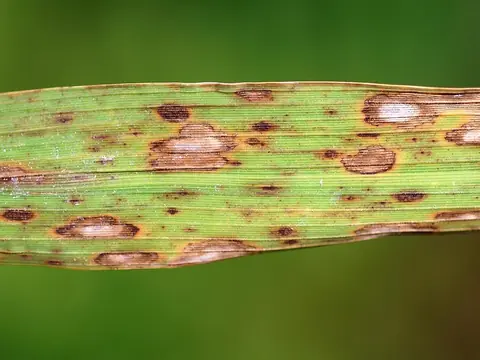
- Mottled or striped young leaves, sometimes with rust colored spots.
- Stunted hills with fewer tillers than the healthy plants nearby.
- Late flowering, with small panicles that do not fully come out of the sheath.
- Many empty or half filled grains, marked with dark brown blotches.
- Green leafhoppers feeding on the young plants around the yellow hills.
Tungro yellowing can pass for nitrogen or zinc deficiency, water stress, planthopper, stem borer or rat damage, grassy stunt or orange leaf. Look for yellow to orange color that starts at the leaf tips, mottled young leaves and green leafhoppers in the field.
How Rice Tungro Hurts Your Palay
In severe cases, susceptible varieties infected early can lose up to 100 percent of their yield. The disease builds quickly in young fields. Late planted fields suffer most, and they also carry the disease into the early plantings of the next season.
There is no leafhopper count that tells you when to spray. Insecticides often fail against tungro, because leafhoppers keep moving in from nearby fields and spread the viruses in very short feeds. So the real action point is the first sick plant. Pull infected plants out as soon as you find them, then watching the field closely for new ones.
How to Control Rice Tungro
- Plant a tungro resistant or leafhopper resistant variety. This is the most economical defense, and NSIC Rc120 is a good pick for tungro.
- Plant at the same time as the farms around you. Late or staggered planting gives the leafhoppers and the viruses a steady supply of young rice.
- Leave a fallow of at least one month between crops to cut the food supply of the leafhoppers.
- Walk the field often to look for leafhoppers and sick plants, and pull infected plants out as soon as you see them.
- Plow under the stubble right after harvest to remove virus sources and destroy leafhopper eggs and breeding sites.
- Avoid seedbeds near tungro hit fields and long nursery periods, since nurseries of 5 to 6 weeks in tungro areas lead to more infection.
Why No Spray Cures It
No chemical cures a plant with tungro. An insecticide against the green leafhopper helps only where tungro is already in the area and hoppers are many, and even then it often fails. Also use no pesticide for 30 to 40 days after planting, because early sprays kill the spiders and wasps that keep pests down. Follow the FPA label.
| Active ingredient | IRAC group | On Philippine labels |
|---|---|---|
| Thiamethoxam | IRAC 4A | A first choice. 23 registered products name it on rice. |
| Dinotefuran | IRAC 4A | A first choice. 10 registered products name it on rice. |
| Pymetrozine plus dinotefuran | IRAC 9B plus 4A | A first choice. 3 registered products name it on rice. |
| Triflumezopyrim | IRAC 4E | A first choice. 3 registered products name it on rice. |
| Pymetrozine | IRAC 9B | A sound second choice. 25 registered products name it on rice. |
| Chlorantraniliprole plus thiamethoxam | IRAC 28 plus 4A | A sound second choice. 8 registered products name it on rice. |
| Buprofezin | IRAC 16 | A sound second choice. 7 registered products name it on rice. |
| Clothianidin | IRAC 4A | A sound second choice. 3 registered products name it on rice. |
| Imidacloprid | IRAC 4A | A sound second choice. 3 registered products name it on rice. |
| Buprofezin plus isoprocarb (MIPC) | IRAC 16 plus 1A | A sound second choice. 1 registered product names it on rice. |
The table stops at the ten best. 32 more on Philippine labels for it are older or broad chemistry. The Disease Finder in anee.io lists every one, crop by crop, with the products sold here.
Use only products registered with the Fertilizer and Pesticide Authority, and follow the label for the rate, the timing and the protective clothing. Switch to a different fungicide group next time, so the disease does not learn to survive it. Our guide to plant diseases explains how.
Keep It Out Next Season
- Plant a tungro resistant or leafhopper resistant variety where tungro has struck, and change varieties every few seasons.
- Plant together across the barangay after a fallow, and avoid the weeks when leafhoppers peaked before.
- Plow under stubble, ratoons and volunteer rice right after harvest. They carry the virus to the next crop.
- Pull and bury sick hills early, and never take seedlings from a seedbed that shows yellow orange plants.
- Do not plant next to a field that has tungro, and keep nitrogen at the right rate.
Natural Enemies and Biological Help
- Spiders, mirid bugs, dragonflies and damselflies eat green leafhoppers. Avoid early sprays so they stay.
Not Sure What You Are Seeing?
Take a clear photo of the spots or the damage up close, then the whole plant, then ask Anee, the smart farm technician in anee.io, in Tagalog or English. Anee tells you what it most likely is and what to do at the age of your crop. You can also put your scouting days on the cropping calendar, so the team knows when to walk the field.
anee.io keeps your scouting, spraying and harvest on one calendar, and Anee answers when something looks wrong.
- Scouting days dated from each lot's own planting day
- Photos and notes for every lot
- Anee, the smart farm technician, in Tagalog or English
Questions Farmers Ask About Rice Tungro
Can a rice plant recover from tungro?
What insect spreads rice tungro?
Is my yellow, stunted rice tungro or grassy stunt?
Should I spray insecticide to stop tungro?
Stop the spread of Rice Tungro
With Libre + Anee, read the whole guide: how to tell it from look alikes, what makes it spread, and what to spray and when.
The account is free, no credit card.