Rice Brown Spot: Signs, Causes and Control in Palay
Rice brown spot is a fungus that covers palay leaves with round brown spots and leaves the grain stained and light. It follows hungry, dry soil and infected seed. A survey of 53 provinces now counts it among the top pests of Philippine rice. Much of the control starts with the seed and the soil.
What Is Rice Brown Spot?
Brown spot comes from the fungus Bipolaris oryzae. It can infect the young shoot, the leaves, the leaf sheath, the panicle branches, the glumes and the spikelets. Brown spot was overlooked for years, yet few rice diseases are as common or as costly. It was also considered a major factor in the Great Bengal Famine of 1943.
In the Philippines it is on the rise. A survey of 53 provinces over five years named brown spot among the top five pests of rice. In December 2023, its incidence passed 5 percent in Antique, Aklan, Capiz, Iloilo and Negros Occidental. Besides that, a survey of 2,186 farm fields from 2015 to 2018 linked more brown spot to rainfed fields. It also linked more of it to direct seeded rice and hybrid rice. Farmers often confuse it with rice blast.
| Fact | Details |
|---|---|
| Name | Brown spot of rice |
| Scientific name | Bipolaris oryzae |
| Kind | Fungus (a fungal disease) |
| Crops it attacks | Rice |
| Local names | None recorded |
| Where it strikes | Leaves, panicles and ears and seedlings |
| When it strikes | Brown spot can appear at any stage from seedling to ripening, but infection matters most from maximum tillering to ripening, and it builds up in the wet season. |
| How it spreads | The fungus survives in infected seed for more than four years, and also in volunteer rice, crop debris and weeds. Its spores travel through the air, and the leaves must stay wet for 8 to 24 hours for a new infection to start. |
How to Identify Rice Brown Spot
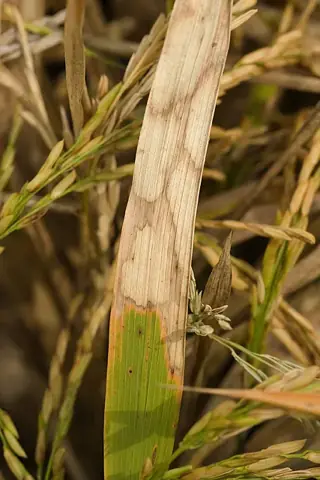
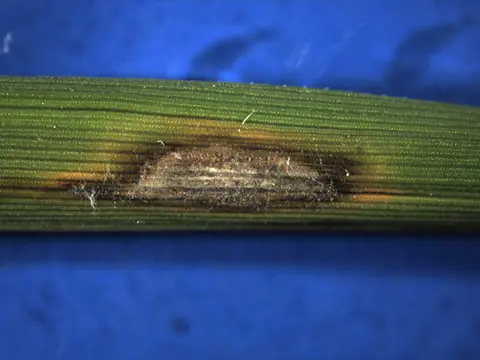
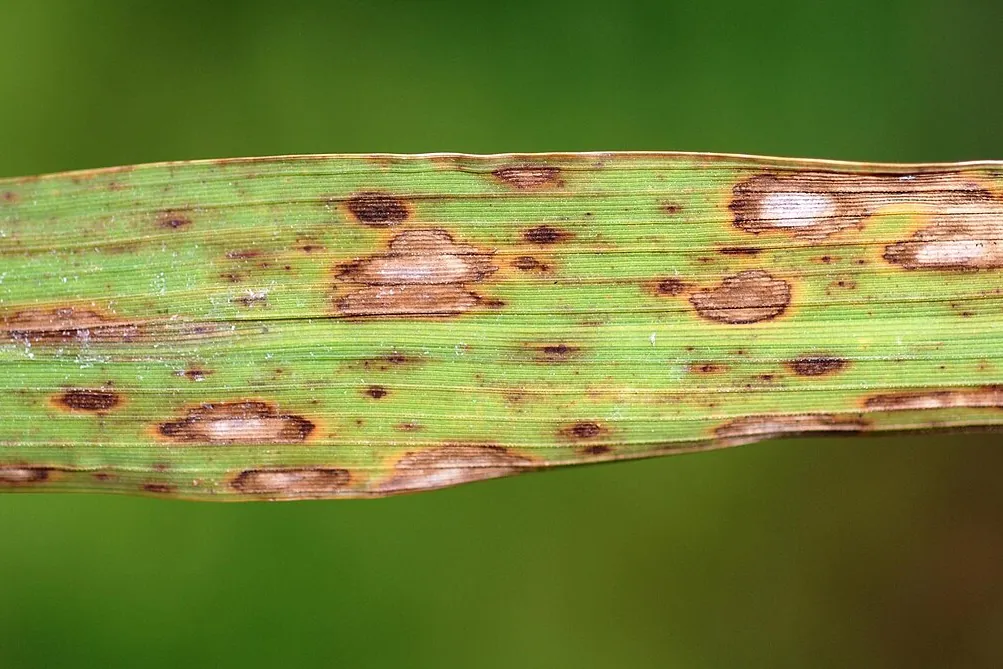
Look for round or oval spots, pale brown to gray in the middle and ringed with reddish brown. On susceptible varieties the spots grow 5 to 14 mm long and can make the leaf wilt. On resistant varieties they stay brown and pinhead sized. Seedlings show small, circular yellow brown or brown spots that can girdle the young shoot. Later, the glumes and panicle branches get dark brown to black spots. Infected grains come out spotted, a condition called pecky rice.
- Small, circular, dark brown to purple brown spots on the leaves from tillering on.
- Mature spots, round to oval, with a gray center and a reddish brown margin.
- Many big spots that kill the whole leaf on poor or dry soils.
- Seedlings with brown spots on the young shoot and misshapen first leaves.
- Dark brown to black spots on the glumes, and spotted, discolored grains.
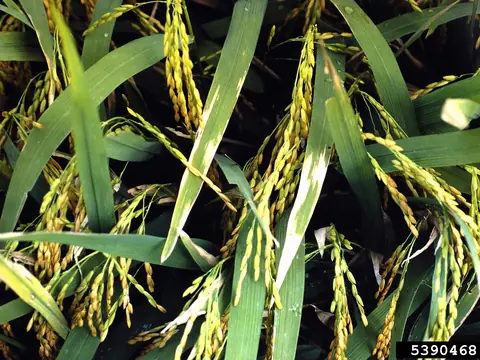
- Short panicles and empty grains in badly hit fields.
Brown spot is often taken for blast. Brown spot lesions are round to oval and brown with a gray center and a reddish margin, often with a yellow halo. Blast lesions are long and pointed at both ends. Narrow brown leaf spot makes thin, linear streaks instead of round spots.
How Rice Brown Spot Hurts Your Palay
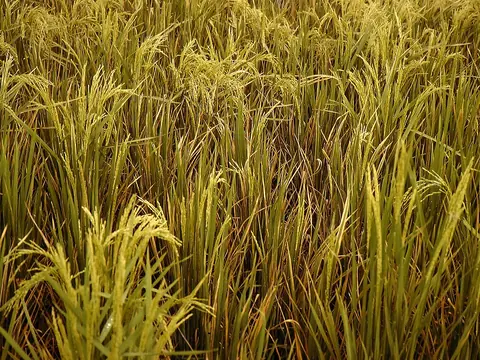
Brown spot cuts both the amount and the quality of the harvest. The average loss is 5 percent across lowland rice in South and Southeast Asia. A badly infected field can lose up to 45 percent. Heavily infected seed causes seedling blight that kills 10 to 58 percent of the seedlings. It also means fewer grains on each panicle, and lighter ones.
There is no set spray threshold. The bigger lesson is that brown spot points to a soil problem. It turns up most in fields that are not kept flooded, in poor soils, and in soils where toxic substances build up. So a field that keeps getting it needs a soil check before it needs more fungicide. Our guide to potash fertilizer covers the potassium your soil needs.
How to Control Rice Brown Spot
- Use clean, high quality seed, since infected seed gives rise to infected seedlings.
- Treat the seed with hot water at 53 to 54 degrees Celsius for 10 to 12 minutes before sowing. Soaking it in cold water for eight hours first makes the treatment work better.
- Fix the soil. Test it, apply the fertilizer it lacks, and use potassium rich fertilizer. Where the soil is short of silicon, spread calcium silicate slag ahead of planting.
- Plant a resistant variety, and ask your local agriculture office for the current list.
- Keep water on the field where you can, since brown spot is common in unflooded soil.
- Remove volunteer rice, crop debris and weeds that carry the fungus between seasons.
When a Spray Makes Sense
Fungicides work mainly as seed treatments, and they are one of the ways to reduce its impact. Spray the crop only if the leaves keep spotting after you fix the seed and the soil. Choose a product whose FPA label lists brown leaf spot on rice. Follow the label for the rate.
| Active ingredient | FRAC group | On Philippine labels |
|---|---|---|
| Tebuconazole plus trifloxystrobin | FRAC 3 plus 11 | A first choice. 11 registered products name it on rice. |
| Mancozeb | FRAC M03 | A sound second choice. 84 registered products name it on rice. |
| Propineb | FRAC M03 | A sound second choice. 13 registered products name it on rice. |
| Chlorothalonil | FRAC M05 | A sound second choice. 10 registered products name it on rice. |
| Benomyl | FRAC 1 | Older or broad chemistry: a last resort. 1 registered product names it on rice. |
Use only products registered with the Fertilizer and Pesticide Authority, and follow the label for the rate, the timing and the protective clothing. Switch to a different fungicide group next time, so the disease does not learn to survive it. Our guide to plant diseases explains how.
Keep It Out Next Season
- Use clean seed, or treat your own seed in hot water at 53 to 54 degrees Celsius for 10 to 12 minutes, after an 8 hour cold soak.
- Test the soil and give what it lacks, above all potash, and silicon on poor soils.
- Keep water on the field where you can. Brown spot is worst in dry, unflooded soil.
- Remove volunteer rice, crop debris and weeds that carry the fungus between seasons.
- Plant a resistant variety, above all in direct seeded or rainfed fields.
Natural Enemies and Biological Help
- Seed treated with Trichoderma, where sold, gives seedlings a cleaner start.
Not Sure What You Are Seeing?
Take a clear photo of the spots or the damage up close, then the whole plant, then ask Anee, the smart farm technician in anee.io, in Tagalog or English. Anee tells you what it most likely is and what to do at the age of your crop. You can also put your scouting days on the cropping calendar, so the team knows when to walk the field.
anee.io keeps your scouting, spraying and harvest on one calendar, and Anee answers when something looks wrong.
- Scouting days dated from each lot's own planting day
- Photos and notes for every lot
- Anee, the smart farm technician, in Tagalog or English
Questions Farmers Ask About Rice Brown Spot
What causes rice brown spot?
Is brown spot the same as narrow brown leaf spot?
Does potassium help against brown spot?
Can I save seed from a field with brown spot?
Stop the spread of Rice Brown Spot
With Libre + Anee, read the whole guide: how to tell it from look alikes, what makes it spread, and what to spray and when.
The account is free, no credit card.