Narrow Brown Leaf Spot: How to Spot It and Stop It in Palay
Narrow brown leaf spot is a fungal disease that draws short, thin brown lines along the veins of rice leaves. It shows up late, around heading, and it is a sign to check your potassium.
What Is Narrow Brown Leaf Spot?
Narrow brown leaf spot is caused by the fungus Cercospora janseana, which scientists now also name Sphaerulina oryzina. It is also called narrow brown spot or rice Cercospora leaf spot. It lives in the rice growing regions of the tropics and subtropics, including the Philippines, and it can infect leaves, leaf sheaths and panicles.
Most seasons it is a minor problem. Bad outbreaks have been seen only now and then, and most of the time it costs farmers little. Even so, a bad attack can lower the market value of the grain and the milling recovery, so it pays to know the signs. Our guide to rice diseases shows where it fits among the other leaf problems.
| Fact | Details |
|---|---|
| Name | Narrow brown leaf spot |
| Scientific name | Cercospora janseana (Sphaerulina oryzina) |
| Kind | Fungus (a fungal disease) |
| Crops it attacks | Rice |
| Local names | None recorded |
| Where it strikes | Leaves, stems and tillers and panicles and ears |
| When it strikes | It builds late in the crop, from heading onward, and it is common on soils short of potassium in warm weather of about 25 to 28 degrees Celsius. |
| How it spreads | The fungus survives on infected crop residue and seed, and its spores travel on the wind and in splashing rain. It then infects leaves, sheaths and panicles as the plant ages. |
How to Identify Narrow Brown Leaf Spot
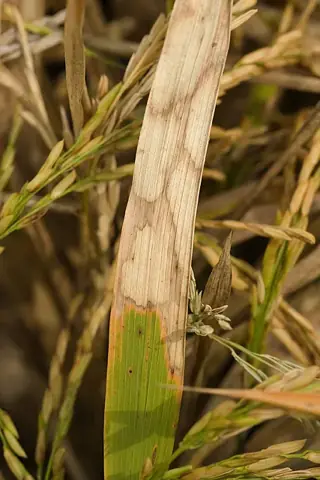
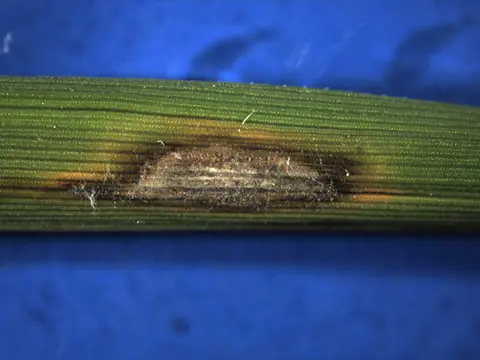
Look at the older leaves and the flag leaf from heading. The lesions are narrow, light to dark brown, and they run straight along the veins. Each one is about 2 to 10 millimeters long and 1 to 1.5 millimeters wide. On a very susceptible variety they grow wider and join into larger dead areas. On the leaf sheath, brown and yellowish patches make a net pattern, called net blotch.
- Thin, straight brown lines run parallel to the veins on the leaf and the upper sheath.
- Each line is short, about 2 to 10 millimeters long, and light to dark brown.
- On a susceptible variety the lines widen and join into bigger dead patches with a pale center.
- The leaf sheath shows a brown and yellowish net pattern.
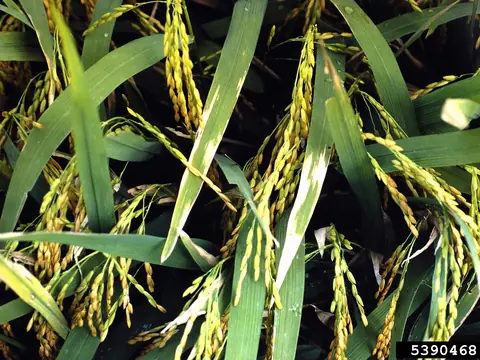
- Leaves and sheaths die early, and the grain may ripen early in a bad attack.
The narrow brown lines look like bacterial leaf streak, but the streak is water soaked and oozes yellow droplets. Brown spot has rounder lesions with a yellow halo, as in rice brown spot.
How Narrow Brown Leaf Spot Hurts Your Palay
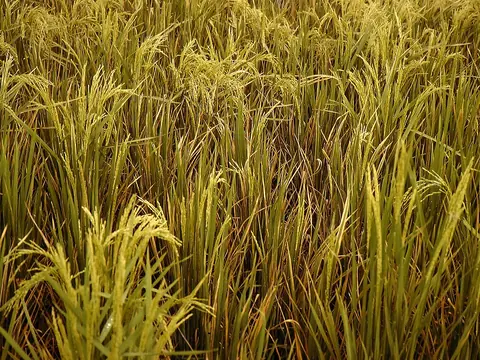
Severe narrow brown spot kills leaves and sheaths early, makes the grain ripen too soon, and in a severe case can cause the plants to lodge. It also cuts the price the grain fetches and how much rice comes out of the mill. Bad outbreaks that cut the harvest are rare, so for most farmers the loss is small. Where the disease is bad, the main loss is in grain quality.
The disease is linked to soils short of potassium and appears late in the crop, from heading. So the signs on your leaves can also warn you about the soil. Our guide to fertilizer for rice explains how potash and nitrogen fit together. We found no official action threshold for spraying in the Philippines.
How to Control Narrow Brown Leaf Spot
- Test or review your soil, and correct a potassium shortage with potash. The disease is linked to potassium deficient soils.
- Use certified, disease free seed paddy, and choose varieties that show less of the disease. Resistant varieties show much lower damage in trials.
- Follow the recommended nitrogen rate, or use the leaf color chart so you do not overfeed the crop.
- Keep the field free of weeds, since weeds hold the disease and crowd the crop.
- Add organic fertilizer to build up the soil, so the crop stays healthy to the end.
- After harvest, do not return diseased straw to the soil, and clear stubble from the field.
When a Spray Makes Sense
A fungicide is rarely needed, because the disease is usually minor. Trials in the United States found that a spray at panicle initiation or early boot worked well on a susceptible variety, but we found no Philippine recommendation. Check with your local agriculture office first and follow the product label.
| Active ingredient | FRAC group | On Philippine labels |
|---|---|---|
| Mancozeb | FRAC M03 | A sound second choice. 84 registered products name it on rice. |
| Chlorothalonil | FRAC M05 | A sound second choice. 10 registered products name it on rice. |
| Benomyl | FRAC 1 | A sound second choice. 1 registered product names it on rice. |
| Cuprous oxide | FRAC M01 | Older or broad chemistry: a last resort. 2 registered products name it on rice. |
Use only products registered with the Fertilizer and Pesticide Authority, and follow the label for the rate, the timing and the protective clothing. Switch to a different fungicide group next time, so the disease does not learn to survive it. Our guide to plant diseases explains how.
Keep It Out Next Season
- Test the soil and fix a potassium shortage with potash. The disease follows potassium poor soils.
- Use certified seed of a variety that shows less of the disease.
- Follow the recommended nitrogen rate, or the leaf color chart, so you do not overfeed.
- Keep weeds down in the field and on the bunds, and add organic matter to build the soil.
- Plant at the best time for your area, and clear diseased straw and stubble after harvest.
Not Sure What You Are Seeing?
Take a clear photo of the spots or the damage up close, then the whole plant, then ask Anee, the smart farm technician in anee.io, in Tagalog or English. Anee tells you what it most likely is and what to do at the age of your crop. You can also put your scouting days on the cropping calendar, so the team knows when to walk the field.
anee.io keeps your scouting, spraying and harvest on one calendar, and Anee answers when something looks wrong.
- Scouting days dated from each lot's own planting day
- Photos and notes for every lot
- Anee, the smart farm technician, in Tagalog or English
Questions Farmers Ask About Narrow Brown Leaf Spot
Is narrow brown leaf spot dangerous to my palay?
Why does it show up so late in the crop?
Do I need a fungicide for it?
Stop the spread of Narrow Brown Leaf Spot
With Libre + Anee, read the whole guide: how to tell it from look alikes, what makes it spread, and what to spray and when.
The account is free, no credit card.