Fertilizer for Rice: A Season Plan for Irrigated and Rainfed Palay
The right fertilizer for rice depends on your soil, your variety and your season, but the plan always follows the same growth stages. This guide lays out a full palay season based on the usual recommendations. It covers the basal dose, when to top dress, how to compute the bags, and how rainfed fields differ from irrigated ones.
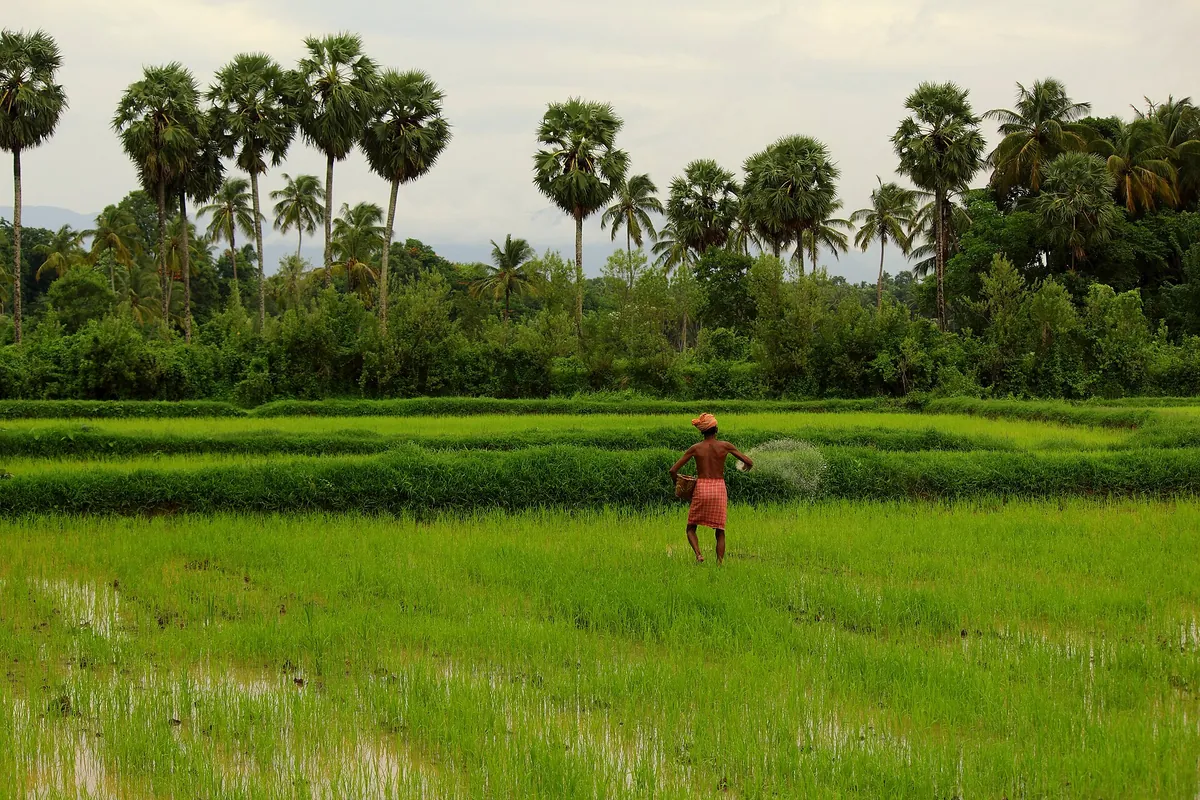
Fertilizer is money you bury in the mud, so it has to work. In 2020, fertilizer took about 8 percent of the total cost of producing rice. Seeds and pesticides took only 3 to 4 percent each.
The goal is simple to state. Give enough nutrients from tillering to early panicle initiation and flowering. At dough stage, aim for at least 300 panicles per square meter in transplanted rice, or 350 in direct seeded rice.
Why fertilizer is important for palay
Every harvest carries nutrients out of your field. For each ton of grain, the crop takes up about 16 kg of nitrogen and 19 kg of potash. So a 5 ton harvest takes up about 80 kg of nitrogen and 95 kg of potash, most of the potash staying in the straw. Fertilizer fills the gap between that need and what the soil, water and straw supply.
Many farmers leave part of that gap open. A survey of irrigated farms in 2016 and 2017 found far less phosphorus and potassium than recommended. Short feeding means slow growth, fewer tillers and panicles, and lighter grain. Too much nitrogen is also bad, because it invites lodging and pests.
Start with a soil test, MOET or the Rice Crop Manager
Before you buy, find out what your soil lacks. These tools help.
- Soil analysis at a soils laboratory. Ask your municipal agriculturist where to send samples.
- MOET, the Minus One Element Technique: rice grown in pots of your own soil, each pot missing one nutrient. An app turns the result into fertilizer amounts.
- Leaf color chart, a four color ruler that shows when the crop needs nitrogen.
- Rice Crop Manager, an online tool that gives a fertilizer guideline for your field.
No tool at hand? Use the modified general recommendation as a guide. For irrigated lowland rice, it lists 97 kg of nitrogen per hectare in the wet season and 139 kg in the dry season. A quarter of the nitrogen goes on at 7 to 14 days after transplanting (DAT). Another quarter goes at mid tillering, and half at maximum tillering or early panicle initiation. All the phosphorus goes on first. Potassium goes 70 percent at 7 to 14 DAT and 30 percent around panicle initiation.
A season plan of fertilizer for rice, by days after transplanting
Those rules turn into bags per hectare in a plan of balanced fertilization. Below is the plan for a target of 5 to 6 tons per hectare. Check the days to harvest on your seed bag, because the dates follow variety maturity.
| Dose | 100 to 110 day varieties | 111 to 120 day varieties | 121 to 130 day varieties |
|---|---|---|---|
| Basal: 2 bags 14 14 14 or 16 20 0 | 0 to 14 DAT (10 to 14 DAS) | Same | Same |
| First top dressing: 1 bag urea | 18 to 22 DAT (24 to 28 DAS) | 22 to 26 DAT (32 to 36 DAS) | 26 to 31 DAT (36 to 40 DAS) |
| Second top dressing: 1 bag urea and half a bag 0 0 60 | 28 to 32 DAT (38 to 42 DAS) | 32 to 36 DAT (48 to 53 DAS) | 36 to 40 DAT (58 to 62 DAS) |
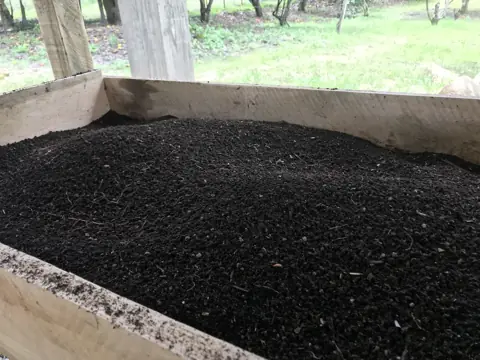
The plan also works organic matter into the field. It uses 5 to 6 tons of rice straw. At 14 DAT, it adds 10 bags of decomposed chicken manure, commercial organic fertilizer or vermicompost.
For a 3 to 4 ton target, the plan uses 1 bag of 14 14 14 at basal. Later comes 1 bag of urea with half a bag of 0 0 60. For 7 to 8 tons, it doubles the urea to 2 bags at each top dressing. Our guides to pagtatanim ng palay and palay cover the rest of the crop.
What each bag does
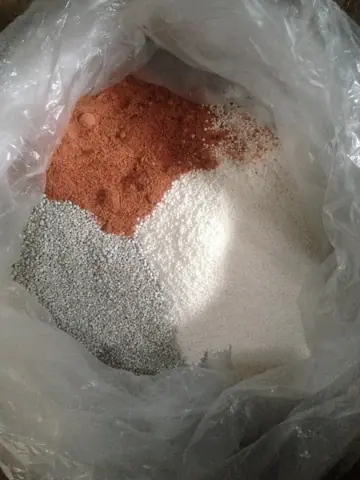
- Complete fertilizer 14 14 14 or 16 20 0 fertilizer at basal gives early phosphorus for the roots.
- Urea fertilizer, the usual fertilizer for top dressing, feeds tillers and panicles.
- Potash fertilizer near panicle initiation helps fill the grain and keeps stems standing.
- Ammonium sulfate, the 21 0 0 fertilizer, can replace urea where soil lacks sulfur, at about 2.2 bags per bag of urea.
Own a leaf color chart? Read it every 7 days from 14 DAT, or 21 DAS, until early flowering. Apply nitrogen when 6 or more of 10 leaves read below 4. For direct wet seeded rice, the cutoff is 3.
Irrigated and rainfed palay
Irrigated fields yield more in the dry season, and the modified general recommendation feeds them more. It gives 139 kg of nitrogen in the dry season against 97 kg in the wet. Where the sun is strong, like Nueva Ecija, Bicol and Isabela, also add muriate of potash around panicle initiation. That raises grain size and weight.
Rainfed fields go through the same stages on a different rhythm. Fertilizer needs moisture to reach the roots, so time each dose to a wet field, not a fixed date. Broadcast direct seeded rice can take its basal 10 to 14 days after establishment. There must be water in the field. If your field usually gives 3 to 4 tons, follow the lighter plan.
Fertilizer computation for one hectare
Here is a worked fertilizer calculation for the 5 to 6 ton plan. It uses the national average prices for September 14 to 18, 2026, and prices change every week.
Read the grade
Each number is a percent, and the three make up the bag's NPK ratio. A 50 kg bag of fertilizer 14 14 14 holds 7 kg each of nitrogen, phosphate and potash. A bag of urea holds 23 kg of nitrogen. Half a bag of 0 0 60 holds 15 kg of potash.
Add up the nutrients
Two bags of complete and two of urea give 14 plus 46, or 60 kg of nitrogen. They also give 14 kg of phosphate. Potash comes to 14 plus 15, or 29 kg per hectare.
Price it
Two bags of complete cost PHP 3,805.84. Two bags of urea cost PHP 4,641.38, and half a bag of potash PHP 834.04. The total is PHP 9,281.26 per hectare.
Scale it to your lot
For a 0.6 hectare lot, multiply every amount by 0.6. That is 1.2 bags of complete, 1.2 bags of urea and 15 kg of muriate of potash. The cost comes to about PHP 5,568.76.
For a nutrient target, the fertilizer calculation formula is to divide the kilos of nutrient you need by the percent in the grade. Our guide to fertilizer calculation shows each step.
This plan gives less nitrogen from the bag than the general recommendation. It counts on the straw and manure for part of the rest.
Method of fertilizer application, spreaders and applicators
The method of fertilizer application matters as much as the amount. For the basal dose, spread it evenly and mix it into the soil just before transplanting or seeding. In a puddled field, do it during the last harrowing.
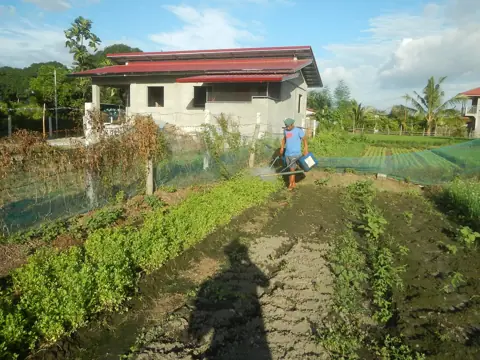
For each top dressing, spread the nitrogen fertilizer evenly across the whole paddy. Then keep the bunds and outlets closed so the dissolved nutrients stay in your field. Our page on fertilizer application methods compares broadcasting, banding and more.
Using a fertilizer spreader or applicator
On big lots, hand broadcasting rarely stays even. A hand cranked or knapsack fertilizer spreader throws granules in an even arc and saves time. A fertilizer applicator on a seed drill puts the basal dose in the rows with the seed.
Check the rate of any tool before you start. Weigh what you load, spread it over a measured area, then weigh what is left. If it drops too much or too little, adjust the opening or your walking speed.
Plan the whole season in anee.io
Your fertilizer for rice plan only works if each dose lands on the right day. In anee.io, the cropping calendar dates every basal and top dressing task from each lot's own day zero. The Protocol Builder lets you write the fertilizer program ahead, with materials and rates. It even warns you when two fertilizer applications fall within two days.
The farm inventory counts every bag of urea, complete and potash. Each task you tick done takes its bags out of stock. Ask Anee, the smart farm technician, to compute a fertilizer plan for your lots in Tagalog or English.
Sign up free, add your lots and transplanting dates, and let anee.io schedule every fertilizer task.
Start free