How Can I Increase Rice Yield per Hectare in the Philippines?
To increase rice yield per hectare, find and fix the weakest link of your season instead of only adding fertilizer. Nine key checks cover the season, from certified seed and a level field to steady water and a harvest on time. Trials that followed these practices reached about 7 tons per hectare in the dry season, while the national average stood near 4. anee.io, a farm app built for Filipino farmers, puts each check on a dated calendar for every lot and keeps the records that show which one held your yield back.
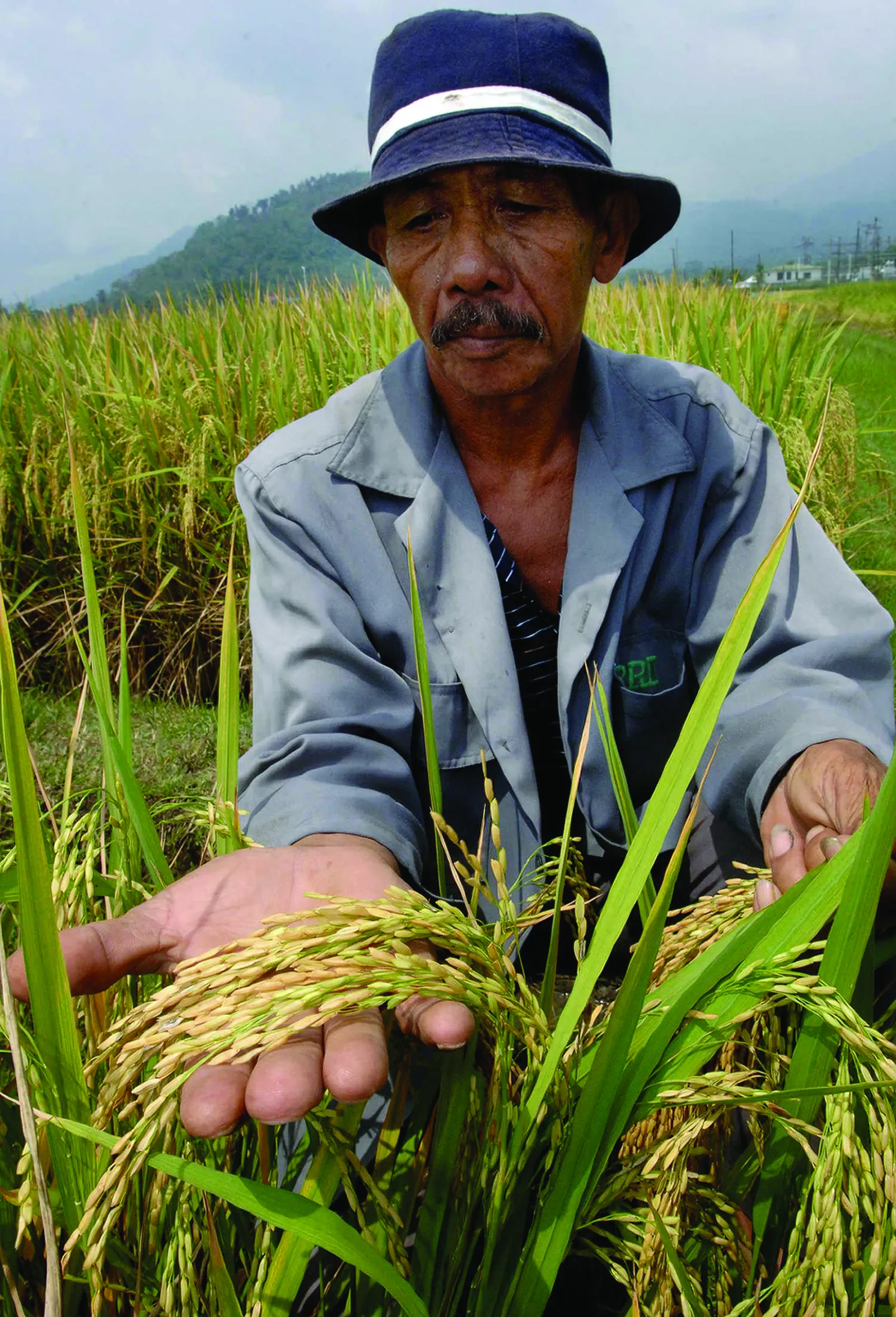
Your harvest comes from three numbers: how many panicles stand in each square meter, how many grains fill on each panicle and how heavy those grains are. Every good practice adds to one of them or protects it. So before you buy one more bag of urea, ask which of the three is short on your farm.
The checklist below covers the whole season, from seed to drying. It works for a quarter hectare as well as for ten.
- Count panicles, not bags. Aim for at least 300 panicles per square meter at dough stage for transplanted rice and 350 for direct seeded rice.
- Start with good seed. Good quality seed alone can raise yield by 5 to 20 percent.
- Feed by growth stage. Nutrients matter most from tillering to early panicle initiation and flowering.
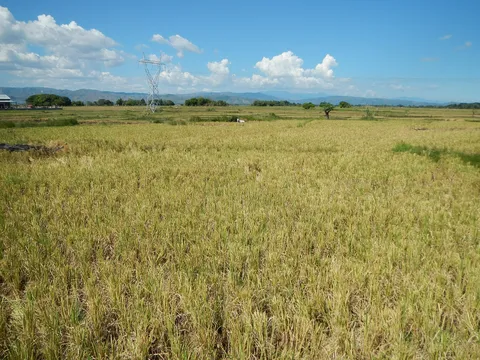
- Harvest on time. Cut when 85 to 90 percent of the grains turn golden yellow, then dry within a day.
- Keep records per lot. A yield you wrote down beats a yield you remember.
Why is my palay yield stuck?
For most farms the gap is in management, not in the variety. In an evaluation of rice integrated crop management, stations in Nueva Ecija, Isabela and Albay hit 7 tons per hectare in the dry season. That was far above the 4 ton national average at the time.
Feeding often falls short too. A survey of irrigated farms in 2016 and 2017 found about 9 kg of phosphorus per hectare in the wet season. The general recommendation calls for 28 kg. Potassium was near 17 kg against 43 kg, and dry season nitrogen averaged 96 kg against 139 kg. Because cash runs short and habits are strong, many fields simply never get what the crop needs. So on most farms, a crop yield increase starts with closing these gaps, not with a new variety.
How do I increase rice yield per hectare, check by check?
Good practice comes down to nine checks you can see in the field. Each one has a target, so you know right away if you met it. Use the table as your season scorecard.
| Key check | What to aim for |
|---|---|
| 1. High quality seed | Certified seed of a recommended variety that suits your area |
| 2. Well leveled field | No spot under more than 5 cm of water, no mound above it |
| 3. Synchronous planting | Field rested 30 days, planted within 14 days of your area's schedule |
| 4. Enough healthy seedlings | 20 to 40 kg seed per hectare and at least 25 hills per square meter if hand transplanted |
| 5. Enough nutrients | No deficiency signs from tillering to flowering, 300 panicles per square meter at dough stage |
| 6. No water stress | No drought from seedling to dough grain, no excess water during the vegetative phase |
| 7. Low pest losses | No real yield loss to insects, diseases, weeds, rats, snails or birds |
| 8. Harvest on time | 85 to 90 percent golden grains for manual harvest, threshed within one or two days |
| 9. Proper drying | Dried within 12 to 24 hours to 12 to 14 percent moisture |
Seed, field and seedlings come first
The first four checks set your panicle count before any fertilizer goes on. Certified seed emerges more evenly, so you replant less and the crop grows as one. Our guides to the best rice variety for your area and to rice land preparation cover these steps in detail.
A level field matters more than it looks. High spots dry out and grow weeds, while low spots drown young seedlings. Then, if you plant weeks after your neighbors, pests that built up on their crop move to yours.
Nutrients, water and pests protect the grain
Fertilizer works only on a healthy stand, and a bigger harvest carries more nutrients out of the field. Still, timing beats amount. Our pages on fertilizer for rice and fertilizer timing by growth stage show when each dose should land.
The MOET app turns a soil test done in pots into a fertilizer plan. In trials, plots fed this way gave 9.04 tons per hectare in the 2015 dry season. Farmers' own plots gave 7.4 tons. After feeding, keep water steady through flowering and watch for rice insects before they spread.
Lay a 1 meter by 1 meter frame in three spots along a diagonal, at least 1 meter in from the dike. Count the panicles inside each and take the average. If you get fewer than 300 in transplanted rice, look back at your seedling count and your early nitrogen before you blame the variety.
How do I find my own weakest link?
Observe and record
Write down what you did and saw at each stage: seeding rate, hills per square meter, fertilizer dates, water and pests.
Measure at the end
Count panicles at dough stage, then record the harvest per lot in kilos or cavans, with its moisture.
Compare with the targets
Mark each key check as met or missed. The missed ones explain most of the gap.
Change one thing next season
Fix the biggest miss first. If you change everything at once, you will not know what worked.
How does anee.io help me raise my yield?
No app can promise an exact number, but anee.io takes the guessing out of the checks that decide your yield. The cropping calendar dates every task from each lot's own day zero, so the basal dose and each top dressing land on the right day. Growth stages and weather show what stage each lot is in and whether rain is coming.
After harvest, harvest records keep the yield, moisture, buyer and price of every lot. Next season, Compare Reports lets you put two seasons side by side, and Anee, the smart farm technician inside anee.io, explains what changed. She answers in Tagalog or English and uses credits.
Sign up free, add your lots and planting dates, and let anee.io date every task from land preparation to harvest.
Start free