Nutrient Deficiency in Rice: How Do I Know If My Palay Lacks N, P or K?
You can spot a nutrient deficiency in rice by where and how the leaves change color. Older leaves gone yellowish green point to nitrogen, short plants with dark leaves standing straight up point to phosphorus, and deep green plants whose leaf edges turn yellowish brown point to potassium. Dusty brown spots on the upper leaves 2 to 4 weeks after transplanting point to zinc. Confirm it with a leaf color chart or a soil test before you buy, and in anee.io, a farm app built for Filipino farmers, you can send Anee a photo to read with your lot's records.
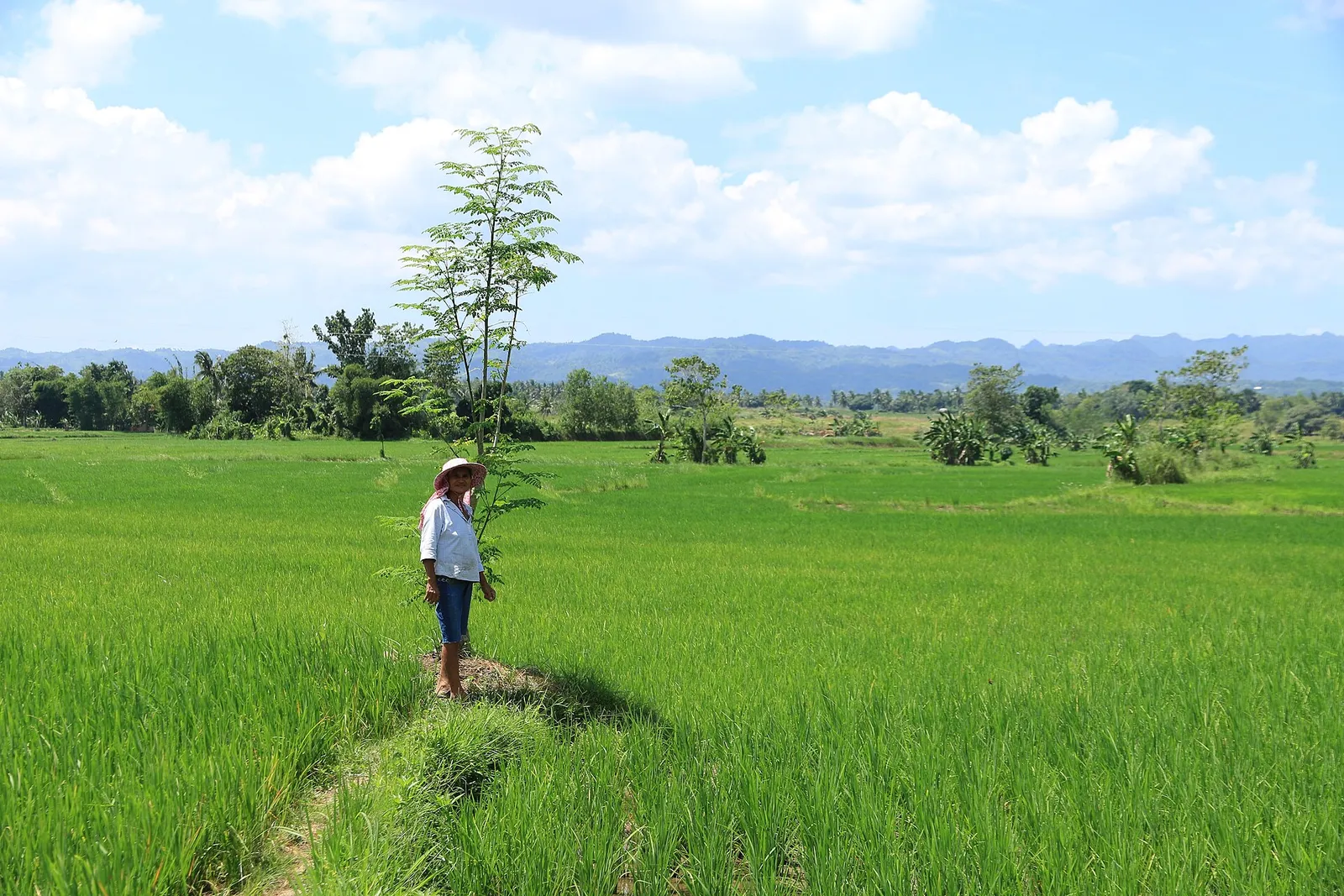
Start with where the color change shows first. Nitrogen, phosphorus, potassium and magnesium shortages show first on the lower, older leaves. Zinc, sulfur, iron and boron shortages show first on the upper, younger leaves.
Then look at the pattern across the field. A whole field that turns pale tells a different story from a few scattered hills.
- Nitrogen: older leaves or whole plants turn yellowish green, starting at the tips. Tillers are few.
- Phosphorus: plants stay short with dark, narrow, very erect leaves and thin stems.
- Potassium: dark green plants get yellowish brown leaf edges and brown tips on older leaves, often in patches.
- Zinc: dusty brown spots on the upper leaves of stunted plants, 2 to 4 weeks after transplanting.
- Always confirm with a leaf color chart, MOET or a soil and plant test before you buy.
What does each nutrient deficiency in rice look like?
| Nutrient | Where it starts | What you see | Easy to confuse with |
|---|---|---|---|
| Nitrogen (N) | Older leaves or whole plant | Yellowish green leaves, pale tips, narrow short erect leaves, fewer tillers and grains, the whole field can look yellow | Sulfur shortage, tungro |
| Phosphorus (P) | Older leaves | Stunted plants with a dull dark green color, very erect leaves, thin stems, few tillers, maturity delayed by a week or more | Nothing at all, since mild cases are hard to see |
| Potassium (K) | Tips and edges of older leaves | Yellowish brown edges, rusty brown spots from the tip, yellowing in an inverted V, weak stems and more unfilled grains | Brown spot disease, which is common on soils low in potassium |
| Zinc (Zn) | Upper leaves | Dusty brown spots, pale midribs near the leaf base, uneven growth in patches | Iron problems, grassy stunt, tungro |
| Sulfur (S) | Young leaves or whole plant | Yellowing young leaves, fewer tillers and shorter panicles, delayed maturity | Nitrogen shortage |
Potassium hunger often hides until later in the season. The symptoms are harder to recognize than those of nitrogen. It also tends to hit single hills in patches rather than the whole field. It is more common where farmers apply nitrogen and phosphorus without enough potassium.
How do I confirm it before I buy fertilizer?
Walk the whole field
Note whether the color change covers the field or only some hills, and whether it follows a low spot, a water inlet or the path where you spread fertilizer.
Check which leaves changed first
Older, lower leaves point to nitrogen, phosphorus or potassium. Young, upper leaves point to zinc or sulfur.
Rule out pests and diseases
Tungro, stem borers and hoppers can also yellow a crop. Our guide on pest or disease helps you tell them apart.
Read nitrogen with a leaf color chart
Compare 10 leaves with the chart every 7 days from 14 days after transplanting. Apply nitrogen when 6 or more of 10 read below 4 in transplanted rice.
Test the soil for the rest
For phosphorus, potassium, zinc and sulfur, send soil and plant samples to a laboratory. A MOET kit tests your own soil in pots, each one missing a nutrient.
Nitrogen deficiency and rice tungro look alike, since both leave plants shorter and yellow. With nitrogen hunger, the whole plant turns yellowish green and the leaf tips pale. With tungro, plants stay stunted with greenish to yellow top leaves, and green leafhoppers spread it. Urea will not cure a virus.
How do I correct each one?
- Nitrogen: top dress urea fertilizer when the leaf color chart calls for it, from tillering to early flowering. Too much invites lodging and pests.
- Phosphorus: All of it goes in the first dose, at 0 to 14 days after transplanting, so build it into the basal with 14 14 14 or 16 20 0.
- Potassium: give the second dose of potash fertilizer 5 to 7 days before or after panicle initiation, and work the rice straw back into the soil.
- Zinc: choose one method, for example a 2 percent zinc oxide seedling dip for 15 to 30 minutes, or 25 kg of zinc sulfate per hectare broadcast at 10 to 14 days after transplanting. Our guide to micronutrients for rice looks closer at zinc and the other trace elements.
- Sulfur: The sulfur in 14 14 14 with 12 percent sulfur at basal is usually enough.
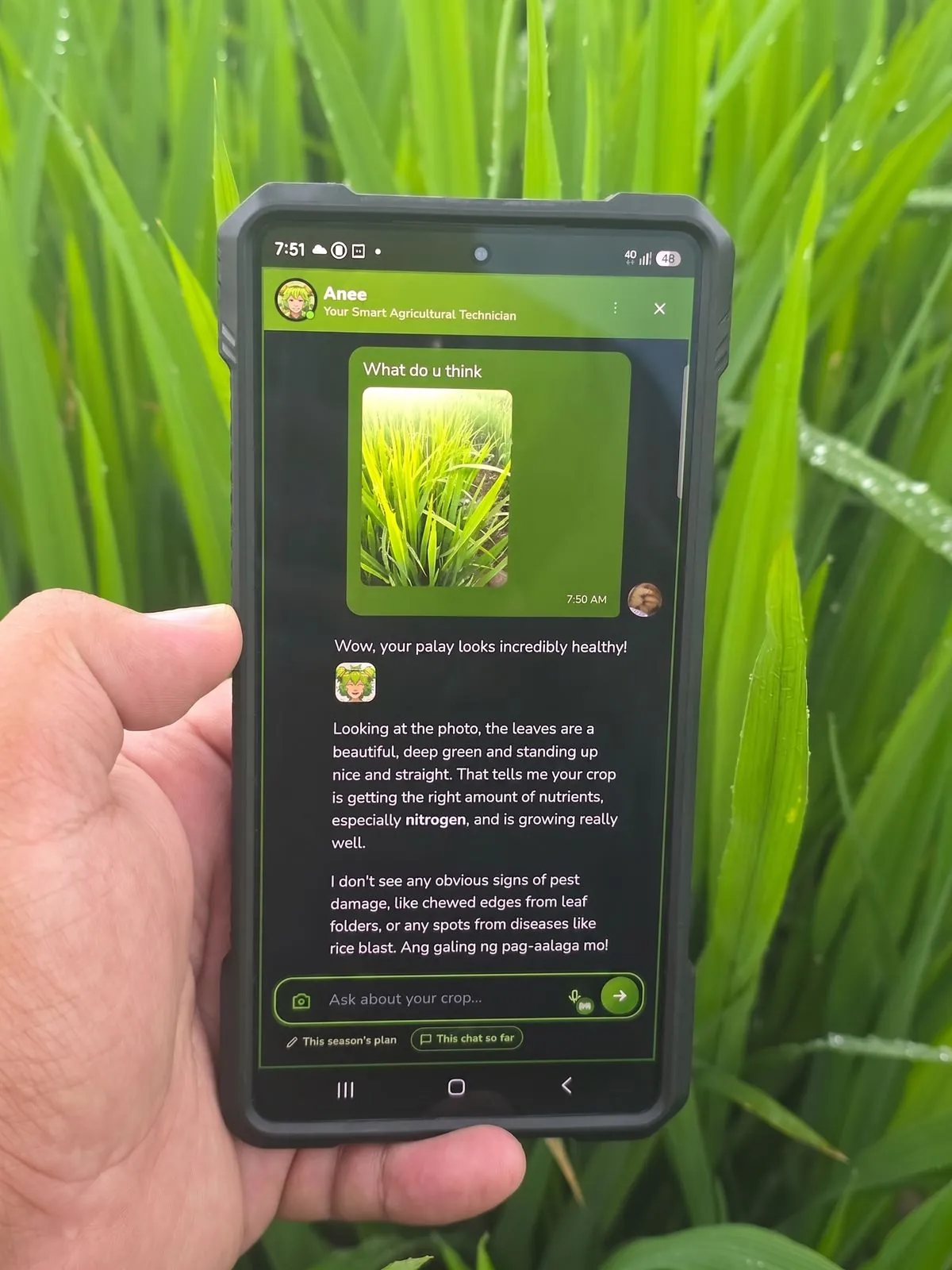
How can anee.io help me read the signs?
Take a photo of the leaves and send it to Anee, the smart farm technician inside anee.io. She answers in Tagalog or English with your farm in mind: the lot, its growth stage, the weather and the fertilizer you already applied. Her answers use credits, so treat her reading as a strong lead and confirm it in the field.
The Disease Finder helps you rule out diseases first. Then the NPK Plus calculator shows whether your plan was short on nitrogen, phosphorus or potassium in the first place.
Send Anee a photo of the leaves and get an answer that knows your lot, its stage and its fertilizer history.
Meet Anee