Fertilizer Timing by Growth Stage: How Do I Know When to Apply?
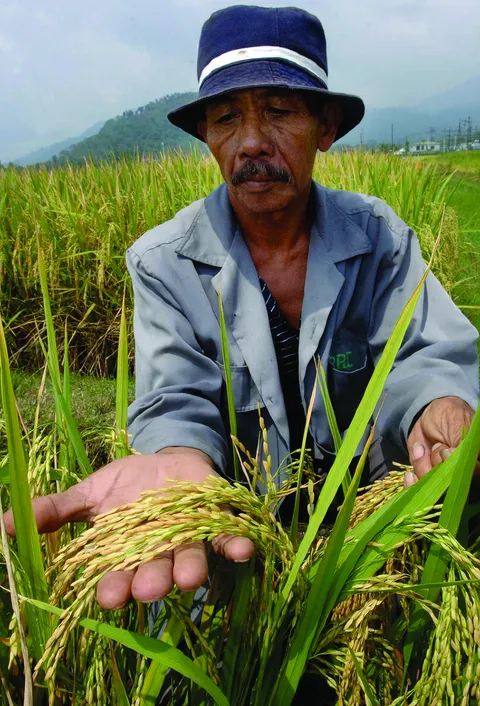
Good fertilizer timing by growth stage means you read the plant, not only the calendar. In rice, the basal dose goes in by 14 days after transplanting, nitrogen follows at tillering and the last dose lands around panicle initiation. In corn, the second half of the nitrogen goes on at about four weeks, when plants are knee high. anee.io, a farm app built for Filipino farmers, shows each lot's growth stage on any date, so you know which dose is due.
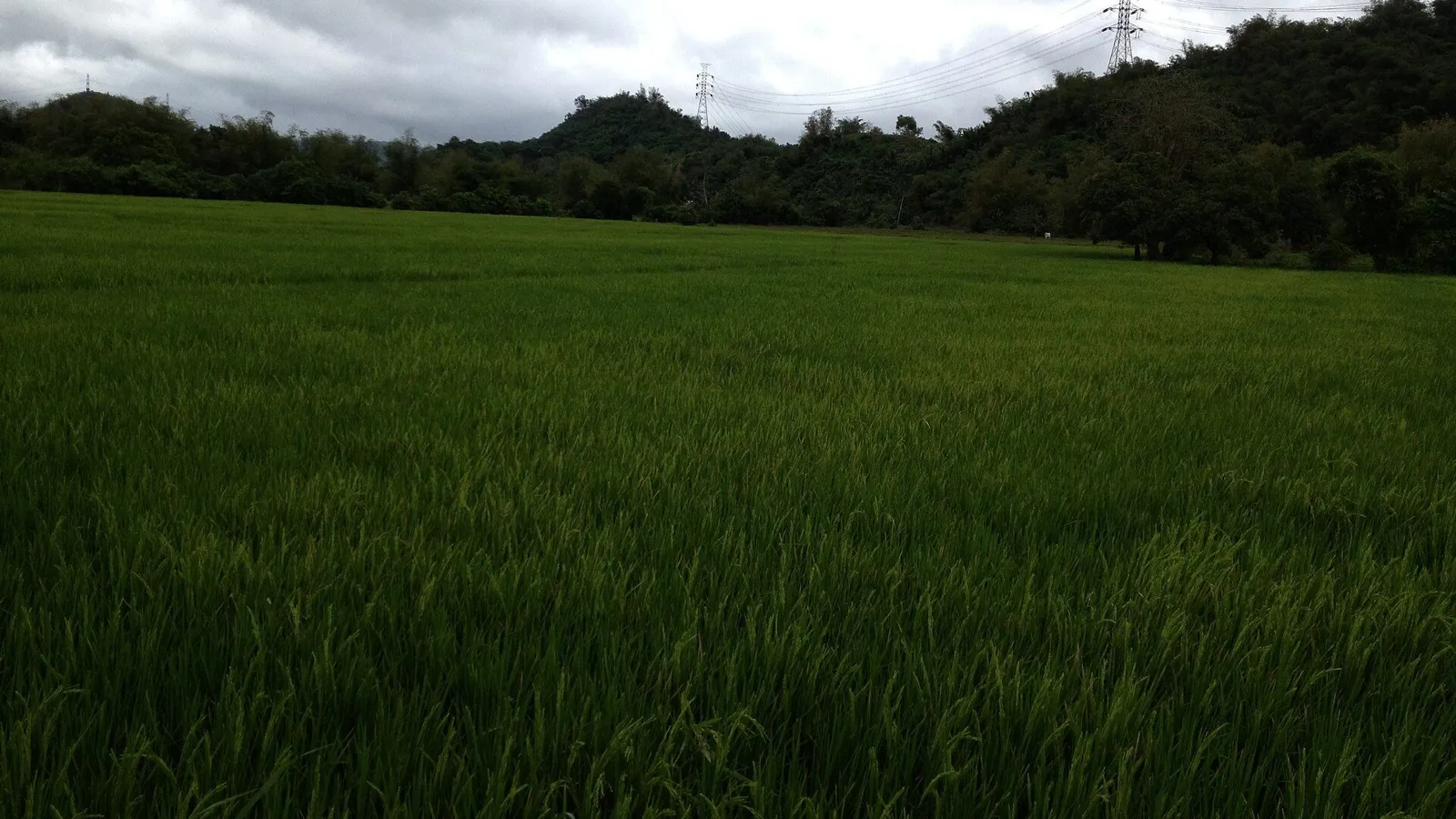
Days after planting are a good guide, but crops do not read calendars. Variety, weather and water can move the same stage by several days. So use the day count to know when to start looking, and the plant itself to decide when to apply.
Rice gives the clearest example. In the tropics, the reproductive stage lasts about 35 days and ripening about 30 days. The difference between a short and a long variety lies mostly in the vegetative stage.
- Count back from harvest. Panicle initiation comes about 65 days before maturity in tropical rice.
- Check the plant to confirm. A young panicle about 1 mm long shows inside the stem at the stage agronomists call panicle initiation.
- Feed rice from tillering to panicle initiation. That is when the crop needs nutrients most.
- Side dress corn by knee high, and no later than about the eighth leaf.
- Give fruiting vegetables potash once they start to set fruit.
Which rice growth stages need fertilizer?
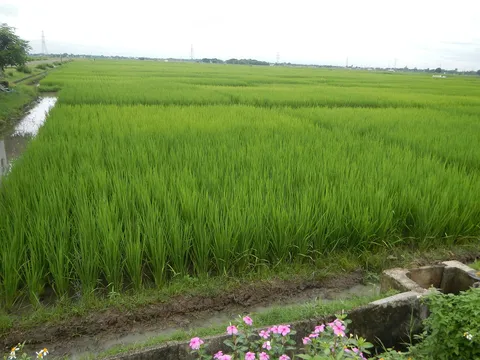
Rice needs enough nutrients from tillering to early panicle initiation and flowering. The table follows the wet season quick guide for transplanted rice in Nueva Ecija.
| Stage | How to recognize it | Days after transplanting | Fertilizer |
|---|---|---|---|
| Early growth | Seedlings recover and put out new leaves | 0 to 14 | Basal: all the phosphorus, the first potassium dose and about 30 percent of the nitrogen |
| Active tillering | New shoots keep coming from the base of each hill | 23 to 27, 24 to 28 or 28 to 32 | Urea |
| Panicle initiation | A young panicle about 1 mm long inside the main stems | 33 to 37, 35 to 39 or 43 to 47 | Last urea, plus the second potassium dose |
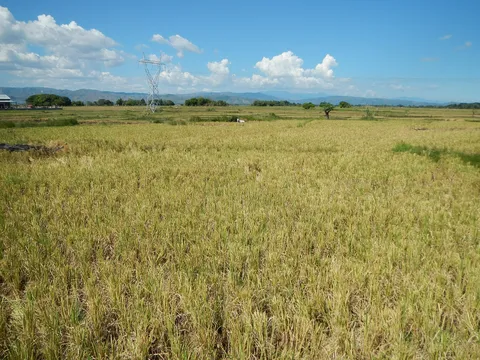
| Flowering to ripening | Panicles out, then grains fill and turn golden | After heading | Usually none, and leaf color readings stop at early flowering |
How do I know my rice has reached panicle initiation?
Count back from the maturity on the seed bag
Subtract about 65 days, for the reproductive and ripening stages together. For example, IR64 matures in 110 days with a 45 day vegetative stage.
Turn sowing days into transplanting days
Your count from the seed bag runs from sowing. Add the age of the seedlings at transplanting to move between days after sowing and days after transplanting.
Start checking a week early
Pull a few of the tallest main stems and split them lengthwise near the base. You can see a young panicle about 1 mm long with the naked eye or a magnifying glass.
Apply the panicle initiation dose
Put the last nitrogen 5 to 7 days before panicle initiation for varieties under 110 days, and within 5 to 7 days either side for longer ones. The second potassium dose goes in the same window.
From panicle initiation, heading follows in about 23 to 25 days. Too much nitrogen during panicle initiation and flowering raises the share of unfilled grains. Our guide to fertilizer for rice gives the bag amounts for each dose. For a closer look at two stages, read fertilizer for rice tillering and fertilizer for rice grain filling.
Read the chart every 7 days from 14 days after transplanting, or 21 days after sowing, until early flowering. Apply nitrogen when 6 or more of 10 leaves read below 4, or below 3 in direct wet seeded rice.
When should corn and vegetables get their doses?
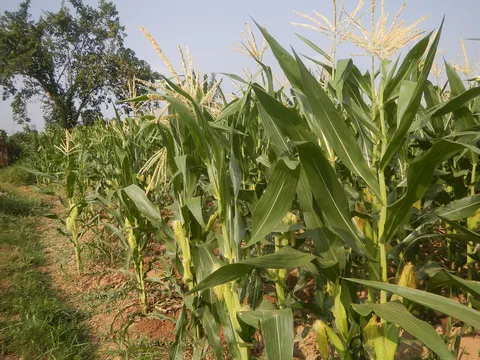
Count corn stages by the fully opened leaves. All the phosphorus, all the potassium and half the nitrogen go in at planting, in a band beside and below the seed. The rest of the nitrogen goes on at four weeks, or when plants are knee high at 30 to 48 cm. Farmers usually do it with the hill up at 21 to 30 days.
You can still side dress nitrogen up to about the eighth leaf, if the soil is moist and you do not cut the roots. See our page on how to increase corn yield for the full program. Fruiting vegetables run on weeks after transplanting instead, with potash once fruit sets. Our guide to fertilizer for vegetables lists the week by week doses for ampalaya, tomato and eggplant.
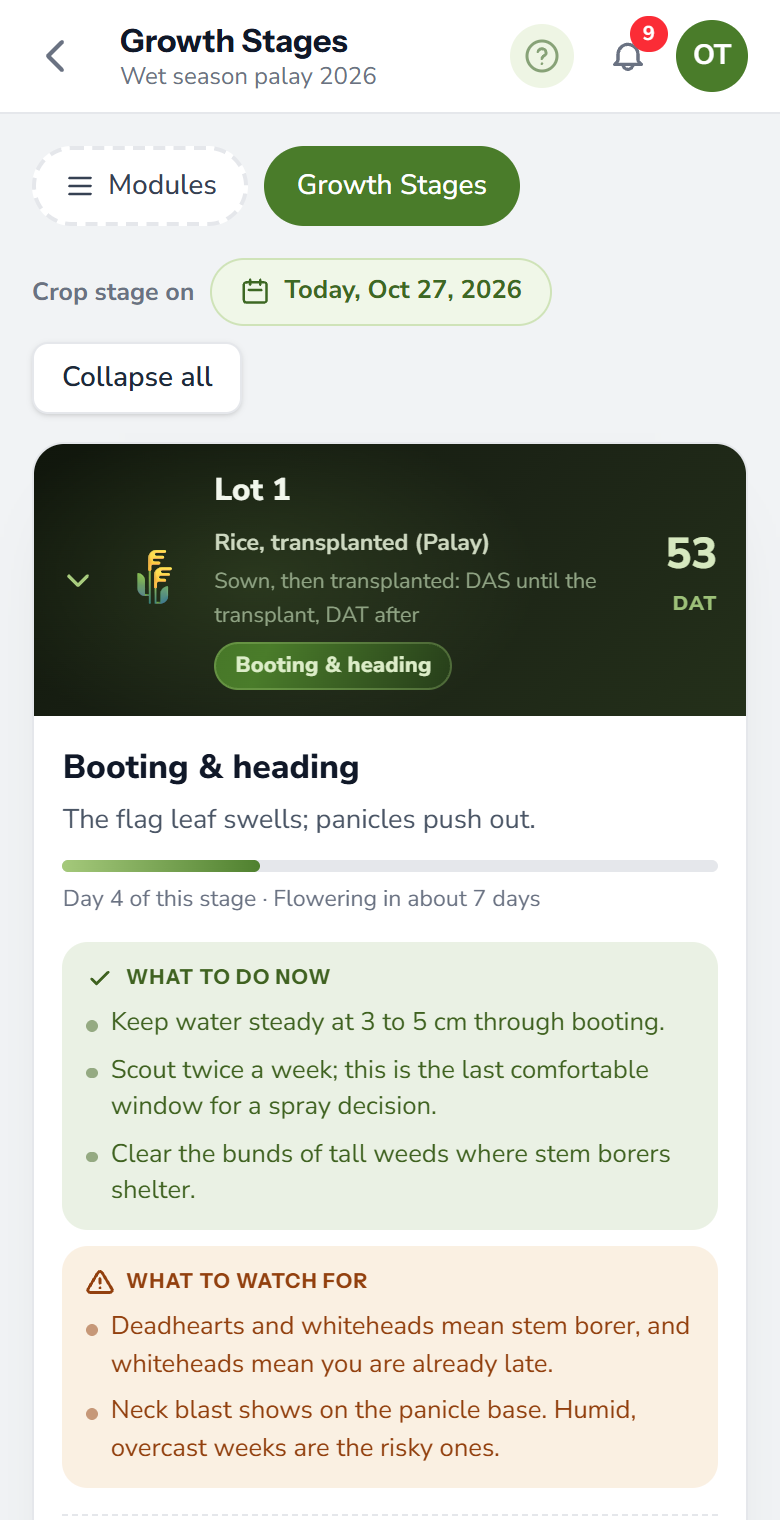
How does anee.io help with fertilizer timing by growth stage?
Growth stages in anee.io cover 85 Philippine crops, from palay and mais to gulay and fruit trees. Pick any date, and each lot shows its stage, what to do now and what to watch for. Lots planted on different days each count from their own day zero.
Some lots run behind because of drought or a late transplant. Realign by Anee reads the lot's records, weather and your notes, then moves its stage count to match the real crop. Your calendar dates stay as they are, and the reading uses credits. The Count the days tool shows how many days lie between two dates, with each lot's count at both ends.
Know which dose is due on each lot today, and which one comes next.
See growth stages