What Is the Best Fertilizer Plan for Wet Season Rice?
The best fertilizer for wet season rice is a smaller plan with sharper timing, because cloudy months cap the yield the crop can reach. The general recommendation for irrigated lowland gives 97 kg of nitrogen per hectare in the wet season, against 139 kg in the dry season. A quick guide for Nueva Ecija uses 2 to 4 bags of 14 14 14 at transplanting, then urea at active tillering and at panicle initiation, by yield target. anee.io, a farm app built for Filipino farmers, dates each dose from your transplanting day and shows the rain forecast beside it.
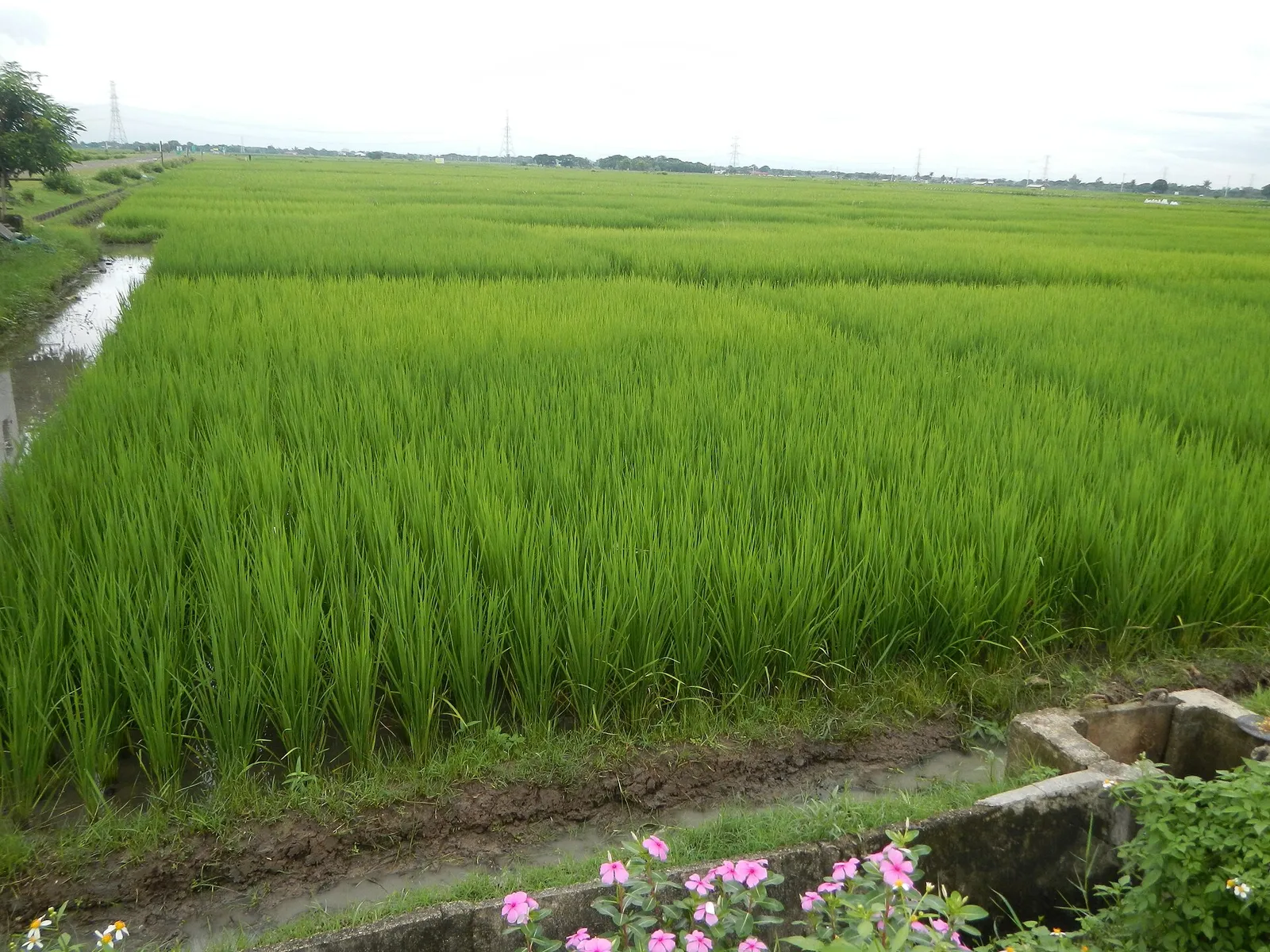
The wet season crop grows under clouds. The tropics get more sunlight in the dry season, so dry season yields are usually higher. Even so, the right variety and good management can still give about 5 to 6 tons per hectare in the wet season.
That changes the fertilizer plan in two ways. First, the target is lower, so the rate is lower. Second, rain can wash away a dose that lands on the wrong day, so timing matters more than ever.
- Feed for a wet season target. The usual rate is 97 kg of nitrogen per hectare in the wet season and 139 kg in the dry season.
- Put the basal dose into the soil between transplanting and 14 days after, with all the phosphorus.
- Split the urea between active tillering and panicle initiation.
- Top dress into shallow water, 2 to 5 cm deep, late in the afternoon, with the bunds closed.
- Let the leaves decide extra nitrogen. A leaf color chart stops you from overfeeding a crop that is already green.
Why does wet season rice need a different plan?
Less sunlight means the crop can turn less fertilizer into grain. If you feed a wet season crop like a dry season one, the extra nitrogen tends to go into leaves rather than grain. Too much nitrogen during panicle initiation and flowering invites lodging and pests. It also raises the share of unfilled grains.
Wet months also bring strong winds and typhoons, and a tall, soft crop falls over first. So the wet season plan aims a little lower and keeps the stems firm.
| Nutrient | Wet season | Dry season |
|---|---|---|
| Nitrogen (N) | 97 | 139 |
| Phosphorus (P) | 28 | 35 |
| Potassium (K) | 43 | 50 |
What is the best fertilizer for wet season rice, bag by bag?
For transplanted rice in Nueva Ecija, there is a quick guide in bags per hectare. It counts one cavan as 56 kg of fresh palay from the thresher. The days follow your variety: early, medium early or medium maturing.
| Step and stage | When (DAT) | Fertilizer | 70 to 90 cavans | 90 to 110 cavans | 110 to 130 cavans |
|---|---|---|---|---|---|
| 1. Early growth | 0 to 14 | 14 14 14 with sulfur | 2 bags | 3 bags | 4 bags |
| 2. Active tillering | 23 to 27, 24 to 28 or 28 to 32 | Urea 46 0 0 | 1 bag | 1.5 bags | 2 bags |
| 3. Panicle initiation | 33 to 37, 35 to 39 or 43 to 47 | Urea 46 0 0 | 1 bag | 1.5 bags | 2 bags |
The guide fits fields with enough water, average soil fertility and seedlings under 23 days old. It also assumes no flood silt, no straw returned to the field and no organic matter besides the stubble. If your farm differs, your municipal agriculturist can help you get a field level plan.
Compare it with the dry season guide for the same province. There the targets run from 110 to 170 cavans, with up to 6 bags of 14 14 14, more urea and added potash at panicle initiation. So a wet season field that copies the dry season plan pays for a harvest it cannot reach.
How do I time each dose around the rain?
Mix the basal dose into the soil
Incorporate granular fertilizer into the soil, which cuts leaching and nitrogen loss to the air. Put only about 30 percent of the season's nitrogen in this first dose.
Check the forecast before each top dressing
Skip a day when heavy rain will spill over the bunds, because the overflow carries the dissolved urea away. Keep bunds and outlets closed for a few days after you spread.
Spread into shallow water, late in the day
Top dress when the field holds 2 to 5 cm of water. Choose the cooler hours, after 3 in the afternoon, to cut nitrogen loss.
Read the leaves every week
With a leaf color chart, check every 7 days from 14 days after transplanting until early flowering. Apply nitrogen only when 6 or more of 10 leaves read below 4, or below 3 for direct wet seeded rice.
Finish potassium near panicle initiation
Give the second potassium dose 5 to 7 days before or after panicle initiation. Potassium helps the crop stand against lodging, pests and diseases.
When the canopy is already deep green and the stems look thin, hold the next nitrogen dose and read the leaf color chart first. In the wet season, a soft crop is the first to lodge when the wind comes.
How does anee.io keep the wet season plan on time?
In the Protocol Builder you write every dose on its day after transplanting. Keep one version for the wet season and one for the dry. When you plant, the protocol becomes a cropping calendar dated from each lot's own transplanting day.
The farm weather forecast sits beside your plan, so you see the rain before you send workers out with urea. Anee, the smart farm technician inside anee.io, can review the protocol and point out a stage with nothing planned or a rate that looks too high. Her reviews use credits.
Write your wet season fertilizer protocol once in the Protocol Builder, then reuse it every year with new dates.
See the Protocol Builder