What Is the Best NPK Ratio for Rice?
There is no single best NPK ratio for rice, because the right amounts change with soil, season and yield target. As a guide, the usual rates for irrigated lowland rice work out to about 3.5 parts nitrogen to 1 part phosphate and 1.5 parts potash for a wet season crop, and about 4 to 1 to 1.4 for a dry season crop. You build that ratio by mixing urea, a phosphate grade and potash. anee.io, a farm app built for Filipino farmers, has an NPK Plus calculator that adds up the bags for you.
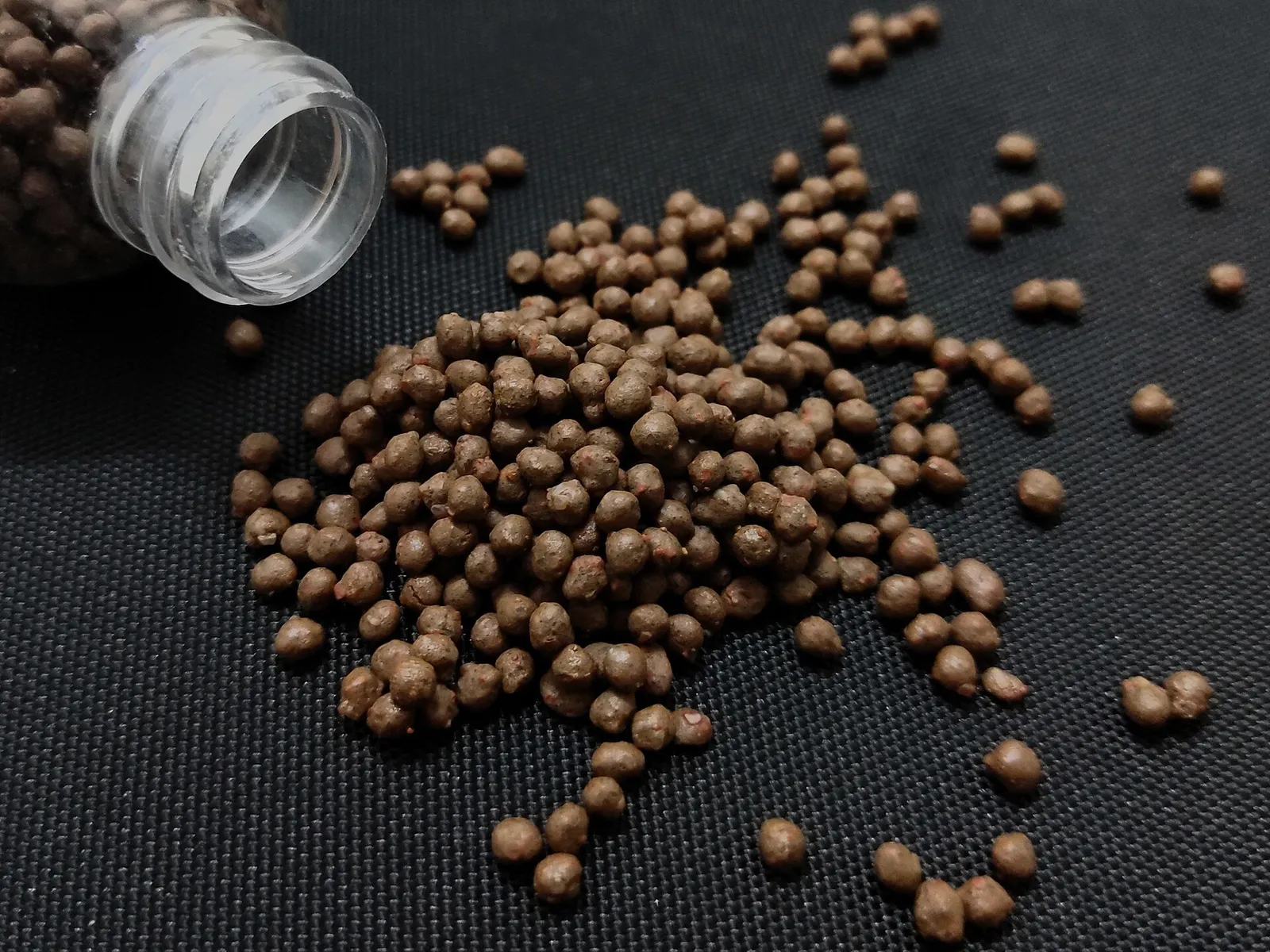
Most farmers meet NPK as three numbers printed on a sack. Those numbers describe the bag, not your field. What your palay needs is kilos of each nutrient per hectare, and you reach it by mixing two or three grades.
So this guide answers two things. First, what the numbers mean. Then, how to turn a recommended rate into a shopping list.
- The numbers are percents. 14 14 14 means 14 percent each of nitrogen (N), phosphate (P2O5) and potash (K2O).
- Rice wants far more nitrogen than phosphate, about 3.5 to 4 times more in the usual rates.
- No single bag has that ratio, so you mix urea, a phosphate grade and potash.
- Soil, season and straw change it, so a soil test or MOET beats a fixed formula.
- Add it up with the NPK Plus calculator.
What do the three numbers on a fertilizer bag mean?
Farmers call the three numbers NPK, the fertilizer components printed in the same order on every bag. First comes the percent of nitrogen. Next is phosphate, written P2O5, and last is potash, written K2O. So a 50 kg bag of 14 14 14 holds 7 kg of each. A bag of urea, 46 0 0, holds 23 kg of nitrogen only.
The fertilizer ratio is the proportion between those numbers. A 14 14 14 bag is 1 to 1 to 1. A 16 20 0 bag is 4 to 5 to 0. Your crop's need is a different thing: kilos of N, P2O5 and K2O per hectare, from a soil test or the rates for your area. Some research tables list pure P and K instead of the oxides, so check the form before you divide.
What is the recommended NPK ratio for rice?
Farmers without a soil test or decision tool can use general rates for irrigated lowland rice. The table below shows them.
| Recommendation | N | P | K | Ratio N to P to K |
|---|---|---|---|---|
| Initial, wet season | 97 | 28 | 28 | 3.5 to 1 to 1 |
| Initial, dry season | 141 | 42 | 42 | 3.4 to 1 to 1 |
| Modified, wet season | 97 | 28 | 43 | 3.5 to 1 to 1.5 |
| Modified, dry season | 139 | 35 | 50 | 4 to 1 to 1.4 |
The modified plan adds potash. In sunny areas such as Nueva Ecija, Bicol and Isabela, it adds muriate of potash near panicle initiation for bigger, heavier grains. For when each part goes on, see fertilizer timing by growth stage.
Now look at it from the crop's side. Rice takes up about 16 kg of nitrogen and 19 kg of K2O per ton of grain. But 16.8 kg of that potash stays in the straw. So returned straw brings most potash back, while nitrogen must come again every season.
Lower targets and rainfed fields
The Abonong Swak plan for 3 to 4 tons uses 1 bag of 14 14 14, 1 bag of urea and half a bag of 0 0 60. It adds rice straw and 10 bags of organic fertilizer. That makes about 30 kg N, 7 kg P2O5 and 22 kg K2O, near 4 to 1 to 3.
For low input rainfed fields, a 2 ton crop on clay loam starts at about 20 kg N and 5 kg P per hectare. Sandy soil may need 10 to 15 kg of K more. Apply the basal only when there is water in the field.
Why does the right ratio change with soil and season?
- Season. The dry season yields more, so its rate carries about 40 kg more nitrogen.
- Soil. Potassium runs short most on sandy, acid upland and degraded lowland soils, and where farmers apply N and P but little K.
- Straw. Straw from a 5 ton harvest, worked back in, gives about 30 kg of nitrogen.
- Yield target. Plan 40 to 50 kg of nitrogen for each extra ton of grain above what the field gives without it.
That is why MOET, the leaf color chart and the Rice Crop Manager come first. Our guide to balanced fertilization for rice explains each tool.
How do I build the ratio from the bags I can buy?
Start with the nutrient that only a few grades carry, then fill the gaps with single nutrient bags. Here is the modified wet season rate, 97 kg N, 28 kg P2O5 and 43 kg K2O.
Cover the phosphate first
Only complete, 16 20 0 or 18 46 0 carry phosphate. Divide 28 kg of P2O5 by 0.14 to get 200 kg of 14 14 14, or 4 bags. These also give 28 kg each of N and K2O.
Fill the potash gap
You need 43 kg of K2O and have 28. Divide the 15 kg left by 0.60 to get 25 kg, or half a bag of 0 0 60.
Fill the nitrogen gap
You need 97 kg of N and have 28. Divide the 69 kg left by 0.46 to get 150 kg, or 3 bags of urea.
Check the total
The mix gives 97 kg N, 28 kg P2O5 and 43 kg K2O. Without the potash, it gives 97, 28 and 28, the initial wet season rate.
Scale it to your lot
Multiply by your area in hectares. A 0.6 hectare lot needs 2.4 bags of complete, 15 kg of potash and 1.8 bags of urea.
With 16 20 0 instead, 2.8 bags cover the phosphate and add 22.4 kg of nitrogen. Then you need about 72 kg of potash and 162 kg of urea. It is the same ratio, but a different shopping list. Our guide to fertilizer calculation has more examples.
Which grades are high in nitrogen, phosphorus or potassium?
| Grade | Name | One 50 kg bag holds | Use in rice |
|---|---|---|---|
| 46 0 0 | Urea | 23 kg N | Top dressing |
| 21 0 0 | Ammonium sulfate | 10.5 kg N, 12 kg sulfur | Top dressing where soil lacks sulfur |
| 14 14 14 | Complete | 7 kg each of N, P2O5, K2O | Basal dose |
| 16 20 0 | Ammonium phosphate | 8 kg N, 10 kg P2O5 | Basal dose |
| 18 46 0 | Diammonium phosphate | 9 kg N, 23 kg P2O5 | Basal dose |
| 0 0 60 | Muriate of potash | 30 kg K2O | Basal and near panicle initiation |
Urea is the fertilizer high in nitrogen that most palay farmers top dress with. Ammonium sulfate is a fertilizer rich in nitrogen that also carries sulfur. For phosphate, 16 20 0 and 18 46 0 are the fertilizers rich in phosphorus.
Complete 14 14 14 is the usual fertilizer with phosphorus and potassium as well as nitrogen. It suits the basal dose, but alone it gives rice too little nitrogen. See urea fertilizer, 16 20 0 and potash for each grade.
Feeding only 14 14 14 gives as much phosphate as nitrogen. The usual rates call for 3.5 to 4 times more nitrogen, so complete fertilizer belongs at basal, with urea later.
How can anee.io add up my NPK?
The NPK Plus calculator in anee.io does this math for you. Tap the fertilizers you plan to use, and it adds up every nutrient per hectare and in all. Then it tells you if each one is short, right or too much for rice.
Once the mix looks right, put each dose on its day in the Protocol Builder. Anee, the smart farm technician inside anee.io, can also read the plan against your place and season, using credits.
Tap the bags you plan to use and see the nitrogen, phosphate and potash they give your palay per hectare.
Open NPK Plus