Rice Diseases in the Philippines: A Guide by Growth Stage
Rice diseases cut into the palay harvest every season, and most of them strike at a predictable stage. This guide walks the crop from seedbed to ripening and names the diseases to scout for at each step. Then it sets out what works: resistant varieties, clean seed, balanced nitrogen, good water and, only when it pays, a fungicide.
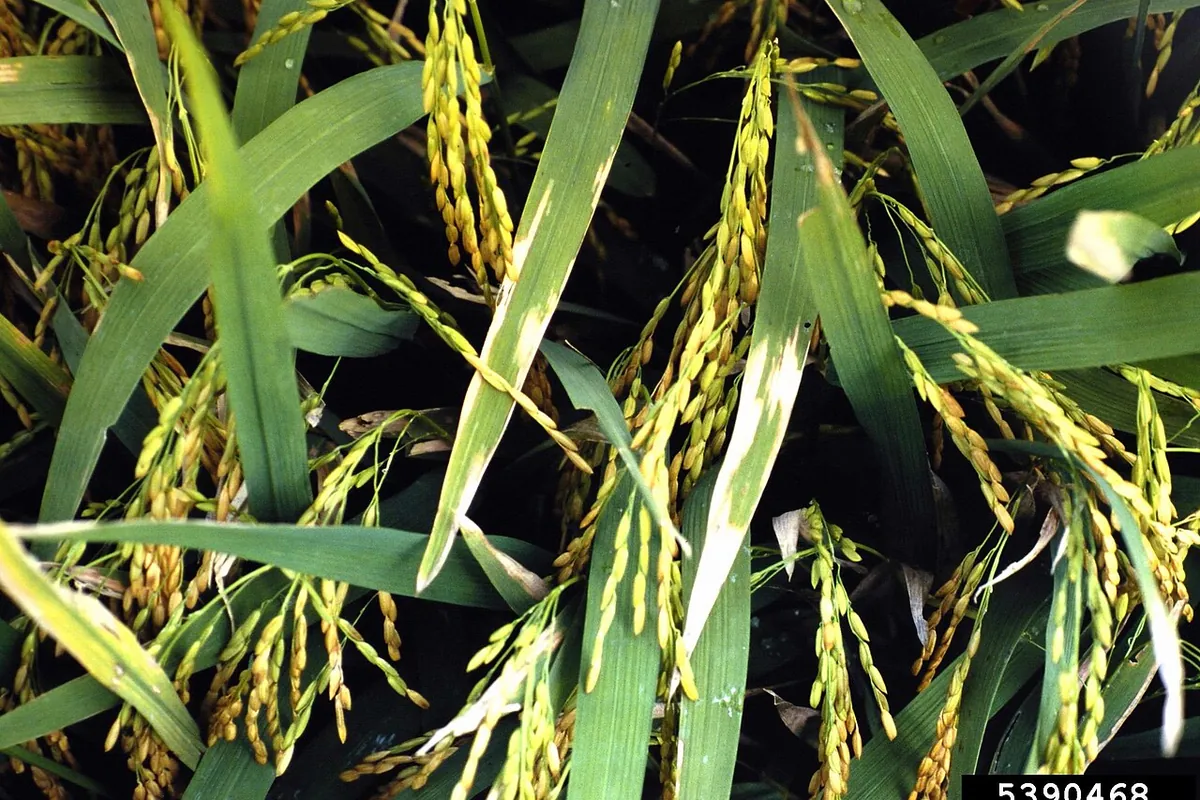
The rice diseases that cost the most palay
Bacterial leaf blight, blast, sheath blight and tungro are the major diseases of palay, the rice crop still in its husk. All four rise in the rainy season. Bacterial leaf blight can cut yield by up to 70 percent on susceptible varieties. Tungro can be worse. In severe cases, a susceptible variety infected young can lose the whole crop.
Farmers know many of these by local names. Blast is mata mata in Bisaya, agupaw in Waray and taya taya among Cebuano speakers in Mindanao. Sheath blight is masot in Pangasinan. Grassy stunt and ragged stunt share the Tagalog name burit.
Rice diseases by growth stage
Each disease has a stage when the crop is most at risk. Scout for the right one at the right time.
| Stage | Diseases to scout for | What you see |
|---|---|---|
| Seedbed (punlaan) | Bakanae, seedling blast, brown spot, kresek | Tall, thin, pale seedlings, spindle shaped spots, brown spots on young leaves, wilting seedlings |
| Tillering | Leaf blast, tungro, grassy stunt, ragged stunt, sheath blight | Yellow orange leaves, stunted hills, gray oval spots on the sheath near the water |
| Booting | Sheath blight, sheath rot, stem rot, brown spot | Lesions climbing the sheaths, a rotting flag leaf sheath, black spots at the water line |
| Heading and flowering | Neck blast, bacterial leaf blight, false smut | A gray brown neck that breaks, yellow stripes with wavy edges, orange balls on single grains |
| Ripening | False smut, brown spot on grains, stem rot | Greenish black smut balls, spotted or discolored grains, rotted stems |
Not sure what you are looking at? Take a clear photo of the leaf in daylight and ask Anee, the smart farm technician in anee.io. She answers in Tagalog or English, and she checks your lot's growth stage before she replies.
The big rice diseases, one by one
Blast
Rice blast comes from the fungus Magnaporthe oryzae and can hit the leaf, collar, node and neck. Leaf spots are spindle shaped, with gray centers and brown borders. If the neck rots before the milky stage, no grain forms. High nitrogen, long dew, light rain and water stress all favor it. So put resistant varieties first, then moderate, split nitrogen and no water stress.
Bacterial leaf blight
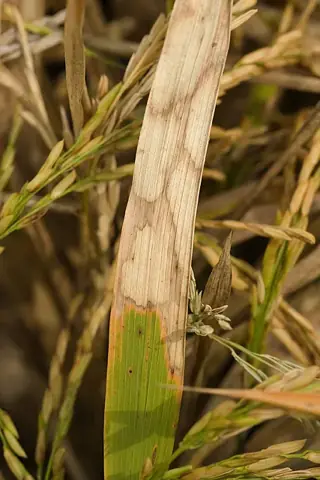
Bacterial leaf blight comes from Xanthomonas oryzae pv. oryzae. On seedlings it causes kresek, a wilt that kills the whole plant. On older rice, yellow stripes with wavy edges run down from the leaf tip. Milky drops of ooze show in the early morning. Strong wind and heavy rain spread it, while excess nitrogen and a lack of phosphorus and potassium make it worse.
Tungro and the stunt viruses
Tungro is two viruses carried by the green leafhopper. Leaves turn yellow to orange from the tip down, plants stay short, and sick hills show up in clusters that grow. It does not travel in seed.
Grassy stunt and ragged stunt ride with the brown planthopper. Grassy stunt makes an upright, grassy tuft of many tillers. Ragged stunt leaves torn, twisted leaves on a plant that stays dark green. Once a rice plant has the virus, nothing can cure it yet.
Sheath blight
Sheath blight, from the fungus Rhizoctonia solani, starts as oval greenish gray spots on the sheath just above the water. In dense, heavily fertilized palay it climbs to the leaves and spreads to the next hill. Its hard resting bodies, the sclerotia, survive in the soil for months and float on the water. No resistant variety is available yet. So wider spacing, moderate nitrogen and a few days of draining at maximum tillering do the work.
Brown spot, false smut and bakanae
Brown spot makes round brown spots with gray centers. It is tied to poor, unflooded soil and to potassium deficiency, so fix the soil first.
False smut turns single grains into velvety balls, orange at first and greenish black later. Rain, high humidity and high nitrogen favor it. Bakanae is seedborne. Infected seedlings grow tall, thin and pale, then die or give empty grains.
Resistant varieties are the first defense
A resistant variety is the top choice against blast, bacterial leaf blight, tungro, grassy stunt and ragged stunt. It is the cheapest, most reliable control for bacterial leaf blight. Examples are PSB Rc10 for blast, Rc 242 for bacterial leaf blight and Rc 120 for tungro.
Resistance works disease by disease, though. In trials, the hybrid Mestiso 19 (NSIC Rc202H) withstood tungro, yet it was susceptible to bacterial leaf blight. So pick a variety that resists the diseases your farm had before. New ones come out every year, so ask your local agriculture office for the current list.
anee.io can help with that search. In Variety Ranking, Anee looks up the newest Philippine varieties of your crop and their resistance ratings. Then she compares them for your field and season.
Clean seed, balanced nitrogen and good water
Start with clean seed
Certified seed carries fewer germs. Against bakanae, sort seed in salt water so light, infected grains float off. Against brown spot, use a hot water soak at 53 to 54 degrees Celsius for 10 to 12 minutes.
Split the nitrogen
Too much nitrogen raises blast, sheath blight and bacterial leaf blight. Split it into two or more doses timed with the Leaf Color Chart, and add potassium where the soil lacks it. See our guide to fertilizer for rice.
Manage the water
Flooding the field as often as possible holds blast back. Sheath blight wants the opposite: drain for a few days at maximum tillering. Against bacterial leaf blight, keep seedbeds and fields from flooding, at 2 to 3 cm of water.
Plant together, then clean up
Get your crop in no more than a month from when most farms around you plant, so tungro and the stunt viruses stay low. After harvest, plow the stubble under. Where tungro struck, leave the field free of rice for at least a month.
Timing is everything here. The anee.io cropping calendar dates every task from each lot's own day zero. So the nitrogen splits, the drain and the scouting walks land on the right day. The growth stages view also lists what to watch for at each stage.
anee.io reads each lot's growth stage and what to watch for. Anee can also look at a photo of a sick rice leaf.
Start freeWhen a fungicide makes sense
A fungicide is the last step, never the first. It does nothing against tungro, grassy stunt or ragged stunt, because those are viruses. Chemicals against bacterial leaf blight are not economical or effective either. For the fungal diseases, spray only when scouting and the weather show real risk.
- Blast. Triazoles (FRAC group 3) and strobilurins (FRAC group 11) can be used with care. One spray at heading can pay where the risk of yield loss is high.
- Sheath blight. If you spray, aim at the leaf sheaths between stem elongation and booting.
- Brown spot and bakanae. Treat the seed, not the field. Propiconazole (group 3) and azoxystrobin (group 11) are among the brown spot seed treatments. The bakanae fungus also builds resistance to repeated benomyl (group 1).
- False smut. No spray is recommended. Keep the field clean, use moderate nitrogen and plant certified seed.
Rotate groups between sprays, because products with the same FRAC number share one weak point. Our fungicide guide explains the groups, and the overview of plant diseases in the Philippines lists the common ones.
Use only products registered with the FPA for rice and that disease. Follow the label for rate, timing and safety. No spray cures a virus.
Questions about rice diseases
What are the most common rice diseases in the Philippines?
Can I spray an insecticide to stop tungro?
Is there a spray for bacterial leaf blight?
Why does sheath blight come back every wet season?
How do I tell neck blast from stem borer whiteheads?
Read the whole guide and keep your crop healthy
With Libre + Anee, read the whole guide: how to tell the diseases apart, what makes them spread, and what to spray and when.
The account is free, no credit card.