Anthracnose: Signs, Spread and Control on Mango, Sili and Onion
Anthracnose is the fungal disease behind black, sunken spots on ripening mango and rotting sili pods. It also causes the twisted onion leaves known locally as kulot. Colletotrichum fungi cause it and rain spreads it. Even a mango that looks clean at harvest can break out in spots once it ripens. This guide shows you how to spot anthracnose early, cut its sources, and use a fungicide only where it pays.
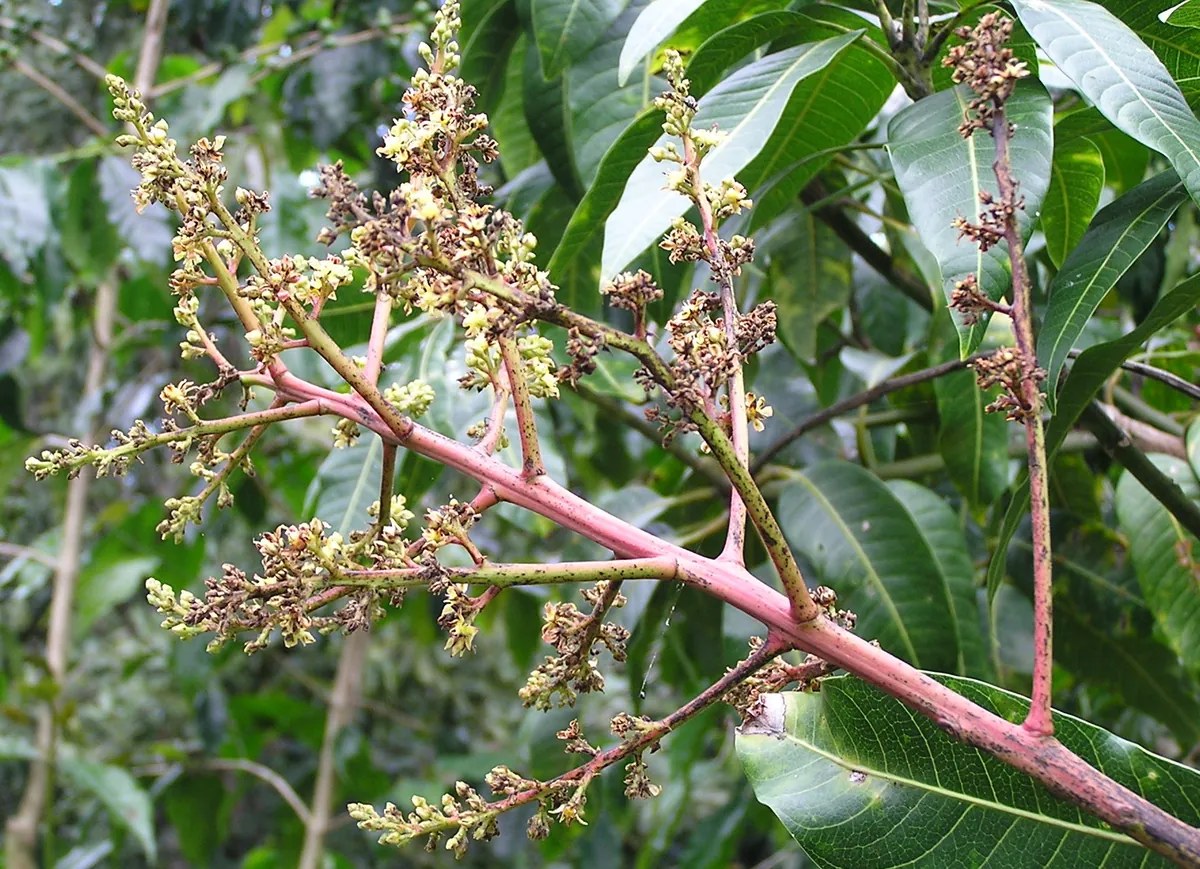
Anthracnose is common wherever Filipino farmers grow fruit and vegetables. A 2025 checklist of Philippine records counted 55 named Colletotrichum species on 106 host plants. Anthracnose was the main disease. So a mango grower, a sili grower and an onion grower can all be fighting the same family of fungi.
The disease goes after the part you sell: the flowers that should set fruit, the pods, the bulbs and the ripe fruit. For onion, the anthracnose twister complex can destroy up to 80 percent of a harvest in Nueva Ecija. With mango, much of the loss shows up after harvest, when the fruit ripens in the crate.
What causes anthracnose and how it spreads
Colletotrichum fungi survive on dead twigs, old leaves, fallen fruit and weeds. In chili, they also ride on seed saved from sick pods. Their spores sit in sticky pink to orange masses, so water moves them best. Rain splash, dripping dew and wind driven rain carry them from an old spot to new flowers, leaves and young fruit. That is why anthracnose flares up in the wet season and after every long rainy spell.
On mango and papaya, the fungus often infects young fruit and then waits. It stays quiet until the fruit ripens, and then the spots break out. A harvest that looked clean can rot within days in storage.
Wounds make it easier. Scars from thrips, stings from fruit flies and bruises from rough handling all open a door for the fungus. For onion, barnyard grass, spreading dayflower and four sedges are possible alternate hosts, so the common weeds around your field matter too.
Diseased in Tagalog: how to describe what you see
Diseased in Tagalog is 'may sakit', and a diseased mango tree is 'punong mangga na may sakit'. When you ask a technician for help, say what you see and where. For example, 'may itim na batik ang bunga' means black spots on the fruit, 'natutuyo ang bulaklak' means the flowers are drying up, and 'kulot ang dahon ng sibuyas' means the onion leaves curl and twist. Our list of farm words in Tagalog has more terms like these.
Anthracnose signs on each crop
| Crop | Where to look | What you see |
|---|---|---|
| Mango | Flower clusters, young leaves, fruit | Flowers turn black and dry up, a stage called blossom blight. Leaves get dark spots. Ripening fruit shows black spots that spread and join. |
| Chili (sili) | Ripening pods | Sunken, water soaked spots that grow into rings, often with orange or black spore dots. Pods shrivel and rot. |
| Onion (sibuyas) | Leaves and neck | Spots with orange to black spore masses, leaves that curl and twist, a long neck and thin bulbs. This is the anthracnose twister complex, or kulot. |
| Papaya | Ripening fruit | Round, water soaked, sunken spots that keep growing. Small reddish brown spots called chocolate spot come from the same fungus. |
| Beans and tomato | Pods and ripe fruit | Dark, sunken spots on bean pods and round, sunken spots on ripe tomatoes. |
On mango fruit, anthracnose spots sink into the skin, and in humid weather you often see tiny pink or orange dots of spores inside them. Bacterial black spot, a different disease, makes raised black spots that crack open. Each needs its own plan, so get the name right first.
How to control anthracnose before you spray
Active Ingredients on Philippine Labels
| Active ingredient | FRAC group | On Philippine labels |
|---|---|---|
| Chlorothalonil | FRAC M05 | A first choice. Registered products name it on mango, string bean, cowpea, bitter gourd and more. |
| Mancozeb | FRAC M03 | A first choice. Registered products name it on mango, string bean, cowpea, cucumber and more. |
| Azoxystrobin plus difenoconazole | FRAC 11 plus 3 | A first choice. Registered products name it on mango and onion. |
| Prochloraz | FRAC 3 | A first choice. Registered products name it on mango and banana. |
| Difenoconazole | FRAC 3 | A sound second choice. 53 registered products name it on mango. |
| Azoxystrobin | FRAC 11 | A sound second choice. Registered products name it on mango, banana and watermelon. |
| Propineb | FRAC M03 | A sound second choice. Registered products name it on mango and onion. |
| Tebuconazole | FRAC 3 | A sound second choice. 13 registered products name it on mango. |
| Carbendazim plus tebuconazole | FRAC 1 plus 3 | A sound second choice. 12 registered products name it on mango. |
| Copper hydroxide | FRAC M01 | A sound second choice. Registered products name it on mango, cucumber, watermelon and tomato. |
The table stops at the ten best. 20 more on Philippine labels for it are older or broad chemistry. The Disease Finder in anee.io lists every one, crop by crop, with the products sold here.
These are on Philippine labels for it, but we leave them off the list above, for the reasons below.
- Potassium silicate: A plant tonic, not a fungicide: it does not stop the anthracnose fungus.
Resistance. Anthracnose fungi in Asian mango orchards often resist group 1 (benomyl, carbendazim, thiophanate methyl), and group 11 (strobilurins) loses ground fast when used alone. Build the season on mancozeb or chlorothalonil, slot in prochloraz or a group 3 plus 11 mix in the wettest weeks, and never spray one systemic group twice in a row.
Remove the sources
Prune dead twigs, pick off dried mummy fruit, and rake up fallen leaves and rotten fruit. Bury them or carry them out of the field, because next season's spores live in this trash.
Open up the canopy
Prune mango trees so light and air reach the inside. Leaves and flowers then dry faster after rain, and the fungus needs wet surfaces to infect.
Plan flowering around the rain
Wet flowers are where mango anthracnose starts. If you can choose when to induce flowering, aim for a drier stretch, and watch the forecast in the weeks after.
Bag the fruit
In a Philippine trial on Carabao mango, paper bags on the fruit gave the least disease when the fruit also got a 10 minute dip in water at 53 degrees Celsius after harvest. In that same trial, every unbagged, untreated fruit from the rainy season crop developed anthracnose. Bagging plus the hot water dip cut it by 83 percent.
Start clean in vegetables
For sili, buy seed from a trusted source instead of saving it from spotted pods. Rotate away from pepper and tomato, pull rotten pods early, and water at the base instead of over the leaves.
Keep onion fields weeded
Clear the weeds that may host the onion anthracnose twister fungi and plant healthy seedlings. Biological control such as Trichoderma is also being tested, but few onion farmers use it yet.
Fungicide choices for anthracnose
A fungicide protects healthy tissue. It will not turn a black spot green again, so the goal is to shield new flowers, flushes and young fruit before rain spreads the spores. On mango, the stages to protect are the flower clusters and the developing fruit.
Every fungicide label carries a FRAC group code that tells you how the product works. Rotating between groups keeps the fungus from growing resistant. Our guide to fungicides in the Philippines covers the common brands.
| FRAC group | Example active ingredients | How it works | Watch out for |
|---|---|---|---|
| M (multi site) | Mancozeb, chlorothalonil, copper | Stays on the surface and stops spores before they enter | Heavy rain washes it off. Low risk of resistance. |
| 11 (strobilurins) | Azoxystrobin | Moves into the leaf and stops the fungus from making energy | High risk of resistance. Never spray it alone back to back. |
| 3 (triazoles) | Difenoconazole, propiconazole | Moves into the plant and stops the fungus from building its cell membranes | Medium risk of resistance. Rotate or mix with another group. |
| 1 (benzimidazoles) | Carbendazim, thiophanate methyl | Moves into the plant and stops the fungus from dividing | Resistance in Colletotrichum is common. Do not rely on it alone. |
Ortiva Top fungicide on mango and onion
One product you will see at agri supply stores is Ortiva Top fungicide from Syngenta. It combines azoxystrobin from group 11 and difenoconazole from group 3. Its Philippine label lists anthracnose on mango and on onion, along with scab and stem end rot on mango and other diseases on rice, corn and vegetables. Use it only on the crops named on the label, at the label rate and interval. Rotate it with a product from another group.
Rates, spray intervals, the number of sprays per season and the days to wait before harvest differ per product and per crop. Buy only products registered with the Fertilizer and Pesticide Authority for your crop, wear gloves and a mask, and never spray into the wind.
How anee.io helps you stay ahead of anthracnose
Anthracnose control is mostly timing: scout at flowering, protect before a wet week, and remember where the disease started last season. With anee.io, all three sit in one place.
Pick a date and the growth stages and weather view shows where each lot stands, from flowering to fruit set, next to the week's forecast for that lot. When you find spots, take a photo and ask Anee, the smart farm technician. Anee looks at the picture, reads your schedule and weather first, and answers in Tagalog or English.
Your photos and notes stay in the gallery, so next season you know which trees or which corner of the field got sick first. The inventory also keeps count of every fungicide you buy and what each spray used.
Sign up for anee.io, set up your lots and growth stages, and when spots appear, send Anee a picture. You get an answer in Tagalog or English that fits your crop and its stage.
Sign up for anee.ioAnthracnose questions farmers ask
Can anthracnose be cured?
What is diseased in Tagalog?
Is Ortiva Top fungicide registered for anthracnose?
Why do my mangoes rot after harvest when they looked clean?
When should I spray mango against anthracnose?
- Syngenta Philippines, Ortiva Top 325 SC product label
- Balendres (2025), Checklist of Colletotrichum species associated with plant diseases in the Philippines
- Buganic, Lizada and de Ramos (1997), Disease control in Philippine Carabao mango with preharvest bagging and postharvest hot water treatment, Acta Horticulturae 455
- FRAC Code List 2024, Fungicide Resistance Action Committee
Stop the spread of Anthracnose
With Libre + Anee, read the whole guide: how to tell it from look alikes, what makes it spread, and what to spray and when.
The account is free, no credit card.