Cacao Black Pod: How to Spot It and Save Your Pods
Cacao black pod is a rot that turns healthy pods brown and then black in days, and in wet weather it can take a large share of the crop. This guide shows you the signs, the sanitation steps that work and when a spray makes sense.
What Is Cacao Black Pod?
Black pod is caused by Phytophthora palmivora. It is not a true fungus but a water mold, a relative of algae. The Pacific Pests and Pathogens fact sheet says it can attack the whole tree, including pods, stems, shoots, leaves and roots. It is a major disease of cacao in many countries.
A 2023 study in Cagayan Province collected 14 isolates from infected pods on five farms. It found the same disease on seedlings, flowers and pods. The wet months are when pods suffer. If you are starting cacao and other trees, plan your spacing, shade and drainage with black pod in mind. The same water mold also causes coconut bud rot.
| Fact | Details |
|---|---|
| Name | Black pod of cacao |
| Scientific name | Phytophthora palmivora |
| Kind | Water mold (an oomycete) |
| Crops it attacks | Cacao |
| Local names | None recorded |
| Where it strikes | Fruits, pods and nuts, leaves and stems and tillers |
| When it strikes | It strikes in wet weather and in humid, shaded, poorly drained plantings, and ripe pods are more at risk than unripe ones. |
| How it spreads | The water mold lives in the soil. Rain splash, wind, heavy dew, ants, rats, beetles and dirty pruning tools carry its spores to the pods. |
How to Identify Cacao Black Pod
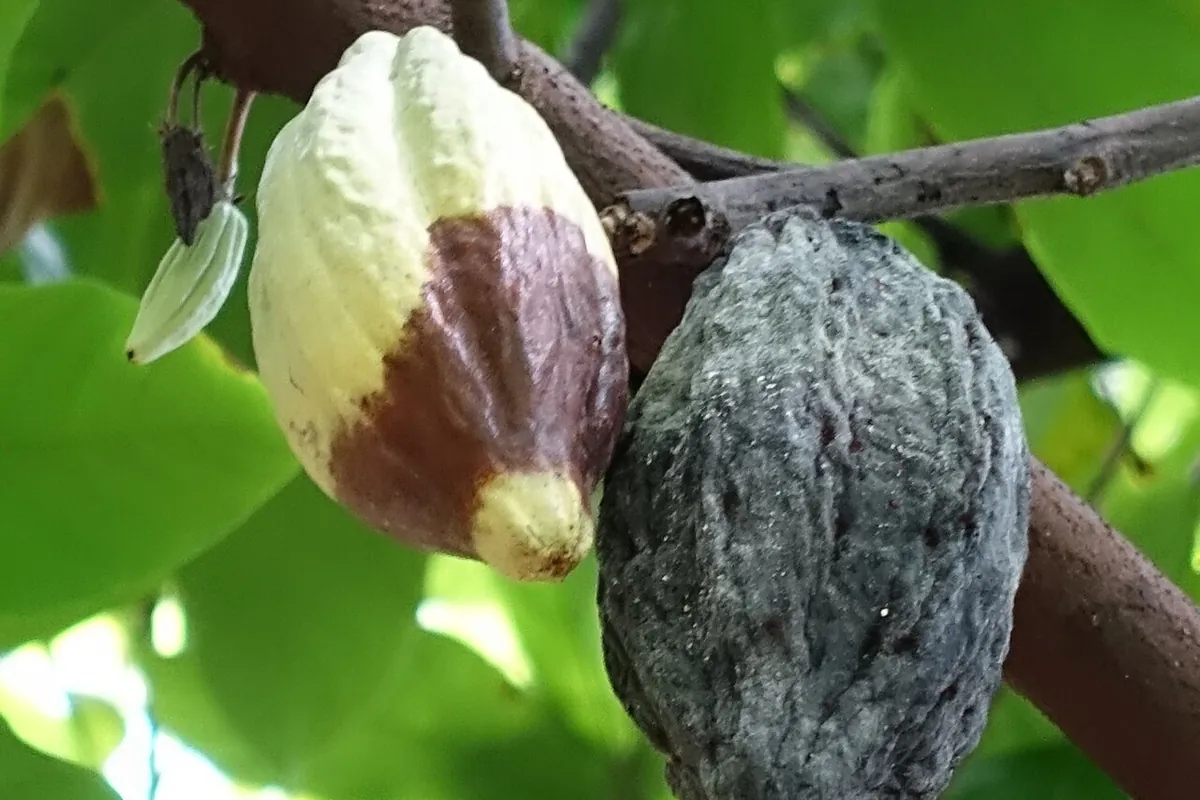
On a pod, look for small brown spots that spread and take on an oily brown look. Then they darken until the pod is black. White, leathery spore masses form on the surface. The pod dries into a mummy that hangs on the tree. On young leaves the disease starts at the tip and follows the veins. Cankers on the trunk and branches show red under the bark. Check for the oily spots and the white spores before you decide a pod is sick.
- Small brown, oily spots appear on the pod and spread quickly.
- The whole pod turns black, often within about ten days.
- White, leathery spore growth forms on the black surface.
- Pods dry into hard black mummies that stay on the tree.
- Young leaves brown from the tip along the veins, and trunk cankers show red under the bark.
Other pod rots and plain overripe pods can darken too. The oily brown spot that spreads fast and the white spore growth are the clues for black pod.
How Cacao Black Pod Hurts Your Crop
The Pacific Pests and Pathogens fact sheet says black pod causes yearly losses of 20 to 30 percent of pods. It also kills about 10 percent of trees by stem canker. Where rain is heavy and little fungicide is used, pod losses often pass 40 percent. Those numbers come from many countries, so your own loss will vary with weather, shade and sanitation.
In the Cagayan study, ripe pods were more easily infected than unripe ones. Symptoms came in 4 to 14 days. So pods you leave on the tree too long are at the highest risk.
How to Control Cacao Black Pod
- Open the canopy. Use light shade, space cacao at least 3 meters apart and prune water shoots so air moves and pods dry faster.
- Drain the field. Avoid heavy clay and wet spots, since the water mold loves standing water.
- Harvest ripe pods on time, and remove diseased pods every two to four weeks, more often in the main season.
- Take the shells away. Bury or burn diseased pods and empty shells away from the trees, instead of leaving them on the ground.
- Control rats, which chew infected pods and then healthy ones, and clean pruning tools between trees.
- Plant more tolerant types where you can. The fact sheet notes that Amelonado shows more resistance than Trinitario, so ask your agriculturist or DA what suits your area.
When a Spray Makes Sense
Sprays come after sanitation, not before. The fact sheet suggests copper sprays on the pods every two weeks in the wet season. It also suggests phosphorous acid injected into the trunk once or twice a year. Use only products registered for cacao by the FPA and follow the label.
| Active ingredient | FRAC group | On Philippine labels |
|---|---|---|
| Copper hydroxide | FRAC M01 | A first choice. 12 registered products name it on cacao. |
| Fosetyl aluminium | FRAC P07 | A first choice. 8 registered products name it on cacao. |
| Cuprous oxide | FRAC M01 | A first choice. 2 registered products name it on cacao. |
| Bordeaux mixture | FRAC M01 | A sound second choice. 3 registered products name it on cacao. |
Use only products registered with the Fertilizer and Pesticide Authority, and follow the label for the rate, the timing and the protective clothing. Switch to a different fungicide group next time, so the disease does not learn to survive it. Our guide to plant diseases explains how.
Keep It Out Next Season
- Prune to an open canopy, remove water shoots and low branches, and thin the shade so sun and wind dry the pods after rain.
- Space cacao at least 3 meters apart and avoid heavy clay and wet spots where water stands after rain.
- Harvest ripe pods on time and pick every black pod each round. Bury or burn sick pods and empty husks away from the trees.
- Mulch the bare ground under the trees. Rain splash from bare soil throws the water mold up onto the low pods.
- Keep rats and squirrels down, since they chew sick pods and carry the water mold to healthy ones, and clean knives between trees.
- Plant tolerant clones when you replant or rehabilitate old trees.
Natural Enemies and Biological Help
- Trichoderma sprays on pods have been tried abroad. They help a little but never replace picking the sick pods.
Not Sure What You Are Seeing?
Take a clear photo of the spots or the damage up close, then the whole plant, then ask Anee, the smart farm technician in anee.io, in Tagalog or English. Anee tells you what it most likely is and what to do at the age of your crop. You can also put your scouting days on the cropping calendar, so the team knows when to walk the field.
anee.io keeps your scouting, spraying and harvest on one calendar, and Anee answers when something looks wrong.
- Scouting days dated from each lot's own planting day
- Photos and notes for every lot
- Anee, the smart farm technician, in Tagalog or English
Questions Farmers Ask About Cacao Black Pod
How fast does cacao black pod spread?
Should I leave the diseased pods on the tree?
Is cacao black pod the same as coconut bud rot?
Stop the spread of Cacao Black Pod
With Libre + Anee, read the whole guide: how to tell it from look alikes, what makes it spread, and what to spray and when.
The account is free, no credit card.