Banana Bunchy Top: How to Spot It and Protect Your Banana Farm
Banana bunchy top is a virus disease that leaves banana plants short, stiff and bunched at the top, with narrow leaves and little or no fruit. It has no cure, so the work is to catch it early, remove sick plants and keep the aphids down. This guide shows you how.
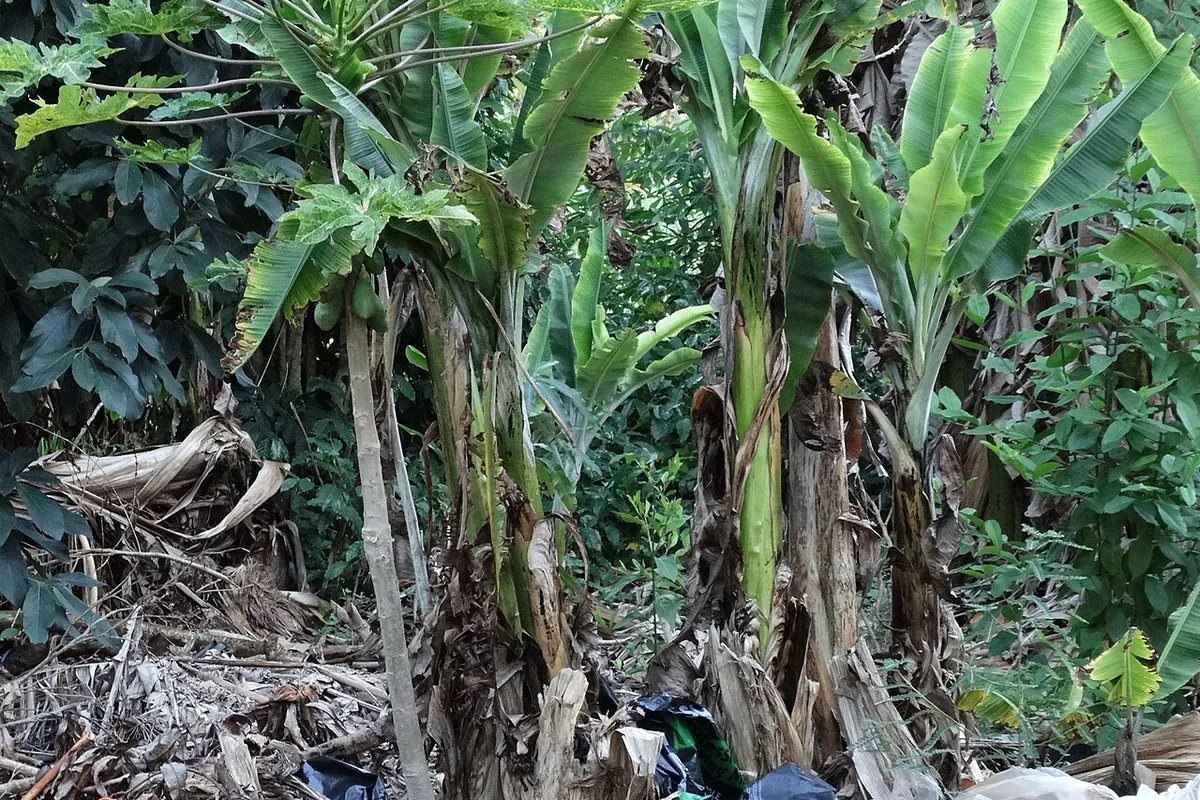
What Is Banana Bunchy Top?
Banana bunchy top is caused by the banana bunchy top virus, known as BBTV. No virus does more harm to banana here than bunchy top. It has no known cure. It has hit Lakatan, the most popular dessert banana, and it also attacks abaca. For years it has devastated abaca plantations in the Bicol Region.
The virus lives only in banana and its relatives. It reaches new plants through the banana aphid, so a farm with sick plants and many aphids can lose plants fast. If you grow banana in the Philippines, learn the signs now. A plant caught early costs far less than a mat that has already passed the virus on.
| Fact | Details |
|---|---|
| Name | Banana bunchy top |
| Scientific name | Banana bunchy top virus (BBTV) |
| Kind | Virus (spread by insects) |
| Crops it attacks | Banana, especially Lakatan, and abaca |
| Local names | None recorded |
| Where it strikes | Leaves and the whole plant |
| When it strikes | It can strike at any stage and in any season, and plants infected when young almost never bear a bunch. |
| How it spreads | A tiny black banana aphid carries the virus from sick plants to healthy ones as it feeds. The virus also travels in suckers and plantlets taken from sick mats, so planting material moves it over long distances. |
How to Identify Banana Bunchy Top
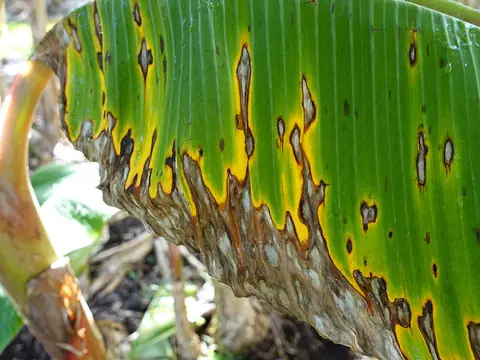
Look at the youngest leaves first. On a sick plant they come out narrow and shorter and shorter. They crowd together at the top so the plant looks bunched. The leaf edges roll upward and turn yellow. The best sign is on the minor veins. Look for short dark green dots and dashes, like Morse code. Hooks curve down near the edge of the midrib. Mineral shortage can also yellow leaves, but it does not make the dots and dashes. Wilt diseases such as moko disease change the whole plant color and ooze when cut, which bunchy top does not.
- New leaves come out narrow, short and stiff, and they crowd together at the top of the plant.
- Leaf edges roll upward and turn yellow.
- Dark green dots and dashes follow the small veins in a Morse code pattern, best seen when you hold the leaf to the light.
- Plants infected when young stay stunted and rarely make a bunch.
- Plants infected later may make a short, twisted bunch with poor fruit.
- Banana aphids feeding on the plants nearby point to a farm at risk.
Nutrient shortage, herbicide drift and other viruses can also stunt or yellow banana leaves. Only bunchy top leaves the short dark green streaks, like dots and dashes, along the small veins.
How Banana Bunchy Top Hurts Your Crop
A young plant that catches the virus rarely bears a fruit bunch, so each sick mat is a lost harvest. Later infections give distorted bunches. The Pacific Pests and Pathogens fact sheet describes one Pacific case. Poor choice of planting material led to 20 percent of plants with the disease in the first year. Major losses followed within two to three years.
There is no cure for a plant once it is infected. The control targets are the next plants, so every sick mat you remove early protects its neighbors.
How to Control Banana Bunchy Top
- Plant only clean material. Buy tissue cultured plantlets tested for BBTV. Never take suckers from a mat that looks bunched or comes from a sick farm.
- Walk the farm often and look at the youngest leaves. Mark any plant with Morse code dots or bunched leaves right away.
- Kill the aphids on a sick plant before you remove it. The Pacific fact sheet suggests spraying with soap, oil or kerosene first, so aphids do not fly off to healthy plants.
- Then destroy the whole plant and its suckers. In the Philippines, farmers use a bamboo stick dipped in herbicide, or dig the mat out.
- Watch young plantings closely, because a plant infected when young never bears a bunch.
- Ask your agriculturist about resistant lines. Philippine researchers are testing BBTV resistant Lakatan, but at this time every common banana variety can catch the virus.
Why No Spray Cures It
No spray cures a sick plant. Aphids pass the virus on in a few hours of feeding, so spraying alone does not stop the spread. Home gardens use soap or white oil on the aphids. Commercial growers in some countries have used the insecticides below. Use varies by country, so check the FPA registration and the label first.
| Active ingredient | IRAC group | On Philippine labels |
|---|---|---|
| Imidacloprid | IRAC 4A | A sound second choice. 5 registered products name it on banana. |
| Potassium salts of fatty acids | Not grouped | A sound second choice. 2 registered products name it on banana. |
| Beauveria bassiana | IRAC UNF | A sound second choice. 1 registered product names it on banana. |
| Clothianidin | IRAC 4A | A sound second choice. 1 registered product names it on banana. |
| Mineral oil | Not grouped | A sound second choice. 1 registered product names it on banana. |
| Malathion | IRAC 1B | Older or broad chemistry: a last resort. 40 registered products name it on banana. |
| Chlorpyrifos | IRAC 1B | Older or broad chemistry: a last resort. 15 registered products name it on banana. |
| Fenitrothion | IRAC 1B | Older or broad chemistry: a last resort. 4 registered products name it on banana. |
| Bifenthrin | IRAC 3A | Older or broad chemistry: a last resort. 1 registered product names it on banana. |
| Lambda cyhalothrin | IRAC 3A | Older or broad chemistry: a last resort. 1 registered product names it on banana. |
Use only products registered with the Fertilizer and Pesticide Authority, and follow the label for the rate, the timing and the protective clothing. Switch to a different fungicide group next time, so the disease does not learn to survive it. Our guide to plant diseases explains how.
Keep It Out Next Season
- Plant only virus tested tissue culture plantlets. Never take suckers from a bunched mat or from a farm where bunchy top is found.
- On a sick mat, kill the aphids first with soap, oil or a banana aphid spray, then inject herbicide or dig out the whole mat and all its suckers.
- Remove sick mats the same day you find them, then check the mats around them every week for the next months.
- Prune extra suckers and keep weeds down around the mats. The aphids gather on young suckers.
- Clear a hit area together with your neighbors, and replant only after every sick mat and stray sucker nearby is gone.
- Abaca growers: rogue sick plants the same way and raise abaca nurseries far from infected banana and abaca fields.
Natural Enemies and Biological Help
- Ladybird beetles, hoverfly larvae, lacewings and small wasps eat the aphids, but they never stop the virus. Spray only the sick mat to spare them.
- Soap or horticultural oil sprayed into the leaf throat and sheaths clears aphids from a sick mat before you remove it.
Not Sure What You Are Seeing?
Take a clear photo of the spots or the damage up close, then the whole plant, then ask Anee, the smart farm technician in anee.io, in Tagalog or English. Anee tells you what it most likely is and what to do at the age of your crop. You can also put your scouting days on the cropping calendar, so the team knows when to walk the field.
anee.io keeps your scouting, spraying and harvest on one calendar, and Anee answers when something looks wrong.
- Scouting days dated from each lot's own planting day
- Photos and notes for every lot
- Anee, the smart farm technician, in Tagalog or English
Questions Farmers Ask About Banana Bunchy Top
Can banana bunchy top be cured?
How does banana bunchy top spread?
Should I just cut the sick plant down?
Stop the spread of Banana Bunchy Top
With Libre + Anee, read the whole guide: how to tell it from look alikes, what makes it spread, and what to spray and when.
The account is free, no credit card.