Coconut Bud Rot: How to Spot It and Save Young Palms
Coconut bud rot is a disease of the growing point that makes the spear leaf droop and the crown rot with a bad smell. Young palms and nursery seedlings suffer most. This guide shows you the signs and the steps that keep your palms dry and clean.
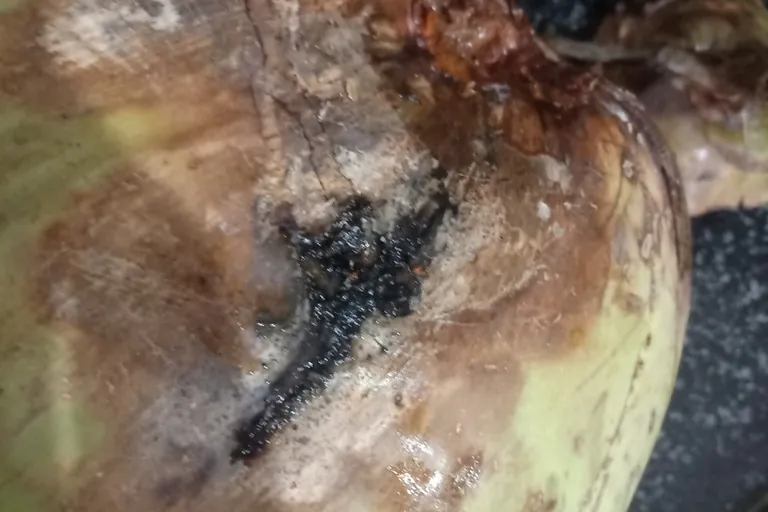
What Is Coconut Bud Rot?
Phytophthora palmivora causes coconut bud rot. It is not a true fungus but a water mold, which is why it loves wet places. The Pacific Pests and Pathogens fact sheet says it attacks coconut and other palms, such as betel nut and oil palm. The same organism also causes black pod of cacao and infects papaya.
Most hits are on palms under five years old, and seedling nurseries can be hit too, the fact sheet notes. It is a serious problem in Indonesia and Ivory Coast. We found no Philippine loss figures, so ask your PCA field office whether bud rot has been reported in your area. If you plant coconut, a young palm lost to bud rot is years of growth gone.
| Fact | Details |
|---|---|
| Name | Coconut bud rot |
| Scientific name | Phytophthora palmivora |
| Kind | Water mold (an oomycete) |
| Crops it attacks | Coconut, and other palms such as betel nut and oil palm |
| Local names | None recorded |
| Where it strikes | Leaves, the whole plant and fruits, pods and nuts |
| When it strikes | It strikes mostly young palms under five years old and seedlings, and it is worst in wet, humid weather and in low, badly drained plantings. |
| How it spreads | The water mold lives in the soil and in plant debris as thick walled spores. Wind, wind driven rain and perhaps insects carry the spores to the palm crown. |
How to Identify Coconut Bud Rot
By the time the signs show, the disease is far along. It shows first in the spear leaf, which droops or bends over and often turns a pale green. Then the outer leaves yellow from the tips of the fronds down and turn brown, and yellow brown sunken patches appear on the leaf stalks. The center of the crown rots and gives off a foul smell. Cadang cadang also yellows leaves, but a rotten, bad smelling bud points to bud rot instead. See cadang cadang to compare.
- The spear leaf wilts or bends over, and may turn light green.
- Outer leaves yellow from the tip down and then turn brown.
- Yellow to light brown sunken patches appear on the leaf stalks.
- The bud and inner leaves rot and smell bad, and the central leaves fall.
- Seedlings are killed, and nuts can fall early when the infection reaches the flower stalk.
Other problems can also wilt a spear leaf. A rotten crown with a foul smell points to bud rot.
How Coconut Bud Rot Hurts Your Crop
The rot destroys the bud and inner leaves, and the outer leaves later dry and drop. The Pacific Pests and Pathogens fact sheet says the disease is rare in Pacific islands but causes major problems in Indonesia and the Ivory Coast, and that seedling nursery outbreaks have occurred in Vanuatu. Because it takes young palms, the loss is in the years you waited, not only in the nuts.
We did not find a Philippine loss figure in the sources we read. Treat any number you hear with care.
How to Control Coconut Bud Rot
- Drain the planting. Standing water and wet, humid air help the disease, so open drains in low areas.
- Space palms well. The fact sheet suggests at least 10 meters apart, so air moves through the crowns and leaves dry faster.
- Remove and burn palms that have bud rot as soon as you find them, so spores do not spread.
- Keep nurseries clean and drained, and do not crowd seedlings. Pull out sick seedlings and burn them.
- Choose tolerant types. Polynesian Tall and Rennell Tall show good tolerance, and hybrids are less susceptible than pure dwarf types. Ask the PCA which planting material suits your area.
- If a palm is valuable, ask an agriculturist about the protective treatments in the next section.
When a Spray Makes Sense
Treatment comes last and works best before the bud is badly rotted. The fact sheet suggests removing infected fronds and then coating the crown, or giving trunk injections. Use only products registered for coconut by the FPA, and follow the label.
| Active ingredient | FRAC group | On Philippine labels |
|---|---|---|
| Fosetyl aluminium | FRAC P07 | A first choice. 9 registered products name it on coconut. |
Use only products registered with the Fertilizer and Pesticide Authority, and follow the label for the rate, the timing and the protective clothing. Switch to a different fungicide group next time, so the disease does not learn to survive it. Our guide to plant diseases explains how.
Keep It Out Next Season
- Open drains in low, wet parts of the farm and avoid planting coconut where water stands after rain.
- Do not crowd the palms, and clear trash around young palms, so air moves through the crowns and they dry after rain.
- Cut down and burn a palm with a rotten bud as soon as you find it, so its spores do not reach the neighbors.
- Keep nurseries clean and drained, do not crowd the seedlings, and pull out and burn any sick seedling.
- Keep rhinoceros beetle and palm weevil damage down. Their holes in the crown let water and the water mold in.
- Plant hybrids or tall types in wet areas. Pure dwarf types catch bud rot most easily.
Not Sure What You Are Seeing?
Take a clear photo of the spots or the damage up close, then the whole plant, then ask Anee, the smart farm technician in anee.io, in Tagalog or English. Anee tells you what it most likely is and what to do at the age of your crop. You can also put your scouting days on the cropping calendar, so the team knows when to walk the field.
anee.io keeps your scouting, spraying and harvest on one calendar, and Anee answers when something looks wrong.
- Scouting days dated from each lot's own planting day
- Photos and notes for every lot
- Anee, the smart farm technician, in Tagalog or English
Questions Farmers Ask About Coconut Bud Rot
Why do the youngest palms die of bud rot?
Can I save a palm with bud rot?
Is coconut bud rot the same as cadang cadang?
Stop the spread of Coconut Bud Rot
With Libre + Anee, read the whole guide: how to tell it from look alikes, what makes it spread, and what to spray and when.
The account is free, no credit card.