Mango Cecid Fly (Kurikong): Signs, Damage and Control
The mango cecid fly, known to farmers as kurikong, is a tiny mosquito like fly whose larvae bore into young mango fruit. It leaves circular brown, scab like spots, and bad outbreaks have cost growers most of the crop. This page shows when it strikes and what to do before the fruit sets.
What Is Mango Cecid Fly?
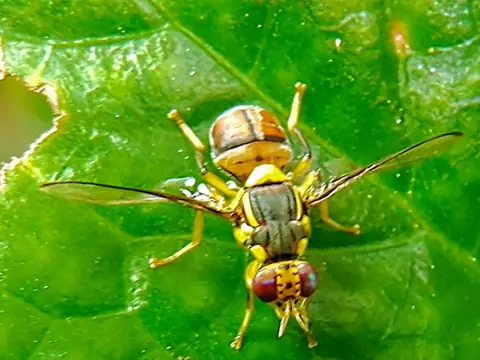
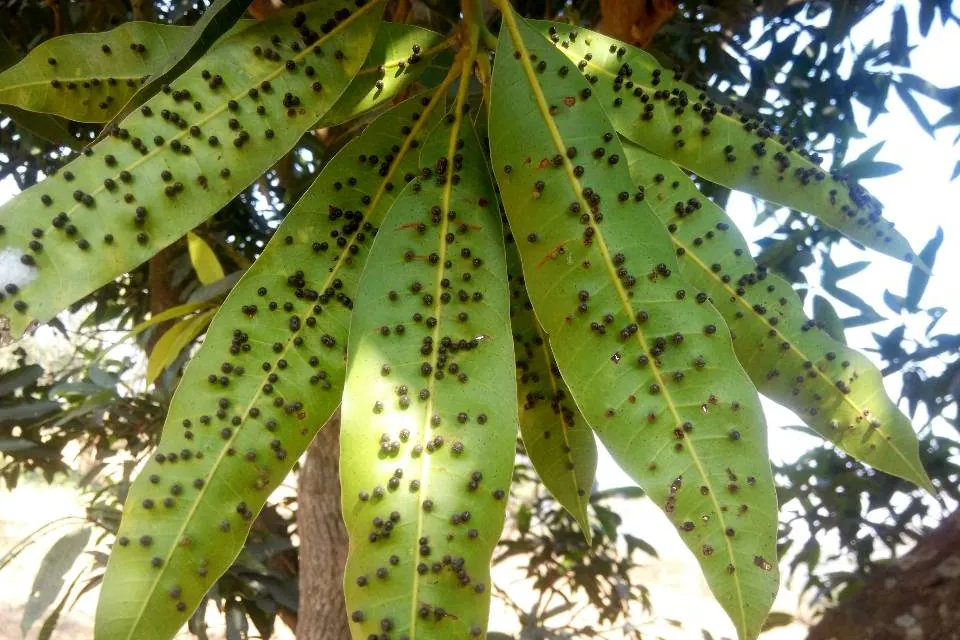
Kurikong is a small fly of the family Cecidomyiidae, and it looks like a mosquito. Three species affect Philippine mango. Procontarinia pustulata and Procontarinia robusta make galls on the leaves, and Procontarinia frugivora feeds on the fruit. The fly lays eggs on the fruit skin and on young leaves.
The pest was first documented in 1987, and it spread nationwide in 2010. It has come back in Central Luzon since then. Farmers have seen losses of 70 to 100 percent of the yield in bad outbreaks. So timing is everything, and the care starts at flower induction.
| Fact | Details |
|---|---|
| Name | Mango cecid fly (kurikong) |
| Scientific name | Procontarinia spp. |
| Kind | Insect |
| Crops it attacks | Mango |
| Local names | Farmers call the scab like spots on the fruit kurikong, and other names in use are buti, armalite and saksak walis. |
| Where it strikes | Leaves and fruits, pods and nuts |
| When it strikes | It attacks young fruit from about 32 days after flower induction, and the risky period runs to about 70 days. |
| Life cycle | The female lays eggs on the fruit skin and young leaves. The larva bores in and feeds for 4 to 5 days, then drops out to pupate in the soil. A full cycle takes only 10 to 12 days. |
How to Identify Mango Cecid Fly
Look at the fruit skin from about a month after flower induction. Kurikong shows as circular, brown to black, scab like spots scattered over the fruit. Early attacks make young fruit fall and rot. On the leaves, look for small galls or blisters. The spots are small and round, not the large sunken patches of anthracnose, and cutting the young fruit shows a tiny larva under the spot.
- Circular brown to black scab like spots are scattered over the fruit skin.
- Small holes show where the larvae bored into young fruit.
- Young fruit fall and rot after an early attack.
- Galls or blisters form on young mango leaves.
- A mosquito like fly sits on the young fruit and the new leaves.
Spots from anthracnose are larger and sunken. Kurikong makes small, round, scab like spots, and a larva sits under each.
How Mango Cecid Fly Hurts Your Crop
A study found that the fly infests fruit from 32 days after flower induction. The loss depends on how many fruits are marked. Farmers saw 70 to 100 percent loss in bad outbreaks, and a mark on the skin also hurts the sale price.
The same study found that pruning and clearing the undergrowth alone did not stop the infestation. So sanitation helps, but it is not enough alone. Plan the bagging and the spray calendar around the days after flower induction, and talk to your neighbors. A mango farm also faces the mango leafhopper at flowering.
How to Control Mango Cecid Fly
- Prune crowded branches after every harvest and keep the orchard clean.
- Mark the day of flower induction on your calendar. Count 32 days from that day, because the attack begins then.
- Bag the fruit early, at 45 to 55 days after flower induction.
- Check the fruit and young leaves each week for the first spots, and for adult flies.
- Remove and destroy badly marked and fallen fruit.
- Work with the neighbors in your area. A united effort is needed, or the fly keeps coming back.
When a Spray Makes Sense
If the first damage appears, a spray can help, but only as part of the whole plan. The groups below are the ones used for kurikong. Always read the label and observe the pre harvest interval.
| Active ingredient | IRAC group | On Philippine labels |
|---|---|---|
| Cyantraniliprole | IRAC 28 | A first choice. 1 registered product names it on mango. |
| Tetraniliprole | IRAC 28 | A first choice. 1 registered product names it on mango. |
| Lambda cyhalothrin plus thiamethoxam | IRAC 3A plus 4A | A sound second choice. 42 registered products name it on mango. |
| Abamectin | IRAC 6 | A sound second choice. 5 registered products name it on mango. |
| Clothianidin | IRAC 4A | A sound second choice. 4 registered products name it on mango. |
| Abamectin plus spiromesifen | IRAC 6 plus 23 | A sound second choice. 1 registered product names it on mango. |
| Bifenthrin plus imidacloprid | IRAC 3A plus 4A | Older or broad chemistry: a last resort. 3 registered products name it on mango. |
| Carbosulfan | IRAC 1A | Older or broad chemistry: a last resort. 2 registered products name it on mango. |
Resistance. Sprays given week after week with the same product breed flies that survive it. Rotate a diamide (28), abamectin (6) and a neonicotinoid or pyrethroid mix (4A, 3A) between sprays, and add a sticker so the spray stays on the fruit.
Use only products registered with the Fertilizer and Pesticide Authority, and follow the label for the rate, the timing and the protective clothing. Switch to a different insecticide group next time, so the pest does not learn to survive it. Our guide to integrated pest management explains how.
Keep It Out Next Season
- Write down the flower induction date. The fly starts on young fruit at about day 32 to 35, so plan checks and any spray around it.
- Bag the fruits once they are big enough to hold a bag, about 45 to 55 days after induction, to keep the egg laying females off.
- Gather and bury fallen fruits and spotted leaves. The larvae leave the spots and drop to the soil to pupate.
- Mulch or turn the soil under the canopy during fruiting so fewer larvae can pupate there.
- Prune crowded branches after every harvest so the crown dries fast and any spray reaches the fruit.
- Induce flowers together with your neighbors. An area that fruits at one time leaves the fly no young fruit later.
Natural Enemies and Biological Help
- Tiny parasitic wasps attack the larvae inside the spots. Weekly broad sprays wipe them out.
- Ants, spiders and ground beetles take larvae as they drop to the soil, so leave the litter under the trees unsprayed.
Not Sure What You Are Seeing?
Take a clear photo of the insect, the damage and the whole plant, then ask Anee, the smart farm technician in anee.io, in Tagalog or English. Anee tells you what it most likely is and what to do at the age of your crop. You can also put your scouting days on the cropping calendar, so the team knows when to walk the field.
anee.io keeps your scouting, spraying and harvest on one calendar, and Anee answers when something looks wrong.
- Scouting days dated from each lot's own planting day
- Photos and notes for every lot
- Anee, the smart farm technician, in Tagalog or English
Questions Farmers Ask About Mango Cecid Fly
What does kurikong mean?
When should I bag my mango fruit?
Does pruning alone stop it?
Stop Mango Cecid Fly (Kurikong) from costing you the harvest
With Libre + Anee, read the whole guide: how to be sure it is this pest, when it pays to act, and what to spray, by active ingredient.
The account is free, no credit card.