Oriental Fruit Fly: How to Spot It and Protect Your Mango and Papaya
The oriental fruit fly is a small fly whose maggots rot mango, papaya, guava and many other fruits from the inside. The fruit looks fine at first, then it drops or turns soft. This page shows how to spot the oriental fruit fly and how to keep it out of your harvest.
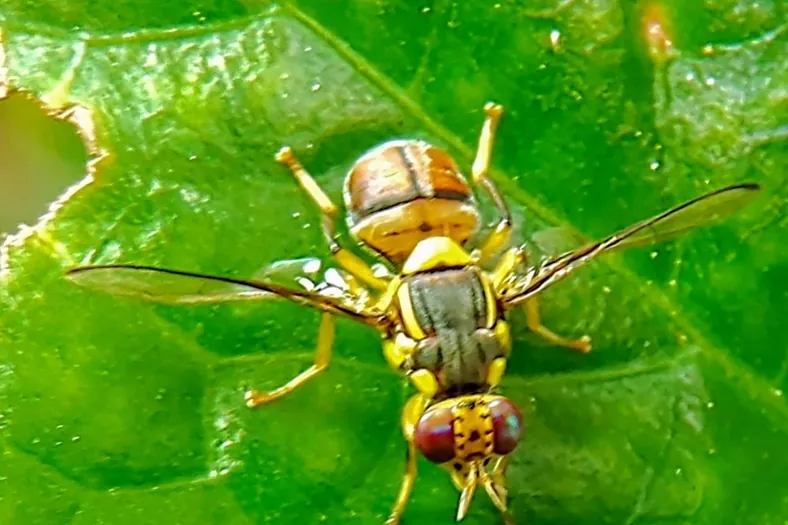
What Is Oriental Fruit Fly?
The oriental fruit fly (Bactrocera dorsalis) is native to Asia and is also called the papaya fruit fly. The Pacific Pests sheet calls it highly destructive, and UF reports that it attacks 478 kinds of fruits and vegetables, with avocado, mango and papaya most at risk. It also hits banana, citrus, capsicum, grapes and tomato, and wild plants such as Ficus and Terminalia.
The female also puts bacteria into the fruit when she lays eggs, and these bacteria rot the flesh. The fruit then drops early. A single female may lay 1,200 to 1,500 eggs in the field, according to UF. That is why a few flies can ruin a whole harvest. See also the melon fly, a close relative that attacks gourds.
| Fact | Details |
|---|---|
| Name | Oriental fruit fly |
| Scientific name | Bactrocera dorsalis |
| Kind | Insect |
| Crops it attacks | Mango, papaya, guava, avocado, banana, citrus and some vegetables such as tomato and pepper |
| Local names | None recorded |
| Where it strikes | Fruits, pods and nuts |
| When it strikes | It attacks as the fruit nears ripening, and most flies arrive during the fruiting season of mango, guava and papaya. |
| Life cycle | The female pierces ripe or ripening fruit and lays eggs inside. The eggs hatch in about a day, and the maggots feed for about 2 weeks. Then they drop to the soil to pupate. Egg to adult takes about 16 days in good conditions. |
How to Identify Oriental Fruit Fly
Look for small egg laying marks, called stings, on the fruit skin. Cut a fruit that has begun to soften and you will find creamy white maggots, about 10 mm when full grown. The adult fly is about 7 mm long. It has a black thorax with two yellow stripes, a brown to yellow abdomen with a T shaped mark, and clear wings with a brown band along the front edge. The mango cecid fly and the mango pulp weevil damage mango too, so check what you find inside the fruit.
- Small sting marks on the fruit skin where the female laid eggs.
- Fruit that softens, rots or drops before it is ripe.
- Creamy white maggots inside the flesh.
- Fruit that ripens too early or goes soft where the eggs were laid.
- Many flies on fallen fruit under the tree.
- Fruit that looks sound at first but rots from the inside within days.
The melon fly is similar, but it stings gourds such as ampalaya and upo. Several other fruit flies also look alike, so for a sure name, bring a few flies to your agricultural technician.
How Oriental Fruit Fly Hurts Your Crop
The Pacific Pests sheet describes premature fruit drop within days of egg laying, and heavy yield losses in mango and guava in Thailand. When the fly entered Australia in 1995, it took 4 years and 33 million dollars to wipe it out. The fly can also close export markets, because its presence can limit export opportunities.
We found no Philippine action threshold in the sources we read. The usual rule is to trap and watch from the time the fruit is half grown, and to act as soon as the traps catch flies.
How to Control Oriental Fruit Fly
- Hang traps with methyl eugenol in the shade of the trees to watch the males. The lure only monitors and draws the males, so it does not protect the fruit by itself.
- Pick up and destroy every fallen and overripe fruit each few days. Bury it deep or seal it in a plastic bag in the sun, so the maggots cannot pupate in the soil.
- Bag the fruit at least 6 weeks before harvest, as the Pacific Pests sheet suggests, so the females cannot reach it.
- Harvest at the mature green stage when your buyer allows it. The flies prefer ripe fruit.
- Prune the canopy to improve air flow, and keep wild host plants such as guava and Ficus away from the orchard edge.
- Work with your neighbors, because the flies travel from tree to tree. See the integrated pest management guide.
When a Spray Makes Sense
Pacific Pests prefers protein bait sprays to broad cover sprays. The bait draws the flies, and the insecticide in it kills them. Apply it 5 to 8 weeks before harvest to a few spots of the canopy, not to the fruit. Follow the FPA registered label and the waiting time. Older sprays such as malathion and pyrethroids caused resistance and harmed the environment.
| Active ingredient | IRAC group | On Philippine labels |
|---|---|---|
| Spinosad | IRAC 5 | A first choice. 2 registered products name it on mango. |
| Cypermethrin | IRAC 3A | Older or broad chemistry: a last resort. 100 registered products name it on mango. |
| Lambda cyhalothrin plus thiamethoxam | IRAC 3A plus 4A | Older or broad chemistry: a last resort. 40 registered products name it on mango. |
| Carbaryl | IRAC 1A | Older or broad chemistry: a last resort. 27 registered products name it on mango. |
| Fenthion | IRAC 1B | Older or broad chemistry: a last resort. 2 registered products name it on mango. |
| Carbosulfan | IRAC 1A | Older or broad chemistry: a last resort. 1 registered product names it on mango. |
Resistance. In Asia the oriental fruit fly resists organophosphates such as malathion and trichlorfon and pyrethroids such as beta cypermethrin, and spinosad resistance has shown up where bait was used alone for years. Lean on sanitation, bagging and male traps so bait sprays stay few, and swap the bait's insecticide group when a choice is registered.
Use only products registered with the Fertilizer and Pesticide Authority, and follow the label for the rate, the timing and the protective clothing. Switch to a different insecticide group next time, so the pest does not learn to survive it. Our guide to integrated pest management explains how.
Keep It Out Next Season
- Bag the fruits at least 6 weeks before harvest so the females cannot sting them.
- Pick up fallen and overripe fruit every 2 to 3 days. Bury it deep or seal it in a plastic bag in the sun.
- Harvest at the mature green stage when the buyer allows. The flies prefer soft ripe fruit.
- Kill the males: blocks or wicks with methyl eugenol and a killing agent, spread over the whole area, cut mating.
- Clear wild host trees and unpicked fruit near the orchard, and work with neighbors, since the flies travel between farms.
- Prune the canopy open. Bagging, bait spots and checks are easier on low, open trees.
Natural Enemies and Biological Help
- Native parasitic wasps attack the eggs and maggots in the fruit. They survive where cover sprays are few.
- Weaver ants (hantik) patrolling the canopy cut fruit fly stings on mango. Leave their nests on the tree.
- Ants, beetles and chickens eat the maggots and pupae in the soil under the trees.
Not Sure What You Are Seeing?
Take a clear photo of the insect, the damage and the whole plant, then ask Anee, the smart farm technician in anee.io, in Tagalog or English. Anee tells you what it most likely is and what to do at the age of your crop. You can also put your scouting days on the cropping calendar, so the team knows when to walk the field.
anee.io keeps your scouting, spraying and harvest on one calendar, and Anee answers when something looks wrong.
- Scouting days dated from each lot's own planting day
- Photos and notes for every lot
- Anee, the smart farm technician, in Tagalog or English
Questions Farmers Ask About Oriental Fruit Fly
Why do my mangoes rot from inside even though the skin looks fine?
Does a methyl eugenol trap protect my fruit?
When should I put out the bait spray?
Stop Oriental Fruit Fly from costing you the harvest
With Libre + Anee, read the whole guide: how to be sure it is this pest, when it pays to act, and what to spray, by active ingredient.
The account is free, no credit card.