Red Palm Weevil: Hidden Damage in Coconut and How to Stop It
The red palm weevil, Rhynchophorus ferrugineus, is a large reddish weevil whose grubs tunnel inside the trunk and crown of the palm. The damage stays hidden for a long time, and a hollowed palm can collapse. This page shows the early signs and the farm practices that keep it out.
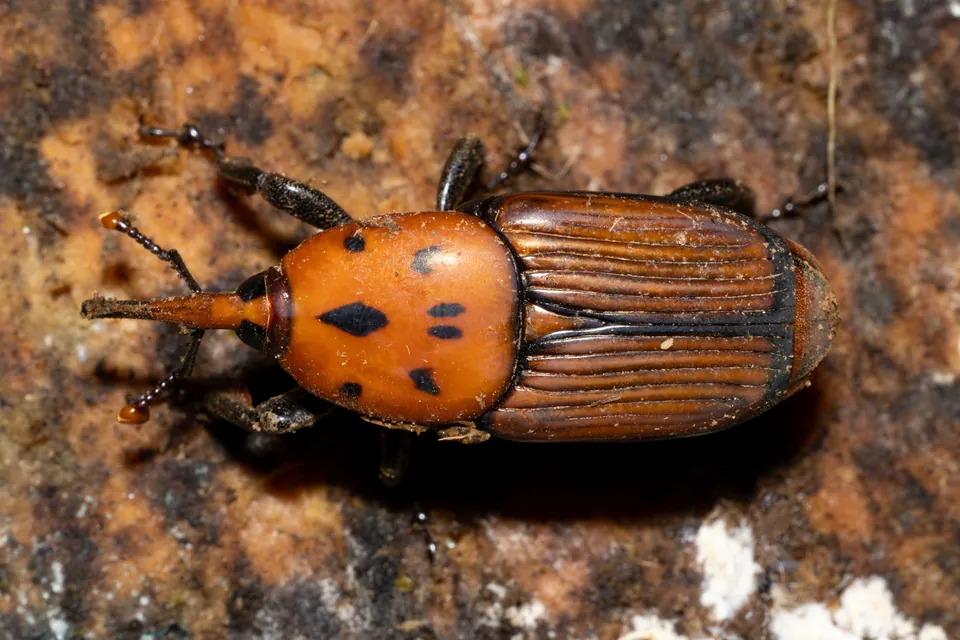
What Is Red Palm Weevil?
The red palm weevil is a large beetle with a long snout. Its grubs have no legs, a white body and a brown head, and they reach 50 mm. They chew through the inside of the palm, leaving tunnels as long as a meter. The weevil comes from southern Asia and Melanesia, and the Philippines is one of the countries it lives in.
It attacks coconut and oil palm, betel nut, sago and date palms, and many palms grown for show. Palms can stand a lot of damage inside before any sign shows, and young palms under about 20 to 25 years are the most open to attack. So by the time the crown wilts, the trunk may already be hollow.
| Fact | Details |
|---|---|
| Name | Red palm weevil |
| Scientific name | Rhynchophorus ferrugineus |
| Kind | Insect |
| Crops it attacks | Coconut |
| Local names | None recorded |
| Where it strikes | Stems and tillers and the whole plant |
| When it strikes | It attacks palms at any time of the year, and it enters through wounds from pruning, harvesting and other cuts in the trunk and the leaf bases. |
| Life cycle | The female lays 200 to 300 eggs in holes in the trunk or in the leaf stalks. The eggs hatch in a few days, and the grubs tunnel inside the palm for about 36 to 78 days. The full life cycle takes about 4 months. |
How to Identify Red Palm Weevil
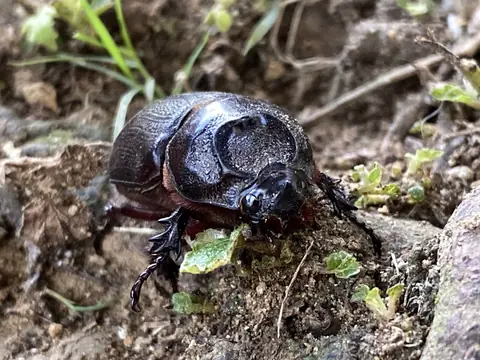
Look closely at the trunk, the base of the fronds and the crown. Tunnel holes with frass, a brown chewed paste, point to the weevil. Leaves with straight, cut looking edges instead of pointed tips are another sign. This weevil works inside the trunk. The coconut rhinoceros beetle bores into the crown and leaves V shaped cuts in the leaves, so that is how you tell them apart.
- Holes appear at the base of the fronds or in the trunk.
- Frass sits at the entrance of the tunnels.
- Leaflets show straight edges instead of pointed tips.
- Leaves wilt and die, especially in the crown.
- A badly attacked palm collapses because the inside is hollow.
Wilting crowns can come from coconut bud rot or from the rhinoceros beetle. Frass and tunnels in the trunk or the leaf bases point to the weevil.
How Red Palm Weevil Hurts Your Crop
The damage is inside, so farmers often see it late. Larvae can excavate tunnels up to 1 meter long, which weakens the palm until it dies. A pest that hides this well is cheaper to prevent than to cure.
A female lays 200 to 300 eggs, and the cycle takes only about 4 months. Numbers can build up fast inside one grove. Fresh wounds are the main door, so how you prune and harvest matters a lot.
The damage is not even everywhere. In India, CPCRI says it is serious only in certain pockets, mainly where the water table is high or where leaf rot and bud rot already weaken the palms. For large plantations, an Indian review of area wide programs assumes about 1 percent infested palms as the point to start action, and in small gardens farmers act on a single infested palm.
How to Control Red Palm Weevil
- Remove and bury or destroy infested palms and trunks so the grubs cannot finish their life cycle. Cut and burn dead palms that still hold the pest.
- Avoid cuts and injuries on the palm. When you cut green leaves, cut them about 120 cm from the base, and do not cut steps in the trunk for climbing, because the female lays eggs in cut and damaged tissue.
- Clean the crown now and then so that rotting debris does not collect in the leaf axils.
- Trap the adults. A coconut log split lengthwise, with fermented toddy on the cut face, attracts the weevils, and you collect and kill them each morning. A pheromone lure in a bucket trap baited with sugarcane also catches adults and tells you how many are around.
- Treat palms with bud rot or leaf rot early, because weakened palms attract the weevil. Leave the natural enemies alone, since the assassin bug and earwigs eat the eggs and grubs.
- Check palms often, because early treatment works better than late treatment, and one method alone seldom works when neighbors do nothing.
When a Spray Makes Sense
Trunk injection with fipronil or imidacloprid has been tried, but the Pacific fact sheet calls it uneconomical for coconut. Use a chemical only as advised or a technician, and follow the label and the FPA registration.
| Active ingredient | IRAC group | On Philippine labels |
|---|---|---|
| Imidacloprid | IRAC 4A | No product sold here names it on its label yet. Ask your technician before you use it. |
These are on Philippine labels for it, but we leave them off the list above, for the reasons below.
- Fipronil: Very toxic to bees, fish and the earwigs that eat weevil grubs, and no label names this weevil.
Use only products registered with the Fertilizer and Pesticide Authority, and follow the label for the rate, the timing and the protective clothing. Switch to a different insecticide group next time, so the pest does not learn to survive it. Our guide to integrated pest management explains how.
Keep It Out Next Season
- Do not wound the trunk: cut no climbing steps, and cut green fronds about 120 cm from the trunk.
- Seal any trunk wound or cut at once with tar or mud. The females lay eggs in fresh wounds.
- Cut down palms past saving, split them and burn or bury them, so the grubs inside cannot become adults.
- Treat bud rot and rhinoceros beetle holes early. The weevil lays eggs in the wounds and rotting tissue they leave.
- Trap adults with a pheromone lure in a bucket baited with sugarcane, or a split log with toddy, and kill the catch each week.
- Clean rotting debris out of the leaf axils and crown now and then.
Natural Enemies and Biological Help
- Earwigs and assassin bugs eat the eggs and young grubs. Avoid spraying the crowns.
- Weevils caught in traps can be killed with Beauveria or Metarhizium fungus instead of poison.
Not Sure What You Are Seeing?
Take a clear photo of the insect, the damage and the whole plant, then ask Anee, the smart farm technician in anee.io, in Tagalog or English. Anee tells you what it most likely is and what to do at the age of your crop. You can also put your scouting days on the cropping calendar, so the team knows when to walk the field.
anee.io keeps your scouting, spraying and harvest on one calendar, and Anee answers when something looks wrong.
- Scouting days dated from each lot's own planting day
- Photos and notes for every lot
- Anee, the smart farm technician, in Tagalog or English
Questions Farmers Ask About Red Palm Weevil
Why do I see no damage until the palm collapses?
How does the weevil get into the palm?
What can I do for a badly infested palm?
Stop Red Palm Weevil from costing you the harvest
With Libre + Anee, read the whole guide: how to be sure it is this pest, when it pays to act, and what to spray, by active ingredient.
The account is free, no credit card.