Coconut Rhinoceros Beetle: Signs, Damage and How to Control It
The coconut rhinoceros beetle, Oryctes rhinoceros, is a jet black beetle with a horn that bores into the crown of coconut palms. It cuts the growing point, leaves V shaped cuts in the leaves and can kill young palms. This page covers how to spot it, where it breeds and how to control it without chemicals.
What Is Coconut Rhinoceros Beetle?
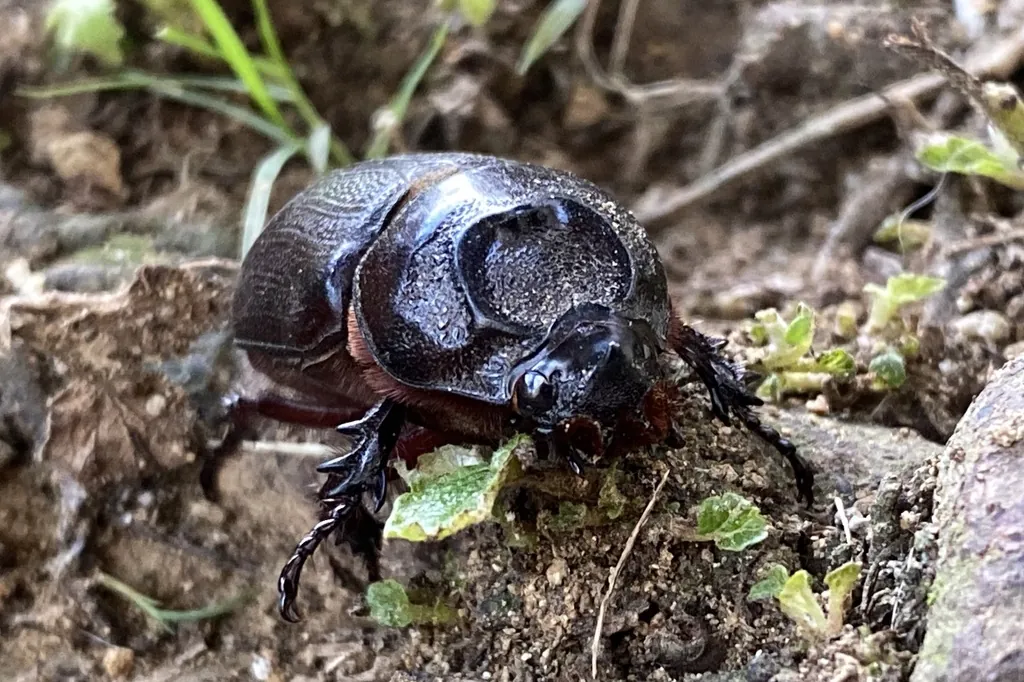
The adult beetle is shiny black, as long as 40 mm, and carries an easy to see horn. A female has a shorter horn than the male. Adults fly to the palm at night, bore into the crown and feed on the sap. The grubs do no harm to living palms, because they grow in rotting organic matter.
The beetle is one of the main pests of coconut, and it also attacks oil palm and other palms across Asia and the Pacific. Because the grubs live in dead trunks and heaps of compost, the farm itself makes the breeding ground. That is why cleaning the farm is the first control.
| Fact | Details |
|---|---|
| Name | Coconut rhinoceros beetle |
| Scientific name | Oryctes rhinoceros |
| Kind | Insect |
| Crops it attacks | Coconut |
| Local names | None recorded |
| Where it strikes | Leaves and the whole plant |
| When it strikes | It attacks all year, and numbers rise wherever dead palms, rotting trunks and compost heaps are left in the farm. |
| Life cycle | Adults feed in the crown and breed in dead and rotting plant material. An egg takes 8 to 12 days to hatch, the grub stage lasts 80 to 200 days, and the pupa needs 25 to 40 days. |
How to Identify Coconut Rhinoceros Beetle
Look at the leaves as they open. The beetle chews into the folded leaf, so the open leaflets show V shaped or wedge shaped cuts. Fresh chewed fiber may stick out of a hole at the base of a frond. Cut a rotting log or open a compost heap, and you may find fat, curled, cream colored grubs. Do not confuse the cuts with typhoon damage, which tears leaflets in ragged strips and not in neat wedges.
- Leaflets show V shaped or wedge shaped cuts when the frond opens.
- A hole with chewed fiber sits at the base of a frond or in the crown.
- Young palms stop making new leaves when the growing point is damaged.
- Fat curled grubs live in rotting trunks, sawdust, manure and compost.
- Heavily attacked palms look thin and may die.
Typhoon damage tears the leaflets in ragged strips. The beetle leaves neat V shaped cuts. The red palm weevil tunnels inside the trunk, and the beetle only bores into the crown.
How Coconut Rhinoceros Beetle Hurts Your Crop
Adults bore into the crown. When they cut the growing point, the palm cannot make new leaves, and it can die. Young palms suffer most. Damaged leaves also give a way in for other problems, such as coconut bud rot.
A female lives about 9 months and lays roughly 50 eggs, so numbers climb fast where breeding sites are plentiful. Over the last decade the virus and the fungus have worked well together with pheromone traps and clean farm practice. Even so, a newer biotype of the beetle in the Pacific has resisted the virus, so the Philippines needs steady monitoring.
How to Control Coconut Rhinoceros Beetle
- Remove and destroy breeding sites first. Cut up and remove fallen palms and dead standing palms, and clear rotting stumps and sawdust.
- Cover heaps of compost, manure or rotting plant material with a fine net so the beetles cannot lay eggs in them.
- Check the pile before you throw anything away. Collect the grubs, pupae and adults by hand and destroy them.
- Hang pheromone traps. Space them about 1 to 2 km apart for monitoring and pick up the catch often.
- Use the Metarhizium anisopliae fungus, developed from Philippine isolates. Apply it to breeding sites or to beetles, so the infection spreads inside the pile.
- Ask your PCA office about the Oryctes nudivirus, a virus that infects grubs and adults and has been used as a biological control agent.
When a Spray Makes Sense
Spraying is not recommended on coconut, because the crown is high and the cost is too great for the return. A Pacific fact sheet says synthetic pyrethroids may be used on young palms if nothing else works. Follow the label and the FPA registration.
Use only products registered with the Fertilizer and Pesticide Authority, and follow the label for the rate, the timing and the protective clothing. Switch to a different insecticide group next time, so the pest does not learn to survive it. Our guide to integrated pest management explains how.
Keep It Out Next Season
- Cut fallen and dead palms and old stumps into pieces, then split, burn or bury them. Rotting trunks are where the grubs grow.
- Turn, spread or use up heaps of compost, manure, sawdust and coconut husks, or cover them with fine net so beetles cannot lay eggs.
- Grow a creeping cover crop over cut logs and stumps at replanting. Shaded logs draw far fewer beetles.
- Pull the beetle out of its hole in the crown with a hooked wire and kill it, then fill the hole with sand.
- Hang pheromone traps 1 to 2 km apart to watch numbers, and empty them often. More traps near breeding sites catch more beetles.
Natural Enemies and Biological Help
- Spread the green muscardine fungus (Metarhizium) into breeding heaps and logs. Grubs that pick it up die and pass it on.
- Where it is offered, release beetles carrying the Oryctes virus. It spreads in the breeding sites and keeps numbers down for years.
Not Sure What You Are Seeing?
Take a clear photo of the insect, the damage and the whole plant, then ask Anee, the smart farm technician in anee.io, in Tagalog or English. Anee tells you what it most likely is and what to do at the age of your crop. You can also put your scouting days on the cropping calendar, so the team knows when to walk the field.
anee.io keeps your scouting, spraying and harvest on one calendar, and Anee answers when something looks wrong.
- Scouting days dated from each lot's own planting day
- Photos and notes for every lot
- Anee, the smart farm technician, in Tagalog or English
Questions Farmers Ask About Coconut Rhinoceros Beetle
Where does the coconut rhinoceros beetle breed?
What does its damage look like?
Does the Metarhizium fungus really help?
Should I spray the palms?
Stop Coconut Rhinoceros Beetle from costing you the harvest
With Libre + Anee, read the whole guide: how to be sure it is this pest, when it pays to act, and what to spray, by active ingredient.
The account is free, no credit card.