Mealybug: How to Spot the White Cotton and Stop It
Mealybug is a small, soft, sap sucking insect that hides under a coat of white wax on leaves, stems and fruit. The plant turns yellow, stunts and drops its fruit. This page shows how to spot mealybug early and how to control it with clean farming and natural enemies.
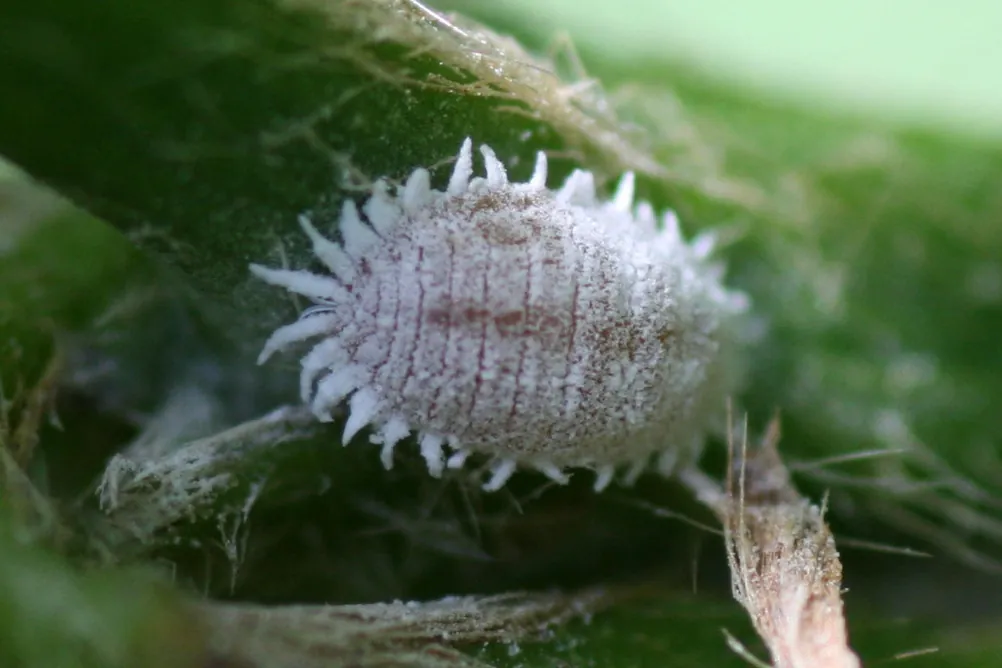
What Is Mealybug?
Mealybugs belong to the family Pseudococcidae. Two species matter here. The papaya mealybug (Paracoccus marginatus) attacks more than 55 plants in over 25 genera. Among them are papaya, citrus, mango, tomato, eggplant, pepper, beans, sweet potato and cassava. Citrus mealybug (Planococcus citri) mostly attacks citrus. But people have collected it from at least 27 plant families, including pineapple, mango and banana.
The University of Florida says the papaya mealybug is hard to kill. It also hides and wears a waxy coat. PestNet adds that in Thailand natural enemies brought the papaya mealybug down to low levels by 2012. So helpers may already work in your area.
| Fact | Details |
|---|---|
| Name | Mealybug |
| Scientific name | Paracoccus marginatus, Planococcus citri |
| Kind | Insect |
| Crops it attacks | Papaya, citrus, mango, banana, pineapple, eggplant, cassava and many ornamentals |
| Local names | None recorded |
| Where it strikes | Leaves, stems and tillers and fruits, pods and nuts |
| When it strikes | It can attack at any stage, and colonies build up on new growth and fruit, especially in dry weather when natural enemies are few. |
| Life cycle | Females lay eggs in a cottony or waxy sac. The crawlers hatch in about 10 days and move onto new growth. A female papaya mealybug matures in about a month, and a citrus mealybug in 6 to 10 weeks. |
How to Identify Mealybug
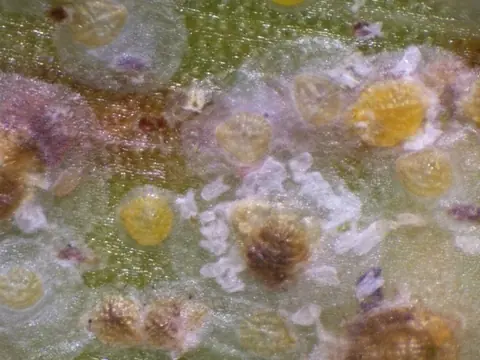
Look for white, waxy, cottony masses on the underside of leaves and on stems. Next check leaf joints and the area under the fruit stalk. The female papaya mealybug is yellow, about 2.2 mm long. It also has a white waxy coat and short waxy filaments around the edge. The citrus mealybug is 3 to 4.5 mm long and white to light brown. Then it lays eggs in white cotton like sacs. Ants running up the plant often point to mealybugs, because the ants feed on the honeydew. Scale insects look like hard bumps, not like white cotton.
- White, waxy or cottony masses on leaves, stems, fruit stalks and fruit.
- Yellow, wilted and distorted leaves, and stunted growth.
- Sticky honeydew on the plant, with black sooty mold on it.
- Ants moving up and down the stem.
- Early leaf and fruit drop.
- Fruits covered with wax, which cannot be sold.
Scale insects are hard, flat or domed bumps, while mealybugs are soft and covered with white wax. For other waxy pests, see cocolisap on coconut and the banana aphid.
How Mealybug Hurts Your Crop
UF reports that the papaya mealybug injects a toxic substance. It causes yellowing, stunting, leaf deformation and early drop of leaves and fruit. Heavy colonies leave a waxy build up that can make fruit unsellable. The citrus mealybug causes similar yellowing and leaf drop, and its honeydew feeds sooty mold. Feeding under fruit buttons causes crop loss.
We found no Philippine action threshold in the sources we read. In practice, treat the first colonies as soon as you see them. A few females grow into hundreds of crawlers quickly. UF reports that one female papaya mealybug lays 100 to 600 eggs.
How to Control Mealybug
- Inspect the plants every week, especially the new growth, the leaf joints and the fruit stalks. Cut off and destroy infested shoots and fruits in a sealed bag.
- Wash small infestations off with a strong spray of water. UF says high pressure water is moderately effective against the citrus mealybug.
- Use clean planting material. Check the seedlings and cuttings before you bring them to the farm, and clean tools and shoes after working in an infested block.
- Keep ants down, because they guard the mealybugs from predators. Keep weeds, which also host mealybugs, off the farm.
- Protect the natural enemies. In trials in the Dominican Republic and Puerto Rico, wasps such as Acerophagus papayae cut papaya mealybug numbers by 97 to 99.7 percent. Lady beetles and lacewings also feed on mealybugs.
- Keep sprays to a minimum once helpers are working, because the wasps are easy to kill. See the integrated pest management guide.
When a Spray Makes Sense
Sprays work poorly, because the waxy coat and the hiding places shield the insects. Use them only on heavy infestations, and aim at the new growth and the underside of the leaves. Follow the FPA registered label and the waiting time. Spraying also harms the wasps and the predators that do most of the work.
| Active ingredient | IRAC group | On Philippine labels |
|---|---|---|
| Buprofezin | IRAC 16 | A sound second choice. 8 registered products name it on banana. |
| Imidacloprid | IRAC 4A | A sound second choice. Registered products name it on citrus, banana, calamansi and pomelo. |
| Bifenthrin plus buprofezin | IRAC 3A plus 16 | A sound second choice. 2 registered products name it on banana. |
| Mineral oil | Not grouped | A sound second choice. 2 registered products name it on banana. |
| Potassium salts of fatty acids | Not grouped | A sound second choice. 2 registered products name it on banana. |
| Azadirachtin | IRAC UN | A sound second choice. 1 registered product names it on banana. |
| Beauveria bassiana | IRAC UNF | A sound second choice. 1 registered product names it on banana. |
| Clothianidin | IRAC 4A | A sound second choice. 1 registered product names it on banana. |
| Malathion | IRAC 1B | Older or broad chemistry: a last resort. Registered products name it on papaya, citrus, banana, mango and more. |
| Diazinon | IRAC 1B | Older or broad chemistry: a last resort. 21 registered products name it on banana. |
The table stops at the ten best. 8 more on Philippine labels for it are older or broad chemistry. The Pest Finder in anee.io lists every one, crop by crop, with the products sold here.
These are on Philippine labels for it, but we leave them off the list above, for the reasons below.
- Carbaryl: Barely touches waxy mealybugs and kills their wasps and lady beetles, so outbreaks follow.
Resistance. Citrus mealybug and other mealybugs have resisted organophosphates and pyrethroids in other countries. Rotate spirotetramat (23), buprofezin (16) and a neonicotinoid (4A) with oils or soaps, and keep broad sprays out.
Use only products registered with the Fertilizer and Pesticide Authority, and follow the label for the rate, the timing and the protective clothing. Switch to a different insecticide group next time, so the pest does not learn to survive it. Our guide to integrated pest management explains how.
Keep It Out Next Season
- Check seedlings, cuttings and fruits from other farms before they come in. Mealybugs ride on planting material.
- Cut off and bag heavily infested shoots and fruits, and wash small colonies off with a strong jet of water.
- Keep ants off with sticky bands on the trunk and by breaking their nests. Ants guard mealybugs from their enemies.
- Weed the farm and its edges. Many weeds carry mealybugs between seasons.
- Do not overfeed with nitrogen. Soft new growth breeds more mealybugs.
- Clean tools, sacks and shoes after working in an infested block.
Natural Enemies and Biological Help
- Tiny wasps such as Acerophagus papayae can crash papaya mealybug numbers. Brown puffed mealybugs mean they are working.
- Lady beetles (including the mealybug destroyer), lacewings and hoverfly larvae eat mealybugs. Avoid broad sprays.
- Beauveria bassiana or Lecanicillium sprays infect mealybugs in humid weather.
Not Sure What You Are Seeing?
Take a clear photo of the insect, the damage and the whole plant, then ask Anee, the smart farm technician in anee.io, in Tagalog or English. Anee tells you what it most likely is and what to do at the age of your crop. You can also put your scouting days on the cropping calendar, so the team knows when to walk the field.
anee.io keeps your scouting, spraying and harvest on one calendar, and Anee answers when something looks wrong.
- Scouting days dated from each lot's own planting day
- Photos and notes for every lot
- Anee, the smart farm technician, in Tagalog or English
Questions Farmers Ask About Mealybug
Why is there white cotton on my papaya?
Why do ants climb my fruit trees?
Do sprays work on mealybugs?
Stop Mealybug from costing you the harvest
With Libre + Anee, read the whole guide: how to be sure it is this pest, when it pays to act, and what to spray, by active ingredient.
The account is free, no credit card.