Coconut Leaf Beetle (Brontispa): Signs, Damage and Control
The coconut leaf beetle, Brontispa longissima, hides in the unopened spear leaf and chews it into brown streaks. As the leaf opens, the damage turns into grey and scorched blotches. This page shows how to recognize it and why natural enemies work better than repeated spraying.
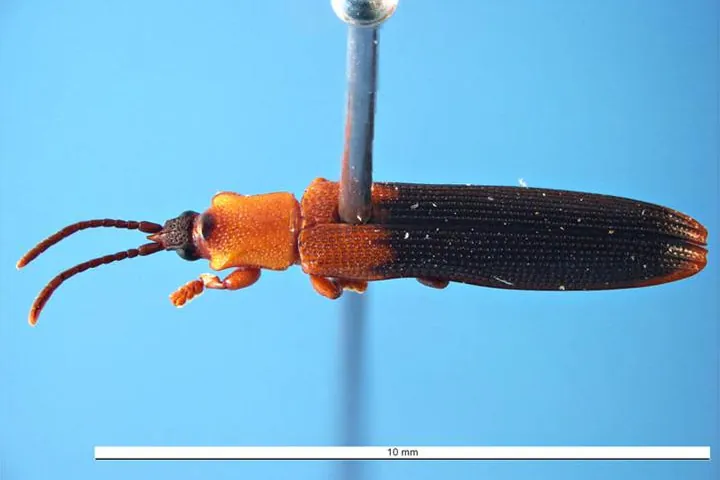
What Is Coconut Leaf Beetle?
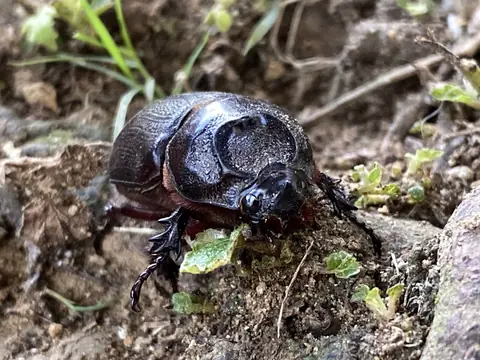
Brontispa is a small, narrow beetle, only 8 to 10 mm long. The adults and the larvae both feed on the soft tissue of the youngest leaf, still folded in the center of the palm. Coconut is the main host. It also attacks betel nut, sago palm, oil palm and many ornamental palms.
The beetle came into the Philippines on shipments of ornamental plants. It was first seen around 2005. From August 2007 to March 2011, it affected more than three million coconut palms. Since coconut supports about 3.5 million farmers, the beetle is a serious worry.
| Fact | Details |
|---|---|
| Name | Coconut leaf beetle (Brontispa) |
| Scientific name | Brontispa longissima |
| Kind | Insect |
| Crops it attacks | Coconut |
| Local names | None recorded |
| Where it strikes | Leaves |
| When it strikes | It attacks palms of all ages, and the damage to nursery seedlings and newly planted palms is often severe. Dry periods favor it. |
| Life cycle | The whole life cycle happens inside the unopened spear leaf. Eggs hatch in 4 to 5 days, the larvae feed for about 4 weeks, and adults live about 7 months. Long distance spread follows the movement of palms and plants by people. |
How to Identify Coconut Leaf Beetle
Open a young spear leaf and look at the folded surfaces. You will find narrow flat beetles and flat, pale larvae feeding side by side. The leaflets show narrow red brown streaks along the midrib. When the leaf opens, the streaks join into grey, scorched blotches. Wind or drought damage does not come with live insects inside the spear.
- The still folded spear leaf shows thin red brown streaks along its leaflets.
- As the leaf opens, the streaks grow into grey, scorched blotches.
- The youngest fronds look burned, while the older fronds stay green.
- Flat, narrow beetles and larvae hide inside the folded spear leaf.
- Seedlings in the nursery and young palms show the worst damage.
Brontispa damage can resemble the scorched look of cocolisap and of drought. Cocolisap shows scales on the underside of open leaflets. Brontispa shows live beetles and larvae inside the unopened spear.
How Coconut Leaf Beetle Hurts Your Crop
A severe attack can kill the palm. Palms that survive are weaker against drought and disease, and the yield of bearing palms drops a lot. In Cambodia, an outbreak attacked about 58 percent of the palms and killed 16 percent, according to an APPPC report. In the Philippines, more than three million palms were affected between August 2007 and March 2011.
Spraying gave only short relief. The beetle came back as soon as the spray wore off. That is why the PCA moved to integrated pest management, with biological control at the center.
How to Control Coconut Leaf Beetle
- Inspect nursery seedlings and young palms often. Open the spear leaf and look for beetles and larvae.
- Remove and destroy badly damaged young leaves and seedlings that are full of larvae, so they stop feeding the next generation.
- Use the larval parasitoid wasp Asecodes hispinarum. The PCA and research teams are testing and releasing it in the Philippines.
- Use the pupal parasitoid Tetrastichus brontispae where it is available. It was introduced successfully in the Solomon Islands and Samoa.
- Ask your PCA office about the fungi Metarhizium anisopliae and Beauveria bassiana, which infect the larvae and adults.
- Plant more resistant types where you can. In the Solomon Islands, Local Tall coconut was more resistant than some dwarf types.
When a Spray Makes Sense
Chemicals are best kept for young palms and nurseries, and only when natural enemies cannot keep up. Synthetic pyrethroids probably work but also kill the natural enemies. Follow the label and the FPA registration.
Use only products registered with the Fertilizer and Pesticide Authority, and follow the label for the rate, the timing and the protective clothing. Switch to a different insecticide group next time, so the pest does not learn to survive it. Our guide to integrated pest management explains how.
Keep It Out Next Season
- Inspect seedlings and ornamental palms before moving them. Brontispa travels mostly on planting material.
- Cut and burn spear leaves crowded with larvae on young palms and in the nursery.
- Water and feed young palms well so the spear unfolds fast. The beetle lives only in the folded spear.
- Keep earwig homes: leave some leaf litter and husks near the palms and do not spray the crowns.
- Where both are planted, local tall types tend to suffer less than some dwarf types.
Natural Enemies and Biological Help
- Put earwigs (Chelisoches morio) into the spear leaves. They hunt Brontispa eggs and larvae and can be reared cheaply.
- The wasps Asecodes hispinarum (on larvae) and Tetrastichus brontispae (on pupae) parasitize Brontispa and bring outbreaks down.
- Metarhizium anisopliae sprayed into the spear leaf infects larvae and adults in wet weather.
Not Sure What You Are Seeing?
Take a clear photo of the insect, the damage and the whole plant, then ask Anee, the smart farm technician in anee.io, in Tagalog or English. Anee tells you what it most likely is and what to do at the age of your crop. You can also put your scouting days on the cropping calendar, so the team knows when to walk the field.
anee.io keeps your scouting, spraying and harvest on one calendar, and Anee answers when something looks wrong.
- Scouting days dated from each lot's own planting day
- Photos and notes for every lot
- Anee, the smart farm technician, in Tagalog or English
Questions Farmers Ask About Coconut Leaf Beetle
How do I know it is Brontispa and not drought?
Does spraying stop it?
Which natural enemies work?
Who is hit hardest?
Stop Coconut Leaf Beetle (Brontispa) from costing you the harvest
With Libre + Anee, read the whole guide: how to be sure it is this pest, when it pays to act, and what to spray, by active ingredient.
The account is free, no credit card.