Mango Leafhopper: How to Spot It and Protect the Flowers
The mango leafhopper, Idioscopus clypealis, is a wedge shaped insect that sucks sap from mango flowers. Flowers turn brown and dry, and fruit set drops. This page shows how to count the hoppers and how to protect the crop at flowering.
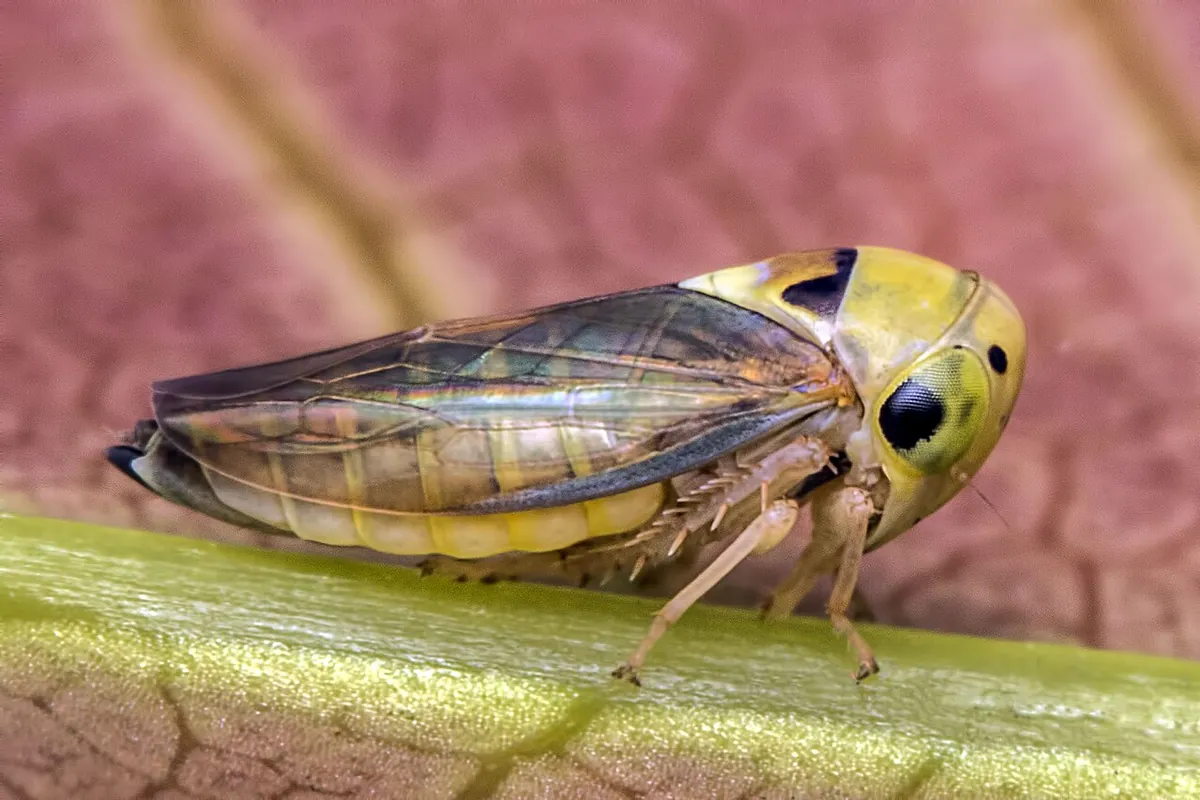
What Is Mango Leafhopper?
The adults measure about 4 to 5 mm, are golden to dark brown, and have a wide, round head. Nymphs are yellowish brown, with red eyes. They move fast, and when you shake a branch they jump and fly off with a clicking sound.
Mango is the only host. In the Philippines, three leafhopper species have been found on mango, including Idioscopus clypealis. It was long seen as one of the most destructive mango insects. It is the flowering period that matters, because high numbers of adults and nymphs show up in the flowers.
| Fact | Details |
|---|---|
| Name | Mango leafhopper |
| Scientific name | Idioscopus clypealis |
| Kind | Insect |
| Crops it attacks | Mango |
| Local names | None recorded |
| Where it strikes | Leaves, panicles and ears and fruits, pods and nuts |
| When it strikes | It builds up when the mango flowers, since Idioscopus clypealis breeds only in the flowers. |
| Life cycle | A female lays 100 to 200 eggs singly in the midrib on the underside of the leaves or in the flowers. Adults spread a short way by flying, and farther on nursery plants. |
How to Identify Mango Leafhopper
Tap a flowering branch over a sheet of paper, or shake it gently. Small wedge shaped insects jump and fly with a clicking sound. Look at the flowers for brown, dry spots, and look at leaves and fruit for sticky honeydew and black sooty mold. Flowers dried by disease do not come with live hoppers jumping around.
- Wedge shaped hoppers jump and fly with a clicking sound when you shake a flowering branch.
- Flowers turn brown and dry and fall before they set fruit.
- Leaves and fruit are sticky with honeydew.
- Black sooty mold grows on the honeydew and covers the leaves.
- Fruit set is poor on branches with many hoppers.
Brown dry flowers can also come from powdery mildew or from anthracnose. The hoppers jumping off a shaken branch, and sticky honeydew, tell you it is the insect.
How Mango Leafhopper Hurts Your Crop
Hoppers suck sap and drop honeydew. The flowers dry up, so fruit set and yield fall. Sooty mold grows on the honeydew, blackens the leaves and cuts photosynthesis. The Pacific fact sheet puts crop losses as high as 50 percent in bad cases.
The Pacific fact sheet says economic injury occurs at 4 to 5 adult insects per flower branch while the fruit is still small. That holds for India and the Philippines. That count is a useful action threshold. Compare it with the mango pulp weevil and the mango cecid fly, which attack the fruit later in the season.
How to Control Mango Leafhopper
- Prune the tree after harvest to open the canopy. Hoppers do well in shade and high humidity, so airy trees get fewer.
- Start scouting before flowering. Shake a few flowering branches each week and count the adults per flower branch.
- Compare your count with the threshold of 4 to 5 adults per flower branch while the fruit is still small.
- Use the fungi Beauveria bassiana or Metarhizium anisopliae, applied in an oil based spray, to cut the hopper numbers.
- Protect natural enemies. Spiders, ladybird beetles, lacewing larvae and chalcid wasps feed on the hoppers. In the Philippines, two parasitoids from the insect group Strepsiptera attack them at a low rate.
- Do not move infested nursery plants to a clean orchard, because longer distance spread is on nursery plants.
When a Spray Makes Sense
If your count passes the threshold, spray before the flowers open, because sprays at full bloom can harm the pollinators. In Australia the advice is two sprays 7 days apart before flowering begins. Follow the label and the FPA registration.
| Active ingredient | IRAC group | On Philippine labels |
|---|---|---|
| Pymetrozine | IRAC 9B | A first choice. 30 registered products name it on mango. |
| Cyantraniliprole plus pymetrozine | IRAC 28 plus 9B | A first choice. 1 registered product names it on mango. |
| Cartap hydrochloride | IRAC 14 | A sound second choice. 83 registered products name it on mango. |
| Buprofezin | IRAC 16 | A sound second choice. 21 registered products name it on mango. |
| Thiamethoxam | IRAC 4A | A sound second choice. 19 registered products name it on mango. |
| Dinotefuran | IRAC 4A | A sound second choice. 9 registered products name it on mango. |
| Imidacloprid | IRAC 4A | A sound second choice. 4 registered products name it on mango. |
| Clothianidin | IRAC 4A | A sound second choice. 3 registered products name it on mango. |
| Acetamiprid | IRAC 4A | A sound second choice. 1 registered product names it on mango. |
| Azadirachtin | IRAC UN | A sound second choice. 1 registered product names it on mango. |
The table stops at the ten best. 26 more on Philippine labels for it are older or broad chemistry. The Pest Finder in anee.io lists every one, crop by crop, with the products sold here.
Resistance. Hoppers in mango areas that get one group spray after spray stop dying, and pyrethroids and neonicotinoids are the groups most overused in Asia. Rotate pymetrozine (9B), buprofezin (16), cartap (14), a neonicotinoid (4A) and a pyrethroid (3A), and never use one group twice in a row in the same flowering.
Use only products registered with the Fertilizer and Pesticide Authority, and follow the label for the rate, the timing and the protective clothing. Switch to a different insecticide group next time, so the pest does not learn to survive it. Our guide to integrated pest management explains how.
Keep It Out Next Season
- Prune after harvest so light and wind reach inside the crown. Hoppers thrive in shaded, humid trees.
- Induce all trees in a block at the same time, so the flowering window is short and hoppers cannot move from early to late trees.
- Count hoppers every week from bud swell until the fruits are pea sized, instead of spraying by the calendar.
- If a spray is needed, give it before the flowers open. Sprays at full bloom kill the bees and flies that set the fruit.
- Do not bring nursery plants carrying hoppers or eggs into a clean orchard.
- Wash or wipe sooty mold off small trees and keep weeds low under the canopy to dry the air.
Natural Enemies and Biological Help
- Spiders, lady beetles, lacewing larvae and small wasps eat hoppers and their eggs. Every needless spray kills them.
- Beauveria bassiana or Metarhizium anisopliae in an oil based spray can cut hopper numbers in humid weather.
Not Sure What You Are Seeing?
Take a clear photo of the insect, the damage and the whole plant, then ask Anee, the smart farm technician in anee.io, in Tagalog or English. Anee tells you what it most likely is and what to do at the age of your crop. You can also put your scouting days on the cropping calendar, so the team knows when to walk the field.
anee.io keeps your scouting, spraying and harvest on one calendar, and Anee answers when something looks wrong.
- Scouting days dated from each lot's own planting day
- Photos and notes for every lot
- Anee, the smart farm technician, in Tagalog or English
Questions Farmers Ask About Mango Leafhopper
When do mango leafhoppers attack?
How many hoppers are too many?
Why are my mango leaves black?
Stop Mango Leafhopper from costing you the harvest
With Libre + Anee, read the whole guide: how to be sure it is this pest, when it pays to act, and what to spray, by active ingredient.
The account is free, no credit card.