Powdery Mildew: How to Spot It and Stop It on Your Vegetables
Powdery mildew is a fungal disease that dusts the leaves of squash, ampalaya, cucumber, sitao, pepper and tomato with a white powder. The leaves then yellow and die early, so the fruit come smaller and fewer. This page shows how to spot it early and how to keep it down.
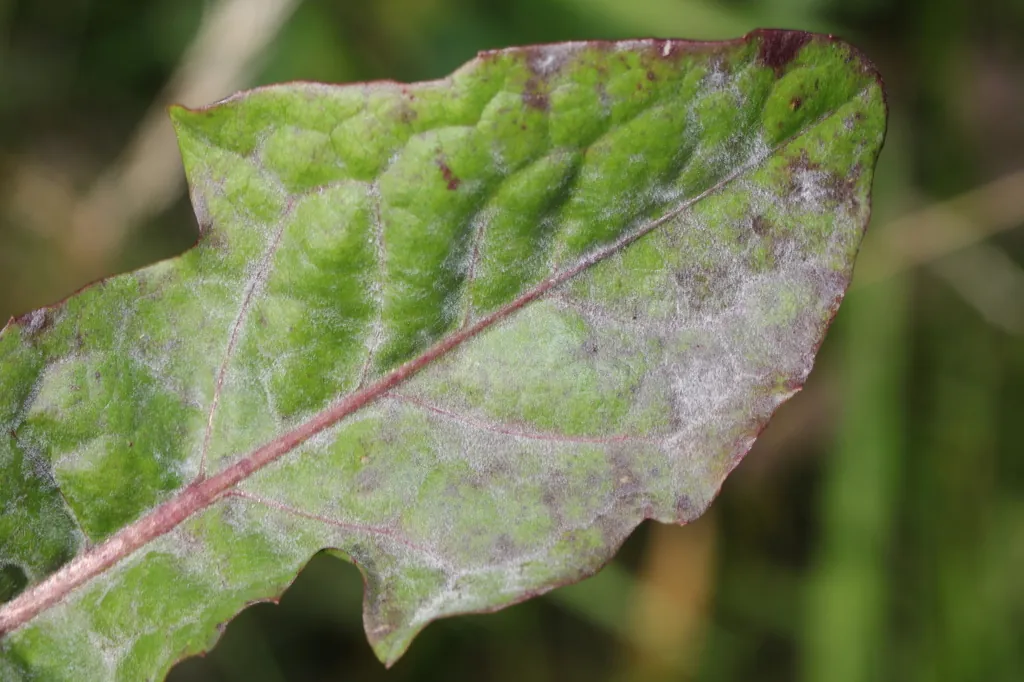
What Is Powdery Mildew?
Powdery mildew is not one fungus but a group of them. On cucurbits like squash (kalabasa), ampalaya, cucumber and melon, the main one is Podosphaera xanthii. On pepper, tomato and eggplant, it is Leveillula taurica, which Cornell says can infect over 1,000 plant species. Several Erysiphe species complete the group.
In the Philippines, powdery mildew is a common disease of squash. It is among the common diseases of pole sitao too. Also, one squash variety is highly tolerant of it. This is a dry weather disease, unlike its cousin downy mildew, which needs wet leaves.
| Fact | Details |
|---|---|
| Name | Powdery mildew |
| Scientific name | Podosphaera xanthii, Erysiphe spp., Leveillula taurica |
| Kind | Fungus (a fungal disease) |
| Crops it attacks | Squash, ampalaya, cucumber, melon, sitao, pepper, tomato and eggplant |
| Local names | None recorded |
| Where it strikes | Leaves and stems and tillers |
| When it strikes | On cucurbits it usually starts around the first fruits, and it spreads fastest in warm, humid but dry spells with little rain. |
| How it spreads | It lives only on living plants. Its spores blow in the wind from crop to crop, and new spots appear 3 to 5 days after infection. |
How to Identify Powdery Mildew
Look for round, white, powdery spots on the leaves, the leaf stalks and the stems. On cucurbits they show first on the upper side of older, shaded leaves, and you can rub the powder off with a finger. Later the leaves turn yellow, then brown, and dry out. Pepper and tomato are different. There you see pale yellow blotches on top of the leaf, while the white growth forms only underneath, because Leveillula grows inside the leaf. Downy mildew, by contrast, makes angular yellow spots bound by the veins and a purple gray fuzz underneath.
- Round white spots, like flour, appear on the leaves, the leaf stalks and the stems.
- The spots spread until whole leaves look dusted with powder on top and below.
- Sick leaves yellow, brown, dry up and die before their time.
- On pepper and tomato, pale yellow blotches show on top while white powder grows only underneath.
- Pepper leaves with the disease tend to drop off the plant.
- Fruit left bare by the dying leaves get sunburned and ripen too early.
Downy mildew is the usual mixup on cucurbits. Powdery mildew is white and powdery, often on the top of the leaf, while downy mildew shows angular yellow spots with a purple gray fuzz only underneath.
How Powdery Mildew Hurts Your Crop
Powdery mildew seldom kills a plant, but it steals the leaves that feed the fruit. The Pacific Pests and Pathogens sheet says it cuts growth and yield. Then early leaf death causes fruit sunburn, early ripening, poor storage and poor flavor. Also, sick plants catch other diseases more easily, gummy stem blight in particular.
Cucurbits have a clear point at which to act. Start checking once the first fruits form. Then start spraying a fungicide when 1 in every 50 older leaves you check, top and underside, shows the disease. Waiting past that point weakens control and helps the fungus build resistance.
How to Control Powdery Mildew
- Plant tolerant or resistant varieties first. Resistant types exist for cucumber, melon, squash and pumpkin, and one squash variety is highly tolerant of powdery mildew.
- Choose a sunny spot with good air flow, and do not crowd the plants, because dense, humid canopies speed up the disease.
- Remove the weeds in and around the field, since they can carry the fungus. Do not plant next to an older crop that already has white spots.
- Scout from the first fruits. Check 50 older leaves on both sides, and act when one shows white spots.
- For organic growers, the Pacific Pests sheet lists horticultural oil, potassium bicarbonate and wettable sulfur. Oil can treat spots already there, while bicarbonate and sulfur work best before the disease shows. Never spray sulfur within two weeks of an oil spray, or the leaves will burn.
When a Spray Makes Sense
Start sprays at the threshold, not after the leaves turn white. Pair a mobile fungicide that reaches the leaf underside with a contact one, and switch FRAC groups every spray. Use only FPA registered products and follow the label.
| Active ingredient | FRAC group | On Philippine labels |
|---|---|---|
| Sulfur | FRAC M02 | A first choice. Registered products name it on mungbean, winged bean, lima bean, pechay and more. |
| Fluopyram plus trifloxystrobin | FRAC 7 plus 11 | A first choice. Registered products name it on bitter gourd and watermelon. |
| Chlorothalonil | FRAC M05 | A sound second choice. Registered products name it on pechay, bitter gourd, squash, cucumber and more. |
| Difenoconazole | FRAC 3 | A sound second choice. 53 registered products name it on tomato. |
| Benomyl | FRAC 1 | A sound second choice. Registered products name it on mungbean, cucumber, melon, papaya and more. |
| Carbendazim | FRAC 1 | A sound second choice. Registered products name it on mungbean, string bean and cowpea. |
| Thiophanate methyl | FRAC 1 | A sound second choice. Registered products name it on mungbean, cucumber, melon, papaya and more. |
| Tebuconazole plus trifloxystrobin | FRAC 3 plus 11 | A sound second choice. Registered products name it on bitter gourd and watermelon. |
| Bacillus amyloliquefaciens | FRAC BM02 | A sound second choice. 1 registered product names it on string bean. |
| Copper hydroxide | FRAC M01 | Older or broad chemistry: a last resort. 1 registered product names it on string bean. |
These are on Philippine labels for it, but we leave them off the list above, for the reasons below.
- Mancozeb: Mancozeb does little against powdery mildew. Use sulfur or a triazole for it instead.
- Azoxystrobin: Cucurbit powdery mildew resists strobilurins widely in Asia. Azoxystrobin alone often fails on it.
Resistance. Cucurbit powdery mildew resists the benomyl group (FRAC 1) and the strobilurins (FRAC 11) widely in Asia, and the triazoles (FRAC 3) slowly lose strength. Turn sulfur or chlorothalonil with a triazole or an SDHI (FRAC 7) mix, and never spray one group twice in a row.
Use only products registered with the Fertilizer and Pesticide Authority, and follow the label for the rate, the timing and the protective clothing. Switch to a different fungicide group next time, so the disease does not learn to survive it. Our guide to plant diseases explains how.
Keep It Out Next Season
- Plant a tolerant or resistant variety where one is sold. Good types exist for cucumber, melon, squash and ampalaya.
- Choose a sunny, airy spot and do not crowd the plants. Shade and still, humid air speed the mildew up.
- Clear weeds in and around the field, and do not plant beside an older crop that already shows white spots.
- Pick off the first spotted leaves, and plow under or remove old vines and plants right after the last harvest.
- Avoid too much nitrogen, which grows soft, lush leaves that the mildew loves.
Natural Enemies and Biological Help
- Small yellow and black ladybirds (Illeis) graze on the white mildew. Broad insecticide sprays kill them.
- Potassium bicarbonate, plant oils and Bacillus based products work as early protectants for organic growers, best before the spots spread.
Not Sure What You Are Seeing?
Take a clear photo of the spots or the damage up close, then the whole plant, then ask Anee, the smart farm technician in anee.io, in Tagalog or English. Anee tells you what it most likely is and what to do at the age of your crop. You can also put your scouting days on the cropping calendar, so the team knows when to walk the field.
anee.io keeps your scouting, spraying and harvest on one calendar, and Anee answers when something looks wrong.
- Scouting days dated from each lot's own planting day
- Photos and notes for every lot
- Anee, the smart farm technician, in Tagalog or English
Questions Farmers Ask About Powdery Mildew
What causes powdery mildew on squash and ampalaya?
Is powdery mildew the same as downy mildew?
Can I use sulfur for powdery mildew?
Stop the spread of Powdery Mildew
With Libre + Anee, read the whole guide: how to tell it from look alikes, what makes it spread, and what to spray and when.
The account is free, no credit card.