Early Blight: How to Spot It and Stop It in Tomato and Potato
Early blight is a fungal disease of tomato, potato, eggplant and pepper caused by Alternaria solani. It starts as small brown spots with target rings on the oldest leaves, then strips the plant from the bottom up. This page shows how to spot it, how much harm it does and how to control it.
What Is Early Blight?
Early blight comes from the fungus Alternaria solani. The tomato fungus now goes by a newer name, Alternaria linariae. It attacks tomato (kamatis), potato, eggplant (talong), pepper (sili) and wild plants of the same family. Also, no part of the plant is safe: it hits the leaves, the stems and the fruit.
In the Philippines, early and late blight are among the most common tomato diseases. Growers in parts of Laguna and Quezon have found it. Early blight can cause serious crop loss in tomato and eggplant, mostly in the wet season. So it matters to anyone who grows kamatis or talong for the market. Its cousin, late blight, is a different and faster killer.
| Fact | Details |
|---|---|
| Name | Early blight |
| Scientific name | Alternaria solani (on tomato also named Alternaria linariae) |
| Kind | Fungus (a fungal disease) |
| Crops it attacks | Tomato, potato, eggplant and pepper |
| Local names | None recorded |
| Where it strikes | Leaves, stems and tillers, fruits, pods and nuts and seedlings |
| When it strikes | It can strike from the seedbed to harvest, starts on the oldest leaves, and is worst in warm, humid weeks with heavy dew or rain. |
| How it spreads | The fungus survives in old crop debris and on seed. Its spores then move from plant to plant with the wind, rain splash and overhead water. |
How to Identify Early Blight
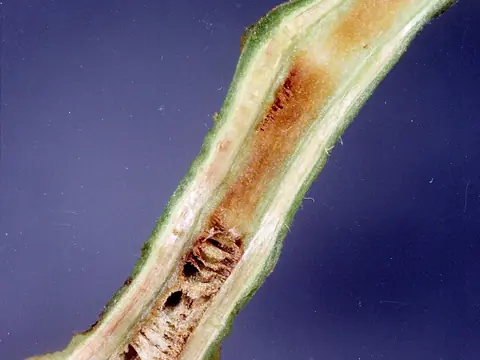
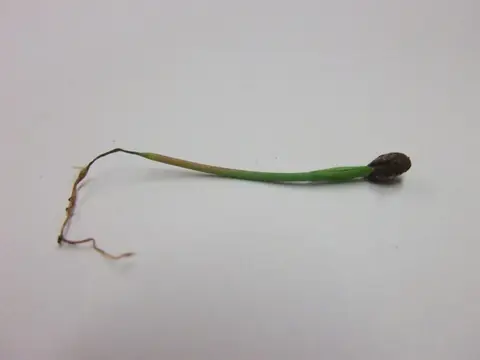
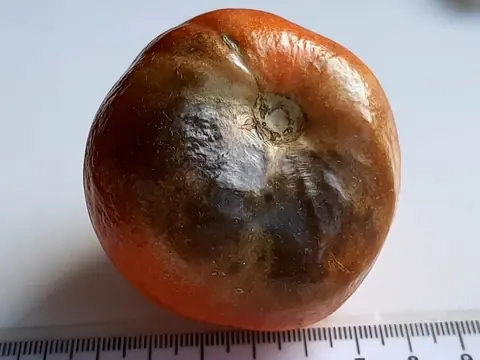
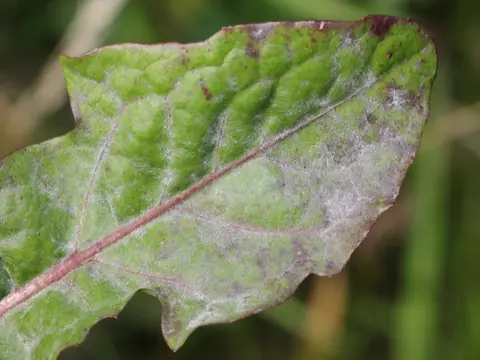
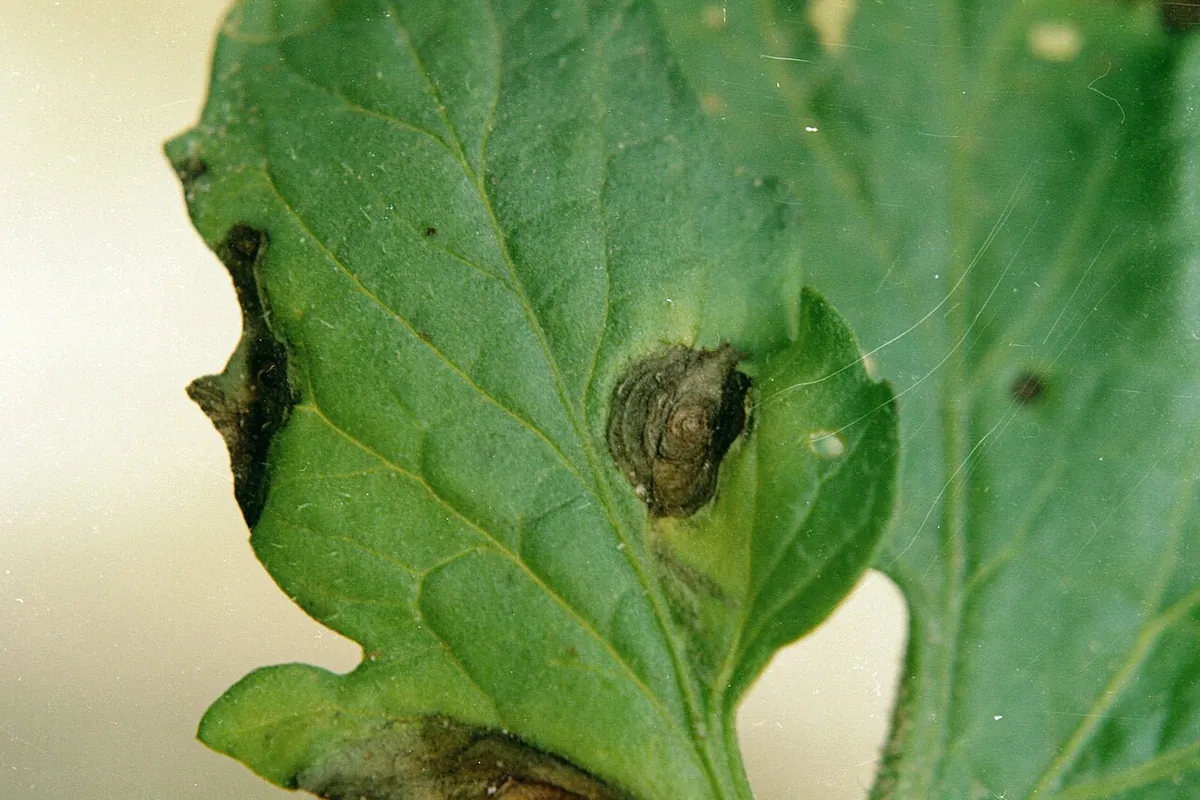
Check the oldest, lowest leaves first. Early blight makes brown spots, from a pinpoint to about 6 mm, round or angular and edged with yellow. As they grow, dark rings form inside each spot, like a target. Stem spots are darker and longer. On seedlings, a dark canker can circle the stem near the soil, a problem called collar rot. On fruit, look near the stem end for dark, sunken, leathery spots with rings and a sooty black spore mass. Late blight looks different, because its patches start at the leaf tips and edges, spread fast and show white growth underneath in wet weather.
- Small brown spots with yellow edges appear first on the oldest, lowest leaves.
- Each spot grows dark rings inside it, like a target.
- The spots join, the leaves turn yellow and drop, and the plant loses its leaves from the bottom up.
- Dark, long spots show on the stems, and young plants may rot at the soil line.
- Fruit gets dark brown to black sunken spots near the stem end, often with a black spore mass.
- Fruit left bare by the falling leaves burns in the sun.
Late blight and Cercospora leaf spot are the usual mixups. Early blight spots are small, ringed like a target and start on old leaves, while late blight makes large, fast spreading patches with white growth underneath.
How Early Blight Hurts Your Crop
Early blight rarely kills a plant outright. Instead, it strips the leaves, so the plant sets fewer and smaller fruit, and bare fruit burn in the sun. The Pacific Pests and Pathogens fact sheet says the yield loss is hard to measure but is probably at least 5 percent. Losses climb in warm, humid weather with heavy dew or rain. The disease favors temperatures above about 27 degrees Celsius with moderate to heavy rain.
No spray threshold is set for small farms. So walk the field every week and turn over the lower leaves. Act when target spots start to climb the plant. Since the fungus also lives in old crop debris and on seed, one bad season can carry over to the next crop on the same ground.
How to Control Early Blight
- Start clean. Use disease free seed and check every seedling before transplanting, because the fungus rides on seed and can rot young stems in the seedbed.
- Give the plants air. Space them 60 to 90 cm apart, stake or trellis them, and prune the lowest leaves and branches so the canopy dries fast.
- Keep water off the leaves. Water the soil around the stem instead of pouring from above, and lay mulch so rain does not splash soil onto the leaves.
- Keep the plants strong with enough fertilizer. Then pick off badly spotted lower leaves early and carry them out of the field.
- For biological control, Bacillus biofungicides suit organic growers, and a local biofungicide for tomato and eggplant is being developed. Use them early, before the spots spread. Our fungicides guide explains the other options.
When a Spray Makes Sense
A spray makes sense when target spots keep climbing the plant in wet, humid weather, and it works best as protection before the spots spread. Rotate between FRAC groups, use only FPA registered products, and follow the label for the rate and the interval.
| Active ingredient | FRAC group | On Philippine labels |
|---|---|---|
| Chlorothalonil | FRAC M05 | A first choice. Registered products name it on potato and tomato. |
| Mancozeb | FRAC M03 | A first choice. Registered products name it on potato and tomato. |
| Azoxystrobin plus difenoconazole | FRAC 11 plus 3 | A first choice. 5 registered products name it on tomato. |
| Chlorothalonil plus mancozeb | FRAC M05 plus M03 | A first choice. 1 registered product names it on tomato. |
| Difenoconazole plus pydiflumetofen | FRAC 3 plus 7 | A first choice. 1 registered product names it on tomato. |
| Azoxystrobin | FRAC 11 | A sound second choice. 23 registered products name it on tomato. |
| Propineb | FRAC M03 | A sound second choice. Registered products name it on potato and tomato. |
| Tebuconazole plus trifloxystrobin | FRAC 3 plus 11 | A sound second choice. Registered products name it on potato and tomato. |
| Fluopyram plus trifloxystrobin | FRAC 7 plus 11 | A sound second choice. Registered products name it on potato and tomato. |
| Azoxystrobin plus mancozeb | FRAC 11 plus M03 | A sound second choice. 1 registered product names it on tomato. |
The table stops at the ten best. 10 more on Philippine labels for it are older or broad chemistry. The Disease Finder in anee.io lists every one, crop by crop, with the products sold here.
These are on Philippine labels for it, but we leave them off the list above, for the reasons below.
- Mancozeb plus metalaxyl: Metalaxyl does nothing to early blight and wastes a late blight tool. Buy plain mancozeb for early blight.
Resistance. Early blight has become resistant to the strobilurins (FRAC 11) and to some SDHI fungicides (FRAC 7) in many countries. Use them only in mixes or in turn with mancozeb or chlorothalonil, never more than two sprays of one group in a row.
Use only products registered with the Fertilizer and Pesticide Authority, and follow the label for the rate, the timing and the protective clothing. Switch to a different fungicide group next time, so the disease does not learn to survive it. Our guide to plant diseases explains how.
Keep It Out Next Season
- Start with clean seed and healthy seedlings, and throw out any seedling with dark leaf spots or a sunken lesion on the stem.
- Stake or trellis tomato and prune the lowest leaves so the canopy dries fast after rain.
- Mulch the beds so rain does not splash soil and spores onto the lower leaves.
- Feed the crop well through the season. Hungry plants carrying a heavy fruit load get the worst early blight.
- Rotate for two or three years away from tomato, potato, eggplant and pepper, and plow under or remove crop debris after harvest.
- Water at the base early in the day, not over the leaves late in the afternoon.
Natural Enemies and Biological Help
- Bacillus based biofungicides can hold light early blight when sprayed before the spots climb the plant.
Not Sure What You Are Seeing?
Take a clear photo of the spots or the damage up close, then the whole plant, then ask Anee, the smart farm technician in anee.io, in Tagalog or English. Anee tells you what it most likely is and what to do at the age of your crop. You can also put your scouting days on the cropping calendar, so the team knows when to walk the field.
anee.io keeps your scouting, spraying and harvest on one calendar, and Anee answers when something looks wrong.
- Scouting days dated from each lot's own planting day
- Photos and notes for every lot
- Anee, the smart farm technician, in Tagalog or English
Questions Farmers Ask About Early Blight
What causes early blight in tomato?
What is the difference between early blight and late blight?
Can I save a tomato plant with early blight?
Stop the spread of Early Blight
With Libre + Anee, read the whole guide: how to tell it from look alikes, what makes it spread, and what to spray and when.
The account is free, no credit card.