Late Blight: How to Spot It and Stop It in Potato and Tomato
Late blight is the most feared disease of potato in the highlands, and it attacks tomato too. A water mold called Phytophthora infestans causes it, and in cool, wet weather it can turn a green field black within days. This page shows how to spot it early and how to keep it in check.
What Is Late Blight?
Late blight comes from Phytophthora infestans. It is not a true fungus but a water mold, a relative of the algae. It attacks potato, tomato and wild plants of the same family, such as nightshade. Each year it takes about 15 percent of potato production in developing countries.
In Benguet, late blight is the most devastating potato disease. Farmers in Buguias spray fungicide twice a week in the wet season, and that spraying adds up to about 50 percent of their total production cost. In Cagayan Valley, early and late blight are also among the most common tomato diseases. So whether you grow patatas in the mountains or kamatis in the lowlands, it pays to know it. Do not confuse it with early blight, a slower fungus.
| Fact | Details |
|---|---|
| Name | Late blight |
| Scientific name | Phytophthora infestans |
| Kind | Water mold (an oomycete) |
| Crops it attacks | Potato and tomato |
| Local names | None recorded |
| Where it strikes | Leaves, stems and tillers, fruits, pods and nuts, roots and base and the whole plant |
| When it strikes | It can hit potato and tomato at any age, and it explodes in cool nights followed by misty, rainy days, which is why Benguet growers fear the wet season. |
| How it spreads | Spores ride wind and rain up to 15 to 20 km, and infected seed tubers carry it over long distances. Between crops it survives in tubers, cull piles and volunteer plants. |
How to Identify Late Blight
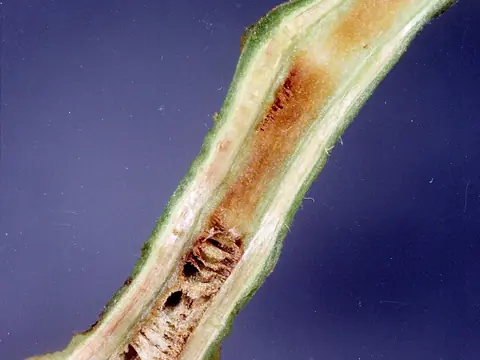
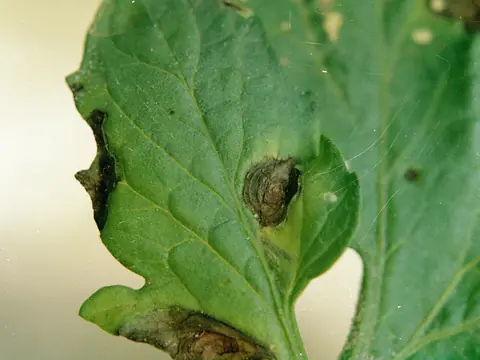
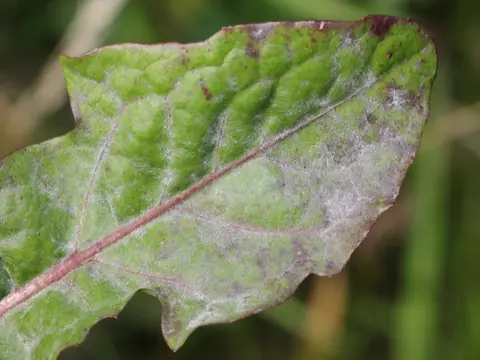
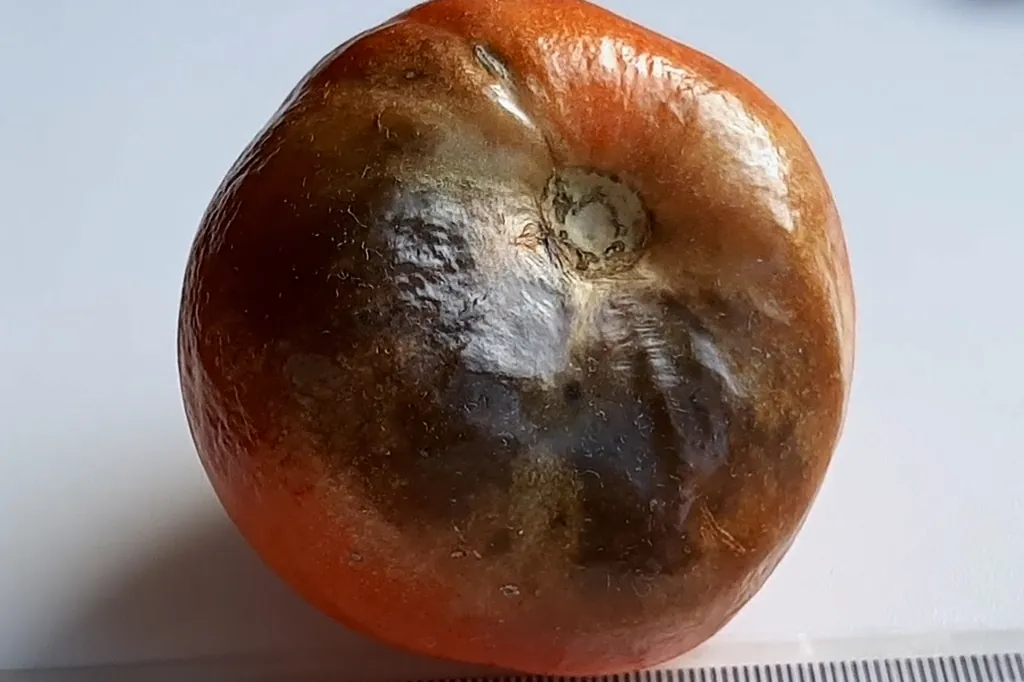
Look at the leaf tips and edges. Late blight starts as brown or black patches of no set shape that grow fast and are not stopped by the veins. Within a few days the whole leaf turns yellow, shrivels and dies. In damp mornings, turn the leaf over: a white, cottony growth rings the edge of each patch, and that is where the spores form. Stems get brown or black spots too. On tomato fruit, the rot is dark brown and firm. On potato, the tubers show brownish red rot under the skin. Early blight is slower and makes small spots with target rings instead.
- Brown or black patches start at the leaf tips and edges and spread fast across the veins.
- A white, cottony growth shows on the underside of the patches in humid weather.
- Whole leaves yellow, shrivel and die within a few days, and the field looks burned.
- Stems carry brown or black spots and may collapse.
- Tomato fruit get firm, dark brown rotten areas.
- Potato tubers show a brownish red rot that can keep spreading in storage.
Early blight is the usual mixup. Late blight patches are large, fast and start at the leaf edge with white growth underneath, while early blight makes small spots with target rings on the oldest leaves.
How Late Blight Hurts Your Crop
Late blight is one of the worst plant diseases anywhere. The Pacific Pests and Pathogens sheet says spores can travel 15 to 20 km on the wind, and a tomato planting can be destroyed within days. On potato, the spores also wash into the soil and rot the tubers, so losses continue after harvest. Tubers that look clean at harvest can rot later in storage.
The cost is not only the lost crop. In Buguias, Benguet, blight spraying ate about half of the production cost. There, farmers who grew the blight tolerant variety averaged about 18,900 kg per hectare, against about 16,300 kg with the traditional one. No spray threshold applies, since the disease moves too fast. Instead, protect the crop before the cool, rainy weeks arrive.
How to Control Late Blight
- Plant resistant varieties first. In Buguias, farmers use Igorota (LBR PO3), which is moderately resistant to late blight and leaf miner, and Solibao (LBR PO4), which showed only about 1 percent infection in trials. Both helped growers cut their spraying.
- Use certified, disease free seed tubers and healthy tomato seedlings, because infected tubers carry the disease into a new field.
- Plant on ridges with good drainage and enough spacing for air. Water at the base instead of overhead, and go easy on nitrogen.
- Walk the field often in cool, wet weather. Pull and destroy the first infected plants, and if the leaves are badly hit, kill the vines before harvest so spores do not reach the tubers.
- Keep potato and tomato apart, and do not plant a new crop next to an older, infected one. If the leafminer is also a problem, Igorota helps with both.
When a Spray Makes Sense
In the wet season a protectant spray before the disease shows is often needed on susceptible varieties. Alternate the systemic fungicides with protectants, because this water mold builds resistance fast. Use only FPA registered products and follow the label for the rate and the interval.
| Active ingredient | FRAC group | On Philippine labels |
|---|---|---|
| Chlorothalonil | FRAC M05 | A first choice. Registered products name it on potato and tomato. |
| Mancozeb | FRAC M03 | A first choice. Registered products name it on potato and tomato. |
| Cymoxanil plus mancozeb | FRAC 27 plus M03 | A first choice. Registered products name it on potato and tomato. |
| Dimethomorph | FRAC 40 | A first choice. Registered products name it on potato and tomato. |
| Cymoxanil plus famoxadone | FRAC 27 plus 11 | A first choice. Registered products name it on potato and tomato. |
| Chlorothalonil plus mancozeb | FRAC M05 plus M03 | A first choice. 2 registered products name it on potato. |
| Cyazofamid | FRAC 21 | A first choice. Registered products name it on potato and tomato. |
| Dimethomorph plus mancozeb | FRAC 40 plus M03 | A first choice. Registered products name it on potato and tomato. |
| Ametoctradin plus dimethomorph | FRAC 45 plus 40 | A first choice. 1 registered product names it on potato. |
| Fluopicolide plus propamocarb | FRAC 43 plus 28 | A first choice. Registered products name it on potato and tomato. |
The table stops at the ten best. 18 more on Philippine labels for it are older or broad chemistry. The Disease Finder in anee.io lists every one, crop by crop, with the products sold here.
Resistance. Late blight resists metalaxyl and the other phenylamides (FRAC 4) in many places in Asia, so never use them alone or as a cure. Turn the systemic groups each spray (27, 40, 21, 43, 45, 49) and keep mancozeb or chlorothalonil in every tank.
Use only products registered with the Fertilizer and Pesticide Authority, and follow the label for the rate, the timing and the protective clothing. Switch to a different fungicide group next time, so the disease does not learn to survive it. Our guide to plant diseases explains how.
Keep It Out Next Season
- Plant certified clean seed tubers and healthy tomato seedlings. One sick tuber can start the disease in a whole field.
- Grow a resistant or tolerant variety where one suits your area. It cuts the number of sprays a season needs.
- Plant on ridges with good drainage and enough room between rows so the leaves dry quickly after rain and fog.
- Hill up potato rows well so spores washed off the leaves do not reach the tubers. Kill blighted vines about two weeks before digging.
- Destroy cull piles and volunteer potato and tomato plants, and do not plant a new crop beside an older infected one.
- Water at the base of the plants, not over the leaves, and do not overfeed with nitrogen.
Natural Enemies and Biological Help
- Bacillus biofungicides give a little help under light pressure, but no biological holds late blight on its own in the wet season.
Not Sure What You Are Seeing?
Take a clear photo of the spots or the damage up close, then the whole plant, then ask Anee, the smart farm technician in anee.io, in Tagalog or English. Anee tells you what it most likely is and what to do at the age of your crop. You can also put your scouting days on the cropping calendar, so the team knows when to walk the field.
anee.io keeps your scouting, spraying and harvest on one calendar, and Anee answers when something looks wrong.
- Scouting days dated from each lot's own planting day
- Photos and notes for every lot
- Anee, the smart farm technician, in Tagalog or English
Questions Farmers Ask About Late Blight
What causes late blight in potato and tomato?
Which potato varieties resist late blight in the Philippines?
Can a field with late blight still be saved?
Stop the spread of Late Blight
With Libre + Anee, read the whole guide: how to tell it from look alikes, what makes it spread, and what to spray and when.
The account is free, no credit card.