Bacterial Wilt: How to Spot It and Protect Your Vegetables
Bacterial wilt is a soil borne disease that makes a healthy, green tomato or eggplant plant wilt suddenly and die. It has no spray that cures it, so the real work is clean seedlings, raised beds, resistant varieties and rotation.
What Is Bacterial Wilt?
Bacterial wilt is caused by the Ralstonia solanacearum species complex. Research in the Philippines found that two species of Ralstonia cause it in production areas, R. pseudosolanacearum and R. solanacearum. The disease attacks tomato, eggplant, potato and pepper, and the bacteria infect more than 200 plant species in over 30 families.
An open access research paper calls it one of the most economically important diseases of tomato and eggplant in the tropics, with losses that can reach 100 percent. Because chemical sprays do not work, prevention decides the harvest. See our guide to vegetables in the Philippines for choosing crops, and read about the similar fusarium wilt.
| Fact | Details |
|---|---|
| Name | Bacterial wilt |
| Scientific name | Ralstonia solanacearum species complex (Ralstonia pseudosolanacearum) |
| Kind | Bacterium (a bacterial disease) |
| Crops it attacks | Tomato, eggplant (talong), potato, pepper and other vegetables |
| Local names | None recorded |
| Where it strikes | The whole plant and roots and base |
| When it strikes | Bacterial wilt can strike from the seedling stage to fruiting, but it is fastest in hot, wet weather, when plants wilt suddenly and die within days. |
| How it spreads | The bacteria live in the soil for about nine months without a host. They enter the root through wounds and natural openings, then clog the water vessels, and they spread by soil on tools and boots, by water and by infected seedlings. |
How to Identify Bacterial Wilt
Watch for a plant that wilts while the leaves are still green, often in the heat of the day, and then does not recover at night. In cooler weather, the plant may instead stunt, yellow on the lower leaves and grow roots from the stem. Do the water test. Cut a stem near the base, hang it in a clear glass of water for 3 to 5 minutes, and look for white streaks of slime flowing from the cut. That is a strong sign of bacterial wilt.
- Sudden wilting of the whole plant while the leaves are still green.
- Wilting in the heat of the day that does not recover at night, then plant death within days.
- In cooler weather, stunting and yellow lower leaves, with small roots growing from the stem.
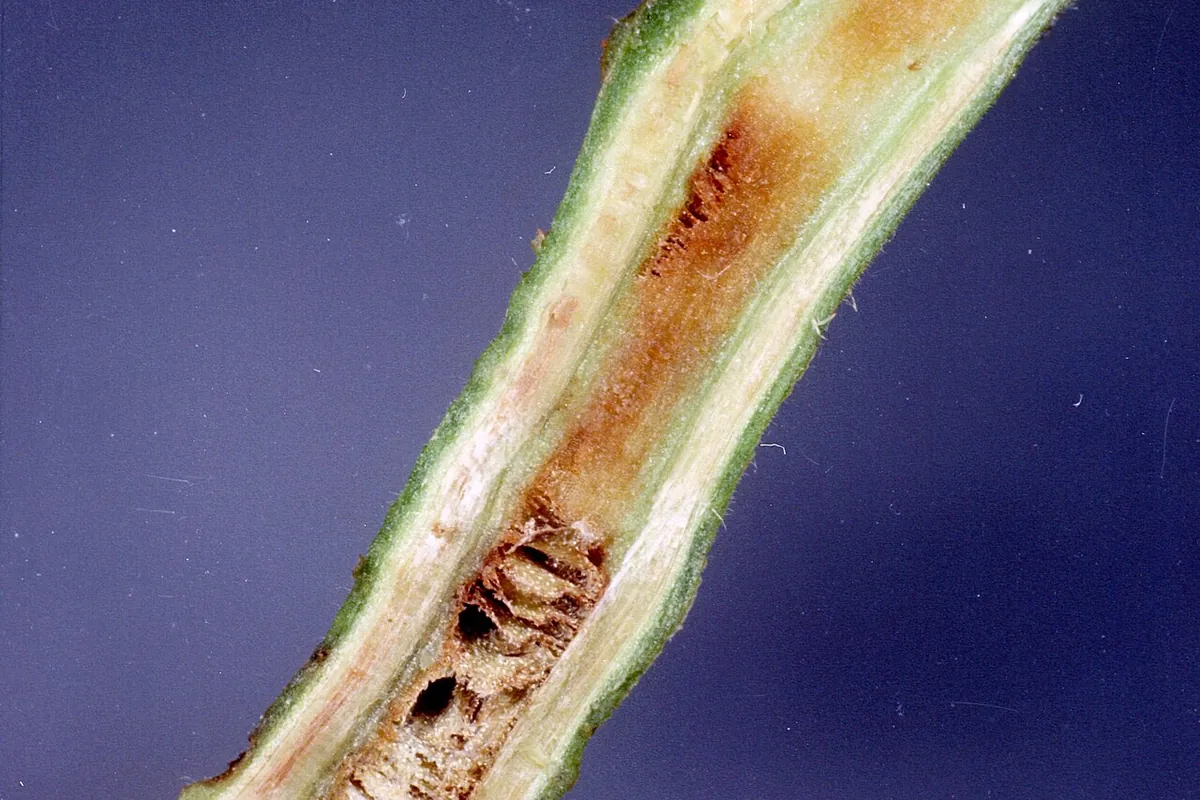
- A brown stained inside of the stem when you cut it near the base.
- White streaks of bacterial slime flowing from a cut stem placed in water for 3 to 5 minutes.
Fusarium wilt and root knot nematode also cause wilting. With fusarium wilt the water test shows no slime, and with nematodes you find galls on the roots. Bacterial wilt shows the white slime in the water test.
How Bacterial Wilt Hurts Your Crop
An open access research paper says bacterial wilt can cause up to 100 percent economic losses. The bacteria stay alive in soil for about nine months without a host, so a field that had it in one season stays risky for the next crop. The Philippine strains studied on Luzon eggplant were all in one group, phylotype I.
There is no spray threshold. The rule is simple. The first wilted plant is a warning. Remove it, mark the spot and do not move water or soil from that spot to other beds. For other soil diseases that look similar, read about root knot nematode.
How to Control Bacterial Wilt
- Plant a resistant variety. Resistant tomato, chili and eggplant lines are available.
- Graft susceptible tomato onto a resistant eggplant rootstock when you have access to it. Eggplant rootstocks resist bacterial wilt better and also tolerate flooding.
- Use healthy seedlings only, and raise them in clean, sterilized media. Infected nursery plants are a main way the disease spreads.
- Plant on raised beds or ridges so water drains away from the roots.
- Pull out wilted plants at once with the soil around the roots, and bury them or burn them away from the field.
- Rotate for about four years with crops that do not host the bacteria, and clean tools and boots between fields.
When a Spray Makes Sense
Chemical control is ineffective, because the bacteria sit inside the water vessels of the plant, out of reach of a spray. The Pacific Pests fact sheet says only soil fumigation helps. Do not buy sprays that promise a cure.
Use only products registered with the Fertilizer and Pesticide Authority, and follow the label for the rate, the timing and the protective clothing. Switch to a different fungicide group next time, so the disease does not learn to survive it. Our guide to plant diseases explains how.
Keep It Out Next Season
- Graft tomato, eggplant or pepper onto a resistant rootstock, or plant a resistant variety. This is the surest answer in fields with a wilt history.
- Raise seedlings in clean, sterilized media, and plant only healthy seed tubers and ginger rhizomes from fields free of wilt.
- Rotate for three to four years with rice, corn or other grasses. Flooded rice in between helps clear the soil.
- Plant on raised beds, drain the field well, and never let water run from a sick field into a clean one.
- Pull wilted plants with the soil around the roots and destroy them away from the field. Wash tools and boots before entering a clean field.
- Avoid cutting roots when weeding, and keep root knot nematodes down, since their wounds let the bacteria in.
Natural Enemies and Biological Help
- Compost and other organic matter feed soil microbes that compete with the bacteria. They help, but they do not replace grafting and rotation.
Not Sure What You Are Seeing?
Take a clear photo of the spots or the damage up close, then the whole plant, then ask Anee, the smart farm technician in anee.io, in Tagalog or English. Anee tells you what it most likely is and what to do at the age of your crop. You can also put your scouting days on the cropping calendar, so the team knows when to walk the field.
anee.io keeps your scouting, spraying and harvest on one calendar, and Anee answers when something looks wrong.
- Scouting days dated from each lot's own planting day
- Photos and notes for every lot
- Anee, the smart farm technician, in Tagalog or English
Questions Farmers Ask About Bacterial Wilt
Can I save a plant with bacterial wilt?
How do I test for bacterial wilt?
How long does the bacteria stay in the soil?
Stop the spread of Bacterial Wilt
With Libre + Anee, read the whole guide: how to tell it from look alikes, what makes it spread, and what to spray and when.
The account is free, no credit card.