Rice Ragged Stunt: How to Spot It and Protect Your Palay
Rice ragged stunt is a virus disease that stunts palay and leaves the leaves twisted, serrated and ragged. It has no cure, so you protect the crop by controlling the brown planthopper and by choosing resistant varieties.
What Is Rice Ragged Stunt?
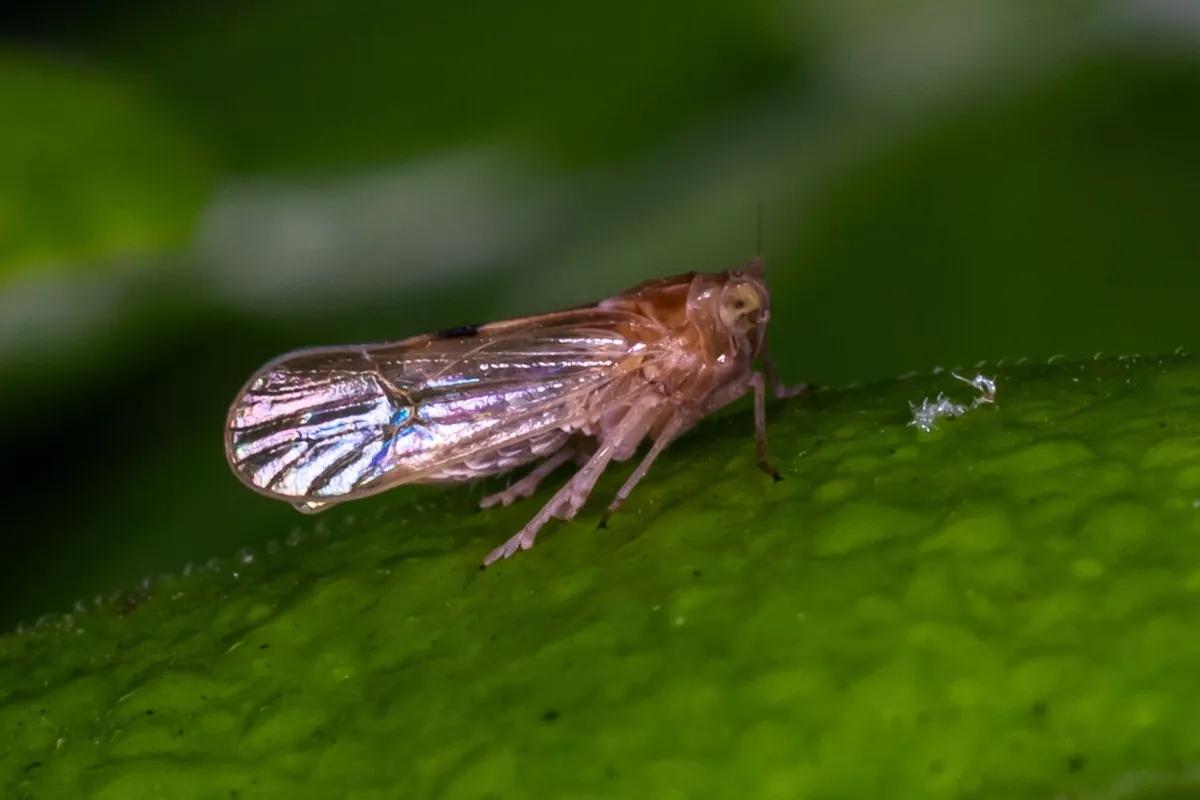
Rice ragged stunt comes from the Rice ragged stunt virus, and the brown planthopper carries it from plant to plant. The infection is especially high in tropical areas where rice is planted all year round. That gives the insect a field of food at all times.
It often shows up alongside rice grassy stunt, because the same insect carries both viruses. Neither disease can be cured. So the plan is to prevent them, starting with the seedbed.
| Fact | Details |
|---|---|
| Name | Rice ragged stunt |
| Scientific name | Rice ragged stunt virus (RRSV) |
| Kind | Virus (spread by insects) |
| Crops it attacks | Rice |
| Local names | None recorded |
| Where it strikes | The whole plant, leaves and panicles and ears |
| When it strikes | It shows at the early growth stages as stunting, then as leaf twisting and vein swelling at later tillering. It is highest where rice grows all year round. |
| How it spreads | Brown planthoppers carry the virus. They pick it up within 24 hours of feeding on a sick plant. After about 6 hours they can pass it on, and they stay infective for life. |
How to Identify Rice Ragged Stunt
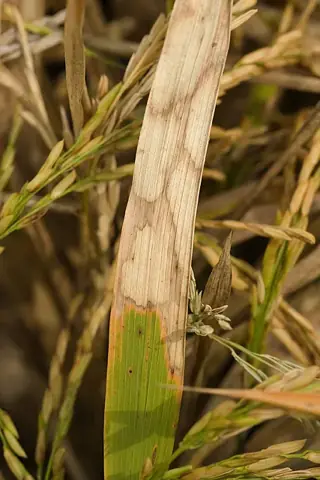
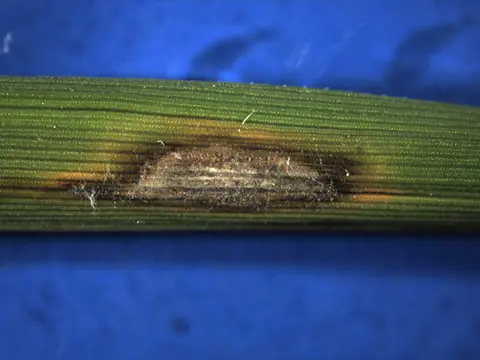
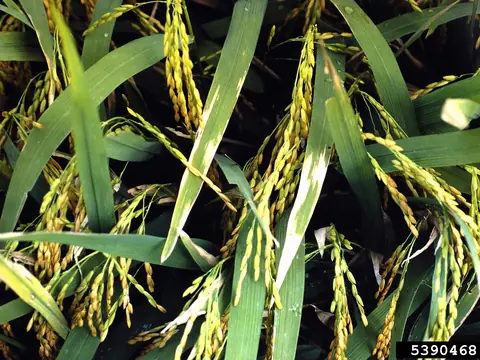
Look at the young crop first. Plants are stunted, with short, dark green leaves that have serrated, uneven edges. The leaf tip or base may twist into a spiral, and the ragged parts turn yellow to yellow brown. At later tillering, pale to dark brown swellings, called galls, run along the veins on the outside of the leaf blade and the sheath. At heading, the panicle comes out only in part and carries unfilled grains.
- Plants are severely stunted in the early growth stages, with short, dark green leaves.
- Leaf edges are serrated and uneven, and the ragged parts turn yellow to yellow brown.
- Leaf blades twist at the tip or the base into a spiral.
- Swollen veins, pale yellow, white or dark brown, appear on the leaf blades and the sheaths.
- Flowering is late, panicles come out in part, and many grains stay unfilled.
Plants hit by ragged stunt are often confused with rice tungro or grassy stunt, since all of them stunt the crop. Ragged stunt has the torn, serrated leaf edges and the swollen veins. Grassy stunt has the grassy clump with rusty spots, and tungro gives an orange yellow color.
How Rice Ragged Stunt Hurts Your Palay
This disease cuts yield by causing panicles that come out only in part, unfilled grains and a loss of plant density. A sick plant can survive, but its yield falls sharply. We found no sourced yield loss percentage for the Philippines, so we give none.
The damage grows with the number of planthoppers. Young nymphs spread the virus most efficiently, so the seedbed and the first weeks matter most. The planthopper itself also burns whole patches of rice, a damage called hopperburn. In 2017, the insect resurged across 18 provinces, and the two viruses it carries have no cure.
How to Control Rice Ragged Stunt
- Choose a resistant variety. The Lucid rice key says resistant varieties are probably the most important control. Three kinds exist: resistant to the planthopper, resistant to the virus, and resistant to both.
- Plant at the same time as the farms around you, so the planthoppers do not move from older fields to young ones.
- Scout the seedbed and the young crop every week for planthoppers at the base of the plants.
- Protect the spiders, mirid bugs and egg parasite wasps that eat planthoppers, by avoiding early insecticide sprays.
- Pull out and bury sick plants early, and destroy infected stubble and crop residue after harvest.
- Flood the seedbed for a day when planthoppers are on it, so that the insects drown.
Why No Spray Cures It
No spray cures a plant that has the virus, because infected plants cannot recover. A spray can only target the planthopper. Do not use insecticide in the first 30 to 40 days after transplanting unless a pest is truly at outbreak level. Early sprays kill the spiders and wasps and then cause planthopper outbreaks. If an outbreak is real, ask your local agriculture office which FPA registered product suits your field, and follow the label.
What the Labels Name for the Brown Planthopper
| Active ingredient | IRAC group | On Philippine labels |
|---|---|---|
| Pymetrozine | IRAC 9B | A first choice. 26 registered products name it on rice. |
| Dinotefuran | IRAC 4A | A first choice. 10 registered products name it on rice. |
| Pymetrozine plus dinotefuran | IRAC 9B plus 4A | A first choice. 3 registered products name it on rice. |
| Triflumezopyrim | IRAC 4E | A first choice. 3 registered products name it on rice. |
| Thiamethoxam | IRAC 4A | A sound second choice. 23 registered products name it on rice. |
| Buprofezin | IRAC 16 | A sound second choice. 7 registered products name it on rice. |
| Chlorantraniliprole plus thiamethoxam | IRAC 28 plus 4A | A sound second choice. 6 registered products name it on rice. |
| Clothianidin | IRAC 4A | A sound second choice. 3 registered products name it on rice. |
| Cartap hydrochloride | IRAC 14 | Older or broad chemistry: a last resort. 83 registered products name it on rice. |
| Fipronil | IRAC 2B | Older or broad chemistry: a last resort. 32 registered products name it on rice. |
The table stops at the ten best. 7 more on Philippine labels for it are older or broad chemistry. The Disease Finder in anee.io lists every one, crop by crop, with the products sold here.
Use only products registered with the Fertilizer and Pesticide Authority, and follow the label for the rate, the timing and the protective clothing. Switch to a different fungicide group next time, so the disease does not learn to survive it. Our guide to plant diseases explains how.
Keep It Out Next Season
- Plant a resistant variety: some resist the planthopper, some the virus, some both.
- Plant at the same time as the farms around you, and leave a fallow or rotate so volunteer rice does not keep the virus.
- Pull out and bury sick plants early, and destroy infected stubble and crop residue after harvest.
- Flood the seedbed for a day when planthoppers are on it, so they drown.
- No insecticide in the first 30 to 40 days, and never a pyrethroid: both bring planthoppers back worse.
Natural Enemies and Biological Help
- Spiders, mirid bugs and egg wasps eat planthoppers. Spare them by not spraying early.
Not Sure What You Are Seeing?
Take a clear photo of the spots or the damage up close, then the whole plant, then ask Anee, the smart farm technician in anee.io, in Tagalog or English. Anee tells you what it most likely is and what to do at the age of your crop. You can also put your scouting days on the cropping calendar, so the team knows when to walk the field.
anee.io keeps your scouting, spraying and harvest on one calendar, and Anee answers when something looks wrong.
- Scouting days dated from each lot's own planting day
- Photos and notes for every lot
- Anee, the smart farm technician, in Tagalog or English
Questions Farmers Ask About Rice Ragged Stunt
Can rice ragged stunt be cured?
Is ragged stunt the same as grassy stunt?
Why do the veins swell?
Stop the spread of Rice Ragged Stunt
With Libre + Anee, read the whole guide: how to tell it from look alikes, what makes it spread, and what to spray and when.
The account is free, no credit card.