Rice Grassy Stunt: How to Spot It and Protect Your Palay
Rice grassy stunt is a virus disease that turns palay plants into short, yellowish, grass like clumps that rarely make a panicle. There is no cure, so the whole game is stopping the brown planthopper that carries it.
What Is Rice Grassy Stunt?
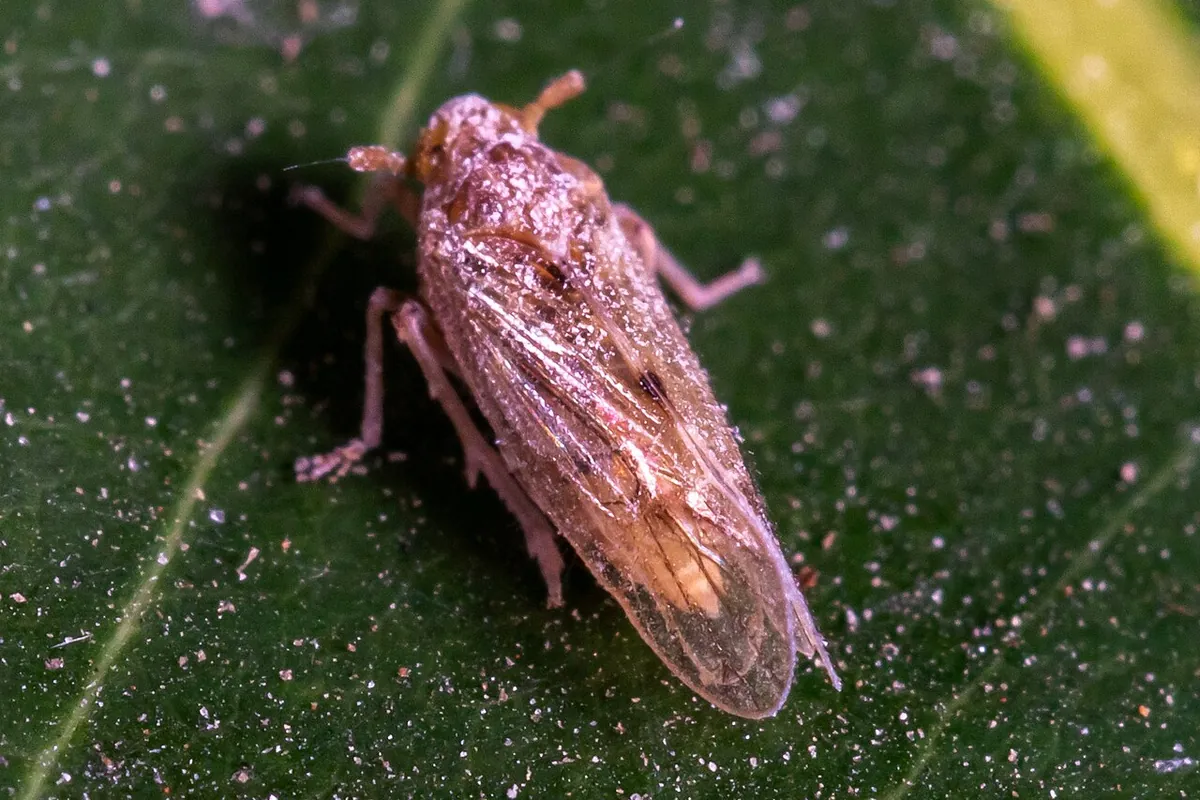
Rice grassy stunt comes from the Rice grassy stunt virus. The brown planthopper spreads it, both as a young nymph and as an adult. This disease is found where rice is grown continuously through the year, because that keeps both the virus and the insect alive in the field.
The virus cuts yield by stopping the plant from making panicles. Researchers in the Philippines also found a strain of the virus that causes tungro like symptoms and can attack varieties that carry resistance genes. So farmers should watch for the signs along with the planthoppers. A related planthopper virus is rice ragged stunt.
| Fact | Details |
|---|---|
| Name | Rice grassy stunt |
| Scientific name | Rice grassy stunt virus (RGSV) |
| Kind | Virus (spread by insects) |
| Crops it attacks | Rice |
| Local names | None recorded |
| Where it strikes | The whole plant and leaves |
| When it strikes | It can strike at any growth stage but hurts most at tillering, and it is worst where rice grows all year round and brown planthoppers never run out. |
| How it spreads | Brown planthoppers carry the virus. They must feed on a sick plant for at least 30 minutes to pick it up, and signs show 10 to 12 days after infection. |
How to Identify Rice Grassy Stunt
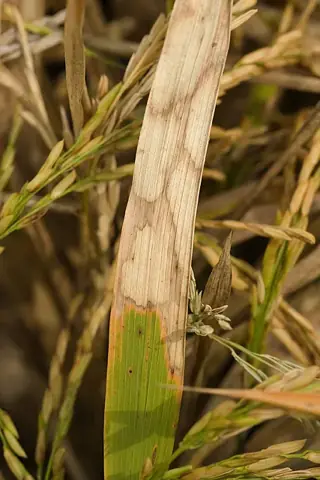
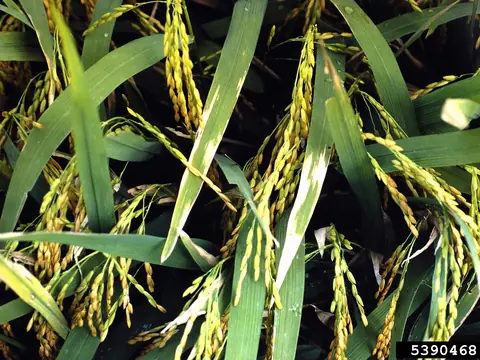
Look for plants that stand upright, look short and grow many thin tillers, like a clump of grass. The leaves are yellowish green, shorter and narrower than normal, and they carry many small rusty spots that join into patches. A plant hit in the seedling stage rarely reaches maturity. A plant hit later may survive but makes no panicle. The signs can resemble tungro, so look for planthoppers at the base of the plants to help tell them apart.
- Plants are severely stunted, with many thin tillers and a grassy, rosette look.
- Growth is very upright.
- Leaves are yellowish green, shorter and narrower than normal.
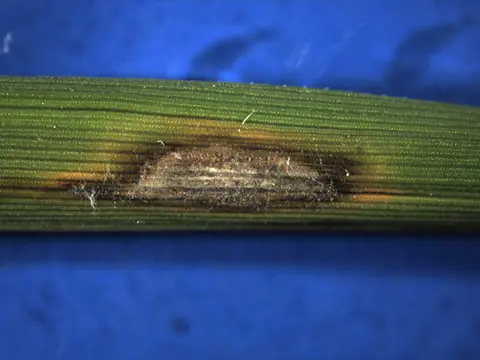
- Small rusty spots or patches cover the leaves and join into blotches.
- Plants fail to make panicles, or make very few.
Grassy stunt looks like rice tungro and like rice yellow dwarf, because all of them stunt the plant and turn leaves yellow. Grassy stunt is the one with the grassy, rosette growth and rusty spots. Tungro is carried by green leafhoppers, not by brown planthoppers.
How Rice Grassy Stunt Hurts Your Palay
Grassy stunt reduces yield by stopping panicle production, so a hit plant gives almost no grain. A plant infected at the seedling stage seldom reaches maturity. The tillering stage is the most open to infection. We did not find a sourced yield loss percentage for the Philippines, so we give none here.
The virus has no cure. A sick plant stays sick, and the planthoppers that fed on it carry the virus on to the next plant. Because of that, the fight begins with the insect. In 2017 the brown planthopper resurged across 18 provinces, and the two viruses it carries, ragged stunt and grassy stunt, have no cure.
How to Control Rice Grassy Stunt
- Plant a variety that resists the brown planthopper. Resistant varieties are the most reliable tool against planthoppers in the tropics.
- Plant when the farms around you plant, so the insect cannot hop from older fields onto young ones. Synchronized crop establishment is one of the controls.
- Avoid close planting, and leave a wider gap in the field every few meters so you can scout and so air can move.
- Natural enemies keep planthoppers in check, such as spiders, mirid bugs, water striders and egg parasite wasps. Protect them by skipping early insecticide sprays.
- Pull out and bury sick plants early, and plow under infected stubble after harvest, because the virus lives on in stubble and volunteer rice.
- Drain and flood the seedbed for a day when planthoppers are present, so that the insects drown.
Why No Spray Cures It
No spray can treat the virus in a sick plant. Insecticides target only the planthopper that carries it. Do not spray in the first 30 to 40 days after transplanting unless a pest is truly at outbreak level, because early sprays kill the spiders and wasps and cause planthopper outbreaks. If an outbreak is real, ask your local agriculture office which FPA registered product to use, and follow the label.
What the Labels Name for the Brown Planthopper
| Active ingredient | IRAC group | On Philippine labels |
|---|---|---|
| Pymetrozine | IRAC 9B | A first choice. 26 registered products name it on rice. |
| Dinotefuran | IRAC 4A | A first choice. 10 registered products name it on rice. |
| Pymetrozine plus dinotefuran | IRAC 9B plus 4A | A first choice. 3 registered products name it on rice. |
| Triflumezopyrim | IRAC 4E | A first choice. 3 registered products name it on rice. |
| Thiamethoxam | IRAC 4A | A sound second choice. 23 registered products name it on rice. |
| Buprofezin | IRAC 16 | A sound second choice. 7 registered products name it on rice. |
| Chlorantraniliprole plus thiamethoxam | IRAC 28 plus 4A | A sound second choice. 6 registered products name it on rice. |
| Clothianidin | IRAC 4A | A sound second choice. 3 registered products name it on rice. |
| Cartap hydrochloride | IRAC 14 | Older or broad chemistry: a last resort. 83 registered products name it on rice. |
| Fipronil | IRAC 2B | Older or broad chemistry: a last resort. 32 registered products name it on rice. |
The table stops at the ten best. 7 more on Philippine labels for it are older or broad chemistry. The Disease Finder in anee.io lists every one, crop by crop, with the products sold here.
Use only products registered with the Fertilizer and Pesticide Authority, and follow the label for the rate, the timing and the protective clothing. Switch to a different fungicide group next time, so the disease does not learn to survive it. Our guide to plant diseases explains how.
Keep It Out Next Season
- Plant a variety that resists the brown planthopper, or the virus, or both.
- Plant together with the farms around you and keep a fallow, so hoppers cannot move from old fields onto young ones.
- Pull out and bury sick plants early, and plow under stubble, ratoons and volunteer rice after harvest.
- Flood the seedbed for a day when planthoppers are on it, so they drown.
- No insecticide in the first 30 to 40 days, and never a pyrethroid: both bring planthoppers back worse.
- Avoid close planting, and leave a narrow walking gap every few meters to scout.
Natural Enemies and Biological Help
- Spiders, mirid bugs, water striders and egg wasps keep planthoppers in check. Spare them by not spraying early.
Not Sure What You Are Seeing?
Take a clear photo of the spots or the damage up close, then the whole plant, then ask Anee, the smart farm technician in anee.io, in Tagalog or English. Anee tells you what it most likely is and what to do at the age of your crop. You can also put your scouting days on the cropping calendar, so the team knows when to walk the field.
anee.io keeps your scouting, spraying and harvest on one calendar, and Anee answers when something looks wrong.
- Scouting days dated from each lot's own planting day
- Photos and notes for every lot
- Anee, the smart farm technician, in Tagalog or English
Questions Farmers Ask About Rice Grassy Stunt
Is there a cure for rice grassy stunt?
How soon do the signs show after infection?
Should I spray right after transplanting?
Stop the spread of Rice Grassy Stunt
With Libre + Anee, read the whole guide: how to tell it from look alikes, what makes it spread, and what to spray and when.
The account is free, no credit card.