Sheath Rot: How to Spot It and Stop It in Your Palay
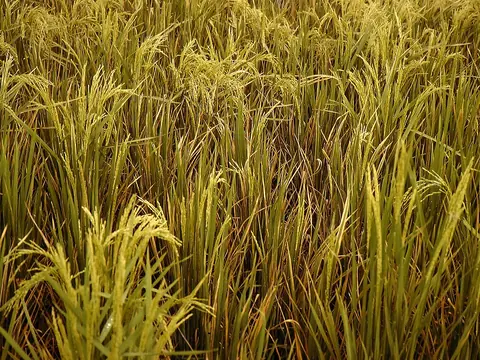
Sheath rot is a fungal disease that rots the uppermost leaf sheath of rice, the one that wraps the young panicle. The panicle then comes out only in part, or not at all, and the grains turn chaffy or discolored.
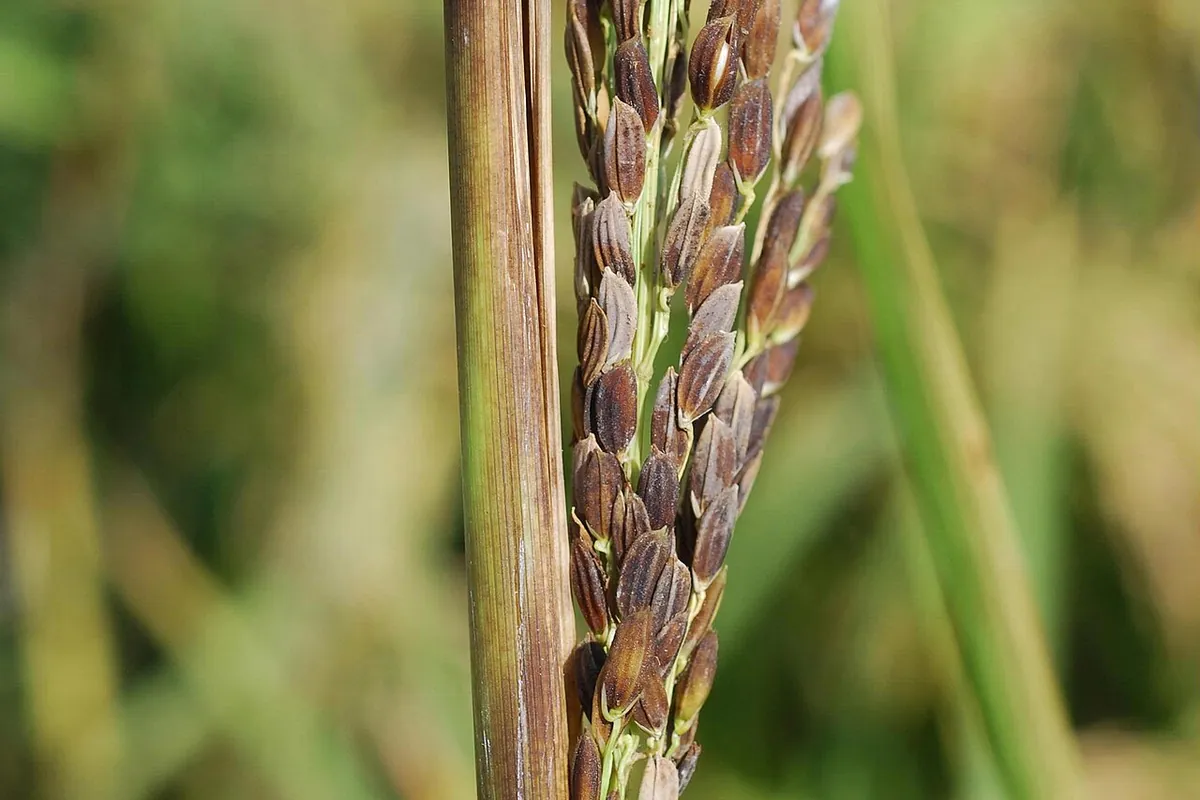
What Is Sheath Rot?
Sheath rot is caused by the fungus Sarocladium oryzae, and the related species Sarocladium attenuatum can cause it too. It is found in most countries that grow rice, above all in rainfed fields, and it does more harm in the rainy months than in the dry ones.
The disease hits at the worst time, just as the panicle forms. Because the sheath wraps the panicle, rot in the sheath chokes the panicle inside. That is why farmers should watch the crop from panicle initiation, and why stem borer control matters, since borer holes let the fungus in. See our page on the rice stem borer.
| Fact | Details |
|---|---|
| Name | Sheath rot |
| Scientific name | Sarocladium oryzae |
| Kind | Fungus (a fungal disease) |
| Crops it attacks | Rice |
| Local names | None recorded |
| Where it strikes | Stems and tillers and panicles and ears |
| When it strikes | It strikes from panicle initiation to heading, mostly in the wet season and in rainfed fields, when the humidity is high and the weather is 20 to 28 degrees Celsius. |
| How it spreads | The fungus lives on infected seed, stubble and crop residue. It enters the top leaf sheath, often through wounds made by insects such as stem borers. |
How to Identify Sheath Rot
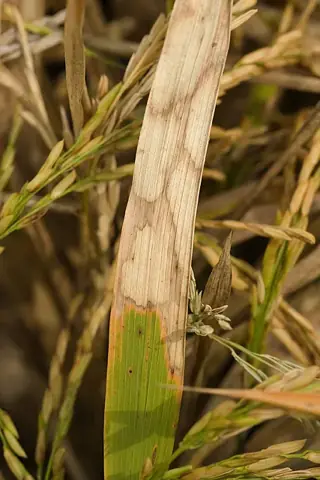
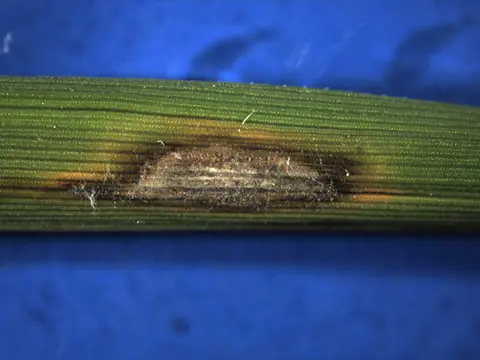
Look at the top leaf sheath, the one that wraps the young panicle, just before and during heading. The lesion is oblong or irregular, with a dark reddish brown edge and a gray or brownish gray center. As spots join, they cover most of the sheath. Open a sheath that looks sick, and you often find a whitish, powdery fungal growth inside, with a rotting panicle.
- Oblong or irregular spots form on the top leaf sheath, with dark reddish brown edges and gray centers.
- Spots join and cover most of the sheath.
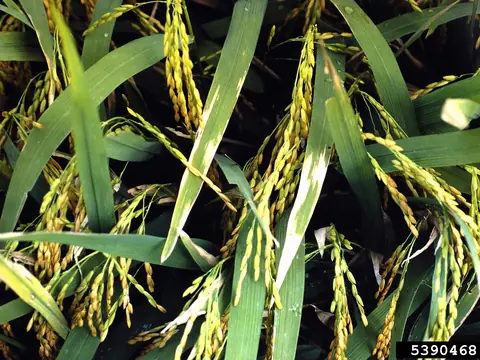
- The panicle stays trapped in the sheath, or comes out only in part.
- A whitish, powdery growth shows inside the sheath, and the young panicle rots.
- Grains are unfilled, sterile or discolored.
Sheath rot is often confused with sheath blight, which has larger, grayish green lesions with brown borders on the lower sheaths and no whitish powdery growth inside the top sheath. A trapped panicle can also come from stem borer injury or from neck blast.
How Sheath Rot Hurts Your Palay
Sheath rot cuts yield by slowing or stopping the panicle from coming out, and by leaving unfilled grains and sterile panicles. It also lowers grain quality, because the panicles rot and the grains discolor. Research papers from India report yield losses of 20 to 85 percent in bad attacks, but the figure depends on the variety, the weather and the year, so use it only as a sign of how bad it can get.
The risk rises with close planting and with heavy nitrogen. Our guide to fertilizer for rice shows how to split nitrogen safely. We found no official action threshold for the Philippines.
How to Control Sheath Rot
- Use healthy seed that comes from a field free of the disease, and never save seed from a sick crop.
- Do not plant too close. Incidence goes up with planting density.
- Apply nitrogen in split doses, and add potash instead of piling on more nitrogen.
- Control stem borers and other insects, because their holes give the fungus a way in. Also read our page on the rice stem borer for how to scout it, and remember that early insecticide sprays in the first 30 to 40 days after transplanting kill the spiders and wasps that protect the crop.
- Remove infected stubble and crop residue after harvest, and plow it under.
- Treat the seed with a fungicide before sowing if the field had sheath rot in the past.
When a Spray Makes Sense
A spray makes sense only where sheath rot was bad before. Once the panicle is stuck inside the sheath, a spray cannot free it. Seed can be treated, and foliar sprays are an option. Follow the label of an FPA registered product, and rotate groups.
| Active ingredient | FRAC group | On Philippine labels |
|---|---|---|
| Azoxystrobin plus difenoconazole | FRAC 11 plus 3 | A first choice. 4 registered products name it on rice. |
| Copper oxychloride plus copper hydroxide | FRAC M01 plus M01 | Older or broad chemistry: a last resort. 1 registered product names it on rice. |
Use only products registered with the Fertilizer and Pesticide Authority, and follow the label for the rate, the timing and the protective clothing. Switch to a different fungicide group next time, so the disease does not learn to survive it. Our guide to plant diseases explains how.
Keep It Out Next Season
- Use healthy seed from a field free of the disease, and treat the seed before sowing if the field had sheath rot.
- Do not plant too close. Sheath rot rises with planting density.
- Split the nitrogen and add potash instead of more nitrogen.
- Control stem borers and sheath mites, whose wounds let the fungus in, but keep insecticides off for the first 30 to 40 days.
- Remove infected stubble and crop residue after harvest, and plow it under.
Not Sure What You Are Seeing?
Take a clear photo of the spots or the damage up close, then the whole plant, then ask Anee, the smart farm technician in anee.io, in Tagalog or English. Anee tells you what it most likely is and what to do at the age of your crop. You can also put your scouting days on the cropping calendar, so the team knows when to walk the field.
anee.io keeps your scouting, spraying and harvest on one calendar, and Anee answers when something looks wrong.
- Scouting days dated from each lot's own planting day
- Photos and notes for every lot
- Anee, the smart farm technician, in Tagalog or English
Questions Farmers Ask About Sheath Rot
Why does my panicle stay inside the sheath?
Is sheath rot the same as sheath blight?
Can I stop sheath rot by controlling insects?
Stop the spread of Sheath Rot
With Libre + Anee, read the whole guide: how to tell it from look alikes, what makes it spread, and what to spray and when.
The account is free, no credit card.