Foliar Fertilizer: When Leaf Feeding Works and When It Does Not
Foliar fertilizer is plant food you spray on the leaves instead of putting it in the soil. It acts fast on small needs, like a zinc or boron shortage, but leaves cannot take in the large amounts of nitrogen, phosphorus and potassium a crop uses in a season. This guide explains how foliar feeding works, which liquid fertilizer to buy, and how to mix and time each spray.

Farmers call it foliar, or simply abono sa dahon, fertilizer for the leaves. The agri supply sells it as bottles of liquid, sachets of soluble powder, and organic brews such as fish amino acid. Many labels promise bigger harvests from a few sprays. The truth is narrower.
This guide sits beside our pages on fertilizer application methods and complete fertilizer 14 14 14, because a foliar spray only works on top of a sound soil program.
How foliar fertilizer gets into a leaf
A waxy skin called the cuticle covers every leaf. Nutrients pass through tiny pores in that skin and, to a smaller degree, through the stomata, the breathing pores of the leaf. Positively charged nutrients such as calcium, magnesium, potassium and ammonium get in more easily. Phosphorus and nitrate nitrogen have a harder time.
Only part of each spray gets in. The same Missouri review puts leaf uptake at about 15 to 20 percent of the nutrients applied. The rest dries on the surface or washes off. So foliar feeding is a small, quick dose, not a full meal.
Why a foliar fertilizer spray cannot replace soil fertilizer
A crop needs nitrogen, phosphorus and potassium by the tens of kilos per hectare. For example, the general recommendation for irrigated palay in the wet season is 97 kg of nitrogen per hectare. Leaves simply cannot absorb that much.
Do the math on a typical spray. As an example only, say you mix 20 grams of a 20 20 20 powder in each 16 liter knapsack load and spray 10 loads on a hectare. That is 200 grams of product and only 40 grams of nitrogen, a tiny share of the 97 kg the crop needs. Your label gives the real rate.
The reason is simple. Plants need macronutrients in large amounts, leaves cannot take up enough to supply the whole plant, and strong sprays burn leaves because the water dries and the salts stay behind. Foliar feeding is a supplement to a sound soil fertility program, not a substitute for it.
When foliar application of fertilizer does make sense
- Correcting a shortage of a micronutrient such as zinc, boron, iron or manganese, when the soil holds that nutrient back and the plant needs only grams of it
- Giving a quick lift while the soil fertilizer you already applied starts to work
- Feeding fruit and young leaves directly, since a spray mostly stays in the tissue it lands on
- High value vegetables, fruit trees and nurseries, where the cost of extra sprays pays back
Liquid fertilizer and soluble powders you can buy
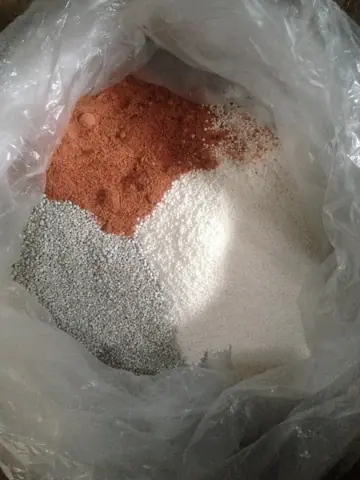
Foliar products come in three forms. Ready liquid fertilizer is a concentrate you dilute in the tank. Soluble powders, such as a 20 20 20 fertilizer, dissolve fully in water and serve both foliar feeding and drip lines. Organic liquids, such as fish amino acid and fish emulsion fertilizer, come from fermented or processed fish.
Whatever the form, buy only products registered with the Fertilizer and Pesticide Authority. The Philippine National Standard for organic soil amendments and plant supplements, PNS/BAFS 183:2023, lists fish amino acid, fish emulsion, seaweed extracts, fermented plant juice, vermi tea and compost tea as organic plant supplements. Their total nitrogen, phosphate and potash content runs from only 0.5 to 10 percent.
| Type | What it carries | Good for | Watch out |
|---|---|---|---|
| 20 20 20 soluble powder | Nitrogen, phosphate and potash, 20 percent each | Vegetables, nursery plants, drip lines | Burns leaves if mixed too strong |
| Micronutrient foliar | Zinc, boron, iron, manganese or a mix | A shortage you have confirmed | Wasted if the soil already has enough |
| Calcium or potassium foliar | Calcium or potassium salts | Fruiting vegetables and fruit trees | Cannot make up for dry or uneven watering |
| Fish amino acid (FAA) | Mostly nitrogen and amino acids | Leafy vegetables, soil drench | Strong smell, dilute about 1 to 1,000 |
| Fish emulsion fertilizer | Mostly nitrogen, a little phosphorus and potassium | Liquid feeding of vegetables and pots | Can clog nozzles, so strain it first |
| Seaweed extract | Small amounts of nutrients plus biostimulant compounds | Trials during heat or drought stress | Not a real source of NPK |
Biostimulants: what seaweed and amino acids can and cannot do
Biostimulants are products that help a plant use nutrients better or cope with stress, rather than feeding it directly. The common kinds include seaweed extracts, amino acids from protein, humic substances and beneficial microbes. Many foliar products now blend a little NPK with one of these.
There is real evidence behind some of them. In trials over three to four seasons, biofertilizers or biostimulants used together with inorganic fertilizer gave high yields at a lower fertilizer cost per kilo of palay. Two of the three featured products cut inorganic fertilizer use by 25 to 50 percent. The same trials also put the cost of these products at PHP 900 to 6,900 per hectare, depending on the number of applications. For palay, see our guide to rice growth enhancers.
Still, keep these limits in mind:
- A biostimulant does not replace urea, complete fertilizer or potash. The crop still needs its kilos of NPK.
- It will not cure a disease or kill a pest. Treat those with the right product at the label rate.
- It cannot fix waterlogged, very acid or compacted soil.
- Results vary by product and crop, so try it on one lot first and compare the harvest.
How to mix and spray foliar fertilizer the right way
Read the label first
Follow the rate, the interval and the crops listed on the label. Check the FPA registration number on the bottle or sachet.
Measure, do not guess
Use a measuring cup or a kitchen scale. A stronger mix does not feed faster. It burns leaves.
Test before tank mixing
If you plan to mix foliar fertilizer with an insecticide or fungicide, both labels must allow it. Mix a small amount in a clear jar first and look for clumps or layers.
Spray when it is cool
Spray in the cool of the early morning or late in the day. Spray while the air is relatively cool, so the droplets stay wet longer and do less harm.
Mist, do not drench
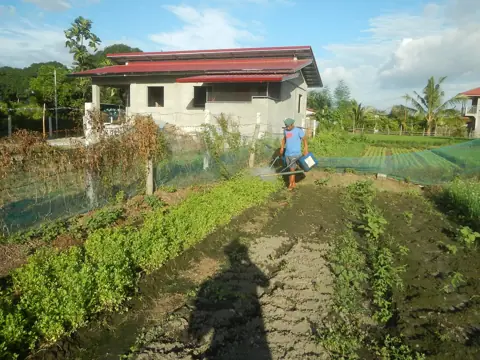
Cover both sides of the leaves with a fine mist and stop before droplets form and run off. Dripping leaves waste product and invite leaf burn.
Watch the sky
Skip the spray if rain is coming, because rain washes the mix off the leaves. Weaker sprays given more often are safer than one strong dose.
Example: fertilizer for tomato plants
The fertilizer for tomato plants comes mostly from the soil: compost or well rotted manure in the beds, a basal dose of complete fertilizer at transplanting, then side dressing as the plants flower and fruit. Our guide to vegetables in the Philippines covers the rest.
Foliar sprays come in at the edges. A micronutrient spray helps only when the plant shows a real shortage. Calcium sprays get the most attention because of blossom end rot, the dark, sunken patch at the bottom of the fruit.
Blossom end rot comes from a shortage of calcium in the enlarging fruit. Low soil pH, uneven or shallow watering, drought and too much nitrogen all make it worse. A calcium chloride spray may give some temporary relief. The lasting fix is regular, deep watering, mulch, gypsum or lime when a soil test calls for it, and less nitrogen.
When a spray dries, the water leaves but the fertilizer salts stay on the leaf. A mix that is too strong, sprayed at noon, scorches the leaf edges and tips. Stay at or below the label rate, spray in the cool hours, and try it on a few plants before the whole lot.
Plan foliar sprays with anee.io
Foliar sprays pay only when they land at the right stage. The anee.io cropping calendar dates every task from each lot's own day zero, so a spray you planned for day 20 after transplanting shows up on the right morning. Each lot also gets the week's weather for its location, which helps you pick a dry, calm day. The inventory records every bottle and sachet you use, with its cost, so you can see what foliar feeding really adds to your expenses.
If leaves turn yellow or spotted, send a photo to Anee, the smart farm technician. Anee answers in Tagalog or English, checks your crop's growth stage and weather first, and tells you whether it looks like a nutrient shortage, a pest or a disease.
Date each foliar spray from your lot's day zero, track what you used, and ask Anee when leaves look wrong.
Start free