Cutworm: How to Protect Corn Seedlings and Vegetables
A cutworm is a moth caterpillar that hides in the soil by day and chews through young stems at night. A patchy stand in the first weeks after planting often points to cutworms. This guide covers the two groups found on Philippine farms, the damage they do to corn and vegetables, and how to control them.
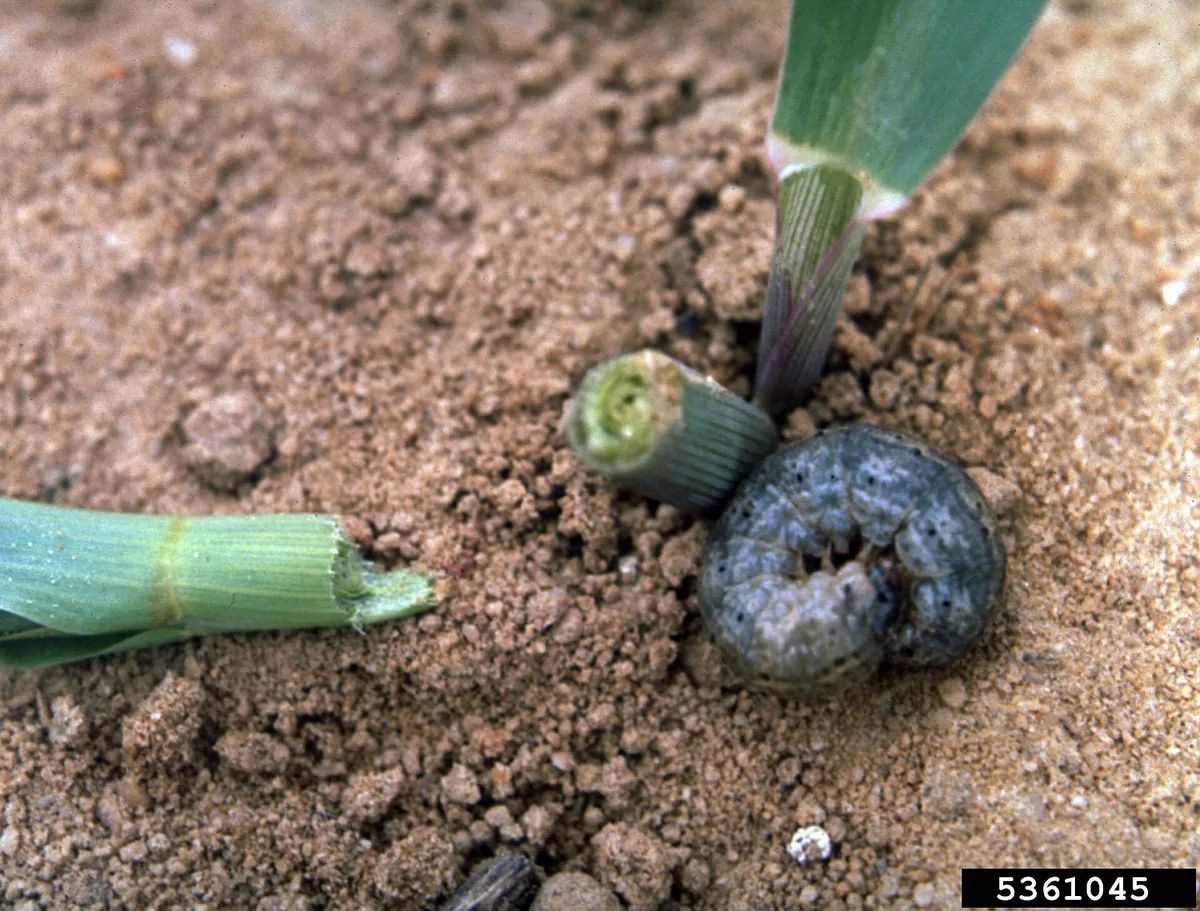
What a cutworm is
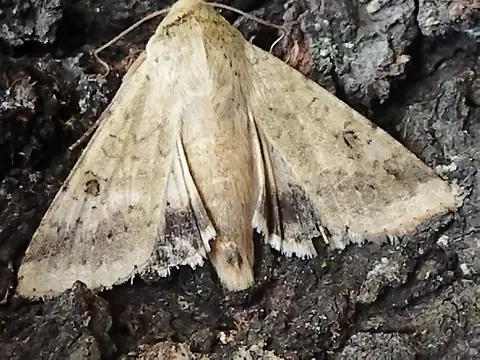
Cutworm is a farm name for the larvae of several moths in the family Noctuidae. Two kinds matter most on Philippine farms, and they behave a little differently.
Black cutworm (Agrotis ipsilon)
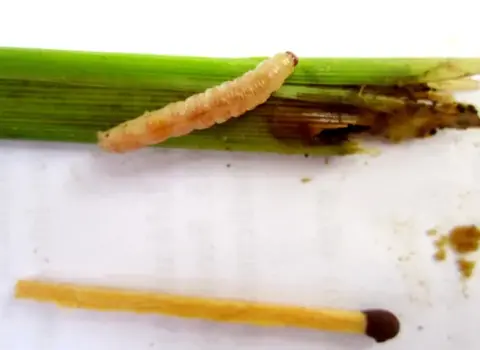
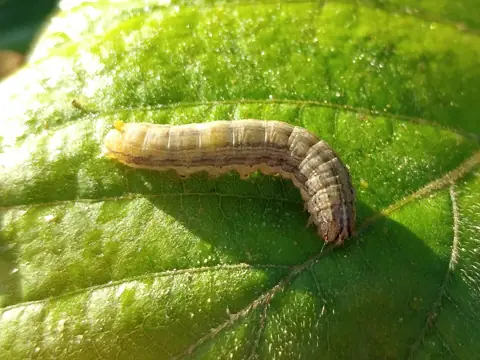
This is the classic soil cutworm. The larva is dark gray to black and grows to about 5 cm. It hides under the soil surface by day and feeds after dark, and it curls into a tight C when you dig it up.
Small larvae feed on leaves first. Larger ones cut seedlings off near the soil line, based on UMass Extension. Philippine product labels list cutworm on cabbage, eggplant, tomato, onion, beans and tobacco, which shows how many crops it can hurt.
Common cutworm (Spodoptera litura)
Also called the tobacco cutworm, this relative of the fall armyworm feeds more on leaves than on stems. It attacks onion, many vegetables, legumes and tobacco. It is also a corn pest that can strip young plants and cut their stems and leaves.
Onion growers in Central Luzon know it well. Researchers worked with farmers in Nueva Ecija to control it with NPV, a virus that infects its larvae.
Signs of cutworm damage
- A corn seedling cut clean at or near the soil line, lying on the ground in the morning
- Wilted seedlings with the stem chewed partway through
- Gaps in the row, often in patches or near weedy borders
- Small holes in leaves from young larvae, before they start cutting
- A gray or dark larva curled in the soil a few centimeters from the cut plant
Field crickets also cut corn seedlings along the soil surface. So dig around a cut plant before you decide. A curled larva means cutworm, while an empty burrow nearby points to crickets.
On vegetables, look at fresh transplants of cabbage, tomato, eggplant and onion. The same night feeding leaves toppled seedlings and chewed leaves.
Why the trouble starts before planting
Black cutworm moths lay their eggs mostly on grasses and weeds. UMass Extension adds that weedy and reduced tillage fields tend to suffer the most damage. So when you plant into a field that was full of weeds, the larvae may already be waiting in the soil.
That is why clean culture is the first step against Spodoptera litura in corn.
Cutworm control
Before and at planting
- Plow and harrow well, so larvae come up where birds and the sun can reach them.
- Clear weeds and grasses from the field and its borders before you plant.
- Buy a little extra seed so you can replant gaps quickly. Our corn seeds guide gives the seeding rates.
- For vegetable transplants, wrap a paper or plastic collar around each stem so larvae cannot reach it.
Scouting
Walk the field every few days in the first weeks after emergence, early in the morning. UMass Extension suggests checking at least 100 plants, with extra attention near field edges, for cut stems and leaf feeding. Dig around each fresh cut to find and kill the larva.
The same guide, from UMass Extension in the United States, suggests spot treatment once about 5 percent of plants are cut. That figure comes from US farms, not from Philippine trials. Use it only as a rough guide, and weigh it against the cost of replanting.
On anee.io, put a stand count and a scouting task on the cropping calendar for each lot, dated from its own planting day. If you cannot tell cutworm from cricket damage, send Anee, the smart farm technician, a photo of the cut seedling.
Biological control
Ground beetles, parasitic flies and wasps all attack the larvae, so skip broad sprays you do not need. For Spodoptera litura, NPV has been tested in Philippine onion fields. In a study on farms in Sto. Domingo and Guimba, Nueva Ecija, NPV sprays timed by pheromone trap catches kept leaf damage as low as the farmers' three to four insecticide sprays.
Cymbush insecticide and other labeled sprays
Cymbush 5 EC contains cypermethrin, a Group 3A pyrethroid. Its Syngenta Philippines label lists cutworm on beans, onion, tobacco and cotton, but for corn it lists only borers and earworms. Karate 2.5 EC, with lambda cyhalothrin, lists cutworms on tomato, onion and tobacco. For corn, the label of Proclaim Opti 5 WG, with emamectin benzoate, lists cutworm.
So before you use Cymbush insecticide against cutworm, check that your crop is on the label. The larvae feed above ground at night, and UMass Extension times sprays for that window, so aim at the base of the plants. Follow the label rate and the harvest interval, and see our guide to Karate, Cymbush and Selecron.
Active Ingredients on Philippine Labels
| Active ingredient | IRAC group | On Philippine labels |
|---|---|---|
| Chlorantraniliprole | IRAC 28 | A first choice. Registered products name it on corn, string bean, tobacco, cabbage and more. |
| Spinosad | IRAC 5 | A first choice. 12 registered products name it on onion. |
| Emamectin benzoate | IRAC 6 | A first choice. Registered products name it on corn, cabbage, onion, tomato and more. |
| Cartap hydrochloride | IRAC 14 | A sound second choice. Registered products name it on pechay, potato, onion, garlic and more. |
| Indoxacarb | IRAC 22A | A sound second choice. Registered products name it on tobacco and bitter gourd. |
| Flubendiamide | IRAC 28 | A sound second choice. Registered products name it on string bean, tobacco, cabbage, onion and more. |
| Chlorantraniliprole plus thiamethoxam | IRAC 28 plus 4A | A sound second choice. Registered products name it on string bean, cabbage and eggplant. |
| Cyantraniliprole | IRAC 28 | A sound second choice. Registered products name it on string bean, cabbage, onion, tomato and more. |
| Lufenuron | IRAC 15 | A sound second choice. 2 registered products name it on tomato. |
| Pyridalyl | IRAC UN | A sound second choice. Registered products name it on tobacco and cabbage. |
The table stops at the ten best. 26 more on Philippine labels for it are older or broad chemistry. The Pest Finder in anee.io lists every one, crop by crop, with the products sold here.
These are on Philippine labels for it, but we leave them off the list above, for the reasons below.
- Dinotefuran: A whitefly and hopper product. Caterpillars like cutworms barely respond to it.
Resistance. Common cutworm (Spodoptera litura) resists pyrethroids, organophosphates and carbamates in much of Asia, and in places emamectin and the diamides too. Rotate by generation among 28, 5 or 6, 22A, 15 and Bt, and never spray the same group twice in a row.
Use only products registered with the Fertilizer and Pesticide Authority for your crop and pest. The label gives the rate, the interval between sprays and the days to wait before harvest.
anee.io dates your land preparation, planting, stand count and scouting for every lot, and Anee answers your pest questions in Tagalog or English.
Sign up freeCutworm FAQ
What is the difference between a cutworm and an armyworm?
Why do my corn seedlings fall over overnight?
Does Cymbush insecticide kill cutworms?
Do cutworms attack vegetables?
Stop Cutworm from costing you the harvest
With Libre + Anee, read the whole guide: how to be sure it is this pest, when it pays to act, and what to spray, by active ingredient.
The account is free, no credit card.