Corn Planthopper: How to Spot It and Stop It in Your Mais
The corn planthopper, Peregrinus maidis, is a small sap sucking insect that lives in the corn whorl. It does harm by feeding, and it does more harm by carrying viruses from plant to plant. This page shows how to spot it and what to do.
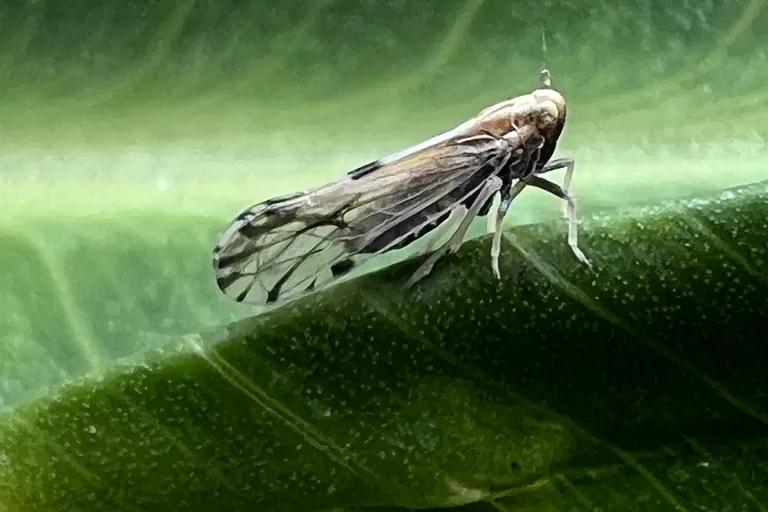
What Is Corn Planthopper?
The corn planthopper belongs to the family Delphacidae. It feeds on corn, sweet corn and sorghum, and it breeds in the whorl or throat of the maize plant. The grass called itch grass, and also barnyard grass and goosegrass, can keep it alive between crops.
It matters because it spreads maize mosaic virus and maize stripe virus. The hoppers pick up the virus while feeding, the virus multiplies inside them, and after a few days they pass it to healthy plants. The virus does not travel on seed.
| Fact | Details |
|---|---|
| Name | Corn planthopper |
| Scientific name | Peregrinus maidis |
| Kind | Insect |
| Crops it attacks | Corn |
| Local names | None recorded |
| Where it strikes | Leaves and the whole plant |
| When it strikes | Through the whole corn crop, with the virus risk highest on young plants, and the hoppers crowd at the field edges. |
| Life cycle | Females lay curved, banana shaped white eggs in slits in the leaf midrib. The nymphs, with red eyes, grow into adults in about 20 to 30 days, and several overlapping generations occur in a season. |
How to Identify Corn Planthopper
Adult hoppers are greenish or brownish yellow with darker tips on the wings, and the abdomen is smoky with yellow stripes on the sides. Nymphs are whitish, then yellowish, with red eyes. Sooty mold on the leaves shows heavy feeding. Look for stripes on the leaves too. A corn downy mildew plant shows pale stripes as well, but it also has a white growth on the underside of the leaf.
- Small greenish brown hoppers sit in the whorl and on the leaves, and jump when disturbed.
- Honeydew and black sooty mold coat the leaves where they feed.
- Light green to yellow stripes run along the leaves, either thin or 1 to 2 centimeters wide.
- Infected plants are stunted.
- Ears do not form, or they are deformed with few seeds.
Stripes can also come from nutrient trouble or from downy mildew. Check for hoppers and for sooty mold to be sure. See the guide to plant diseases in the Philippines.
How Corn Planthopper Hurts Your Corn
Feeding takes sap and leaves honeydew that grows sooty mold, which blocks light and lowers the sugars the plant needs for grain fill. The bigger threat is the viruses. Plants infected young stay stunted, and the cobs stay small or do not form.
A virus fact sheet from the Pacific notes that infection rates often stay low, at about 1 to 2 percent of plants. That is why spraying the whole field does not pay. We found no sourced yield loss figure for the Philippines.
How to Control Corn Planthopper
- Pull out plants with stripes and stunting as soon as you see them. Grasp the young leaves together so the hoppers cannot escape, put the plant in a sack and burn it.
- Weed the field and the edges. Remove itch grass, barnyard grass and goosegrass, which host the hopper and the virus.
- Sample the field edges, where the hoppers gather, and check the whorls of young plants every week.
- Rotate corn with a crop that is not a host, so the hoppers lose their food between seasons.
- Plant resistant varieties where they are sold. Imported maize seed has often come from breeding programs that selected for resistance.
- Protect natural enemies, which help to hold the hoppers down.
When a Spray Makes Sense
A virus has no cure, so the control is the vector and clean plants. Extension sources say that insecticides are not economical for this disease, since the infection rate is usually low. If hopper numbers are very high on young plants, ask the DA about an FPA registered product. We name no active ingredient here, because our sources named none.
Active Ingredients on Philippine Labels
| Active ingredient | IRAC group | On Philippine labels |
|---|---|---|
| Pymetrozine | IRAC 9B | A first choice. 30 registered products name it on corn. |
| Buprofezin | IRAC 16 | A sound second choice. 1 registered product names it on corn. |
Use only products registered with the Fertilizer and Pesticide Authority, and follow the label for the rate, the timing and the protective clothing. Switch to a different insecticide group next time, so the pest does not learn to survive it. Our guide to integrated pest management explains how.
Keep It Out Next Season
- Pull out striped, stunted plants early: close the young leaves in your hand so hoppers cannot jump, bag the plant and burn it.
- Clear itch grass, barnyard grass and goosegrass from the field and borders. They keep the hopper and the virus alive.
- Rotate corn with a crop that is not a grass, so the hoppers lose their food between seasons.
- Plant at the same time as your neighbors, and use virus resistant seed where it is sold.
Natural Enemies and Biological Help
- Spiders, lady beetles, mirid bugs that eat hopper eggs, and egg wasps keep numbers down. Avoid broad sprays that kill them.
- Beauveria or Metarhizium fungus infects hoppers in humid weather.
Not Sure What You Are Seeing?
Take a clear photo of the insect, the damage and the whole plant, then ask Anee, the smart farm technician in anee.io, in Tagalog or English. Anee tells you what it most likely is and what to do at the age of your crop. You can also put your scouting days on the cropping calendar, so the team knows when to walk the field.
anee.io keeps your scouting, spraying and harvest on one calendar, and Anee answers when something looks wrong.
- Scouting days dated from each lot's own planting day
- Photos and notes for every lot
- Anee, the smart farm technician, in Tagalog or English
Questions Farmers Ask About Corn Planthopper
What viruses does the corn planthopper carry?
Can the virus come with the seed?
Should I spray the whole field?
What weeds keep it alive?
Stop Corn Planthopper from costing you the harvest
With Libre + Anee, read the whole guide: how to be sure it is this pest, when it pays to act, and what to spray, by active ingredient.
The account is free, no credit card.