Onion Armyworm: How to Spot It and Stop It in Your Onions
The onion armyworm, Spodoptera exigua, is a caterpillar that scrapes and eats onion leaves, and it moves like an army. It caused a huge outbreak in Nueva Ecija in 2016. This page shows the signs, the traps and the steps that work.
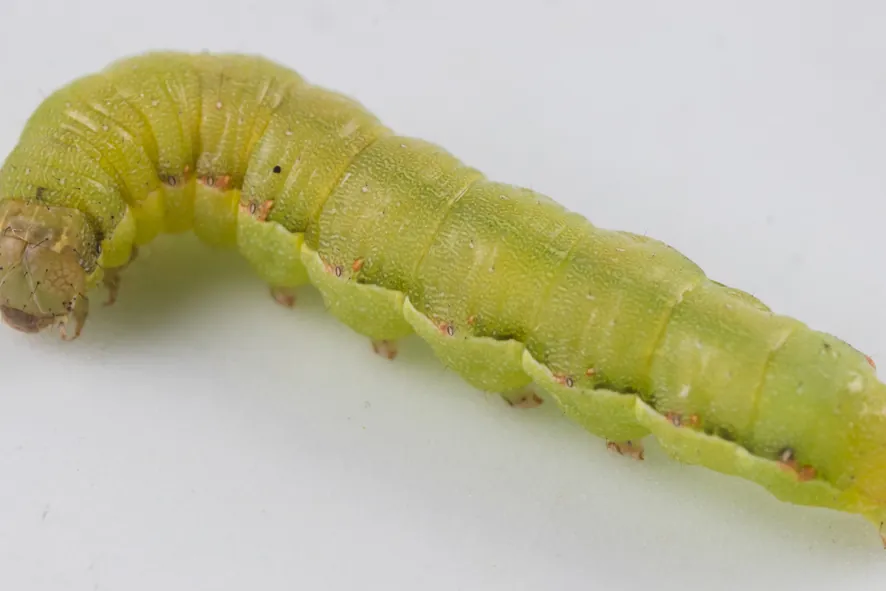
What Is Onion Armyworm?
The onion armyworm is a moth caterpillar found in all the major onion areas of the Philippines. It also eats pepper, squash, bitter melon, cowpea, corn and many weeds, so it is hard to starve out. It is a destructive pest that gets its name from its army like movement.
In 2016 an outbreak hit fourteen municipalities of Nueva Ecija, covering 5,330 hectares and 4,089 farmers, with an estimated loss above 1.6 billion pesos from February to April. Researchers linked it to a long distance migration, possibly triggered by El Nino. Later, 366 hectares were affected out of 10,217 hectares planted in Nueva Ecija and Tarlac.
| Fact | Details |
|---|---|
| Name | Onion armyworm |
| Scientific name | Spodoptera exigua |
| Kind | Insect |
| Crops it attacks | Onion, shallot, and many other vegetables |
| Local names | None recorded |
| Where it strikes | Leaves |
| When it strikes | At every stage of the onion crop, with outbreaks in the dry season, most often between February and April in Nueva Ecija. |
| Life cycle | Females lay cotton like egg masses of 20 to over 100 eggs, and one female lays 300 to 1,000 eggs. The life cycle takes about 3 weeks, and the moths can fly long distances. |
How to Identify Onion Armyworm
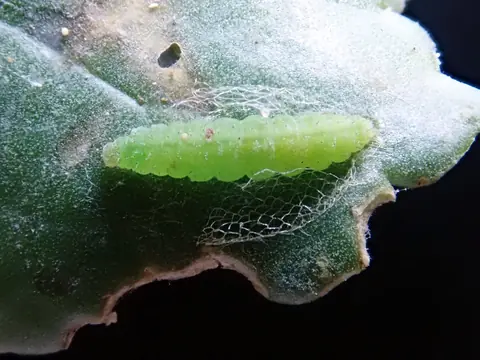
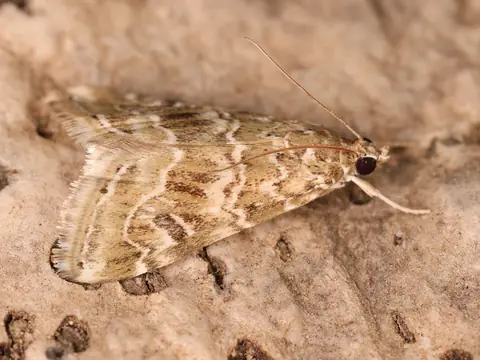
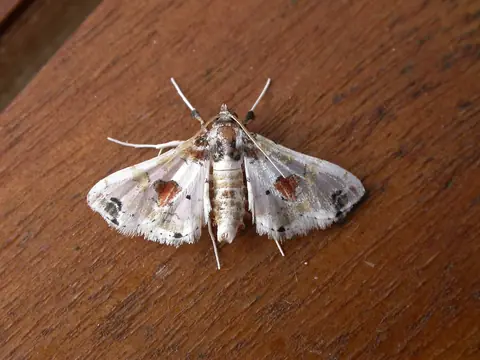
Look on the leaves for egg masses covered with white, hair like scales that look like cotton. The caterpillar is about 30 millimeters when full grown, with wavy, light stripes along its sides. The moth is small, gray and mottled. Young larvae feed together on the leaf, and the leaf tubes of the onion hide them. A diamondback moth larva is much smaller and wriggles when touched.
- White, cotton like egg masses sit on the leaves.
- Young larvae scrape the leaf surface and leave pale, papery patches.
- Bigger larvae make irregular holes and eat the leaves down, even to the bulb.
- Caterpillars crawl across the field in groups when food runs short.
- Frass and chewed leaves collect inside the leaf tubes.
The fall armyworm and the common cutworm also feed on leaves. The onion armyworm is the one with white cotton like egg masses on onion leaves. See cutworm and fall armyworm.
How Onion Armyworm Hurts Your Crop
The larvae skeletonize the leaves, and the feeding reaches down to the bulbs, so yield falls. In 2016 the loss in Nueva Ecija was estimated at more than 1.6 billion pesos. In 2024, 6.9 hectares were a total loss and 359.1 hectares had partial damage.
Because the pest has many other host plants and its moths migrate, one farmer cannot manage it alone. Scouting and joint action with neighbors count.
How to Control Onion Armyworm
- Scout often. Look for egg masses and groups of young larvae, and crush them by hand when numbers are low. Handpicking is the first control measure.
- Use sex pheromone traps to detect the first moths, so you can time your control. Pheromone lures were given out in Nueva Ecija.
- Remove weeds and crop residue, and rest the field from onion and other hosts for one or two seasons, so the pupae in the soil do not infest a new crop.
- Use light traps for mass trapping, or grow shallots under a net on small plots.
- Protect natural enemies such as earwigs, spiders and predatory wasps, which are the biological control.
- Use neem oil, a botanical spray, or Bacillus thuringiensis on young larvae before any synthetic spray.
When a Spray Makes Sense
Chemical control comes last and works best on young larvae. Rotate groups to slow resistance, use only FPA registered products for onion, and follow the label. Pyrethroids also kill the natural enemies.
| Active ingredient | IRAC group | On Philippine labels |
|---|---|---|
| Flubendiamide | IRAC 28 | A first choice. 2 registered products name it on onion. |
| Cyantraniliprole | IRAC 28 | A first choice. 1 registered product names it on onion. |
| Emamectin benzoate | IRAC 6 | A first choice. 1 registered product names it on onion. |
| Chlorfenapyr plus indoxacarb plus lufenuron | IRAC 13 plus 22A plus 15 | A sound second choice. 2 registered products name it on onion. |
| Lufenuron plus cyantraniliprole | IRAC 15 plus 28 | A sound second choice. 1 registered product names it on onion. |
Resistance. Beet armyworm in Asia resists pyrethroids, organophosphates and carbamates, and in China many fields now resist diamides and some resist emamectin. Use one group per generation, about 3 to 4 weeks: a diamide (28), then emamectin (6), then spinosad (5) or indoxacarb (22A).
Use only products registered with the Fertilizer and Pesticide Authority, and follow the label for the rate, the timing and the protective clothing. Switch to a different insecticide group next time, so the pest does not learn to survive it. Our guide to integrated pest management explains how.
Keep It Out Next Season
- Crush the white, cottony egg masses and the groups of tiny larvae (harabas) by hand while scouting.
- Hang sex pheromone traps from transplanting and read them every few days to time your control.
- Plant together with your neighbors, so no young onion field sits beside an old one full of larvae.
- After harvest, clear weeds and old leaves, then plow or flood the field so the pupae in the soil die.
- Rest the field from onion and other hosts for a season. Rice after onion breaks the cycle well.
- Light traps at night, or fine net over small shallot plots, keep the moths off.
Natural Enemies and Biological Help
- Spiders, earwigs and predatory wasps eat eggs and larvae. Pyrethroid sprays kill them first.
- The beet armyworm virus (SeNPV) and Bt aizawai, where you can buy them, work best on newly hatched larvae.
Not Sure What You Are Seeing?
Take a clear photo of the insect, the damage and the whole plant, then ask Anee, the smart farm technician in anee.io, in Tagalog or English. Anee tells you what it most likely is and what to do at the age of your crop. You can also put your scouting days on the cropping calendar, so the team knows when to walk the field.
anee.io keeps your scouting, spraying and harvest on one calendar, and Anee answers when something looks wrong.
- Scouting days dated from each lot's own planting day
- Photos and notes for every lot
- Anee, the smart farm technician, in Tagalog or English
Questions Farmers Ask About Onion Armyworm
Why is it called armyworm?
How big was the 2016 outbreak?
Do pheromone traps help?
How many eggs does one moth lay?
Stop Onion Armyworm from costing you the harvest
With Libre + Anee, read the whole guide: how to be sure it is this pest, when it pays to act, and what to spray, by active ingredient.
The account is free, no credit card.