Diamondback Moth: How to Spot It and Stop It in Your Cabbage
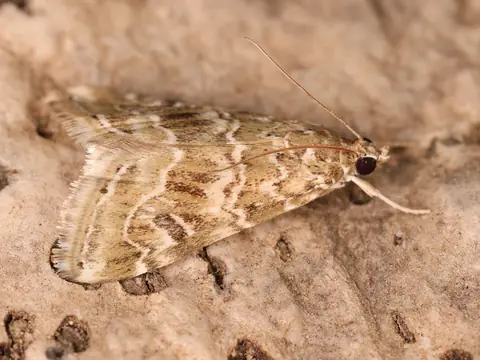
The diamondback moth, Plutella xylostella, is a small caterpillar that scrapes and holes the leaves of cabbage and other crucifers. It has become resistant to many insecticides, so smart control starts with natural enemies. This page shows the signs and the order of steps.
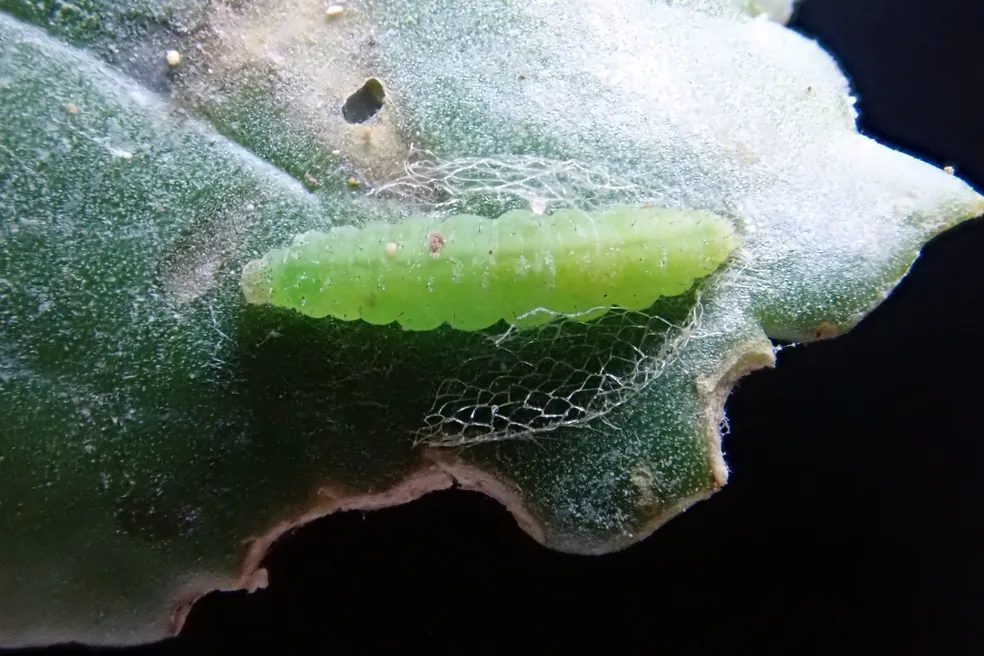
What Is Diamondback Moth?
The diamondback moth attacks cabbage, cauliflower, Chinese cabbage, mustard and other crucifers. In the Philippines it is the key pest in highland and lowland vegetable areas. Before biological control, cabbage farmers used only synthetic pesticides, and the moth became resistant to nearly every potent one.
In 1989 and 1990 the country brought in two parasitic wasps, Diadegma semiclausum for the highlands above 800 meters and Cotesia plutellae for the lowlands. The releases cut larvae from 4 to 10 per plant down to 0.4 to 2.8 per plant.
| Fact | Details |
|---|---|
| Name | Diamondback moth |
| Scientific name | Plutella xylostella |
| Kind | Insect |
| Crops it attacks | Cabbage and other crucifers |
| Local names | None recorded |
| Where it strikes | Leaves |
| When it strikes | Through the whole crop, but the worst damage is on young plants, before and during head formation, and in warm weather. |
| Life cycle | Larvae mature in 10 to 14 days in warm weather, then pupate in a loose cocoon on the leaf or stem. The whole life cycle takes about 3 weeks when it is warm, so generations overlap fast. |
How to Identify Diamondback Moth
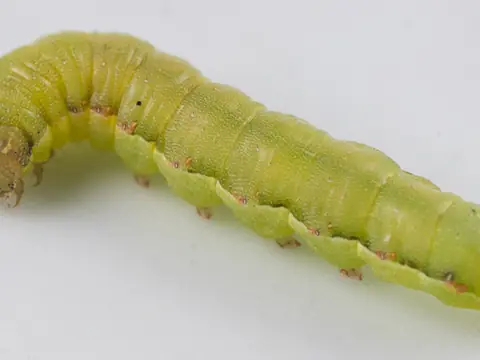
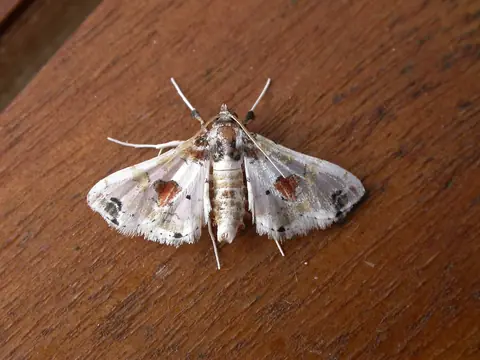
The larva is small, up to 0.3 inch long, wider in the middle, with a V shaped rear end. Young larvae scrape the underside of the leaf and leave a clear thin skin, called window paning. Older larvae chew holes. Moths are small and flutter up when you touch the plants. Holes in the heart of the plant can also come from the cabbage webworm, which feeds at the growing point and leaves silk.
- Window pane spots, where the upper leaf skin stays and turns clear, show on the leaves.
- Small holes and ragged leaves appear as the larvae grow.
- Larvae wriggle backward when you touch them and drop on silk threads.
- Larvae feed at the growing point of young plants and stunt them.
- Loose cocoons sit on the leaves and stems.
The cabbage webworm and the cabbage looper also chew crucifers, and the onion armyworm belongs to a different family of caterpillars. Window paning and the V shaped rear end point to the diamondback moth.
How Diamondback Moth Hurts Your Crop
The most serious damage comes when caterpillars attack the crown or growing point of young plants, which can stunt them. In Philippine trials, the parasitoid approach raised yields by up to 75 percent, cut production costs by 41 percent and cut pesticide sprays by 80 percent.
The moth has developed resistance to many insecticides. Even so, the Philippine populations tested still had a low level of resistance to Bacillus thuringiensis. We found no single national loss figure, so we give none.
How to Control Diamondback Moth
- Protect and use the parasitoids. Diadegma semiclausum suits the highlands above 800 meters and Cotesia plutellae the lowlands, and spiders, ground beetles and syrphid fly larvae also help.
- Plant all the crucifers in a field at the same time, instead of staggering ages, and rotate cole crops to a different field each season.
- Scout twice a week from transplanting, and check the underside of leaves and the growing point.
- Use Bacillus thuringiensis first. Philippine farmers were trained to replace synthetic insecticides with it, and it spares the wasps.
- Remove old crop residue and crucifer weeds after harvest, since the pupae stay there.
- Spray a synthetic insecticide last, and rotate the mode of action with every generation.
When a Spray Makes Sense
The diamondback moth has become resistant to nearly every new mode of action, so rotation is the key. Change the IRAC group each generation, about every 2.5 to 4 weeks, depending on heat. Always choose an FPA registered product for crucifers and follow the label.
| Active ingredient | IRAC group | On Philippine labels |
|---|---|---|
| Spinosad | IRAC 5 | A first choice. 12 registered products name it on cabbage. |
| Indoxacarb | IRAC 22A | A first choice. 7 registered products name it on cabbage. |
| Bacillus thuringiensis kurstaki | IRAC 11A | A first choice. Registered products name it on cabbage, pechay, mustard and cauliflower. |
| Bacillus thuringiensis aizawai | IRAC 11A | A first choice. Registered products name it on cabbage, pechay, mustard, broccoli and more. |
| Spinetoram | IRAC 5 | A first choice. 2 registered products name it on cabbage. |
| Emamectin benzoate | IRAC 6 | A first choice. 1 registered product names it on cabbage. |
| Abamectin | IRAC 6 | A sound second choice. 40 registered products name it on cabbage. |
| Chlorantraniliprole | IRAC 28 | A sound second choice. 36 registered products name it on cabbage. |
| Chlorfenapyr | IRAC 13 | A sound second choice. 19 registered products name it on cabbage. |
| Novaluron | IRAC 15 | A sound second choice. 3 registered products name it on cabbage. |
The table stops at the ten best. 20 more on Philippine labels for it are older or broad chemistry. The Pest Finder in anee.io lists every one, crop by crop, with the products sold here.
These are on Philippine labels for it, but we leave them off the list above, for the reasons below.
- Deltamethrin, cypermethrin, fenvalerate and permethrin: Philippine cabbage moths survive pyrethroids, and the spray kills the wasps that keep them down.
- Malathion, profenofos and phenthoate: Philippine cabbage moths survive organophosphates, and the spray kills the wasps that keep them down.
- Fenobucarb (BPMC): An old carbamate the moths resist. It also kills the parasitic wasps.
- Imidacloprid: Made for sucking insects. It does not control caterpillars.
- Tetraconazole: A fungicide. It does not kill caterpillars, so this label line looks like an error.
- Phenthoate plus fenobucarb (BPMC): Both halves are old chemistry the moths resist, and both kill the wasps.
- Acephate plus imidacloprid: The moths resist acephate and imidacloprid does not hit caterpillars. It mostly kills the wasps.
Resistance. Philippine moths resist pyrethroids, organophosphates and carbamates, moths in many Asian fields survive cartap, and moths on some highland farms survive every diamide. Keep one group for one window of about 3 to 4 weeks (one moth generation), then switch: Bt, then spinosad or spinetoram, then emamectin, then indoxacarb or chlorfenapyr, and drop any group that failed for the rest of the crop.
Use only products registered with the Fertilizer and Pesticide Authority, and follow the label for the rate, the timing and the protective clothing. Switch to a different insecticide group next time, so the pest does not learn to survive it. Our guide to integrated pest management explains how.
Keep It Out Next Season
- Raise seedlings under fine net and plant only clean seedlings, free of eggs and small larvae.
- Plant the whole block at one time and leave a break of at least a month with no crucifer in the field.
- Right after harvest, plow under or feed to animals the old stalks and leaves. Larvae and pupae live on in them.
- Rotate cabbage, pechay and mustard with a crop of another family, such as tomato, beans or corn.
- A row of mustard around the field draws the moths away from the cabbage. Destroy it once it fills with larvae.
- Sprinkling the plants from above in the evening washes off young larvae and disturbs the moths.
Natural Enemies and Biological Help
- Protect the wasps Diadegma semiclausum in the highlands and Cotesia plutellae in the lowlands. Broad sprays kill them first.
- Bt sprays (kurstaki or aizawai) kill only caterpillars and spare the wasps, spiders and syrphid flies.
- Spiders, ground beetles and lacewings eat larvae and pupae left on the leaves.
Not Sure What You Are Seeing?
Take a clear photo of the insect, the damage and the whole plant, then ask Anee, the smart farm technician in anee.io, in Tagalog or English. Anee tells you what it most likely is and what to do at the age of your crop. You can also put your scouting days on the cropping calendar, so the team knows when to walk the field.
anee.io keeps your scouting, spraying and harvest on one calendar, and Anee answers when something looks wrong.
- Scouting days dated from each lot's own planting day
- Photos and notes for every lot
- Anee, the smart farm technician, in Tagalog or English
Questions Farmers Ask About Diamondback Moth
Why do sprays stop working on it?
What helped Philippine cabbage farmers most?
Does Bt work?
When is it worst?
Stop Diamondback Moth from costing you the harvest
With Libre + Anee, read the whole guide: how to be sure it is this pest, when it pays to act, and what to spray, by active ingredient.
The account is free, no credit card.