Cabbage Webworm: How to Spot It and Stop It in Your Crucifers
The cabbage webworm, Hellula undalis, is a small striped caterpillar that eats the growing point of young cabbage. It leaves silk webbing and frass, and a damaged plant may not make a head. Here is how to spot it early and keep your seedlings safe.
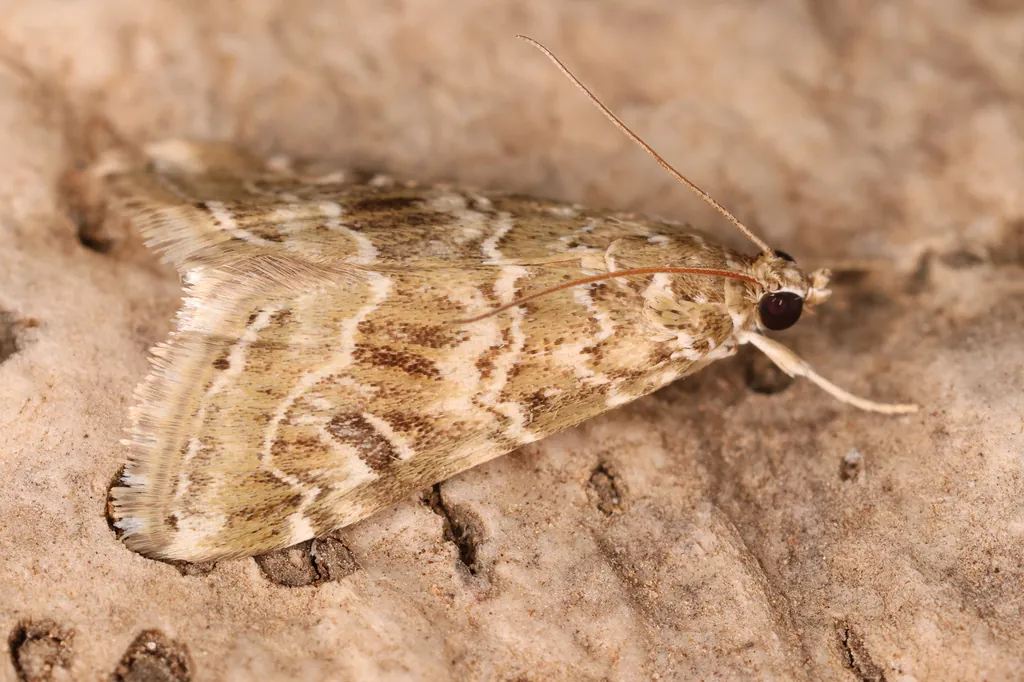
What Is Cabbage Webworm?
The cabbage webworm attacks cabbage, cauliflower and broccoli first, and also Chinese cabbage, mustard, daikon and radish. It affects members of the cabbage family in tropical areas. A Philippine review of cabbage pest control lists Hellula species. They showed up once the diamondback moth was under control.
Farmers care because it attacks the growing point. Early in the season, damage on a young plant can be as good as losing the plant.
| Fact | Details |
|---|---|
| Name | Cabbage webworm |
| Scientific name | Hellula undalis |
| Kind | Insect |
| Crops it attacks | Cabbage, cauliflower, broccoli, Chinese cabbage and radish |
| Local names | None recorded |
| Where it strikes | Leaves and stems and tillers |
| When it strikes | From transplanting to heading, when young plants have a soft growing point. |
| Life cycle | Females lay about 175 eggs in their short life, and the eggs hatch in 2 to 3 days. The larvae feed for 11 to 19 days, then pupate in silk cocoons for about 8 days. |
How to Identify Cabbage Webworm
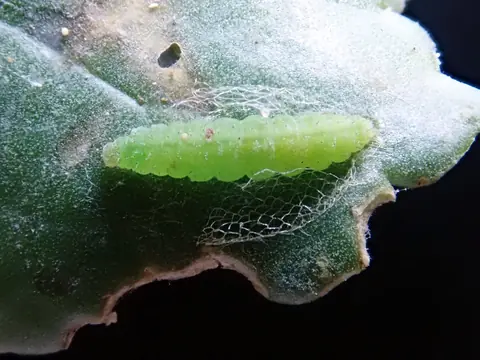
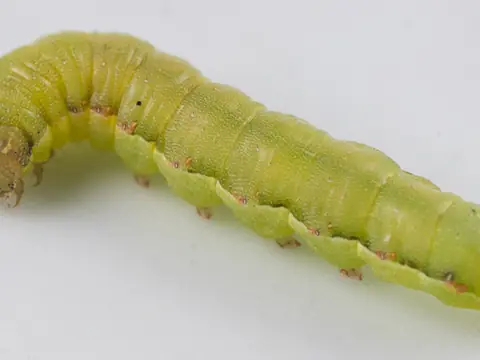
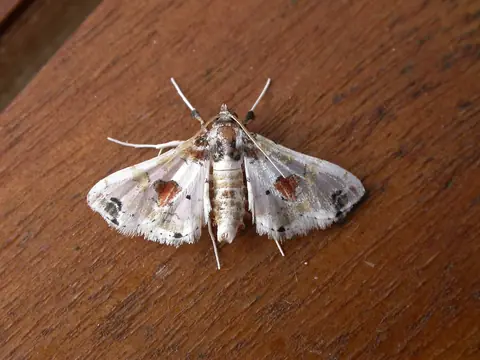
The moth is grayish brown with a wingspan of about 3/4 to 1 inch. The caterpillar is grayish yellow with five broad, irregular reddish brown bands along its body and reaches about 1/2 inch. Open the heart of a young plant and look for silk and frass. The diamondback moth leaves window panes on the leaf and does not web the center.
- Silk webbing and frass sit in the heart of young plants.
- The growing point is eaten, so the plant is stunted or deformed.
- Plants make several small heads or none at all.
- Larvae tunnel into the leaf stalks and the main stem of older plants.
- Damage is worst between transplanting and heading.
The diamondback moth and the cabbage looper also eat cabbage. Silk and frass in the heart of the plant point to the webworm.
How Cabbage Webworm Hurts Your Crop
Young plants suffer the most. Feeding at the growing point and the developing leaves causes stunting and deformity. The plant may form many growing points and weak heads. Extension sources note that early season damage can equal a lost plant for each plant infested.
One extension source suggests tolerating no more than 0.1 to 0.3 larvae per plant for crucifer caterpillars in general. It suggests a lower number for the webworm when many moths arrive early. We found no Philippine threshold, so check your own seedlings often.
How to Control Cabbage Webworm
- Screen the seedbed with a fine net. Keep it clean of weeds and old crop residue, so moths cannot lay eggs on the seedlings.
- Transplant strong, healthy seedlings about 5 to 6 inches tall, since they can outgrow early damage.
- Inspect the heart of each seedling at transplanting and for the next two weeks, and look for silk and frass.
- Pick out and crush larvae and cut off damaged tips on small plots.
- Encourage natural enemies. The wasp Chelonus blackburni attacks the eggs and the larvae, although its field value is uncertain.
- Use the same steps you use against the diamondback moth, and favor products that spare the wasps.
When a Spray Makes Sense
Choose a product with the whole cabbage pest complex in mind. The diamondback moth and other worms attack at the same time. The sources we used name no active ingredient for the webworm. Ask your DA technician for an FPA registered product and follow its label.
Use only products registered with the Fertilizer and Pesticide Authority, and follow the label for the rate, the timing and the protective clothing. Switch to a different insecticide group next time, so the pest does not learn to survive it. Our guide to integrated pest management explains how.
Keep It Out Next Season
- Raise seedlings under fine net, in a seedbed kept clean of weeds and old crop remains.
- Transplant strong seedlings about 5 to 6 inches tall. They outgrow early damage better.
- Check the heart of each new transplant twice a week for two weeks. Crush larvae and pinch off damaged tips on small plots.
- Clear crucifer weeds and old cabbage stalks, and plant the whole field at one time.
- Webworm is worst in hot, dry spells. Sprinkling from above disturbs the moths and young larvae.
Natural Enemies and Biological Help
- The wasp Chelonus blackburni and other small wasps attack the eggs and larvae. Sprays that spare the diamondback moth wasps spare these too.
- Bt aimed into the heart kills young larvae with no harm to the wasps.
Not Sure What You Are Seeing?
Take a clear photo of the insect, the damage and the whole plant, then ask Anee, the smart farm technician in anee.io, in Tagalog or English. Anee tells you what it most likely is and what to do at the age of your crop. You can also put your scouting days on the cropping calendar, so the team knows when to walk the field.
anee.io keeps your scouting, spraying and harvest on one calendar, and Anee answers when something looks wrong.
- Scouting days dated from each lot's own planting day
- Photos and notes for every lot
- Anee, the smart farm technician, in Tagalog or English
Questions Farmers Ask About Cabbage Webworm
Why is the webworm so harmful?
Which plants does it attack?
When do I look for it?
How long does one generation last?
Stop Cabbage Webworm from costing you the harvest
With Libre + Anee, read the whole guide: how to be sure it is this pest, when it pays to act, and what to spray, by active ingredient.
The account is free, no credit card.