Eggplant Fruit and Shoot Borer: How to Spot It and Stop It in Your Talong
The eggplant fruit and shoot borer is a small moth caterpillar that tunnels into the shoots and fruits of talong. It is the main reason many eggplant growers spray so often. This page shows how to spot it early and how to cut the damage with clean fields, traps and careful sprays.
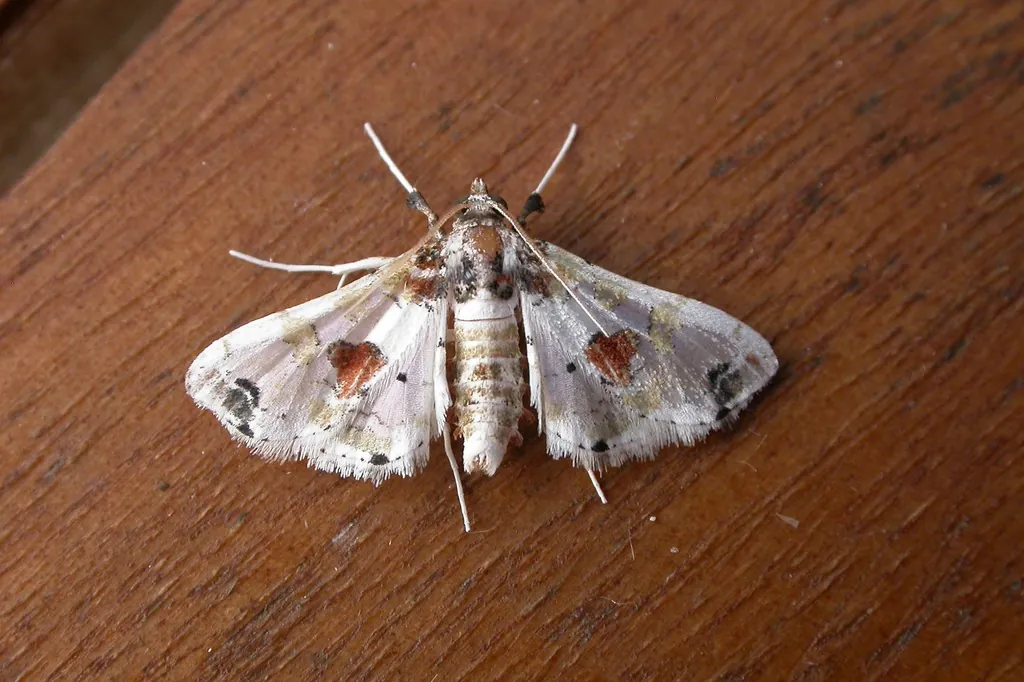
What Is Eggplant Fruit and Shoot Borer?
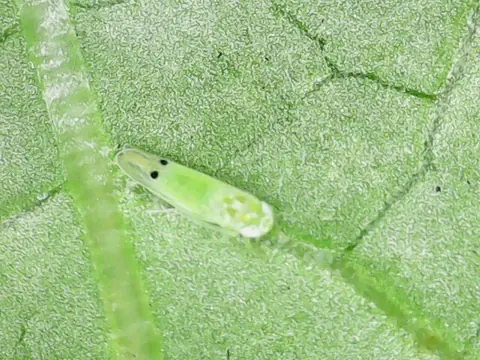
This borer (Leucinodes orbonalis) attacks eggplant, known as brinjal in South Asia. It is the pest behind the heavy misuse of pesticides in eggplant. The eggplant leafhopper is the other big pest of the crop.
The caterpillar hurts your income twice. First it kills the growing tips, so the plant makes fewer fruits. Then it tunnels into the fruits that do form, and they cannot be sold. One larva can damage four to six fruits before it is fully grown, according to an Indian field study.
| Fact | Details |
|---|---|
| Name | Eggplant fruit and shoot borer |
| Scientific name | Leucinodes orbonalis |
| Kind | Insect |
| Crops it attacks | Eggplant (talong) |
| Local names | None recorded |
| Where it strikes | Stems and tillers and fruits, pods and nuts |
| When it strikes | It attacks from the young plant stage to the last harvest. It is worst in warm weather when the plants keep making new shoots and fruits. |
| Life cycle | The moth lays eggs one by one on leaves, stems, flower buds and fruit bases. The caterpillar bores into a shoot or a fruit, then drops to the soil to pupate. Several generations overlap in warm climates, and the pest survives in dried stubble between crops. |
How to Identify Eggplant Fruit and Shoot Borer
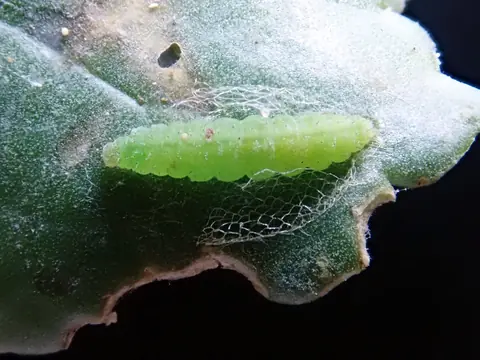
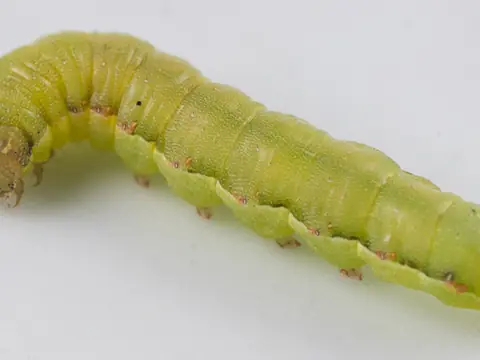
Look at the shoots and the fruits together. A shoot that wilts and dries at the tip, while the older leaves stay green, usually has a larva inside. On the fruit, look first for a tiny hole right under the calyx, the green cap. Cut the fruit open and you will find a tunnel full of frass. The full grown larva is dull white turning light pink, and 15 to 18 mm long. Plain wilting from bacterial wilt starts with the whole plant, not with one shoot, so check the stem before you decide.
- Shoot tips that wilt and dry while the lower leaves stay green.
- A tiny entry hole just below the calyx of the fruit.
- Fruits that are filled with frass and rot inside.
- Larvae of 15 to 18 mm, dull white to light pink, inside shoots and fruits.
- Exit holes in the shoot or the fruit where the larva left to pupate.
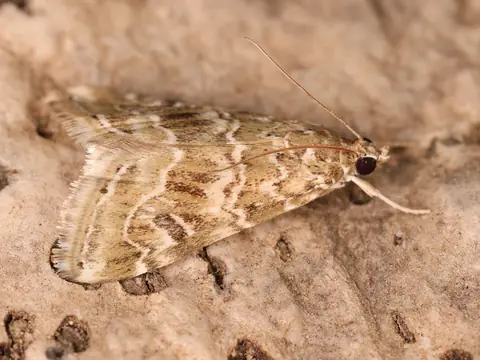
- White moths with a pink or bluish tinge resting under the leaves in the day.
Wilted shoots can also come from bacterial wilt or from stem damage. For a bacterial wilt plant, the whole plant wilts, and a cut stem in water gives off milky threads. In borer damage, one shoot dies and a larva is inside.
How Eggplant Fruit and Shoot Borer Hurts Your Crop
The damage shows as wilted shoots, holes under the calyx and fruits packed with frass. Because the larva feeds inside, a spray often misses it. That is why growers spray again and again, and why costs climb.
We found no Philippine action threshold in the sources we read. So the working rule is simple. Check the field every week, and act on the first wilted shoots. In trials from 2010 to 2012, eggplant lines that carry the Bt Cry1Ac gene cut shoot damage by 98.6 to 100 percent and fruit damage by 98.1 to 99.7 percent. That shows how heavy the borer pressure is, and how much a clean crop is worth.
How to Control Eggplant Fruit and Shoot Borer
- Walk the field every week and clip off wilted shoots and damaged fruits. Put them in a sealed bag or bury them deep. Do not throw them on the ground. Sanitation was one part of a non chemical program that matched methomyl.
- Set up pheromone traps to watch for the moths and to trap males. Change the lure on the schedule on the pack. Traps work best as a warning, together with weekly clipping.
- After the last harvest, pull out the plants and destroy the stubble. The pest survives in partly dried stubble between crops.
- Rotate with a crop that is not in the eggplant family, such as corn or beans. Avoid planting new talong next to old talong. This breaks the cycle.
- Protect the natural enemies. A trial in 2015 released the earwig Euborellia annulata and sprayed langkauas plus oregano extract. Together they cut fruit damage as well as methomyl did. The trial also used Trichogramma wasps and sanitation. Early sprays of broad spectrum insecticides kill these helpers.
- Look at the integrated pest management guide to plan these steps together.
When a Spray Makes Sense
Spray only after you have clipped the damaged shoots and fruits, because a spray cannot reach a larva inside. Rotate groups so the borer does not learn to survive them. Follow the FPA registered label, the waiting time before harvest and the protective clothing.
| Active ingredient | IRAC group | On Philippine labels |
|---|---|---|
| Chlorantraniliprole | IRAC 28 | A first choice. 34 registered products name it on eggplant. |
| Spinosad | IRAC 5 | A first choice. 12 registered products name it on eggplant. |
| Flubendiamide | IRAC 28 | A first choice. 4 registered products name it on eggplant. |
| Emamectin benzoate | IRAC 6 | A first choice. 1 registered product names it on eggplant. |
| Spinetoram | IRAC 5 | A first choice. 1 registered product names it on eggplant. |
| Abamectin | IRAC 6 | A sound second choice. 39 registered products name it on eggplant. |
| Indoxacarb | IRAC 22A | A sound second choice. 6 registered products name it on eggplant. |
| Chlorantraniliprole plus thiamethoxam | IRAC 28 plus 4A | A sound second choice. 3 registered products name it on eggplant. |
| Azadirachtin | IRAC UN | A sound second choice. 1 registered product names it on eggplant. |
| Broflanilide | IRAC 30 | A sound second choice. 1 registered product names it on eggplant. |
The table stops at the ten best. 19 more on Philippine labels for it are older or broad chemistry. The Pest Finder in anee.io lists every one, crop by crop, with the products sold here.
These are on Philippine labels for it, but we leave them off the list above, for the reasons below.
- Acetamiprid and dinotefuran: A neonicotinoid made for leafhoppers and whitefly. It gives poor control of borer larvae.
Resistance. In South Asia the borer resists pyrethroids and organophosphates. Rotate by windows of about 4 weeks: a diamide (28), then spinosad or spinetoram (5), then emamectin (6) or indoxacarb (22A), and come back to a group only after the others.
Use only products registered with the Fertilizer and Pesticide Authority, and follow the label for the rate, the timing and the protective clothing. Switch to a different insecticide group next time, so the pest does not learn to survive it. Our guide to integrated pest management explains how.
Keep It Out Next Season
- Clip wilted shoot tips and bored fruits every week, bag them and bury them deep. Never leave them on the ground.
- Raise seedlings under fine net and plant only seedlings with clean, unbored tips.
- Hang sex pheromone traps from transplanting to the last harvest, and change the lure on time.
- After the last picking, uproot and destroy the old plants. Do not set a new field beside an old one.
- Rotate with a crop outside the eggplant family, such as corn, rice or beans, and remove wild nightshade weeds.
- Grow a variety with better borer tolerance where one is available.
Natural Enemies and Biological Help
- Earwigs, the wasp Trathala flavoorbitalis and egg wasps attack the borer. Early broad sprays kill them.
- Trichogramma cards placed weekly from flowering cut the number of eggs that hatch.
- Bt sprays reach only newly hatched larvae before they bore in. Time them with the trap catch.
Not Sure What You Are Seeing?
Take a clear photo of the insect, the damage and the whole plant, then ask Anee, the smart farm technician in anee.io, in Tagalog or English. Anee tells you what it most likely is and what to do at the age of your crop. You can also put your scouting days on the cropping calendar, so the team knows when to walk the field.
anee.io keeps your scouting, spraying and harvest on one calendar, and Anee answers when something looks wrong.
- Scouting days dated from each lot's own planting day
- Photos and notes for every lot
- Anee, the smart farm technician, in Tagalog or English
Questions Farmers Ask About Eggplant Fruit and Shoot Borer
Why do my eggplant fruits have holes under the cap?
Can I eat a fruit that has a few borer tunnels?
Do pheromone traps stop the borer by themselves?
Is it the same pest as the one that makes my eggplant leaves curl?
Stop Eggplant Fruit and Shoot Borer from costing you the harvest
With Libre + Anee, read the whole guide: how to be sure it is this pest, when it pays to act, and what to spray, by active ingredient.
The account is free, no credit card.