Phosphorus Deficiency in Plants: Signs, Causes and How to Fix It
Phosphorus deficiency in plants starts on the old, lower leaves. Phosphorus carries energy inside the plant as part of ATP, and it is part of DNA. Young roots, shoot tips and seeds need the most, so it builds the root system and the first growth. It also drives tillering, flowering, and seed and fruit set, and it helps the crop ripen on time. Here are the signs in each crop, what brings it, how to be sure and the fertilizer that fixes it.
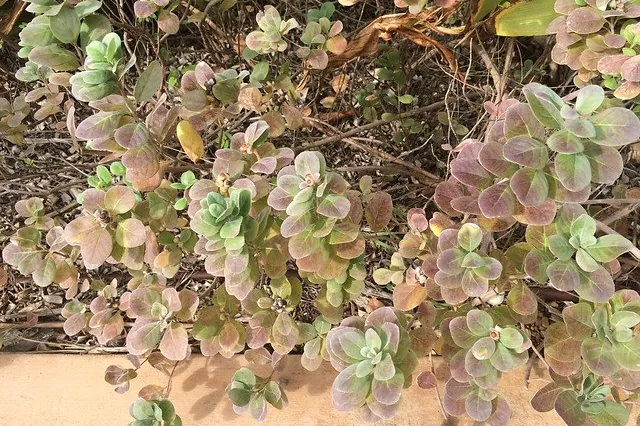
Phosphorus moves fairly easily inside the plant, from old leaves to new growth. So the dark or purple color shows first on the older, lower leaves, while the young leaves can look healthy.
Phosphorus deficiency symptoms
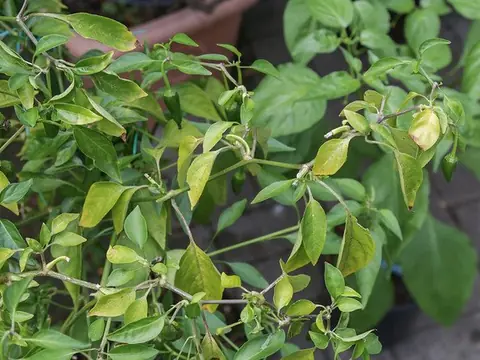
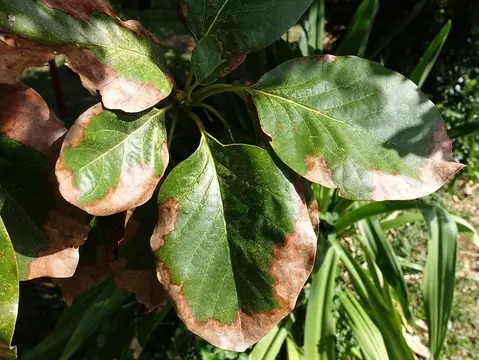
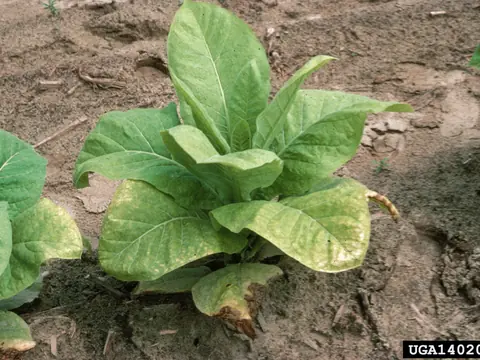
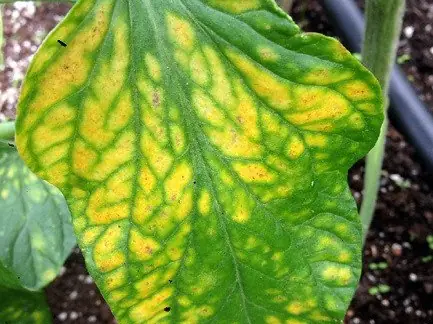
Plants grow slowly and stay short, thin and stiff, with few tillers or branches. Leaves turn a dull dark green or bluish green. Some crops show red or purple on old leaves and stems, as in corn seedlings. Flowering and maturity come late, often by a week or more, and grain, seed and fruit stay few and small. Mild cases are hard to see in the field because the plant looks green, just small.
Phosphorus deficiency by crop
Each crop shows it its own way. So find yours in the tables below, then open its page for the photo and the full fix, like the one for phosphorus in rice.
Rice
| Crop | The first sign | Fix with |
|---|---|---|
| Palay | Short, very upright, dirty dark green plants with very few tillers. | 16 20 0, Complete 14 14 14 |
Corn and Sorghum
| Crop | The first sign | Fix with |
|---|---|---|
| Mais | Young plants are short and dark green, with purple red edges on the lower leaves. | 16 20 0, Complete 14 14 14 |
| Batad | Short, stiff, dark green plants with red or purple leaves and sheaths. | Diammonium phosphate 18 46 0, 16 20 0 |
Legumes
| Crop | The first sign | Fix with |
|---|---|---|
| Monggo | Plants stay small and dark green with few pods, often without clear leaf marks. | Complete 14 14 14, 16 20 0 |
| Utaw | Short, dark bluish green plants with few pods. | Complete 14 14 14, 16 20 0 |
| Sitaw | Slow, short, dark green vines with few flowers and pods. | 16 20 0, Complete 14 14 14 |
| Paayap | Small, dark green plants that grow slowly and set few pods. | 16 20 0, Complete 14 14 14 |
| Sigarilyas | Vines stay short and weak on red, acid soil, with few pods and small roots. | 16 20 0, Complete 14 14 14 |
| Patani | Short, dark bluish green plants, sometimes purple tinted, with few pods. | 16 20 0, Complete 14 14 14 |
| Kadyos | Small, stunted, dark green plants with no clear leaf marks. | Diammonium phosphate 18 46 0, 16 20 0 |
Root Crops
| Crop | The first sign | Fix with |
|---|---|---|
| Kamote | Small, stunted vines with dark old leaves and purple red color under the leaves. | Single superphosphate 0 20 0, Complete 14 14 14 |
| Kamoteng kahoy | Stunted plants with a few yellow lower leaves and purple under the leaves, and late harvest. | Single superphosphate 0 20 0, Complete 14 14 14 |
| Gabi | Stunted plants with darker green old leaves dotted with light spots. | Single superphosphate 0 20 0, Complete 14 14 14 |
| Ubi | Growth slows with no clear marks, then young leaves get small, stiff and curl down at the tip. | Single superphosphate 0 20 0, 16 20 0 |
| Patatas | Short, dark plants with purple stems and leaf undersides, and leaflets curled upward. | Single superphosphate 0 20 0, Complete 14 14 14 |
| Karot | Short plants with small, distorted leaves tinged pink or purple, and late root formation. | Single superphosphate 0 20 0, Complete 14 14 14 |
| Labanos | Older leaves turn strongly purple and die early, and plants stay small. | Single superphosphate 0 20 0, Complete 14 14 14 |
| Luya | Dark green plants with purple leaf undersides and small, stunted rhizomes. | Single superphosphate 0 20 0, Complete 14 14 14 |
| Luyang dilaw | Slow plants with deeper color or purple browning, thin stems and lost lower leaves. | Single superphosphate 0 20 0, Complete 14 14 14 |
Vegetables
| Crop | The first sign | Fix with |
|---|---|---|
| Petsay | Seedlings and young plants stay small and dark, sometimes with purple undersides. | Complete 14 14 14, Ammonium phosphate 16 20 0 |
| Repolyo | Plants simply stay small and slow, sometimes with a pink or purple tint. | Ammonium phosphate 16 20 0, Complete 14 14 14 |
| Litsugas | Stunted, dull dark green plants that are late to head. | Ammonium phosphate 16 20 0, Complete 14 14 14 |
| Kangkong | Plants stay short with dark green leaves and thin, woody stems. | Complete 14 14 14, Ammonium phosphate 16 20 0 |
| Mustasa | Small, slow plants with reddish or purple older leaves. | Complete 14 14 14, Ammonium phosphate 16 20 0 |
| Brokoli | Older leaves turn reddish from the edges with a yellow green band, in cold or dry soil. | Ammonium phosphate 16 20 0, Complete 14 14 14 |
| Koliplor | Older leaves turn dull bluish green with purple color and red undersides. | Ammonium phosphate 16 20 0, Complete 14 14 14 |
| Alugbati | Cuttings root and grow slowly, with small, dark green leaves. | Complete 14 14 14, Ammonium phosphate 16 20 0 |
| Saluyot | Seedlings stay small and dark green with thin, woody stems. | Complete 14 14 14, Ammonium phosphate 16 20 0 |
| Kintsay | Plants stay small with slender stalks and dark green leaves. | Ammonium phosphate 16 20 0, Complete 14 14 14 |
| Kamatis | Small, stiff, dark bluish green plants with purple undersides on the lower leaves. | Ammonium phosphate 16 20 0, Diammonium phosphate 18 46 0 |
| Talong | Stems, leaf stalks and the undersides of old leaves turn purplish and the plant stays short. | Ammonium phosphate 16 20 0, Complete 14 14 14 |
| Ampalaya | Short, thin shoots and dull leaves with purple veins. | Complete 14 14 14, Ammonium phosphate 16 20 0 |
| Kalabasa | Purplish leaves and veins, short thin runners and poor yield. | Complete 14 14 14, Ammonium phosphate 16 20 0 |
| Pipino | Stunted vines with small, dull grey green leaves and weak roots. | Ammonium phosphate 16 20 0, Complete 14 14 14 |
| Okra | Older leaves look extra green, then purple, on short, thin plants. | Complete 14 14 14, Ammonium phosphate 16 20 0 |
| Sili | Purple stems and leaf undersides, few branches, and late flowering. | Ammonium phosphate 16 20 0, Complete 14 14 14 |
| Atsal | Small, wilting plants with mottled leaves and short, narrow fruits. | Ammonium phosphate 16 20 0, Complete 14 14 14 |
| Patola | Slow vines with small, dark leaves and late flowering. | Complete 14 14 14, Ammonium phosphate 16 20 0 |
| Upo | Purplish leaves along the veins and short, thin runners. | Complete 14 14 14, Ammonium phosphate 16 20 0 |
| Sayote | Slow vines with small, dark green leaves and late flowering. | Complete 14 14 14, Ammonium phosphate 16 20 0 |
| Pakwan | Older leaves turn purple along the veins and young leaves are small, stiff and dark. | Complete 14 14 14, Ammonium phosphate 16 20 0 |
| Milon | Purplish leaves along the veins, small stiff dark young leaves and weak vines. | Complete 14 14 14, Ammonium phosphate 16 20 0 |
| Presa | Older leaves turn dull deep green with a metallic sheen and purple undersides. | Ammonium phosphate 16 20 0, Complete 14 14 14 |
Onion and Garlic
| Crop | The first sign | Fix with |
|---|---|---|
| Sibuyas | Slow, dull green plants whose leaf tips die back without yellowing, and many thick necked bulbs. | 16 20 0, Diammonium phosphate 18 46 0 |
| Sibuyas na mura | Slow, dull green plants whose leaf tips die back without yellowing. | 16 20 0, Single superphosphate 0 20 0 |
| Bawang | Dark green, slow plants, sometimes reddish purple, with small roots and bulbs. | 16 20 0, Single superphosphate 0 20 0 |
| Sibuyas Tagalog | Slow, dull green plants with tips dying back and bulbs failing to fill. | 16 20 0, Single superphosphate 0 20 0 |
Sugarcane and Industrial Crops
| Crop | The first sign | Fix with |
|---|---|---|
| Tubo | Leaves look dark bluish green with purple tips and edges, tillers are few and the stalks stay short. | 16 20 0, Ammonium phosphate 18 46 0 |
| Pinya | Leaves stay small and narrow with a purple or bronze color, and the plant barely grows. | 16 20 0, Ammonium phosphate 18 46 0 |
| Bulak | Dark green, stunted plants with reddish purple old leaves and late flowering. | 16 20 0, Complete 14 14 14 |
| Abaka | Short pseudostems and narrow leaves. Old leaf edges yellow and young leaves look bluish. | Complete 14 14 14, 16 20 0 |
| Goma | Bronzing under part of the leaf, often on one half and at the far end, with dying leaf tips and early leaf fall. | Superphosphate 0 20 0, Complete 14 14 14 |
| Palma | Old fronds dull olive green and dying early. A thin, tapering trunk and small bunches. | Rock phosphate, Superphosphate 0 20 0 |
| Kawayan | Clumps spread slowly and send up few shoots. Leaves may look dull dark green. | Complete 14 14 14, 16 20 0 |
Fruits and Plantation Crops
| Crop | The first sign | Fix with |
|---|---|---|
| Saging | Short plant with weak roots. Old leaf edges yellow in a saw tooth pattern and young leaves look bluish. | Ammonium phosphate 18 46 0, 16 20 0 |
| Papaya | Dark bluish green leaves on a tree that stops growing taller, with dead patches on the old leaves. | Superphosphate 0 20 0, Ammonium phosphate 18 46 0 |
| Mangga | Slow growth, old leaves fall early, shoot tips die back and new leaves stay small and dark green. | Superphosphate 0 20 0, Complete 14 14 14 |
| Niyog | Old fronds dark or purplish green, small fronds, and flowering comes late. | Superphosphate 0 20 0, Ammonium phosphate 18 46 0 |
| Kalamansi | Old leaves dull with bronze or purplish freckles. Fruit coarse with a thick peel, and few flowers. | 16 20 0, Superphosphate 0 20 0 |
| Citrus, dalandan or ponkan | Rough fruit with a coarse, thick peel, a hollow core and sour juice. Old leaves dull with bronze freckles. | Superphosphate 0 20 0, 16 20 0 |
| Suha | Few flowers and a light crop. Old leaves dull with bronze freckles. Fruit coarse with a hollow core and sour juice. | Superphosphate 0 20 0, 16 20 0 |
| Langka | A slow, stunted tree whose older leaves turn dull with a purple or bronze tint underneath. | Superphosphate 0 20 0, 16 20 0 |
| Abukado | Dull or bronzed leaves with purple veins underneath and purplish leaf stalks. Slow growth. | Complete 14 14 14, 16 20 0 |
| Bayabas | Older leaves dark blue green or bronzed with purple to red specks. Weak, slow tree and poor fruit. | Ammonium phosphate 18 46 0, 16 20 0 |
| Lansones | Slow, stunted trees with dull older leaves tinged purple or bronze underneath, and poor flowering. | Superphosphate 0 20 0, 16 20 0 |
| Rambutan | Slow growth, dull older leaves with a purple or bronze tint underneath, and weak flowering. | 16 20 0, Complete 14 14 14 |
| Duryan | Slow growing trees with dull older leaves, a purple or bronze tint underneath, and weak flowering. | Superphosphate 0 20 0, 16 20 0 |
| Mangostan | Slow growth, dull older leaves with a purple or bronze tint, and many flowers and young fruits dropping. | 12 24 12, 16 20 0 |
| Sapodilla | Older leaves take on a dull purplish tint and leaves come out smaller than normal. | Ammonium phosphate 18 46 0, Superphosphate 0 20 0 |
| Atis | Bluish green or purplish trees with small mature leaves that later yellow with purple veins. | Superphosphate 0 20 0, 16 20 0 |
| Guyabano | Narrow, small leaves with edges curled and tips bent down. Lower leaves pale and held close to the stem. | Superphosphate 0 20 0, 16 20 0 |
| Santol | Slow, stunted growth with a purplish tint on older leaves, most on the underside. | Superphosphate 0 20 0, 16 20 0 |
| Kaimito | Young trees grow slowly and older leaves take on a purplish tint, most on the underside. | Superphosphate 0 20 0, 16 20 0 |
| Sampalok | Seedlings and young trees grow slowly, with a purplish tint on older leaflets. | Superphosphate 0 20 0, 16 20 0 |
| Kasoy | Leaves dark green, then dull red, green or purple. Slow tree with some dying branch tips. | Superphosphate 0 20 0, 16 20 0 |
| Saniata | Plants grow slowly with weak roots and few new shoots, and flower poorly. | Superphosphate 0 20 0, Ammonium phosphate 18 46 0 |
| Kape | Old leaves go mottled yellow or take a pink to purple tint. Roots and new growth stay weak. | Ammonium phosphate 18 46 0, 16 20 0 |
| Kakaw | Old leaves blotchy pale between the veins, then die back from the tip with a sharp edge. New leaves small and narrow. | Superphosphate 0 20 0, Complete 14 14 14 |
| Malunggay | Slow growing young plants with dull dark green leaves, sometimes purplish, and weak roots. | Superphosphate 0 20 0, Ammonium phosphate 18 46 0 |
What causes phosphorus deficiency
Acid upland clays in the Philippine hills lock phosphorus onto iron and aluminum, so roots cannot reach it. Volcanic, calcareous, saline and acid sulfate soils also tie it up, while sandy, eroded and degraded soils simply hold little. Cool, wet weather slows the roots, and topsoil lost to erosion takes its phosphorus with it. Every harvest also removes phosphorus, so fields fed only urea slowly run short.
How to be sure it is phosphorus
Because the leaves stay dark green, a plant short of phosphorus often passes for healthy but small. Purple corn seedlings can also come from cool weather or the hybrid itself. So compare plants of one hybrid and test the soil. A soil test for available phosphorus and pH is the best check, from a soil test kit or a DA Regional Soils Laboratory. A leaf tissue test confirms it. In lowland rice, the Minus One Element Technique (MOET) pots also show if phosphorus is the missing nutrient.
How to fix phosphorus deficiency
Work phosphorus into the soil at planting, because it hardly moves once it is in the soil. Use superphosphate (0 18 0 or 0 20 0), 16 20 0, 14 14 14 or guano. Let the soil test set the rate. On strongly acid soils, lime first, because phosphorus gives a poor return until the acidity is corrected.
Fertilizers sold here that supply phosphorus
| Product | Made or sold by | What it holds | Use |
|---|---|---|---|
| Philphos 18 46 0 (Di Ammonium Phosphate) | Philphos | 18 46 0 | On the soil |
| Atlas Di Ammonium Phosphate (18 46 0) | Atlas Fertilizer | 18 46 0 | On the soil |
| Atlas Super Gro (16 20 0) | Atlas Fertilizer | 16 20 0 | On the soil |
| Amigo Planters Granular Single Super Phosphate | La Filipina | 0 18 0 with 11 percent sulfur | On the soil |
| Triple Super Phosphate | Newman Chemicals | 0 46 0 | On the soil |
| Sagrex Duofos Granular Guano Phosphate | Sagrex | 0 22 0 | On the soil |
| Monoammonium Phosphate | Zetryl Chem | 12 60 0 | Soil or leaves |
| Haifa MKP | ABG | 0 52 34 | Soil or leaves |
For rates and timing, see our guides to 16 20 0 fertilizer and to fertilizer application methods. Also, anee.io keeps every application on the cropping calendar, so you know what went on each lot and when.
How to keep phosphorus deficiency away
Return straw, manure and compost, and replace the phosphorus that each harvest carries away. Control erosion on sloping land and keep acid soils limed, so the phosphorus you apply stays where roots can use it.
Heavy phosphorus can bring on zinc deficiency, because it ties up zinc in the soil and at the roots. Phosphorus carried off with eroded soil also pollutes the water downstream.
Pick your crop in the Nutrient Deficiency Finder, say where the leaves changed first and what you see, and get the fertilizers sold here that fix it.
- Anee, the smart farm technician, reads a photo of the leaf in Tagalog or English
Phosphorus deficiency questions
What does phosphorus deficiency look like?
What is the best fertilizer for phosphorus deficiency?
Why are my corn seedlings purple?
Why does my crop not respond to phosphorus on acid soil?
Find the missing nutrient and fix it
With Libre + Anee, read the whole guide: how to tell the deficiency from look alikes, how to be sure, what to apply, and the fertilizers sold here that supply it.
The account is free, no credit card.