Rice Nutrient Deficiency: Signs, Causes and the Fertilizer That Fixes It
Rice nutrient deficiency is one of the first things to check when the leaves of your palay (rice) turn yellow, purple or burnt at the edges. On Philippine farms the usual ones are nitrogen, potassium, phosphorus, zinc, sulfur, iron, magnesium, manganese, boron, copper, calcium and silicon. This guide shows where each one starts, how to be sure, and the fertilizer that fixes it.
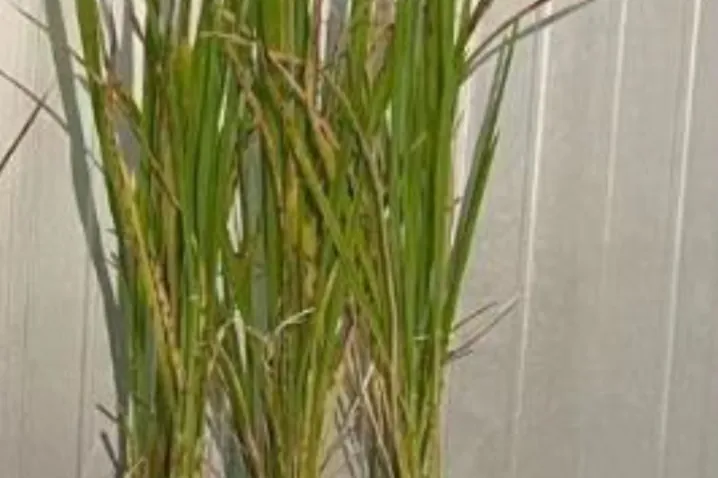
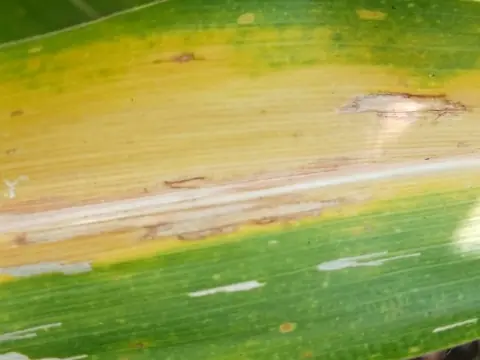
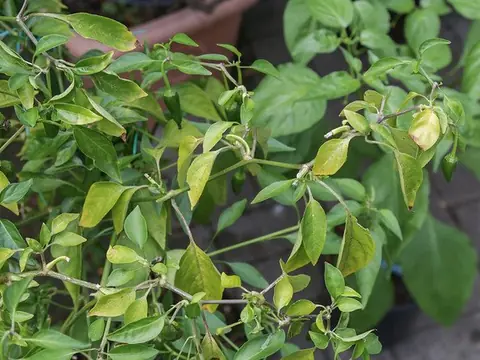
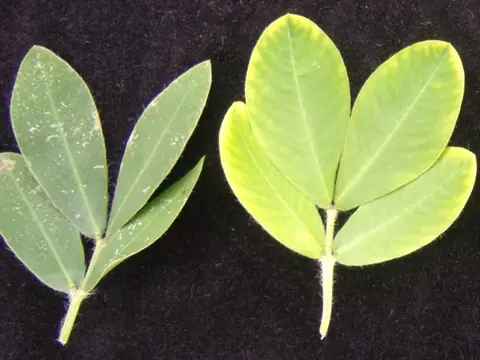
Start with one question: did the change begin on the old leaves or on the young ones? Nitrogen, potassium, phosphorus and magnesium move inside the plant, so a shortage shows on the old, lower leaves first. But zinc, sulfur, iron, manganese, boron, copper, calcium and silicon stay where the plant first put them, so the young leaves and the growing tip show it first. After that, the color and the pattern narrow down which rice nutrient deficiency you have, and a soil test confirms it. Each one below has its signs, its causes and its fix.
Rice nutrient deficiency signs, old leaves and young leaves
Shows first on the old leaves
| Nutrient | Where it starts | What you see | Fix with |
|---|---|---|---|
| Nitrogen | old, lower leaves, the whole plant | Lower leaves turn pale yellow green first and the whole field looks light green and short. | Urea 46 0 0, Ammonium sulfate 21 0 0 |
| Potassium | old, lower leaves, leaf edges and tips | Dark green plants whose lower leaves dry yellow brown at the tips and edges. | Muriate of potash 0 0 60, Sulfate of potash 0 0 50 |
| Phosphorus | old, lower leaves, the whole plant | Short, very upright, dirty dark green plants with very few tillers. | 16 20 0, Complete 14 14 14 |
| Magnesium | old, lower leaves, between the veins | Older leaves show orange yellow stripes between the veins, like a string of beads, and hang wavy. | Epsom salt / magnesium sulfate, Kieserite |
Shows first on the young leaves
| Nutrient | Where it starts | What you see | Fix with |
|---|---|---|---|
| Zinc | young leaves and the tip, the whole plant | Two to four weeks after transplanting, patches of short plants with dusty brown spots and pale midribs. | Zinc sulfate, Zinc oxide |
| Sulfur | young leaves and the tip, the whole plant | The whole plant is pale yellow, and the youngest leaves are the palest. | Ammonium sulfate 21 0 0, Complete 14 14 14 with sulfur (14 14 14 12S) |
| Iron | young leaves and the tip, between the veins | The newest leaves turn yellow between the veins, then almost white, in dry upland or alkaline fields. | Ammonium sulfate 21 0 0, Ferrous sulfate |
| Manganese | young leaves and the tip, between the veins | Young leaves turn greyish green between the veins from the tip down, then get brown spots. | Manganese sulfate, Ammonium sulfate 21 0 0 |
| Boron | young leaves and the tip | Tips of the youngest leaves turn white and roll, and plants are short. | Boric acid, Borax |
| Copper | young leaves and the tip, leaf edges and tips | New leaves stay rolled into needles at the tip, plants are bluish green, and many grains are empty. | Copper sulfate |
| Calcium | young leaves and the tip, leaf edges and tips | Tips of the youngest leaves turn white, split and roll, only on very acid or leached soils. | Calcium chloride, Gypsum |
| Silicon | the whole plant, old, lower leaves | Soft leaves that droop instead of standing up, more brown spot and blast than the next field, and stems that fall over. | Rice straw put back, Rice hull ash |
Before you buy fertilizer for a rice nutrient deficiency
So use the table to pick the likeliest rice nutrient deficiency, then read its section below. Also keep in mind that dry soil, standing water, cold nights, a pest or a disease can look the same. That is why it pays to check the roots and the whole field first.
Nitrogen deficiency in rice
The oldest leaves turn yellowish green first, starting at the tip, while the young leaves stay greener. Leaves become narrow, short and stand very upright. Plants stay short with few tillers, and in a bad case the whole field looks yellow. Fewer grains form and the harvest drops. You see it most at this stage: tillering up to panicle initiation, when the crop takes up the most nitrogen.
Why nitrogen deficiency happens in palay
A modern variety fed too little, or nitrogen that went on too early, too late or by a poor method.
How to tell it apart
Sulfur deficiency looks almost the same, but it yellows the young leaves first. Iron deficiency starts on the newest leaf, with yellow between green veins. To be sure, use the leaf color chart every 7 days from 14 days after transplanting (or 21 days after seeding) until early flowering.
What to apply for nitrogen deficiency
When the leaf color chart reads below 4, use 1.5 bags of Urea 46 0 0 per hectare in the dry season or 1 bag in the wet season. If the crop also shows sulfur deficiency, use Ammonium sulfate 21 0 0 instead: 3.5 bags in the dry season or 2 bags in the wet season. Keep water in the field after applying, but do not let it spill over the bunds right away.
- Urea 46 0 0
- Ammonium sulfate 21 0 0
- Complete 14 14 14
Sold here with nitrogen: Atlas Granular Urea (46 0 0) by Atlas Fertilizer, Amigo Planters Ammonium Chloride by La Filipina (25 0 0), Agripower 46 0 0 (Locally Blended) Coated by Green Acres Agri Tech and Ultra n 25 0 0 SRN by Ri Chemical. Check the FPA registration on the bag and follow the label rate. For the how and when, see our guide to urea fertilizer, and the page on nitrogen deficiency in every crop. Also, the LCC Checker in anee.io reads your leaf color chart, or a photo of the leaves, and says how much urea your palay needs now. In anee.io, Anee, the smart farm technician, reads a photo of the leaf and tells you which nutrient is short.
To keep it away, split nitrogen into several doses timed by the leaf color chart, keep weeds down, and return straw, manure or compost.
Potassium deficiency in rice
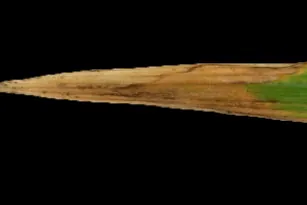
Plants stay dark green, but the tips and edges of the older leaves turn yellowish brown and dark brown spots appear. The browning moves from the tip down to the base of the leaf. Upper leaves become short, droopy and dirty dark green. Panicles get rusty brown spots and many unfilled grains, and plants fall over easily. You see it most at this stage: mostly from late tillering to grain filling, so it is often noticed late.
Why potassium deficiency happens in palay
Sandy soils with small potassium reserves, highly weathered acid soils, poorly drained soils.
How to tell it apart
The color looks like tungro, but potassium deficiency covers the field evenly while tungro shows in patches. Phosphorus deficiency also gives dark green plants, but without the brown leaf edges. To be sure, soil test for exchangeable potassium or a MOET kit test.
What to apply for potassium deficiency
Apply Muriate of potash 0 0 60 to the soil following the soil test. For quick help, use a 1 percent potassium chloride or potassium sulfate spray (10 g per liter, 160 g in a 16 liter sprayer) every 15 days until the symptoms stop. A usual dose is 1 to 2 bags of Muriate of potash 0 0 60 per hectare, half at planting and half at panicle initiation.
- Muriate of potash 0 0 60
- Sulfate of potash 0 0 50
- Complete 14 14 14
Sold here with potassium: Atlas Muriate of Potash (MOP) by Atlas Fertilizer (0 0 60), Simplot Sulfate 0 0 50 by Nutranta, Tierra MX 17.8 0 30 3.4S 1.2ZN by Tierra Agri Technologies (17.8 0 30 with 3.4 percent sulfur and 1.2 percent zinc) and Cambiar K by Donato C. Cruz (0 0 48). Check the FPA registration on the bag and follow the label rate. For the how and when, see our guide to potash fertilizer, and the page on potassium deficiency in every crop.
To keep it away, plow the straw back in instead of burning or hauling it away, spread straw ash evenly.
Phosphorus deficiency in rice
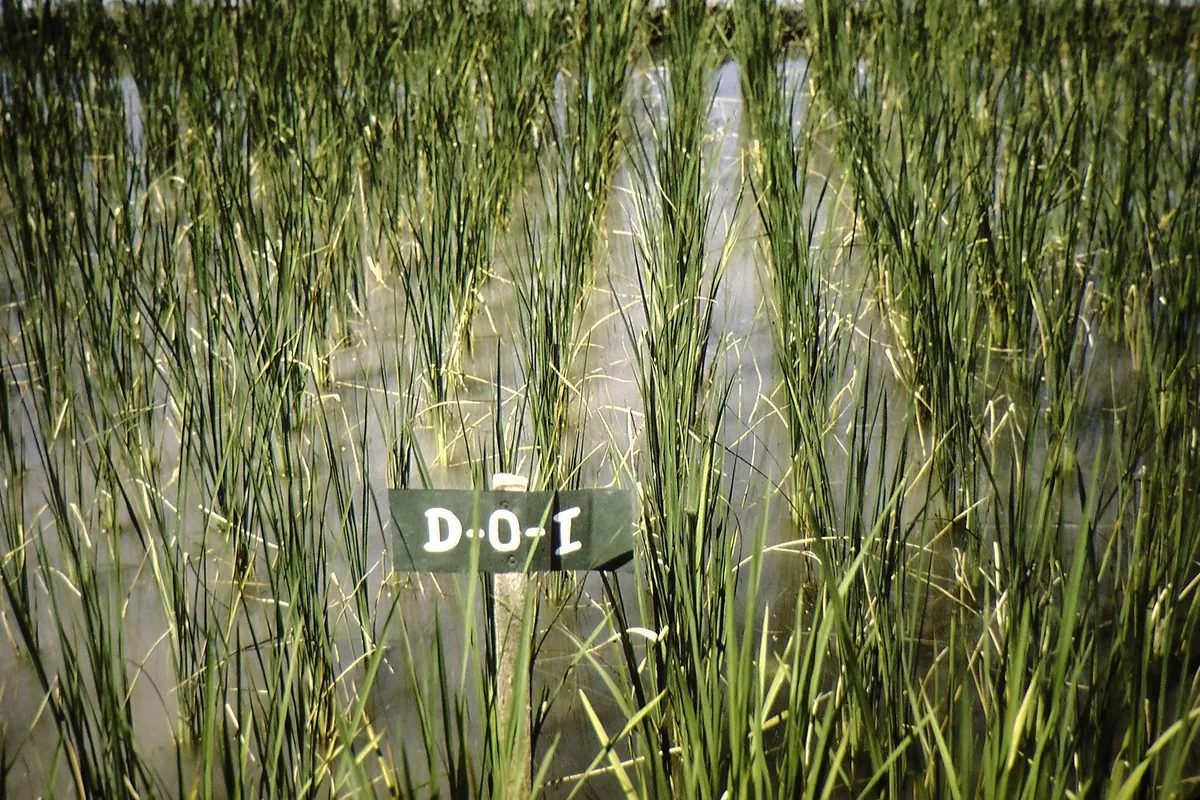
Plants stay short with thin stems and very few tillers. Leaves are narrow, short, very upright and dirty dark green. The older leaves turn brown and die while the young ones look healthy. Some varieties turn red or purple. Panicles and grains are fewer, and the crop can mature a week or more late. You see it most at this stage: early growth and tillering. Mild cases are hard to see in the field.
Why phosphorus deficiency happens in palay
Acid upland soils, sandy soils low in organic matter, degraded lowland soils, acid sulfate soils, volcanic soils and calcareous soils, which hold phosphorus tightly.
How to tell it apart
Potassium deficiency also gives dark green plants, but with yellow brown leaf edges. Phosphorus deficiency often comes together with zinc deficiency or iron toxicity, so look for more than one problem. To be sure, run a MOET kit test or a soil test for available phosphorus before planting.
What to apply for phosphorus deficiency
Apply a phosphorus fertilizer such as 16 20 0, Complete 14 14 14 or Superphosphate 0 18 0 early, following the soil test. Give 15 to 30 kg of phosphorus (P) per hectare to the soil. For a quick boost, spray 2 percent DAP 18 46 0 (20 g per liter, 320 g in a 16 liter sprayer, soaked overnight and filtered) twice, 15 days apart.
- 16 20 0
- Complete 14 14 14
- Superphosphate 0 18 0
- Diammonium phosphate 18 46 0
Sold here with phosphorus: Philphos 18 46 0 (Di Ammonium Phosphate), Atlas Super Gro (16 20 0) by Atlas Fertilizer, Amigo Planters Granular Single Super Phosphate by La Filipina (0 18 0 with 11 percent sulfur) and Triple Super Phosphate by Newman Chemicals (0 46 0). Check the FPA registration on the bag and follow the label rate. For the how and when, see our guide to 16 20 0 fertilizer, and the page on phosphorus deficiency in every crop.
To keep it away, replace the phosphorus each harvest removes with fertilizer, manure or compost, and plow straw back in.
Zinc deficiency in rice
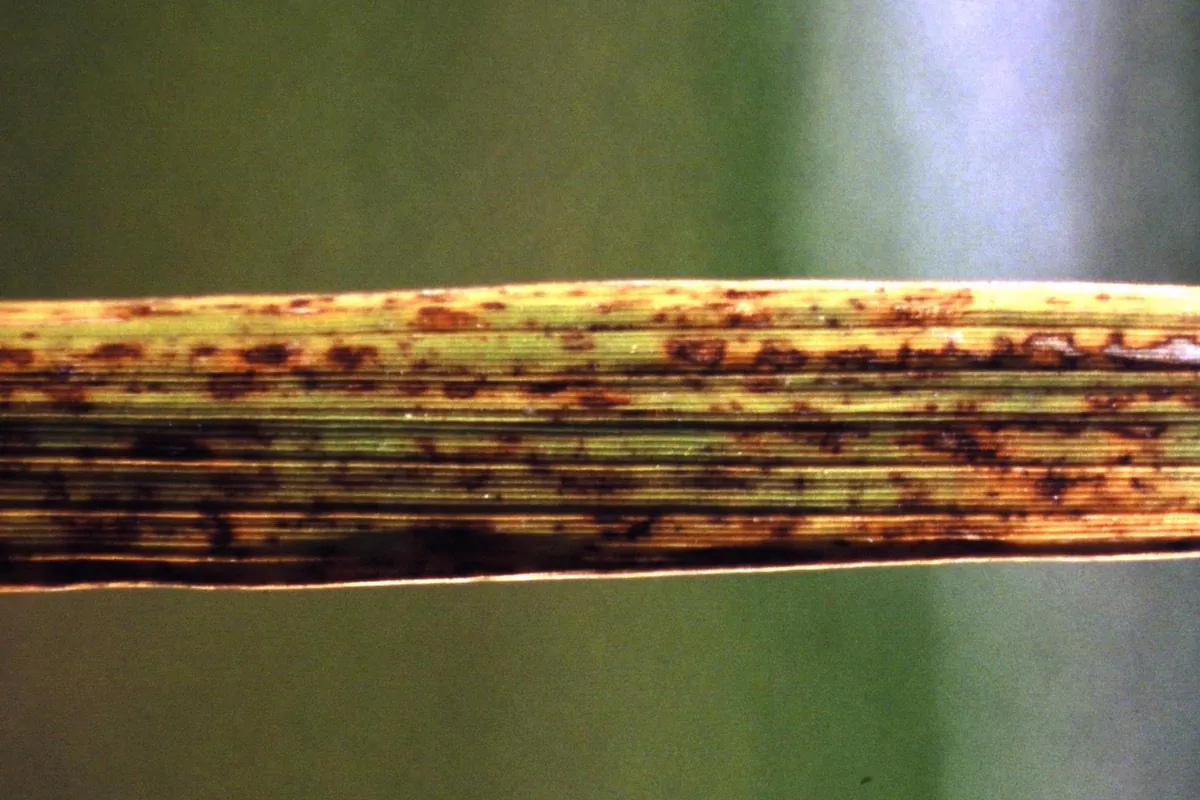
Two to four weeks after transplanting the crop grows unevenly and some hills stay short. Young leaves turn pale along the midrib near the base, and dusty brown spots and streaks appear and join on the leaves. Leaf blades are smaller and tillering drops. In severe cases seedlings rust and die, direct seeded rice fails to come up, and maturity is late. You see it most at this stage: seedbed and the first 2 to 4 weeks after transplanting. Plants may recover once the field is drained, but yield is lost.
Why zinc deficiency happens in palay
Neutral to alkaline and calcareous soils, fields that stay flooded all year (three crops a year), sodic, saline and peat soils, and soils high in phosphorus.
How to tell it apart
Iron toxicity gives similar brown spotting, but on waterlogged acid soils with orange leaves. Iron deficiency yellows the newest leaves between the veins. To be sure, drain a small part of the field.
What to apply for zinc deficiency
Broadcast 25 kg Zinc sulfate per hectare 10 to 14 days after transplanting. In the seedbed, apply 0.5 kg zinc sulfate per 400 square meters (2 kg if severe) 7 to 10 days after sowing, or dip seedlings in a 2 percent zinc oxide mix for 15 to 30 minutes. For direct seeding, add 1 kg zinc sulfate per 40 kg seed to the last soaking water. You can also give a 0.5 percent zinc sulfate spray (5 g per liter, 80 g in a 16 liter sprayer) twice, 15 days apart.
- Zinc sulfate
- Zinc oxide
- Ammonium sulfate 21 0 0
Sold here with zinc: Harvester Zinc Sulphate Heptahydrate by Universal Harvester (22 percent zinc), Petbowe Zinc Sulphate Monohydrate (33 percent zinc), Tierramino ZN by Unilox Far East Resources (7 0 0 with 10 percent zinc) and Folistim Humi ZN Foliar by Envireau Pacific (10.7 percent zinc and 5.3 percent sulfur). Check the FPA registration on the bag and follow the label rate. For the how and when, see our guide to fertilizer with zinc, and the page on zinc deficiency in every crop.
To keep it away, use 25 kg zinc sulfate per hectare at 14 days after transplanting once a year, in the dry season.
Sulfur deficiency in rice
The whole plant turns pale green to yellow, but unlike nitrogen deficiency the young leaves yellow first and their tips may die. Plants are short with fewer tillers, yet not dark like phosphorus or potassium deficient plants. Seedlings in the seedbed turn yellow and many die after transplanting. Panicles are fewer and shorter, and maturity comes 1 to 2 weeks late. You see it most at this stage: seedbed and vegetative growth. The loss is biggest when it starts early.
Why sulfur deficiency happens in palay
Sandy soils, soils low in organic matter, highly weathered soils, and fields given only sulfur free fertilizer such as urea for years.
How to tell it apart
It is easy to take for nitrogen deficiency. Nitrogen yellows the old leaves first, sulfur yellows the young leaves first. To be sure, check which leaves turned yellow first, then run a MOET kit test or a soil and leaf test.
What to apply for sulfur deficiency
Use Ammonium sulfate 21 0 0 (24 percent sulfur) instead of urea for the next nitrogen doses: give 3.5 bags per hectare in the dry season or 2 bags in the wet season when the leaf color chart reads below 4. The sulfur in 14 14 14 12S at the usual rate is enough for the usual shortage. You can also give a 0.5 percent wettable sulfur spray (5 g per liter, 80 g in a 16 liter sprayer) twice, 15 days apart.
- Ammonium sulfate 21 0 0
- Complete 14 14 14 with sulfur (14 14 14 12S)
- Gypsum
Sold here with sulfur: Atlas Ammosul 21 0 0 by Atlas Fertilizer (21 0 0 with 24 percent sulfur), Philphos Gypsum (22.2 percent calcium and 17.4 percent sulfur), Harvester Sulphate of Potash by Universal Harvester (0 0 50 with 17.5 percent sulfur) and Agsmart Kieserite Granule (20 percent sulfur and 16.3 percent magnesium). Check the FPA registration on the bag and follow the label rate. For the how and when, see our guide to ammonium sulfate fertilizer, and the page on sulfur deficiency in every crop.
To keep it away, use a sulfur bearing fertilizer such as 14 14 14 12S or ammonium sulfate each season.
Iron deficiency in rice
Yellowing starts between the veins of the newest leaves while the older leaves stay green. The whole leaf then turns pale yellow and nearly white. In severe cases the whole plant turns pale, grows little and can die. You see it most at this stage: seedling and early growth, mostly in upland or dry seeded fields.
Why iron deficiency happens in palay
Rare in flooded rice.
How to tell it apart
Zinc deficiency also hits alkaline soils, but gives brown spots and pale midribs. Nitrogen deficiency starts on the old leaves. To be sure, check the soil pH (alkaline soil is the warning sign) and send soil and young leaf samples to a laboratory.
What to apply for iron deficiency
Use Ammonium sulfate 21 0 0 instead of urea to make the root zone more acid, add manure or crop residues. Use fertilizers that carry iron as a trace element. For an iron product such as ferrous sulfate, follow the soil test and the label. Spray Ferrous sulfate at 0.5 to 1 percent (80 to 160 grams in a 16 liter sprayer), or an iron chelate at the label rate, two or three times 7 to 10 days apart.
- Ammonium sulfate 21 0 0
- Ferrous sulfate
Sold here with iron: DDDD Planter's Choice Ferrous Sulphate Heptahydrate by Modern Time (19 percent iron), Ferrous Sulfate Monohydrate by Zetryl Chem (30 percent iron), Ferrous Sulphate Monohydrate by Newman Chemicals (30 percent iron) and Liquid Chelate Iron with Sulfur by Sagrex (5 percent iron and 3 percent sulfur). Check the FPA registration on the bag and follow the label rate. For the how and when, see our guide to foliar fertilizer, and the page on iron deficiency in every crop.
To keep it away, grow iron efficient varieties on alkaline uplands and keep the soil rich in organic matter.
Magnesium deficiency in rice
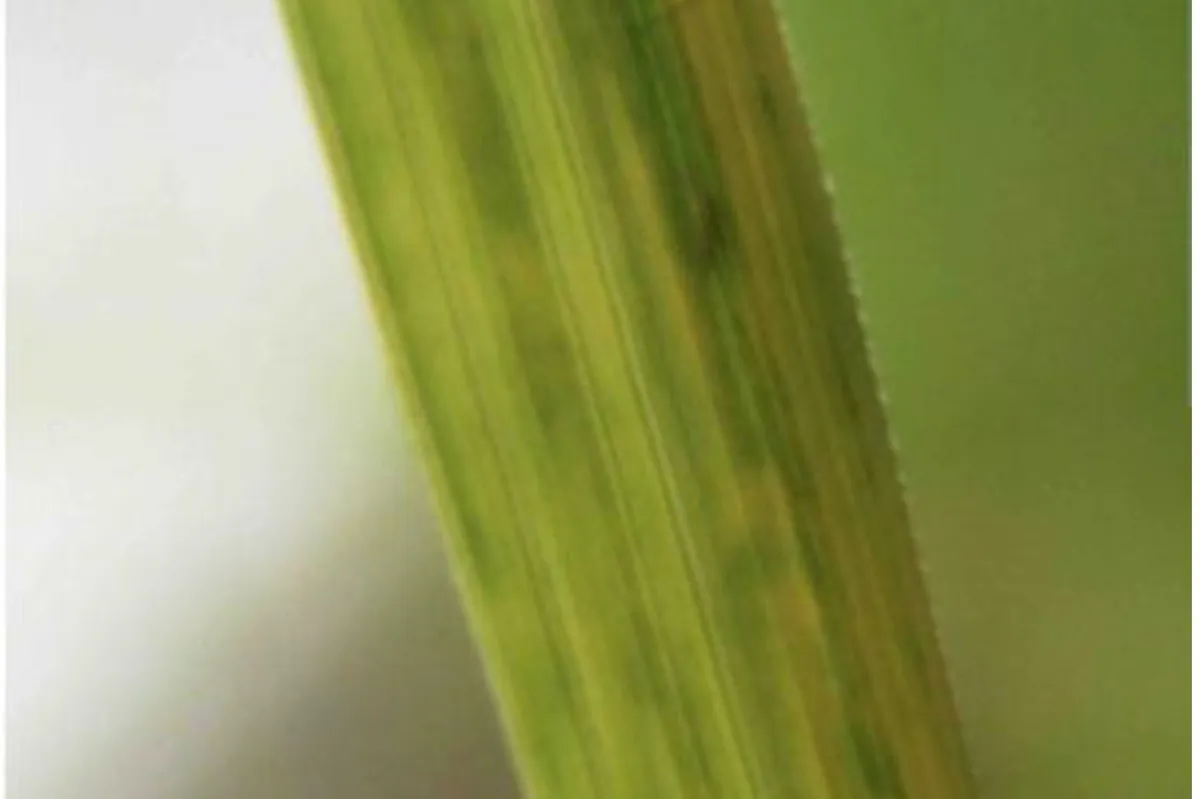
Older leaves turn orange yellow between the veins, with green and yellow stripes along the leaf like a string of beads. Leaves become wavy and droopy because they bend wider away from the stem. As it gets worse the younger leaves pale too and the old leaves die. Height and tillers change little, but grains are fewer and lighter. You see it most at this stage: middle of the season to grain filling. The flag leaf can show it.
Why magnesium deficiency happens in palay
Rare in irrigated rice, where the water brings magnesium.
How to tell it apart
Potassium deficiency starts at the leaf tips and edges, not between the veins. Iron toxicity gives orange leaves too, but with tiny brown spots on waterlogged soils. To be sure, soil test for exchangeable magnesium and a leaf test.
What to apply for magnesium deficiency
Use a 0.5 percent magnesium sulfate spray (5 g Epsom salt per liter) twice, 15 days apart. For the soil, a soluble source such as kieserite corrects it fast. Follow the soil test for the rate. A usual dose is 100 to 150 kg of Kieserite or 150 to 200 kg of Magnesium sulfate per hectare at planting. On acid soil, 1 to 2 tons of Dolomite mixed in before planting both limes and feeds.
- Epsom salt / magnesium sulfate
- Kieserite
- Dolomite
Sold here with magnesium: Dolomite by A6 Agrisource (24 percent calcium and 11 percent magnesium), Agsmart Kieserite Granule (20 percent sulfur and 16.3 percent magnesium), DDDD Planter's Choice Magnesium Sulphate Monohydrate by Modern Time (15.1 percent magnesium) and Zetryl MAG 9 by Zetryl Chem (9 percent magnesium). Check the FPA registration on the bag and follow the label rate. For the how and when, see our guide to complete fertilizer, and the page on magnesium deficiency in every crop.
To keep it away, replace the magnesium taken away in grain and straw with fertilizer or manure.
Manganese deficiency in rice
Young leaves turn pale greyish green between the veins, starting at the tip and moving to the base. Brown dead spots follow and the leaf can turn dark brown. New leaves come out short, narrow and light green, and plants stay short with small roots, though tillering is not much affected. You see it most at this stage: tillering, mostly in upland rice.
Why manganese deficiency happens in palay
Common in upland rice but rare in flooded fields, where manganese dissolves easily.
How to tell it apart
Iron deficiency also yellows young leaves between the veins, but without the grey tone and brown spots. Manganese deficient plants also catch brown spot disease more easily. To be sure, leaf test and soil test, and note whether the field is upland or alkaline.
What to apply for manganese deficiency
Use a 0.2 percent manganese sulfate spray (2 g per liter, 32 g in a 16 liter sprayer) twice, 15 days apart. For the soil, manganese sulfate can be banded along the rows at 5 to 20 kg of manganese per hectare. Use ammonium sulfate instead of urea and add manure or straw.
- Manganese sulfate
- Ammonium sulfate 21 0 0
Sold here with manganese: Manganese Sulfate by Zetryl Chem (31 percent manganese), Tierramino MN by Unilox Far East Resources (7 0 0 with 12 percent manganese), Multimate by Agway (4 0 0 with 4.5 percent sulfur, 2.8 percent zinc and 1.8 percent manganese) and Nutri Tabble Meta Foliar by NS Northern Organic Fertilizer (12 percent zinc, 9 percent sulfur, 2 percent magnesium and 1.2 percent manganese). Check the FPA registration on the bag and follow the label rate. For the how and when, see our guide to foliar fertilizer, and the page on manganese deficiency in every crop.
To keep it away, keep organic matter up with manure or straw and choose acid forming nitrogen such as ammonium sulfate on alkaline uplands.
Boron deficiency in rice
The tips of the young leaves turn white and roll, and plants stay short. When it gets bad the growing point dies, yet the plant keeps sending up new tillers. If it strikes at panicle initiation the plant may not form panicles at all. You see it most at this stage: vegetative growth up to panicle initiation.
Why boron deficiency happens in palay
Rare, especially in irrigated rice.
How to tell it apart
Calcium deficiency gives the same white rolled leaf tips. Only a leaf or soil test tells them apart. To be sure, send soil and plant samples to a laboratory.
What to apply for boron deficiency
Use a 0.3 percent boric acid spray (3 g per liter, 48 g in a 16 liter sprayer) twice, 15 days apart. Borax can also go to the soil, but follow the soil test, because a little too much boron burns rice. A usual soil dose is 5 to 10 kg of Borax per hectare (0.5 to 1 kg of boron), mixed evenly with the basal fertilizer.
- Boric acid
- Borax
Sold here with boron: Etifert 11 (Borax Decahydrate) by Zetryl Chem (11 percent boron), Fertibagra 15G by Unilox Far East Resources (14.6 percent boron), B17 (Boric Acid) by Newman Chemicals (17 percent boron) and Better Yield by Bacphil Planters Fertilizer (0 0 0.9 with 10 percent boron). Check the FPA registration on the bag and follow the label rate. For the how and when, see our guide to foliar fertilizer, and the page on boron deficiency in every crop.
To keep it away, avoid heavy leaching and over drainage, and never apply boron without a test.
Copper deficiency in rice
Leaves turn bluish green with pale streaks on both sides of the midrib. Dark brown dead patches form on the leaf tips. New leaves stay rolled, with a needle like upper part, while the lower part looks normal. Tillering drops and pollen is poor, so many grains stay empty. You see it most at this stage: tillering to flowering.
Why copper deficiency happens in palay
Rare.
How to tell it apart
Boron and calcium deficiency also roll the young leaf tips, but the tips turn white. Copper gives bluish green leaves with brown needle tips and streaks along the midrib. To be sure, send soil and plant samples to a laboratory.
What to apply for copper deficiency
Use a 0.2 percent copper sulfate spray (2 g per liter, 32 g in a 16 liter sprayer) twice, 15 days apart. Soil copper sulfate (1 to 5 kg of copper per hectare) should only follow a soil test, since copper builds up in the soil.
- Copper sulfate
Sold here with copper: Grower's Choice Copper Sulphate Pentahydrate by Zetryl Chem (25 percent copper and 12 percent sulfur), Liquid Chelate Copper with Sulfur by Sagrex (5 percent copper and 2 percent sulfur), Indra by Farmtech Agriland (2 percent zinc, 2 percent manganese and 2 percent copper) and Biozome by Manchem Industries (12 percent sulfur, 12 percent zinc, 3 percent manganese, 1 percent magnesium and traces of iron, copper, boron, molybdenum). Check the FPA registration on the bag and follow the label rate. For the how and when, see our guide to foliar fertilizer, and the page on copper deficiency in every crop.
To keep it away, on peat soils, test for copper before planting and use a fertilizer with trace elements.
Calcium deficiency in rice
The tips of the youngest leaves turn white or bleached, then split, roll and curl. Dead tissue can form along the leaf edges, and old leaves later turn brown and die. In extreme cases the growing points stay short and die. It only shows when the shortage is severe. You see it most at this stage: any stage, but only under severe shortage.
Why calcium deficiency happens in palay
Very rare in lowland rice, since fertilizer and irrigation water bring calcium.
How to tell it apart
Boron deficiency gives the same white rolled tips. Calcium deficient plants also suffer more from iron toxicity on acid soils. To be sure, send soil and plant samples to a laboratory.
What to apply for calcium deficiency
Use a 1 percent calcium chloride spray (10 g per liter, 160 g in a 16 liter sprayer) for quick relief. About 500 kg Gypsum per hectare on calcium poor high pH soils. Superphosphate also carries calcium. On acid soils use Agricultural lime as the soil test advises. Lime 2 to 4 weeks before planting. Calcium sprays go on young fruit from fruit set.
- Calcium chloride
- Gypsum
- Superphosphate 0 18 0
- Agricultural lime
Sold here with calcium: Planters Products Lifelime (36.2 percent calcium), Dolomite by A6 Agrisource (24 percent calcium and 11 percent magnesium), Titon Pro by Vast Agro (27.2 percent calcium, 6.1 percent silicon and 3.6 percent magnesium) and Philphos Gypsum (22.2 percent calcium and 17.4 percent sulfur). Check the FPA registration on the bag and follow the label rate. For the how and when, see our guide to fertilizer for tomatoes, and the page on calcium deficiency in every crop.
To keep it away, return straw or manure to the field, and correct strong acidity before planting.
Silicon deficiency in rice
The leaves feel soft and bend down instead of standing up. So the canopy looks open and the lower leaves sit in shade. Brown spot, blast and stem borer do more harm than in the fields around. Stems stay weak and lodge before harvest, and more grains stay empty or turn brown. You see it most at this stage: from tillering to grain filling, worst at heading.
Why silicon deficiency happens in palay
Old, deeply weathered and leached soils, peat soils.
How to tell it apart
Lodging also follows too much nitrogen, strong wind or stem borers, and brown spot also comes with potassium shortage. Feel the leaves, and ask whether the field ever gets its straw back. To be sure, A straw test at harvest: straw with less than 5 percent silicon (about 11 percent silica) is short.
What to apply for silicon deficiency
Plow the straw back in, and spread rice hull ash or burnt rice hull. For a faster fix, mix 1 to 2 tons of a calcium silicate or silicate slag per hectare into the soil at land preparation, or spray a potassium silicate at the label rate at tillering and at booting. Hold back extra nitrogen until the leaves stand up again.
- Rice straw put back
- Rice hull ash
- Calcium silicate
- Potassium silicate spray
Sold here with silicon: Primera Assist by Donato C. Cruz (9.3 percent silicon, 0.25 percent zinc and 0.001 percent molybdenum), Titon Pro by Vast Agro (27.2 percent calcium, 6.1 percent silicon and 3.6 percent magnesium), Wokozim Xtrude Granules by Biostadt (0.1 0 0 with 11.7 percent silicon, 5.7 percent calcium, 3 percent magnesium and 0.05 percent zinc) and Sili Max Specialty Liquid Inorganic Fertilizer by Oracle Chem (4.7 percent silicon). Check the FPA registration on the bag and follow the label rate. For the how and when, see our guide to fertilizer for rice, and the page on silicon deficiency in every crop.
To keep it away, return the straw to every crop instead of burning it, add rice hull ash or compost.
A soil test is the surest check for any rice nutrient deficiency. Before you buy, ask your Municipal Agriculture Office where to send a soil sample. The DA regional soil laboratories test soil, and the result says how much of each fertilizer your palay needs. That saves money, because extra fertilizer is money lost.
Open the Nutrient Deficiency Finder, pick palay, say where the leaves changed first and what you see, and get the fertilizers sold here that fix it.
- Anee, the smart farm technician, reads a photo of the leaf
- The cropping calendar dates every fertilizer application of your season
Rice nutrient deficiency questions
Why are my palay leaves turning yellow?
What fertilizer fixes nitrogen deficiency in rice?
What fertilizer fixes potassium deficiency in rice?
What fertilizer fixes phosphorus deficiency in rice?
How do I know which nutrient my palay lacks?
Find the missing nutrient and fix it
With Libre + Anee, read the whole guide: how to tell the deficiency from look alikes, how to be sure, what to apply, and the fertilizers sold here that supply it.
The account is free, no credit card.