Iron Deficiency in Plants: Signs, Causes and How to Fix It
Iron deficiency in plants starts on the young leaves and the growing tip. Iron is needed to make and keep chlorophyll, so without it new leaves cannot turn green. It is part of the enzymes that run photosynthesis and respiration. It also helps the plant use nitrate and sulfate to build proteins. Here are the signs in each crop, what brings it, how to be sure and the fertilizer that fixes it.
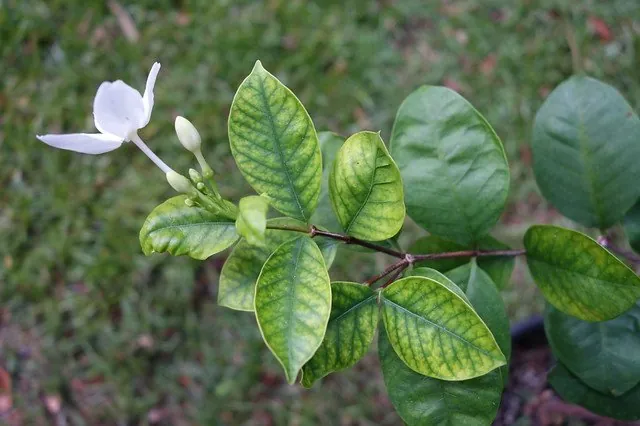
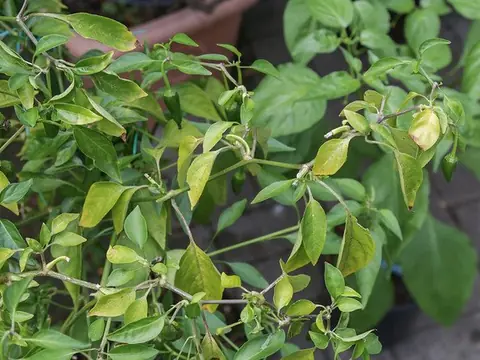
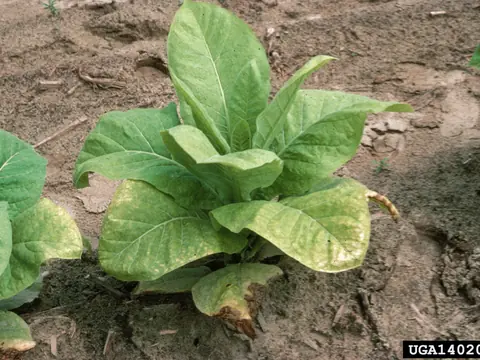
Iron does not move out of old leaves, so the yellowing shows on the newest leaves first. In bad cases the youngest leaves turn almost white while the old ones stay green.
Iron deficiency symptoms
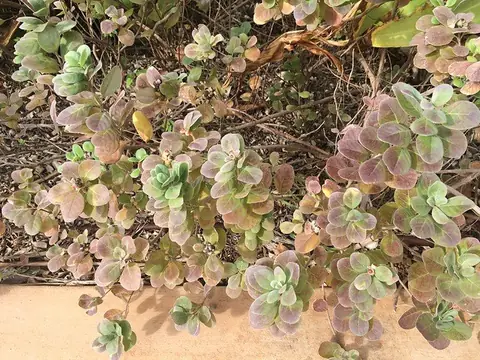
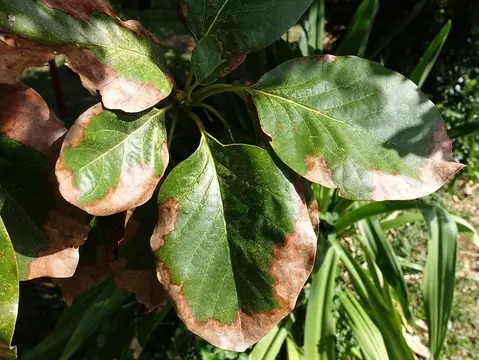
Young leaves turn yellow between the veins while the veins stay green, a pattern that runs the full length of the leaf. As it worsens, the whole leaf turns pale yellow to white, and the leaf edges may scorch brown. Growth slows and yield drops, and in rice a severe case can kill the plant. It is worst on limy, compacted or waterlogged ground.
Iron deficiency by crop
Each crop shows it its own way. So find yours in the tables below, then open its page for the photo and the full fix, like the one for iron in rice.
Rice
| Crop | The first sign | Fix with |
|---|---|---|
| Palay | The newest leaves turn yellow between the veins, then almost white, in dry upland or alkaline fields. | Ammonium sulfate 21 0 0, Ferrous sulfate |
Corn and Sorghum
| Crop | The first sign | Fix with |
|---|---|---|
| Mais | Upper leaves turn pale yellow to white between the veins along their whole length. | Ferrous sulfate, Ammonium sulfate 21 0 0 |
| Batad | On limey, high pH soil, young leaves turn yellow to white between green veins, in patches of the field. | Ferrous sulfate, Chelated iron (Fe EDDHA) |
Legumes
| Crop | The first sign | Fix with |
|---|---|---|
| Monggo | New leaves turn yellow green with green veins, then fully yellow, on limey or high pH soil. | Ferrous sulfate |
| Mani | Young leaves suddenly turn yellow between green veins and stay small, on limey soil. | Ferrous sulfate |
| Utaw | Youngest leaves turn yellow with green veins, then almost white, on limey soil. | Ferrous sulfate |
| Paayap | Young leaves turn yellow, veins and all, then nearly white, on limey soil. | Ferrous sulfate |
| Kadyos | Young leaves turn light green between dark green veins, on limey soil. | Ferrous sulfate |
Root Crops
| Crop | The first sign | Fix with |
|---|---|---|
| Gabi | Young leaves yellow between the veins, then bleach evenly, in dry upland fields. | Ferrous sulfate |
| Ubi | On coral or limey ground the young leaves go pale while thin green veins stay visible like a net, then they bleach white. | Chelated iron, Ferrous sulfate |
| Luya | Young leaves yellow between green veins, then bleach almost white. | Ferrous sulfate |
| Luyang dilaw | Young leaves yellow between the veins, fast spreading over the whole leaf until it is white. | Ferrous sulfate |
Vegetables
| Crop | The first sign | Fix with |
|---|---|---|
| Kangkong | The newest shoot tips turn pale yellow between green veins, then fully yellow. | Ferrous sulfate, Iron chelate |
| Alugbati | On limed or alkaline soil, the newest leaves turn pale yellow between green veins. | Ferrous sulfate, Iron chelate |
| Saluyot | On limed or alkaline soil, the newest top leaves turn pale yellow between green veins. | Ferrous sulfate, Iron chelate |
| Kamatis | New top leaves turn yellow with a fine net of green veins, but keep their normal shape. | Ferrous sulfate, Iron chelate |
| Atsal | Newest leaves at the tip turn yellow green between dark green veins. | Ferrous sulfate, Iron chelate |
| Presa | The youngest centre leaves turn pale yellow between the veins and can bleach. | Iron chelate, Ferrous sulfate |
Sugarcane and Industrial Crops
| Crop | The first sign | Fix with |
|---|---|---|
| Tubo | Young leaves show pale stripes from base to tip and can turn almost white. | Ferrous sulfate, Urea 46 0 0 |
| Pinya | The young heart leaves turn pale yellow, often on acid red soils that are high in manganese. | Ferrous sulfate, Urea 46 0 0 |
| Kawayan | New leaves turn yellow with green veins, on limestone or high pH soils. | Ferrous sulfate |
Fruits and Plantation Crops
| Crop | The first sign | Fix with |
|---|---|---|
| Saging | Young leaves turn yellow to almost white while the veins stay green for a while. | Ferrous sulfate, Urea 46 0 0 |
| Mangga | Newest leaves pale yellow to almost white with a fine net of green veins. | Ferrous sulfate, Iron chelate (Fe EDDHA) |
| Kalamansi | Newest leaves yellow to ivory with green veins. Worst in wet, poorly drained or limey spots. | Iron chelate (Fe EDDHA), Ferrous sulfate |
| Citrus, dalandan or ponkan | Newest leaves yellow to white with green veins. Tops of trees die back on wet or limey ground. | Iron chelate (Fe EDDHA), Ferrous sulfate |
| Langka | Young leaves turn yellow between green veins. In bad cases the whole new leaf goes yellow. | Ferrous sulfate, Iron chelate (Fe EDDHA) |
| Abukado | Young leaves go yellow, leaving thin dark green lines on each vein. Later the veins pale too and leaves drop. | Iron chelate (Fe EDDHA) |
| Mangostan | Seedlings in the nursery whose young leaves turn more and more yellow while old leaves stay green. | Ferrous sulfate, Urea 46 0 0 |
| Atis | The newest leaves turn yellow with a fine net of green veins, and later go fully yellow. | Ferrous sulfate |
| Kaimito | New leaves turn pale yellow with green veins, mostly on limestone or high pH soil. | Ferrous sulfate |
| Saniata | New shoots come out pale yellow on high pH or limestone soils. | Ferrous sulfate |
| Kape | Young leaves light yellow to creamy white with a sharp net of green veins. Old leaves stay green. | Ferrous sulfate |
| Kakaw | Leaves dull yellow green with sharp green veins and a bumpy surface between them. | Ferrous sulfate |
What causes iron deficiency
Iron shortage comes mostly on calcareous, alkaline or over limed soils, where high pH turns iron into forms roots cannot take. Upland crops on neutral to alkaline soils, fields irrigated with alkaline water, and soils low in organic matter are most at risk. Wet, compacted soils and very high phosphorus make it worse. On acid, flooded rice soils the problem is usually the opposite, with too much iron.
How to be sure it is iron
Manganese shortage also yellows young leaves between the veins. But as small yellow spots, while iron chlorosis is smooth and turns leaves whitish. Zinc makes pale bands near the leaf base, and in flooded rice, sulfide damage looks like iron shortage but blackens the roots. Check the soil pH first, because iron shortage usually comes with high pH or too much lime. A DA Regional Soils Laboratory can test soil iron, and a leaf tissue test helps. A trial spray of iron on a few plants is a quick check, because the new leaves green up within days if iron was short.
How to fix iron deficiency
On high pH soils most iron products fail in the soil. Only an iron chelate called FeEDDHA works well above pH 7.2. For fruit trees, a mix of ferrous sulfate and elemental sulfur placed in holes around the drip line lowers the pH near the roots. Use ammonium sulfate instead of urea, and add compost or manure.
A typical spray is about 0.5 percent ferrous sulfate (5 grams per liter) or an iron chelate by its label, and it works within days. The green fades as new leaves grow, so repeat the spray, and spray in the evening to avoid leaf burn.
Fertilizers sold here that supply iron
| Product | Made or sold by | What it holds | Use |
|---|---|---|---|
| DDDD Planter's Choice Ferrous Sulphate Heptahydrate | Modern Time | 19 percent iron | Soil or leaves |
| Ferrous Sulfate Monohydrate | Zetryl Chem | 30 percent iron | On the soil |
| Ferrous Sulfate Heptahydrate | Zetryl Chem | 18 percent iron | Soil or leaves |
| Ferrous Sulphate Monohydrate | Newman Chemicals | 30 percent iron | Soil or leaves |
| Lucky Planters Ferrous Sulphate Heptahydrate | Mindanao Agriplus | 19 percent iron | Soil or leaves |
| Ferrous Sulfate Monohydrate | MC Mai (Cebu) | 30 percent iron | Soil or leaves |
| Ferrous Sulfate Heptahydrate | MC Mai (Cebu) | 19.7 percent iron | Soil or leaves |
| Liquid Chelate Iron with Sulfur | Sagrex | 5 percent iron and 3 percent sulfur | On the leaves |
For rates and timing, see our guides to foliar fertilizer and to fertilizer application methods. Also, anee.io keeps every application on the cropping calendar, so you know what went on each lot and when.
How to keep iron deficiency away
Do not over lime, and on calcareous soils choose iron efficient varieties and acidifying fertilizers such as ammonium sulfate. Keep organic matter up, and avoid waterlogging and heavy phosphorus.
In flooded, acid rice soils, too much iron is the more common problem, reported in many Central Luzon rice areas. Iron toxicity starts as tiny brown spots at the tips of the lower leaves, which spread until the leaves turn orange to brown.
Pick your crop in the Nutrient Deficiency Finder, say where the leaves changed first and what you see, and get the fertilizers sold here that fix it.
- Anee, the smart farm technician, reads a photo of the leaf in Tagalog or English
Iron deficiency questions
What does iron deficiency look like?
What is the best fertilizer for iron deficiency?
Why are the young leaves of my plants yellow but the old ones green?
How often should I spray iron?
Find the missing nutrient and fix it
With Libre + Anee, read the whole guide: how to tell the deficiency from look alikes, how to be sure, what to apply, and the fertilizers sold here that supply it.
The account is free, no credit card.