What Is the Best Fertilizer for Tomatoes in the Philippines?
The best fertilizer for tomatoes in the Philippines is a program by stage, not one bag. Work decomposed manure into the field and put a tablespoon of complete fertilizer 14 14 14 in each planting hole. Then side dress urea and muriate of potash at about 2 weeks and at 30 days after transplanting. Once fruit sets, potassium and steady water matter more than extra nitrogen. anee.io, a farm app built for Filipino farmers, dates each dose from your own transplanting day.
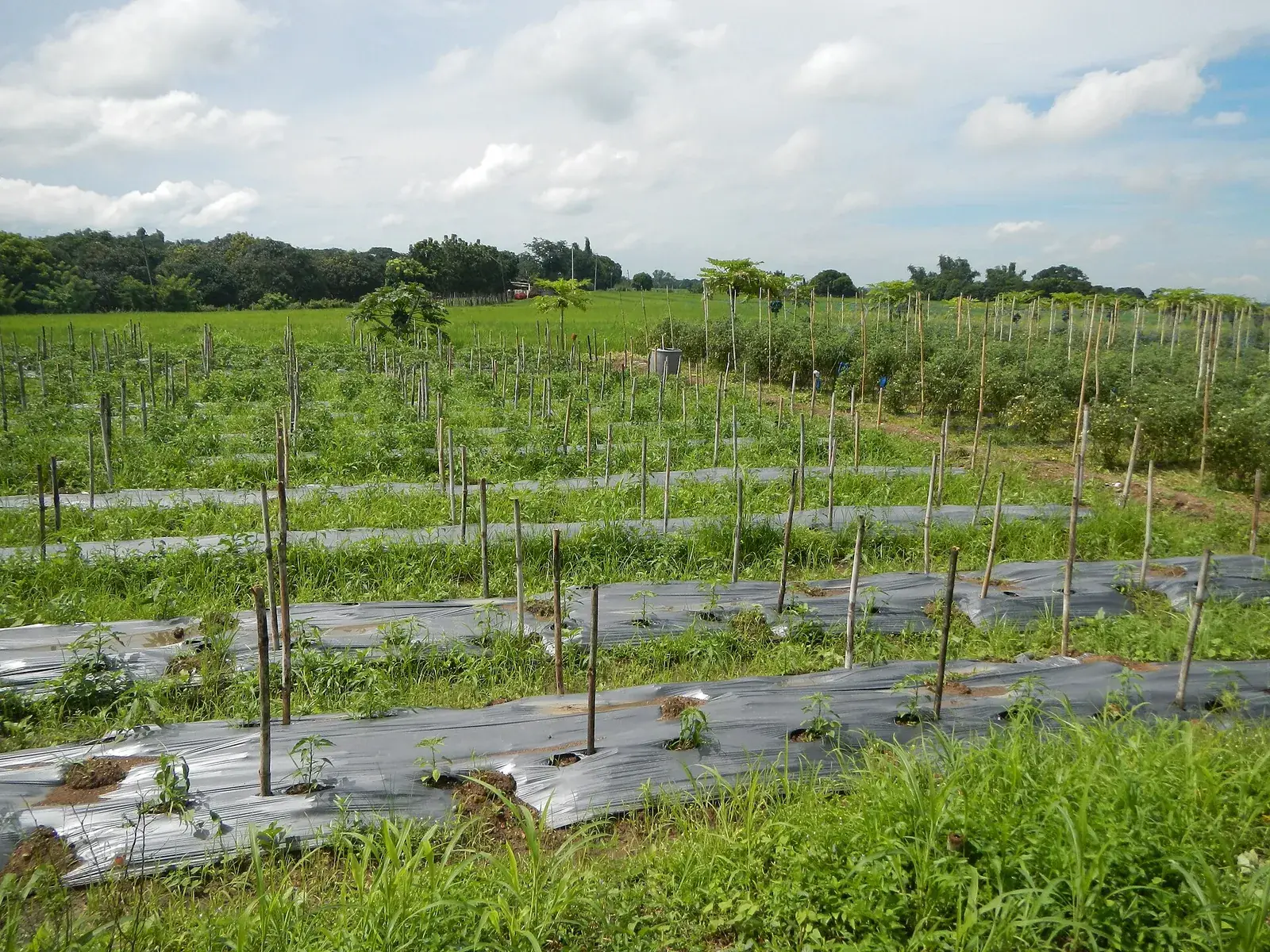
Tomato, or kamatis, punishes a careless feeding plan in two ways. Too little potassium and the fruit colors unevenly. Too much urea and you get big vines and fruit with black bottoms. So the goal is the right nutrient at the right stage.
The rates below are for fields without a soil test. If you can, have your soil tested first. The right amount depends on soil fertility and on the crop that came before.
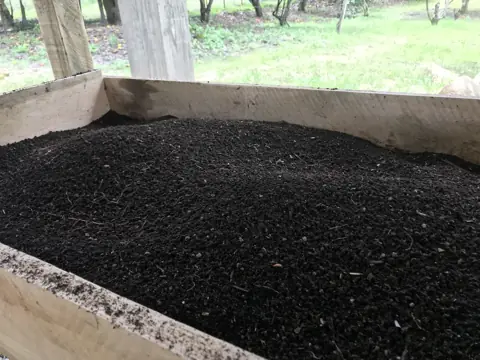
- Before planting: 20 bags of decomposed manure or commercial organic fertilizer per hectare.
- At transplanting: 1 tablespoon of 14 14 14 in each hole, covered with a handful of compost.
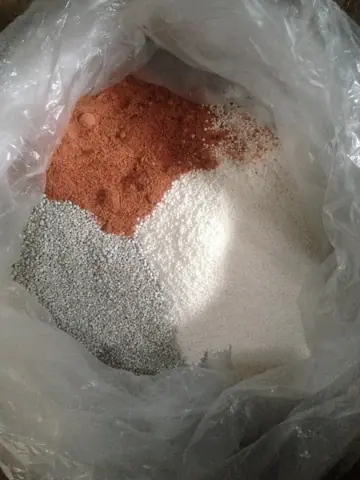
- Side dress twice: 1 tablespoon each of urea and muriate of potash per plant, at about 2 weeks and at 30 days after transplanting (DAT).
- At flowering and fruiting: keep the root zone evenly moist and lean on potassium, not extra urea.
- Blossom end rot is a calcium problem inside the fruit, and uneven watering is the usual cause.
What is the best fertilizer for tomatoes at each stage?
Here is the whole program in one table. DAT means days after transplanting, and DAE means days after the seedlings emerge.
| Stage | What to apply | How much and how |
|---|---|---|
| Seedlings, 10 DAE | Urea or ammonium sulfate as a starter drench | 1 tablespoon in 4 liters of water, then water the seedlings right away |
| Before land preparation | Well rotted animal manure, or an organic fertilizer bought in bags | 20 bags per hectare |
| Transplanting, seedlings 25 to 30 days old | Complete fertilizer 14 14 14 | 1 tablespoon in the hole, covered with a handful of compost |
| 10 to 15 DAT | Urea 46 0 0 and muriate of potash 0 0 60 | 1 tablespoon of each per plant, buried 1 inch deep and 3 to 4 inches from the stem |
| 30 DAT | Urea and muriate of potash again | Same rate and method |
| Flowering to last harvest | Water, potassium and calcium, not more urea | Water just enough to moisten the root zone |
Some printed tables show 10 tablespoons per plant for the side dressing. But others built from the same table use 1 tablespoon of urea and 1 of potash. Use the smaller rate, and when unsure, start low.
Why do tomatoes need more potassium than nitrogen?
Leaves run on nitrogen, but fruit needs potassium as it fills and colors. A 2019 survey of tomato growers in Ilocos, published in the Philippine Journal of Crop Science, shows it. It compared farm rates with a blanket recommendation of 165 95 215 kilograms of NPK per hectare, which is more potassium than nitrogen. Yet table tomato growers averaged only 106 21 68 in Ilocos Norte and 120 36 109 in Ilocos Sur.
Short potassium shows in the fruit. Blotchy ripening and yellow shoulder, where fruit colors unevenly, come from low potassium in the fruit. It is worst under a heavy fruit load, and it can happen after weeks of rain even when the soil tests fine. So pair each urea dose with potash. Our potash fertilizer guide explains the grades.
What should I feed tomatoes at flowering and fruiting?
Feed potassium and calcium through steady water, and skip heavy urea. The last soil dose falls at 30 DAT. Since the first harvest comes at 55 to 65 DAT, or 15 to 20 days from flowering, that dose lands just before bloom. After that, water only enough to moisten the root zone, because tomato is very sensitive to flooding.
Many growers add a leaf spray at this stage. In fact, the Ilocos survey found that over 80 percent of processing tomato farmers sprayed foliar fertilizer at flowering. If you do, follow the product label. For organic plots, switch at flowering to fermented fruit juice (FFJ), CalPhos or oriental herbal nutrient (OHN). Our guide to foliar fertilizer explains what a spray can and cannot do.
How do I stop blossom end rot?
Blossom end rot is a calcium shortage in the developing fruit, not a disease. Swings in soil moisture and heavy nitrogen both feed it. Adding calcium to the soil is also generally ineffective. So fix the water first.
- Mulch the beds with rice straw or plastic so the soil stays evenly moist.
- Water on a regular schedule during dry spells.
- Hold back extra urea once fruit sets.
- Pick and throw away affected fruit, so the plant feeds the rest.
- Check soil pH. Tomato grows at pH 5.5 to 8.0, so very acidic fields need lime first, as our acidic soil guide explains.
What about fertilizer for eggplant and potatoes?
Eggplant (talong) and potato belong to the same nightshade family as tomato. Both feed in a similar pattern: organic matter, a basal dose, then nitrogen and potassium. But the timing and balance differ.
Fertilizer for eggplant
Eggplant bears for months, so it gets side dressed many times. On beds with plastic mulch, each hill gets 170 ml of a liquid feed, about one small sardine can. The urea mix is 3 tablespoons in 15 liters of water, at 3, 5, 9, 13 and 17 weeks after transplanting. The potash mix, also 3 tablespoons in 15 liters, follows at 7, 11, 15 and 19 weeks.
For beds without mulch, see our guide to fertilizer for vegetables. Also watch for the eggplant fruit and shoot borer.
Fertilizer for potatoes
Potato wants far more phosphorus and potassium than nitrogen. The general rate for white potato is 120 kg nitrogen, 240 kg phosphate and 240 kg potash per hectare. First, work in 20 bags of processed chicken manure or other organic fertilizer. Then add 3 bags of 14 14 14 per hectare as basal. The rest of the nitrogen and potassium goes on at hilling up, about one month after planting.
But excess nitrogen delays maturity and causes skinning and blackspot bruising. For the field work, see our root crop land preparation guide.
How does anee.io keep a tomato feeding plan on schedule?
Every dose above counts from transplanting, so the dates move with each planting. In anee.io you write the program once in the Protocol Builder, each task on its DAT count. Then the cropping calendar dates every dose from each lot's own day zero.
The NPK Plus calculator adds up the N, P and K in your plan, so you see if potash falls short. If leaves curl or fruit rots, the Pest and Disease Finders help you tell hunger from sickness. Our pages on tomato leaf curl, bacterial wilt and late blight go deeper. Or send a photo to Anee, the smart farm technician inside anee.io, who answers in Tagalog or English and uses credits.
Sign up free, add your tomato lots and transplanting days, and let anee.io date each dose.
Start free